
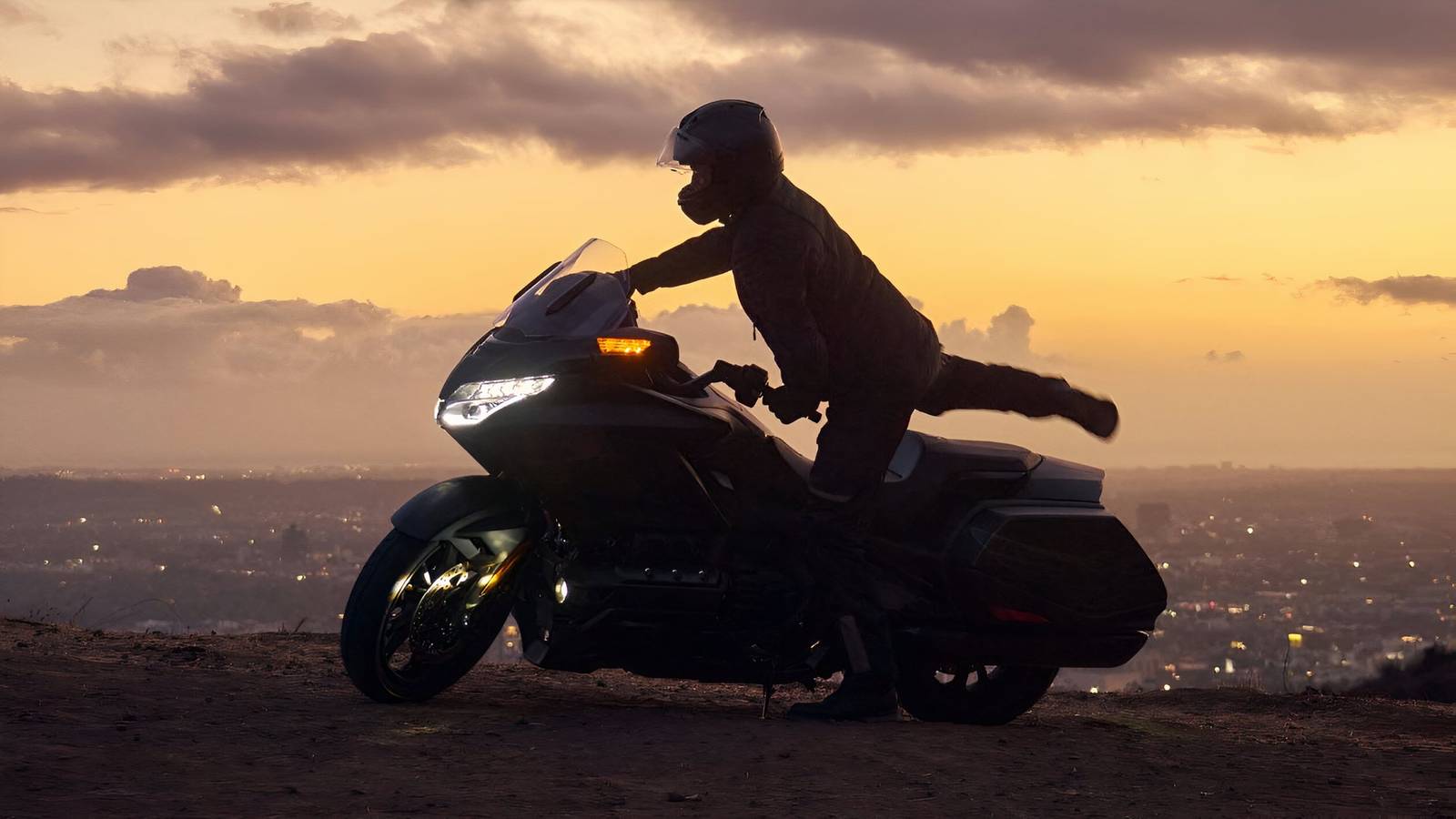
There’s a certain kind of motorcycle that doesn’t just chase miles; it devours them. The kind built for riders who think nothing of crossing state lines before lunch and pushing on until the tank runs dry again. But when you live on the road like that, one thing matters more than horsepower, tech, or even comfort: reliability.
Because every unexpected stop isn’t just an inconvenience, it’s a delay, an expense, and sometimes a trip-ender. Talk to enough riders and mechanics, and you’ll start to hear the same patterns. Some bikes show up on lifts more often than others. And a select few? They barely show up at all. This is a look at the touring machines that quietly earn a different kind of reputation; the ones mechanics rarely see.
To give you the most up-to-date and accurate information possible, the data used to compile this article was sourced from Honda, along with manufacturer service documentation, maintenance schedules, and recall records from Honda, Kawasaki, Yamaha, Suzuki, and Harley-Davidson. This is supported by my experience as a certified motorcycle mechanic trained on the Big Four and Harley-Davidson, with firsthand insight into real-world reliability, service frequency, and long-term durability.
What It Takes To Stay Off The Lift
The Traits That Separate Mile-Eaters From Maintenance Headaches

Bike reliability varies from model to model and year to year, but zoom out and patterns start to emerge. Some families just earn a reputation for staying out of the service bay. Talk to people in the know, and the same names keep surfacing. Among touring-focused machines, bikes like the Yamaha FJR1300, Honda ST1300, and Kawasaki’s Concours 14 consistently come up as close runners-up. These are machines that rack up serious mileage without constantly demanding attention.

To land at the very top, though, a bike has to clear a higher bar. First, it needs reasonable service intervals. High-maintenance designs — early desmodromic engines are a classic example — may perform brilliantly, but frequent valve services and intensive upkeep keep them in the shop more often than most touring riders want.

Next comes low failure rates across the entire machine. It’s not enough for the engine to be bulletproof if the electronics glitch or the suspension components wear prematurely. True long-haul reliability means the drivetrain, chassis, and electrical systems all hold up under sustained use. Finally, a contender needs to prove itself in the real world, measured not in miles ridden occasionally, but in miles devoured consistently, year after year, with little more than routine maintenance standing between it and the next horizon.

Honda Gold Wing: 50 Years Of The Touring Legend
The Gold Wing redefined the luxury touring segment and continues to be a benchmark
The Touring Bike Mechanics Rarely See
Why The Gold Wing Sets The Reliability Standard

Unsurprisingly, Honda doubles down here, with the venerable Gold Wing rising above an already strong field. The Gold Wing is a force of nature, long a favorite among serious distance riders, even in regions traditionally dominated by Harley-Davidson, and more recently, Indian Motorcycle. That reputation isn’t marketing fluff; it’s been earned the hard way, mile after mile, with remarkably few major mechanical issues and little more than routine maintenance required to keep it rolling.

At the heart of it all sits Honda’s opposed-piston flat-six engine, a powerplant known for its uncanny smoothness and durability. It delivers steady, predictable power with plenty of roll-on across the rev range, which means less strain, less drama, and fewer surprises over the long haul. That’s exactly the kind of engineering that keeps a bike off the lift.
Honda Gold Wing Engine And Performance Specifications
|
Engine |
6-cylinder boxer, liquid-cooled |
|
Displacement |
1,833 cc |
|
Power |
125 hp @ 5,500 rpm |
|
Torque |
125 lb-ft @ 4,500 rpm |
|
Transmission |
6-speed manual/ 7-speed auto, shaft-type final drive |
|
Top Speed |
112 mph, governed |
Beyond the drivetrain, the Gold Wing checks every box laid out earlier. Electronics are robust, chassis components hold up under heavy touring loads, and service intervals are refreshingly reasonable for a machine this capable. Comfort seals the deal. Opt for the Tour model, and both rider and passenger get first-class accommodations, along with a top case that makes packing for the long road almost effortless.

The Touring Bike With Yamaha Reliability And Gold Wing-Level Comfort
The BMW K 1600 B is a surprising contender for a combination of reliability and comfort like a Japanese tourer
Why The Gold Wing Goes The Distance
Smart Features And Durability That Keep It Off The Lift

One of the Gold Wing’s most unique tricks is the available seven-speed automatic (DCT) transmission, which delivers true twist-and-go operation. That alone removes a major source of fatigue on long rides. Your clutch hand gets a break, especially in traffic or when the miles start stacking up late in the day. Prefer to row your own? The manual option is still there, and either way, you’re backed up by one of the most underrated features in touring: a factory reverse gear. It’s a lifesaver when you’re loaded down and parked on uneven ground in unfamiliar territory.

Tech is handled with the same no-nonsense reliability. Honda integrates Apple CarPlay and Android Auto, with wireless capability that keeps navigation, music, and communication seamless without turning the bike into a glitchy gadget. It works, and it keeps working.

Then there’s the big one: longevity. These bikes are known to push well past 150,000 miles without major repairs, which is edging into automotive territory. That kind of durability, paired with thoughtful rider-focused features, is exactly why the Gold Wing doesn’t spend much time in the shop, and why it earns its place at the very top of this list.

The Middleweight Touring Bike With Honda Reliability And BMW-Level Road Manners
The Tracer 9 is all that is good about Honda and BMW, and it is in an affordable package.
The Standard Others Chase
Why True Touring Machines Are Defined By What Doesn’t Go Wrong

The bikes that spend the least time in the shop all have something in common: they’re built with intention. Not just to perform, but to endure. In the touring world, that distinction matters more than anywhere else, because these machines aren’t weekend toys. They’re tools for crossing states, countries, and sometimes continents.

What sets the top-tier machines apart isn’t any single spec or standout feature. It’s the way everything works together over time. It’s engineering decisions that prioritize longevity over flash. Components that are designed to handle sustained use instead of occasional bursts. And perhaps most importantly, a track record that proves it all holds up when the miles get serious.

That’s ultimately what this comes down to. When riders are hundreds of miles from home, reliability stops being a talking point and becomes peace of mind. The best touring bikes earn their reputation not in brochures, but on the road, quietly, consistently, and without demanding attention.
Sources: Honda