
Volkswagen has been a technical leader in the electric vehicle industry and one of the front-runners promoting the EV gold rush that we’ve been witnessing in recent years. The German group’s involvement in solid-state technology centers on its deep-rooted partnership with QuantumScape, which evolved from an early-stage investment into a massive industrial licensing deal through VW’s battery subsidiary, PowerCo.

Available Models
Volkswagen
- Founded
-
28 May 1937
- Founder
-
German Labour Front
- Headquarters
-
Wolfsburg, Germany
- Owned By
-
Volkswagen Group
- Current CEO
-
Thomas Schaefer
Unlike traditional supplier agreements, this partnership functions as a high-touch collaboration where a joint scale-up team of experts from both companies works to transfer QuantumScape’s manufacturing process directly into PowerCo’s global factories. Under their latest 2024 and 2025 agreements, PowerCo holds a non-exclusive license to produce up to 40 gigawatt-hours of solid-state cells annually, with an option to double that to 80 GWh. This would be enough capacity to power one million Volkswagen Group vehicles every year. As of right now, QuantumScape announces that it has reached a noteworthy step in this development.
QuantumScape’s Substantial Solid-State Investments

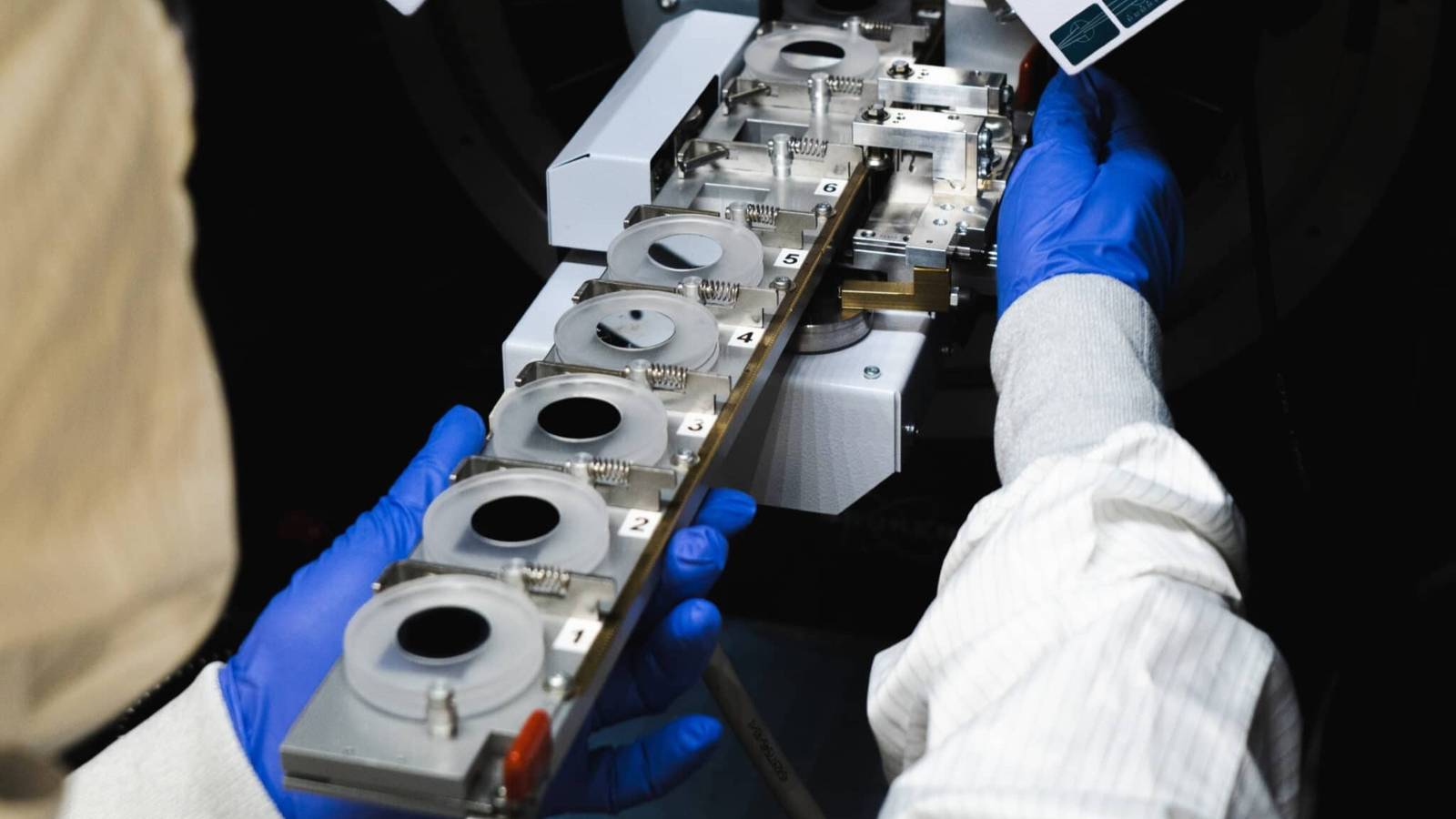
QuantumScape began operations in 2010 and currently acts as an incubator that provides manufacturing blueprints to its customers. In February, the company launched its automated Eagle production line in San Jose, California, focusing on the testing and manufacturing of solid-state batteries for the likes of Volkswagen and other key partners.
Scaling remains difficult and expensive, which is a wall that its rivals are also struggling with. QuantumScape confirmed it spent $12.3 million on Eagle Line equipment during Q4 2025, bringing its total capital expenditures for the year to $36 million. The company expects these costs to rise to between $40 million and $60 million in 2026.
The Race To The First Production SSB

While development remains staggered, the production line signals momentum and a critical landmark for solid-state battery technology. QuantumScape’s progression is impressive, but it must sustain this momentum if it wants to beat its main competitors in the market. Toyota and Mercedes-Benz are also engaged in partnerships that are yielding impressive results, while the Hyundai Group’s in-house development is proving to be massively successful in terms of development.
The last energy storage breakthrough that truly advanced the industry was Sony’s lithium-ion battery in 1991, first used to power its innovative HandyCam. Today, this technology powers everything from smartphones to EVs. While convenient and relatively cost-effective, lithium-ion batteries rely on flammable liquid electrolytes and are a resource-heavy part to manufacture, requiring rare-earth materials that leave a negative impact on the global environment. QuantumScape replaces this liquid with a solid lithium-metal electrolyte, offering higher energy density, improved safety, and longer lifespans for next-generation EVs.

The Engineering Secrets Of Toyota’s Solid-State Battery Project
Toyota remains highly invested in its next-generation solid-state energy storage solutions.
QuantumScape’s Rapid Rise To Success

Dr. Tim Holme co-founded QuantumScape in 2010 as a Stanford University spin-off. He recognized that while lithium-ion batteries worked for early adopters, the mass market required improvements in cost, safety, and range. The company spent its first few years researching materials and the following decade refining manufacturing for cost and quality. QuantumScape’s advantage comes in the form of a proprietary ceramic separator developed with Corning.
This patented separator keeps the energy-dense lithium-metal anode from touching the cathode while moving ions during charging. It’s a non-combustible material that also prevents dendrites, which are lithium growths that puncture separators to cause short circuits or fires. By late 2020, testing confirmed these ceramic separators allow an 80 percent charge in just 15 minutes. The data also showed the technology remains durable over hundreds of thousands of miles and functions in extreme temperatures as low as -22° Fahrenheit.
The SSB Race Is Getting Heated

Many companies, including Finland’s Donut Labs, claim to have invented solid-state batteries, but no one has progressed them from the lab to mass production. QuantumScape leads the field in this transition, having built its Eagle Line in just 10 months. This rapid timeline included designing 14 new tools, constructing them, and starting the assembly process. This pilot line allows both QuantumScape and its customers to learn about costs, cycle times, quality, and throughput.
While QuantumScape has demonstrated its technology in Ducati motorcycles, investors must wait for mass-market EV integration. Holme declined to provide a specific launch timeline. Meanwhile, competitors are moving quickly. Mercedes-Benz and BMW are currently testing batteries, and Stellantis plans to launch a solid-state demonstration fleet in 2026. In China, early movers like Nio and SAIC Motors already sell a few EVs with semi-solid-state batteries. Japanese and Korean manufacturers remain silent about their specific progress.
Lithium-ion technology took 30 years to scale globally and drop in cost by over a thousandfold. This success enabled the modern device landscape. QuantumScape now aims to surpass that standard with the next generation of battery technology.

These Are The First 10 Production Cars In History With Factory Turbochargers
We may love a good turbo today, but they had to start somewhere – here are the first 10 production cars to boast a turbocharged engine under the hood.
Volkswagen’s Lengthy EV Involvement

Volkswagen began its electric journey in the 1970s with experimental prototypes like the Elektro Transporter and the City Stromer Golf, but its modern global venture officially launched in 2013 with the production of the e-up! and e-Golf. Seeking a dedicated electric future, the group developed the Modular Electric Drive Matrix platform and debuted the ID.3 hatchback in 2019 as the first member of its specialized ID. family.
As per a report by Reuters, Volkswagen strengthened its partnership with QuantumScape two years ago after persistent delays with other experts in the industry. Another key partner for the German brand is Blue Solutions, who already creates SSBs for Daimler’s buses that currently service European public transport industries.
Keeping EVs Alive In The U.S.

Volkswagen currently bases its American EV strategy on the Chattanooga-assembled ID.4, which remains its primary volume driver despite a volatile market marked by the 2025 loss of federal tax credits. While the company recently expanded its U.S. catalog with the retro-styled ID.Buzz and the ID.7 sedan, its sales performance in the United States has been mixed; the ID.4 saw a 31 percent year-over-year growth in 2025 with over 22,000 units sold, yet it still trails significantly behind domestic heavyweights.
Tesla continues to dominate the American landscape with a 46 percent market share, followed by General Motors at 11 percent and Ford at 6.2 percent, leaving Volkswagen to fight for a smaller slice of the pie compared to its leadership position in Europe. To regain momentum, Volkswagen is refining the ID.4 for 2026 with software and power upgrades while preparing for a mid-decade shift toward more affordable entry-level models and the next-generation SSP platform. It needs to do this to better compete with rising pressure from rivals like Hyundai and Toyota.
These Are The First 10 Production Cars In History With Factory Turbochargers
We may love a good turbo today, but they had to start somewhere – here are the first 10 production cars to boast a turbocharged engine under the hood.
The Road To Victory Is Busy

The race for solid-state batteries has transitioned from laboratory theory to industrial pilot production, with Toyota and CATL emerging as the front-runners for large-scale mass market adoption. Toyota currently holds over 1,000 patents and has secured Japanese government approval to begin pilot production in 2026, aiming for a full commercial launch in high-performance vehicles by 2027. In China, CATL and Gotion High-tech are moving rapidly. Gotion recently finalized the design for a 2-GWh mass production line, while Nio and SAIC Motors are already delivering semi-solid-state batteries to bridge the gap.
U.S.-relevant innovations include QuantumScape and Volkswagen’s partnership, as well as Factorial Energy, which is currently working with Mercedes-Benz and Stellantis. Both partnerships have already integrated test cells into demonstration vehicles. These startups are leading in technological breakthroughs, but the established giants like Toyota and CATL possess manufacturing infrastructure and capital that will likely lead to them dominating the mass-market. Analysts expect this cycle to reach significant volume deliveries between 2028 and 2030.
Solid-State Will Save The EV

Solid-state batteries are currently seen as the holy grail of modern EV progression because they solve the three primary barriers to mass adoption, namely range, safety, and charging speed. By replacing flammable liquid electrolytes with solid materials, including ceramics and sulfides, these batteries eliminate the risk of thermal runaway and fires, even if the casing is punctured. This stability allows for the use of lithium-metal anodes, which can store up to 50 to 80 percent more energy than today’s graphite-based lithium-ion batteries, potentially pushing EV ranges well past 600 miles without increasing vehicle weight.
Solid electrolytes are also more resilient to the heat generated during rapid power transfer, enabling extreme fast charging that can juice a car from 10 to 80 percent in under 15 minutes. By shrinking the battery’s footprint and extending its lifespan to over 5,000 cycles, this technology promises to make EVs lighter, more durable, and as convenient to refuel as gasoline cars.
Sources: QuantumScape, INC, and Reuters