
The modern sports car market in the U.S. is currently defined by a last hurrah for purely internal combustion engines. Full electrification was the primary roadmap, but many brands have come out to say that they will settle on hybridization for the sake of keeping curb weights low. While this yields impressive performance and efficiency returns, electrical systems still make sports cars bulky and less balanced.
One iconic Japanese sports car rocked the market more than 20 years ago, and since its presence in the market, there hasn’t been an example that has made the formula as perfect. It only enjoyed a short-lived production cycle due to a lack of sales, but it remains a hallmark of balanced performance and driver engagement.
What Makes A Sports Car Good

Agility and balance will always be the fundamental principles that make a good sports car. Brands achieve this by executing engineering precision with a touch of emotion. Beyond the objective metrics, sports cars typically possess a distinct design identity that helps them stand out from the crowd. Some brands take the approach of making their sports cars look striking and aggressive, while others move towards a more seamless and tasteful philosophy.
From a visual aspect, sports cars need to have visual presence, as this communicates prestige and performance to the audience, thus elevating overall brand appeal. Sports car owners typically expect a seamless blend of analog mechanical feedback, such as precise steering and a communicative chassis. For the modern era, digital integration with personalized software-defined driving modes is becoming increasingly more in demand as well.
Sports cars that continue to fly the flag high to a purist level include the likes of the Mazda Miata MX-5 and Toyota GR86. The likes of the Chevrolet Corvette and Lotus Emira have transitioned from more attainable sports cars to flagship supercar-rivaling monikers, while most brands are discontinuing their conventional sports car line-up outright, such as BMW with the Z4 and Porsche with its 718 series.
How Honda Approaches The Sports Segment

Over the last 50 years, Honda’s approach to the sports car segment has been defined by a philosophy of human-centric engineering, where high-revving performance is balanced by exceptional reliability and everyday usability. This legacy began with the lightweight S-series roadsters and evolved into the high-tech Prelude, which served as a laboratory for innovations like four-wheel steering and torque vectoring.
The brand’s pinnacle achievement remains the NSX, which benefited from Formula One insights from Ayrton Senna and an all-aluminum monocoque to challenge European exotics while maintaining the approachability of a daily driver. Beyond dedicated coupes, Honda also helped pioneer the hot hatch formula through its Type R division. The Integra and Civic model lines continue to fly this flag high in the new car market. In between all of these models comes one relatively short-lived moniker.

The Fastest Honda Sports Cars Ever Made
What names come to mind when you think of the fastest Honda sports cars ever made? Here are ten that stand out and top the list.
The S2000 Is A Definitive Sports Car Experience

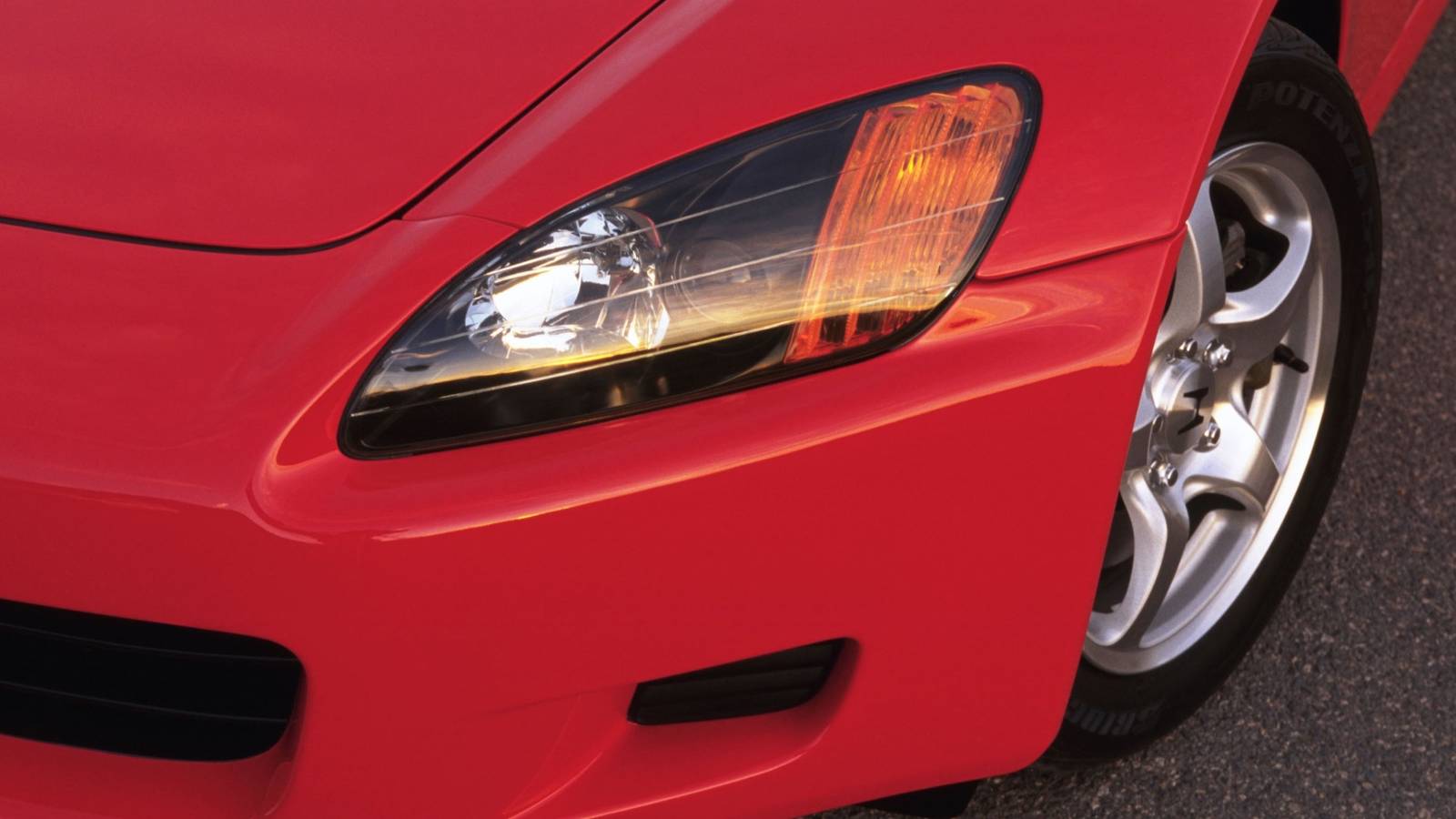
The Honda S2000 first graced the automotive world in 1999 as a commemorative 50th anniversary gift from the brand. Despite being more than 25 years old, it remains one of the few sports car examples that got the segment’s formula right on the very first go. This two-seater roadster embodied a pure and analog approach to the sports car segment, while drawing direct inspiration from Honda’s deep racing heritage.
Visually, its design centers around a unique High X-Bone frame that provides the structural rigidity of a closed-top coupe within an open-air body, combined with a front-mid engine layout that achieves a perfect 50:50 weight distribution for exceptional agility. Throughout its decade-long production run, Honda saw over 110,000 units sold globally. The model evolved through two distinct generations, namely the original AP1 and the more refined AP2. Today, the S2000 has achieved legendary status as a modern classic, thanks to its driver-centric cockpit and its reputation for bulletproof reliability.
The S2000’s Bulletproof Heart

The Honda S2000’s performance legacy is defined by the evolution of its high-revving, naturally aspirated four-cylinder engine, which evolved from the 2.0-liter F20C in the AP1 generation to the 2.2-liter F22C1 in the AP2. The original F20C produced 240 horsepower at 8,300 RPM and 153 pound-feet of torque. Honda limited the output for U.S. markets, while international regions got to enjoy the full 247-horsepower state-of-tune. Regardless of the output, the engine’s speed can reach as high as 9,000 RPM, earning it the record for the highest specific output of any naturally aspirated production engine for over a decade.
In 2004, Honda introduced the F22C1 for the North American market. This increased displacement via a longer stroke, which, while maintaining the same 240 horsepower output, but now with a lowered redline peak of 8,200 RPM to accommodate the increased piston travel. Thanks to the increased displacement, the engine’s torque output increased to 162 pound-feet. This decision improved the S2000’s 0 to 60 MPH acceleration time from 6.3 to 5.9 seconds.

Honda Will Sell You Parts For Your Classic JDM Gem
Honda remanufactures parts for its classics, like the NSX, and will for a long time to come.
It’s All About The Handling Experience

The Honda S2000’s chassis is based on the aforementioned High X-Bone monocoque frame. This design features a high-mounted central floor tunnel that acts as a primary structural backbone to provide coupe-like torsional rigidity in an open-top body. This platform utilizes an in-wheel four-wheel double-wishbone suspension system, which is a compact layout shared with the NSX. It features ductile iron arms and mono-tube shock absorbers to maintain a low hood line and a near-perfect 50:50 weight distribution.
Honda advanced the American-specification model’s suspension through three distinct factory configurations. The AP1 was known for its raw and twitchy characteristics, created by a stiffer rear setup that could induce snap-oversteer. The refreshed AP2 model introduced softer spring rates and revised the rear geometry to reduce bump steer and enhance stability. Honda also introduced a track-focused Club Racer variant, which introduced stiffer dampers, thicker stabilizer bars, and an additional rear body brace for maximum lateral rigidity.
Values Continue To Skyrocket

It’s no surprise that the Honda S2000 is a much-beloved modern classic roadster. According to the Edmunds consumer review portal, the S2000 holds an exceptionally high 4.8/5 owner review score, consisting of 48 unique reviews. When the Honda S2000 first debuted for the 2000 model year, it carried a competitive starting MSRP of $32,000, positioning it as a high-performance alternative to European roadsters. By the end of its production run in 2009, the base MSRP had risen to $35,645, while the track-oriented Club Racer variant pushed the final price tag to $38,445.
In the current 2026 U.S. used market, the S2000 has transitioned from a depreciating used car into a blue-chip collectible, with values varying significantly based on mileage and condition. Driver grade examples with 50,000 to 90,000 miles typically command between $28,000 and $36,000, while pristine, low-mileage collector units frequently fetch $65,000 to over $90,000 at enthusiast auctions. The rare CR models have seen the most dramatic appreciation, with well-preserved examples often exceeding $100,000.

Here’s Why The Honda S2000 Has Held Its Value So Well
This new millennium roadster is one of Honda’s best products and its increasing price reflects that.
Some Things That You Need To Look Out For

The Honda S2000 enjoys a sterling reputation for mechanical durability, though its high-strung nature necessitates a rigorous maintenance schedule centered on 7,500-mile oil changes. Enthusiasts typically shorten these intervals to 3,750. Common mechanical pain points include the timing chain tensioner, which can develop a card-in-spokes rattling noise, and the tendency for early AP1 models to consume oil more rapidly than the later AP2 variants.
Critical known issues include fragile valve retainers on pre-2004 models that are prone to cracking under over-rev conditions and rear brake calipers that can seize if the fluid isn’t flushed every three years. Throughout its lifespan, the S2000 was subject to some recalls, including a 2013 brake booster vacuum loss campaign and earlier safety recalls for seat belt retractors and tail light side markers. Despite these age-related nuances, the car is widely regarded as one of the most reliable performance platforms ever built, frequently surpassing 200,000 miles with original internals provided that the valve clearances are adjusted every 100,000 miles and fluid levels are meticulously monitored.
Sources: Kelley Blue Book, RepairPal, and Edmunds