
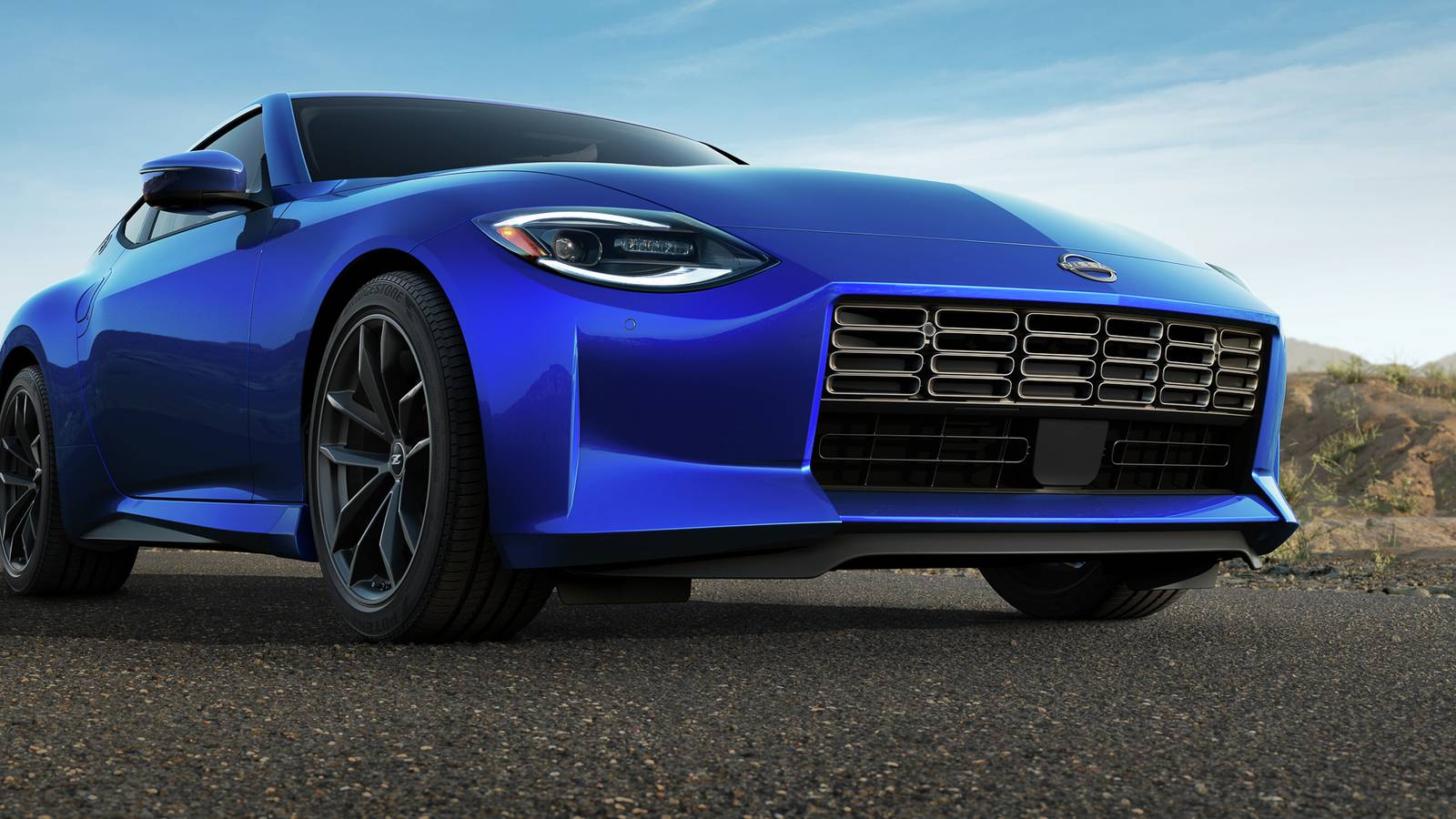
Nissan has a long and successful history of operations in the U.S., thanks to a consistent catalog of cars that has offered an array of practical and affordable daily commuters. In-between these models, the Japanese brand has always offered some form of an aspirational sports car. The Nissan Z is its mass market compact coupe, which has been an exclusively naturally aspirated option since the Z33-generation 350Z.
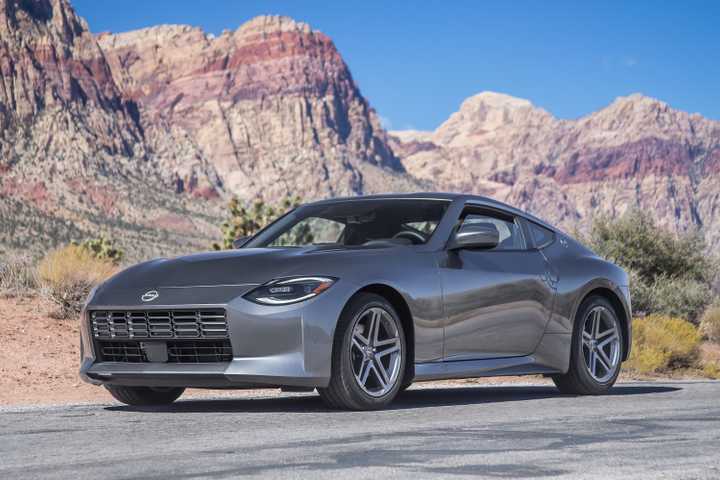

- Base Trim Engine
-
3L VR V6 ICE
- Base Trim Transmission
-
9-speed automatic
- Base Trim Drivetrain
-
Rear-Wheel Drive
- Base Trim Horsepower
-
400 HP @6400 RPM
- Base Trim Torque
-
350 lb.-ft. @ 1600 RPM
- Base Trim Fuel Economy (city/highway/combined)
-
19/28/22 MPG
- Make
-
Nissan
- Model
-
Z
- Segment
-
Sports Car
To introduce a better level of competitiveness to the market, Nissan opted to bring the twin-turbocharged heritage back to the Z with the current-generation model. It introduced this RZ34-generation model in 2023 as a revival of the Z’s twin-turbocharged passion, with a retro-inspired design to match.
The Nissan Z’s Impactful Presence In The U.S.

The 2026 Nissan Z is the spiritual heart of the Japanese brand’s American lineup. The sports coupe is positioned as a dedicated sports car, slotted beneath the legendary GT-R. The 2026 model is available in Sport, Performance, and a track-focused Nismo trim. This model year also notably includes the Heritage Edition, which pays homage to the iconic Z32-generation 300ZX, featuring Midnight Purple paint and retro Twin Turbo graphics.
In terms of market performance, the Z isn’t the most popular model in its catalog, but Nissan saw a significant resurgence in 2025 with 5,487 examples sold in the U.S. This performance reflects a 73.4 percent increase over 2024, outselling the likes of its biggest rival, the Toyota Supra. The Z is Nissan’s current halo car until the imminent arrival of the next-generation GT-R. The compact sports coupe preserves the soul of the brand during its shift toward electrification and maintains an accessible and authentic connection to Japanese tuning culture that few modern competitors match.
Almost Five Decades Of History

The Nissan Z’s history in the U.S. began in 1969 with the Datsun 240Z. This sharp-nosed coupe essentially upended the sports car market by offering European performance and exotic styling at a significantly more accessible price point of $3,500. Over seven generations, Nissan evolved this model from the lightweight S30 generation to the high-tech, twin-turbocharged Z32 300ZX of the 90s.
The Z adopts the FM platform introduced for the 350Z, followed by the 370Z. These two naturally aspirated sports cars kept the brand’s rear-wheel-drive flame alive through the 2000s. The 2026 model represents a noteworthy evolution by blending this deep heritage with modern performance. The only change that this model year introduces is a six-speed manual transmission to the range-topping Nismo trim.

The Japanese Sports Car That Got Away, And The One That Won Us Back Are From The Same Brand
While the GT-R may have gotten away, the Nissan Z has returned to remind us why Japanese sports cars still matter.
Putting Twin-Turbos To Good Use

Nissan applies its twin-turbocharged 3.0-liter V-6 engine to all current variations of the Z, but with varying power outputs depending on the performance tier. The standard Z, available in Sport and Performance trims, produces 400 horsepower and 350 pound-feet of torque. You can have this with a six-speed manual, featuring an Exedy high-performance clutch, or a nine-speed automatic. Manual models will hit 0 to 60 MPH in 4.3 seconds, while the automatic cuts this time down to 4.0 seconds. Expect a quarter-mile time anywhere between 12.3 and 12.8 seconds, depending on your transmission choice.
Opting for the 2026 Z Nismo model means that you’ll get to benefit from a 420-horsepower and 384-pound-feet of torque output. As mentioned, the 2026 model is available with either a manual or automatic transmission, the former of which benefits from bespoke software to better suit the increased output. This model benefits from a claimed 3.9-second 0 to 60 MPH acceleration time, which lets it clear the quarter-mile in 12.1 seconds depending on the surface and transmission. Nissan electronically limits all models to a 155 MPH top speed.
Passionate Engine Building

Nissan’s tried-and-tested VR30DDTT engine is a masterclass in modern lightweight engineering. The design features a high-strength aluminum-alloy block and heads that reduce front-end weight for better balance. To further optimize the V-6’s footprint, Nissan utilizes an integrated exhaust manifold cast directly into the cylinder heads, which brings the twin turbochargers closer to the combustion chambers for better responsiveness.
Nissan uses an arc-sprayed mirror coating on the cylinder bores, which is a linerless technology derived from the GT-R’s engine production. This creates a micro-thin, low-friction surface that improves thermal efficiency and durability. The induction system is equally sophisticated, employing twin water-to-air charge coolers to maintain stable intake temperatures and an electronic wastegate actuator for precise boost management. Nissan rounds this off with a continuously variable valve timing control system and high-pressure direct injection to achieve a broader power band while meeting modern efficiency standards without sacrificing its mechanical character.

Nissan Just Brought Back The Z We Didn’t Expect To See Again
The 90s are calling: Nissan’s latest Z edition pays homage to a legendary model.
Equipment To Support The Z’s Output

The Sport trim sits on a standard independent double-wishbone front and multi-link rear suspension, while the Performance and Heritage editions step up to a sport-tuned setup. These flagship trims feature 19-inch Rays forged-alloy wheels, and a mechanical limited-slip differential. Braking on the base Sport model consists of 12.6-inch front and 12.1-inch rear rotors, but the higher trims upgrade to Akebono four-piston front and two-piston rear calipers for enhanced thermal management.
The Nismo trim features a track-ready suspension with stiffer spring rates, larger-diameter shocks, and reinforced chassis bracing. Its footprint is maximized by wider 19-inch Nismo-specific Rays wheels wrapped in high-grip Dunlop SP Sport Maxx GT600 tires. The brand also upgrades stopping power with larger 15-inch front rotors. Summer performance tires are standard across the range.
A Driver-Focused Interior Experience

Nissan optimizes the Z’s driver-centric ergonomics by implementing some thoughtful design principles. It draws inspiration from the brand’s golden era of Japanese sports cars while integrating modern digital utility. The highlight of the cockpit is a 12.3-inch customizable digital dashboard. The brand developed this system with input from Super GT racing champion Tsugio Matsuda, who helped come up with the Sport mode display configuration. This reorients the tachometer, so the redline sits at the 12 o’clock position for high-performance shifting.
To maintain a tactile connection to the car’s heritage, Nissan applies a signature triple-pod analog gauge cluster on top of the dashboard. This provides real-time readouts for boost, turbine speed, and battery voltage. Material choices emphasize a premium yet functional feel, ranging from standard woven cloth to the leather and Alcantara sport seats found in the Performance trim, which feature anti-slip materials and padded knee bolsters to secure the driver during high-G cornering.
The Nismo model includes a pair of manually adjustable Recaro bucket seats, a red-anodized engine start button, and a GT-R-inspired steering wheel wrapped in Alcantara with a red 12 o’clock marker. Additional digital inclusions consist of a nine-inch touchscreen with wireless Apple CarPlay and an eight-speaker Bose Premium Audio system.

I Wanted To Buy A Nissan Z, But Nissan Doesn’t Make It Easy
The Nissan Z is a highly desirable car, but Nissan doesn’t make buying it an enjoyable ordeal.
Competitive Pricing For The Sports Car Segment

Nissan structures the 2026 Z’s pricing to be competitive for the segment, scaling the range from an accessible entry-level sports car to a premium track-ready machine. The entry-level Sport trim starts at a base MSRP of $42,970, providing a high-value entry point for the
sports car.
Moving up, the Performance trim is priced at $52,970. For enthusiasts seeking the retro-inspired aesthetics of the Heritage Edition, which is an add-on package for the Performance trim, the price increases to $55,910. The range is capped by the high-performance Nismo variant, which commands a base MSRP of $65,750. All of these prices exclude a mandatory $1,245 destination and handling fee.
What The Critics And Fans Have To Say

The Nissan Z is a niche sports car, which is why there are currently only eight reviews listed on the Edmunds consumer review section. The compact sports car sits with a 4.4/5 overall score, with its key strengths being its driving experience, visual appearance, and value. Some owners have pointed out that it falls short on offering comfortable seating, while others point out that the automatic transmission and fuel efficiency could be better.
iSeeCars doesn’t go in-depth with its valuation, but it indicates that the model will lose $12,044 or 28 percent of its value after five years of ownership. This is marginally worse than what the rest of the compact sports car segment experiences in the U.S., but it’s still pretty impressive compared to the 35 to 40 percent depreciation rates that some mainstream SUVs struggle with.