
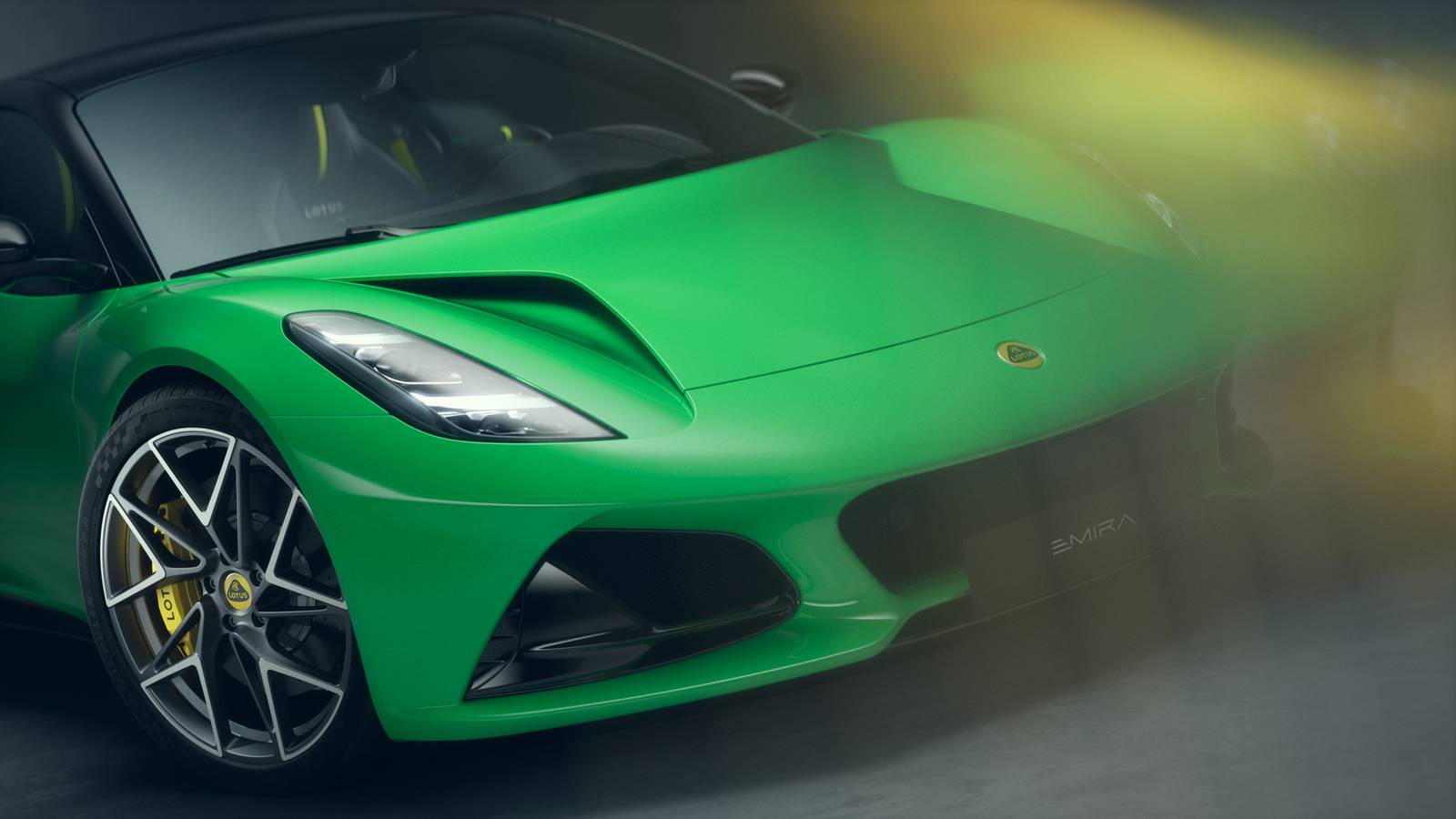
Certain manufacturers operate on the basis that their vehicles will always have a niche but loyal fan base. Though they aren’t pulling in record-breaking sales numbers, the heart and soul they pour into their cars will tap into the interest of a specific consumer. Sports cars could be considered niche in 2026 as a whole, but what if you went one step further than that? Sure, a BMW Z4 isn’t for everyone, but it still holds a popular and world-renowned badge that means it still could attract mainstream buyers who want their first true sports car.
Though many manufacturers that rely on more specialist vehicles are having to roll out SUVs to subsidize the risk of producing top-of-the-line sports cars, there is still a hunger that emanates from several companies to push the boundaries of speed and performance further in a modernized and efficient way.
The Importance Of A Lightweight Sports Car In 2026

Sports cars are one thing, but to set out to make one with the intention of being genuinely lightweight is becoming a thing that has nearly been relegated to the history books. To incorporate the necessary crash structures, reinforced pillars, and expected technology into vehicles is costly for a vehicle’s weight. However, that doesn’t mean some manufacturers won’t still be chasing the dream of being mechanically sensational and lightweight. No matter how much predictive technology and adaptive suspension systems you put into a car, it can never truly replicate the feeling of lower-weight vehicles.

For companies with lightness heavily embedded in the DNA of their vehicles, the pressure is on. Lotus, for example, continues to make impressive sports cars now, which strive to be lighter than the competition. But with safety regulations and the competition for horsepower and features dominating people’s needs, how can Lotus harness all of these modern amenities in a car that is faster and more economical than before, and still hold the title of a “lightweight” sports car?

This British sports coupe outruns a Mustang GT and is the world’s fastest four-cylinder-equipped sports car. More people should be talking about it.
The Lotus Emira Is The Final ICE Lotus Hurrah
Lotus has confirmed its move to electrification in the coming years, including all sports car models. This means it’s the final opportunity to buy a brand-new internal combustion Lotus sports car after a roughly 75-year history. Not only does this mean the end of gasoline-powered Lotus vehicles, but it also means the end of the traditional lightweight sports car.

Due to the considerable weight of batteries and motors, it’s likely the EV replacement will be considerably heavier than the current Emira. This creates another fundamental change in philosophy for Lotus, raising the question: What will Lotus truly signify in the era of electrification?
Reasons For The Lotus Emira Being So Niche
- Reliability concerns compared to Japanese rivals or Porsches
- Lacking any usable cargo space
- Difficulty in finding a Lotus dealership and limited access to service centers
- It is easy to get more horsepower from cheaper vehicles
For most people, a Lotus Emira, which primarily focuses on the sensation of driving and performance, is not a rational decision — even for those who are buying sports cars. Many people looking at sports cars now desire a vehicle that is easy to commute in and still be excellent fun on the weekend, like the fast and forgiving BMW Z4 or even a Porsche Cayman. The Lotus Emira is a car that focuses heavily on that dying combination of lightweight sports car and driver working in unison, and that simply doesn’t cater to most people’s needs in 2026.
The Final Stand Of The Iconic 3.5-liter V6 Toyota Engine

Lotus started using this engine for their 2010s generation of Lotus Exige S cars. While using a Toyota engine may seem like a shortcut, it was a powertrain with an incredible track record for immense reliability and tunability, meaning it was the perfect platform for Lotus to build from. Lotus paired this with a supercharger and still utilizes this combination for the Emira, providing instantaneous throttle response and an addictive whining soundtrack. This would prove to be an extremely punchy engine to combine with the Emira’s focus on weight shedding.
2026 Lotus Emira 3.5-Liter Supercharged V6 (Manual) Specifications
|
Transmission |
6-speed manual |
|
Horsepower |
400 |
|
Torque |
310 Ib-ft |
|
0-60 mph |
4.2 seconds |
|
Weight |
3,175 Ibs |
|
Top Speed |
180 |
There is no doubt that the 2026 Lotus Emira is heavier than its predecessors, but in the climate of 2026 sports cars, a vehicle under 3,200 pounds is still rather impressive (especially when packing a big V6 into the mix). There is also an automatic version, but this feels more at odds with the “man and machine” philosophy of the Emira.

The German Sports Car With Lexus-Level Reliability
Germany’s favorite sports car icon is built to last.
Why Do Owners Swear By The 2026 Lotus Emira?

Given that this is Lotus’s final stand in the world of lightweight, gasoline-powered sports cars, many owners of this car are not just fans of it but are becoming evangelists for it. Nothing about the Lotus Emira feels like it’s desperate to try to appeal to everyone – it simply feels like Lotus tried to make the very best car it could. While it hasn’t resulted in mass popularity, it’s also no wonder that owners swear by the Emira. Even the visual design of the vehicle is something to be truly admired. It’s not for everyone’s tastes, but it offers a true sense of hypercar in a sports car package.
More Reasons Owners Are Loving Their Lotus Emiras
- Exposed linkage for the manual gearbox gives a sense of engineering prowess
- A large displacement, supercharged engine, which feels beyond the scope of turbocharged competitors
- The interior is more premium than previous Lotus models
Some key features feel like an ode to mechanical engineering, which is simply not present in its competitors. One of the most essential aspects of this is keeping the hydraulic steering. This is becoming incredibly rare, as most vehicles now use electric power steering, which has often been criticized for numbing some of the true feel that a hydraulic rack can offer. Being able to feel the road surface and camber of the road through your fingertips is a sensory pleasure that almost all of its rivals simply can’t bring to the table anymore.

12 Affordable Alternatives To The Porsche 911 In 2026
These sports cars prove that you can still find the magic and thrill of a proper sports car for less than the price of a Porsche 911.
Lotus’s Lightweight Past, Present, And Future

Ever since the 1950s, engineer Colin Chapman has had a profound influence on Lotus’s story. It was around this time that the foundation of Lotus’s obsession with weight saving was established, and it would be one of the main reasons that they were able to win F1 championships. Pioneering the monocoque chassis allowed them to have a head start in extreme rigidity, a lower center of gravity, and immense lightness, which would go on to define their later years. Lotus would go on to perfect this lightweight prowess on the road in the 1990s and 2000s, showing what was possible with sub-250-horsepower in now-legendary cars like the Lotus Elise 190 and the Exige S240.

With the Emira’s internal combustion era coming to an end, Lotus has already given us insights into what is next for the brand with the incredible Lotus Evija. Being a 2,000-horsepower EV weighing in at 4,200 pounds, it is certainly a far cry from what we know and love about Lotus today. But if the company is able to make cars with this much punch whilst weighing 1,000 pounds less than Rimac’s comparable models, then we are in for an exciting future for Lotus.
Sources: Lotus