
When you think of reliable motorcycles, Honda leads the way. It has an army of bikes with decades of proven reliability, and yes, this applies to its track-ready sports bikes, too. Just take the CBR600RR, for example, which is known for its crazy reliability both on and off track, and even in Moto2. Riding dynamics, however, aren’t a super strong suit for Hondas.
That’s something we usually associate with Ducati bikes. Not many bikemakers come close to matching the riding feel of a Ducati, let alone beating them. The multiple MotoGP and WSBK titles prove the same. The question then is: can you find a sports bike that promises the best of both worlds? Something that stays mechanically reliable but also boasts top-spec equipment for cutting-edge riding dynamics? The answer is yes, and it’s a bike that’s only available in the US!

10 Most Practical Sports Bikes Of 2025
The level of practicality in some of the sports bikes in this list is insane. One is even without a clutch lever for better urban riding.
The Yamaha YZF-R1 Has Honda Reliability And Ducati-Level Handling
Price: $19,199

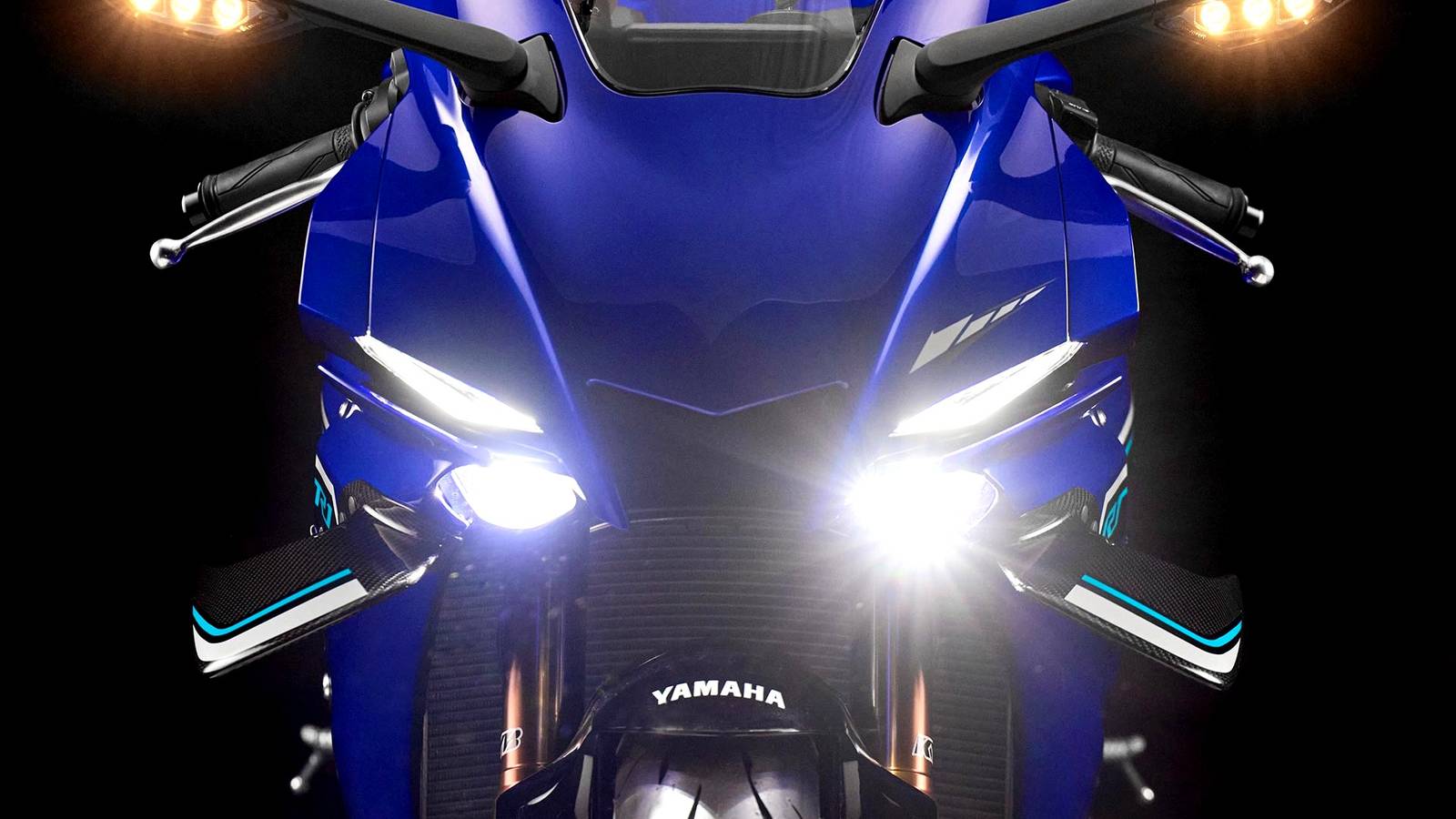
If you want Honda reliability and Ducati handling in a sports bike, we recommend you pick the Yamaha YZF-R1 M. The reasons are pretty simple. First, the crossplane inline-four engine is over a decade old with no major changes. That means its issues have been ironed out over the years, and if you do encounter something, finding a fix won’t be hard.
Plus, a quick read on ownership portals reveals several owners with thousands of miles on the CP4 R1 with basic maintenance. Yes, we’re aware that starting the bike can become an issue, but that’s fixable with a strong battery and not a reliability thing. Oh, and since Yamaha still sells the bike in the US (it’s discontinued overseas), you still get full factory warranty support.

As for handling, this has always been the R1’s strong suit. And with the latest update (again, only in the US), you get new KYB 43 mm USD forks and a monoshock. While both ends have adjustability, the forks now have separate adjustments for rebound and compression (more on that in a bit). That is actually more premium than the base Panigale V4. Both bikes weigh the same fully fueled, too (around 448 pounds).

While the R1 gets our vote, there are other bikes you can eye. The Aprilia RSV4 1100 deserves a shout because it’s the only other V4 on the market, and it’s proven cheaper to maintain over the years than the Ducati if you keep it running like it likes to be run. Having ridden the RSV4, we can also confirm it handles better in the corners. But with its latest update, we’re not sure how the 220-HP version will perform.

The BMW S 1000 RR also comes to mind. It has proven to be adequately reliable, and BMW’s support is quite strong all over the world. The base MSRP is quite strong, too. But the RR feels comparatively simple in base form. It also focuses on being better on the road, which does come with minor handling compromises on track. The price also rises steeply if you pick anything other than the base variant.
The Yamaha YZF-R1’s Engine Platform Has Aged Like Fine Wine

Diving deeper, the Yamaha YZF-R1’s mechanical reliability is thanks to the CP4 engine. This first debuted 16 years ago in 2009, while the current spec traces back to 2015. So what you’re getting here is a decade-old platform, proven not just on the road but also on several world racing platforms. Reddit and ownership portals have plenty of owners with well over 20,000 miles running just fine with basic maintenance.

10 Yamaha Motorcycles That Feel Fast Without Being Intimidating
For those relatively new to riding and looking to upgrade, it is well worth considering one of these Yamahas
The Output Is Close To 200 Horsepower

As for the engine details, this is a 998cc inline-four engine with liquid cooling. A 270-180-90-180 firing order for the four cylinders makes the mill stand out from regular inline-four engines. It’s also the reason for the characteristic rumbling exhaust note and a linear torque curve. That, along with bits like finger-follower rocker arms, titanium con rods, and titanium exhaust, results in an output of 197 horsepower and 83 pound-feet.
A Proven Deltabox Chassis And New KYB Suspension Ensure Razor-Sharp Riding Dynamics
The mill sits inside Yamaha’s staple aluminum deltabox chassis. A magnesium subframe and aluminum swingarm play the sidekicks. While these haven’t changed in a few years, the suspension has undergone a recent overhaul. The KYB 43 mm USD forks can now be adjusted separately. The right side handles high and low-speed rebound control, whereas the left side controls help with high and low-speed compression damping.
Likewise, the rear monoshock is fully adjustable. A shoutout goes to the updated braking package, too. The latest iteration ditches the Yamaha-branded calipers and now has Brembo Stylema monoblocs up top. These work in tandem with a Brembo master cylinder to boost braking performance.
The R1M Unlocks Electronic Ohlins Suspension

If you want even more Ducati flavor, Yamaha sells an upgraded YZF-R1M. Like the Panigale V4 and V4 S, the key point of difference here is the suspension. The M ditches the KYB in favor of Ohlins NPX forks and a TTX monoshock. Both have electronic adjustment via the Smart EC2.0 technology. The price difference is almost $8,000 between the R1 and R1M, though.
The YZF-R1 Keeps You Safe With An Army Of Rider Aids


The Yamaha Adventure Bike That Americans Will Crave In 2026
While we get several ADVs in the US, this forbidden fruit from Yamaha will give you daydreams
When you enjoy the riding dynamics, you’ll appreciate the array of rider aids that keep you safe. A six-axis IMU enables lean-sensitive ABS, traction control, front lift control (aka wheelie control), and even slide control. In addition, Yamaha has thrown in four power modes, two-mode brake control, three-mode engine braking management, adjustable launch control, and a two-way quickshifter. The only gripe is the now age-old TFT instrument cluster. You’ll find it puny to look at side-by-side with the Panigale V4’s gigantic screen.