
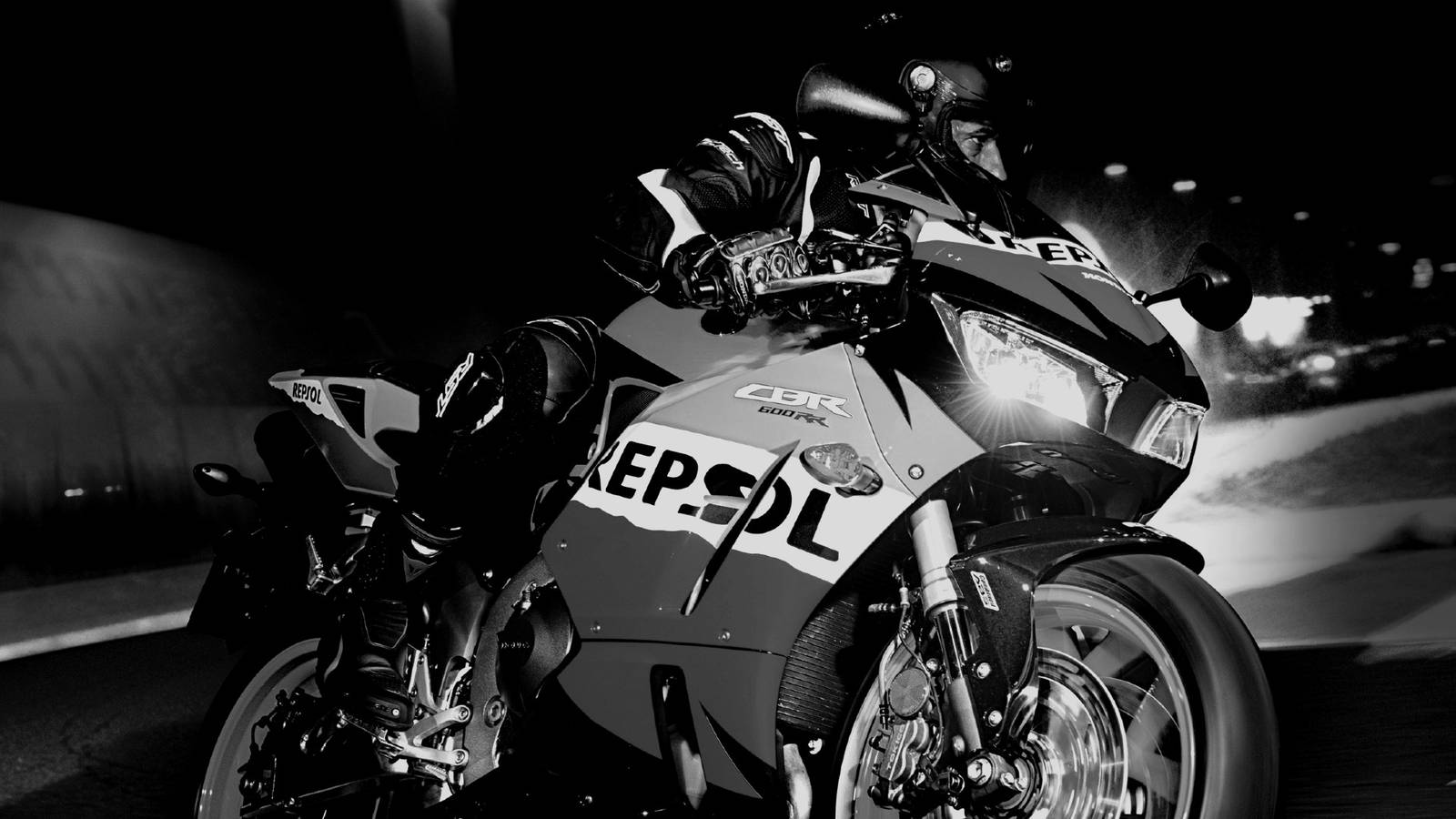
A sports bike isn’t just about going fast in a straight line. It’s a very specific kind of machine built around the idea of speed, precision, and control working together. From the aggressive riding position to the fully faired bodywork, everything is designed to make the rider part of the machine, not just someone sitting on top of it. You’re tucked in, weight forward, eyes locked on the road ahead. It’s a setup that rewards focus and punishes laziness.
Sports Bikes Are Built For Speed, Precision, And Control

At their core, sports bikes are engineered around performance first, and you can feel that the moment you throw a leg over. Everything is built with intent. The frame is typically a lightweight aluminum twin-spar design for rigidity and feedback, the fairings are shaped to cut through the air and keep the bike stable at speed, and the engine is tuned to deliver most of its power high up in the rev range where it matters most. Even the geometry, from rake and trail to wheelbase, is set up to favor sharp turn-in and precise cornering over straight-line comfort.

10 Fast And Small Sports Bikes To Kickstart Your 2025 Riding Goals
This list ranges from frugal 25-horsepower urban runabouts to 50+ horsepower track-ready “civilized” monsters
Why Japanese Sports Bikes Earned A Bulletproof Reputation

Japanese manufacturers didn’t just build fast bikes. They built fast bikes that could survive real-world use, day in and day out. Over decades, brands like Honda refined their engineering processes to a level where reliability became just as important as outright performance. That meant tighter manufacturing tolerances, better material quality, and a development approach rooted in long-term durability, not just short-term gains on a spec sheet.
Engineering Consistency Over Decades

Instead of constantly reinventing the wheel, Japanese manufacturers focused on refining proven platforms. Each new generation built on what already worked, dialing in better materials, tighter tolerances, and stronger overall durability. It’s a slower, more methodical approach, but it results in machines that feel cohesive and well-sorted rather than rushed or experimental. Honda, in particular, leaned heavily into this philosophy. Rather than chasing headline-grabbing numbers, Honda focused on balance, usability, and long-term reliability.
The Honda CBR600RR Was Built In An Era When Supersports Meant Everything

The Honda CBR600RR arrived during what many consider the golden age of supersport motorcycles, when the 600cc class was at its absolute peak. Manufacturers were locked in a tight arms race, each trying to outdo the other with sharper handling, higher rev ceilings, and more aggressive performance. The result was a wave of bikes that pushed technology forward at a rapid pace, many of which are still respected today.
Honda’s approach with the CBR600RR stood out because it wasn’t chasing extremes for the sake of headlines. Instead of building the most aggressive or intimidating machine in the class, it focused on creating a bike that did everything well. It blended performance, balance, and usability in a way that made it approachable without sacrificing capability, and that’s a big reason why it has aged so gracefully.
The Golden Age Of 600cc Supersports

Back in the early 2000s, the 600cc class was where innovation really took off. These bikes struck a sweet spot that made them lighter, sharper, and more approachable than liter bikes, but still seriously quick when ridden properly. With engines hovering around 599cc and pushing well over 100 horsepower, they delivered strong performance without the intimidating surge of bigger machines, allowing riders to stay in the powerband longer and ride closer to the bike’s limits.
Honda’s Precision-Over-Chaos Philosophy In The CBR600RR

*EU model CBR600RR shown
While some rivals leaned into outright aggression, Honda took a more measured approach with the Honda CBR600RR. The bike was tuned for predictability and control, prioritizing smooth throttle response, stable chassis behavior, and a front end that communicated clearly with the rider. It wasn’t the most explosive machine in the class, but it was one of the easiest to ride quickly and confidently, especially when the pace picked up.

10 Most Overlooked Sports Bikes That Will Last A Lifetime
In the world of sports bikes, reliability is not always a priority, and that is why these motorcycles continue to get overlooked
The 600cc Engine That Refuses To Quit

At the heart of the Honda CBR600RR is a 599cc liquid-cooled inline-four engine that perfectly captures what a supersport is all about. It’s compact and tightly packaged within the frame, allowing for centralized mass and sharper handling, while its oversquare design lets it spin freely deep into the rev range. Output sits comfortably at about 119 horsepower, but the real story isn’t just the number, it’s how the engine delivers it.
|
Engine |
599cc liquid-cooled inline-four, DOHC, 16-valve |
|
Output |
119 horsepower @ 14,250rpm | 46.5pound-feet torque @ 11,500rpm |
|
Transmission |
6-speed manual with assist & slipper clutch |
|
Drive Layout |
Chain drive |
Proven Reliability Across Generations

Honda’s engineering shines here. The internals are robust, and the overall design is built to handle sustained high-rev use. With proper maintenance, these engines can last for years without major issues. That’s why the CBR600RR has become known as one of the most reliable bikes in its class. It’s not just fast. It’s durable.
Engineering That Aged Better Than It Had Any Right To

Even years after its initial release, the Honda CBR600RR still feels relevant in a way few supersports can match. A big part of that comes down to how well its core engineering was executed from day one. The fundamentals, from its compact inline-four to its balanced chassis and predictable handling, were already so well sorted that they didn’t need constant reinvention to stay competitive.
Chassis Balance That Still Holds Up Today

The twin-spar aluminum frame gives the bike a strong and stable foundation. It’s light enough to feel agile, but solid enough to inspire confidence at speed. Handling is neutral and predictable, which makes the bike approachable for a wide range of riders. Whether you’re carving corners or pushing on track, it responds exactly how you expect.
Fully adjustable suspension on the Honda CBR600RR allows riders to fine-tune the bike to suit their riding style and conditions. With a 41mm Showa Big Piston Fork up front and a monoshock at the rear, both offering full adjustability, the setup strikes a sweet spot between track-ready stiffness and real-world usability. Braking performance is equally dialed in. Dual 310mm front discs with radial-mounted four-piston calipers deliver strong, consistent stopping power, while the rear 220mm disc adds stability and control.
|
Chassis |
Aluminum twin-spar frame |
|
Suspension |
Front: 41mm Showa Big Piston Fork, fully adjustable | Rear: Unit Pro-Link monoshock, fully adjustable |
|
Brakes |
Front: Dual 310mm discs, radial-mounted four-piston calipers | Rear: Single 220mm disc, ABS |

The Affordable Honda Sports Bike That’s Perfect For A First-Time Buyer
This is also the most affordable twin-cylinder Honda sports bike
How The Honda CBR600RR Stays Relevant Today
Despite being rooted in an earlier era, the Honda CBR600RR hasn’t been left behind. Honda has updated it just enough to keep it competitive without compromising what made it special in the first place. The core formula remains intact, a lightweight chassis, a high-revving inline-four, and a rider-focused setup, but it’s been subtly refined to meet modern expectations.
It still feels like a proper supersport, just with a few well-integrated updates. Features like ride-by-wire throttle, selectable riding modes, traction control, and ABS add a layer of adaptability and safety without dulling the experience. The result is a bike that feels familiar to purists, yet modern enough to hold its own in today’s lineup.

10 Sports Bikes That Are Surprisingly Comfortable
Discover how these 10 sports bikes redefine comfort with their ergonomic design and smooth engines, making them perfect for regular riding.
Why The Honda CBR600RR Lasts Longer Than Most Riders Expect

There’s a reason why so many Honda CBR600RRs are still on the road today, and it goes beyond nostalgia. What you’re seeing is the result of solid engineering and long-term durability baked into the bike from the start. These machines weren’t just built to impress when new; they were designed to keep performing year after year with proper care.
Bulletproof Reputation In The Real World

Owners consistently report high mileage with minimal issues on the Honda CBR600RR, and that kind of feedback doesn’t happen by accident. Regular maintenance definitely plays a role, but the bike itself does most of the heavy lifting thanks to its robust design and well-engineered components. From engine internals to the aluminum chassis and supporting hardware, everything is built with longevity in mind. It’s the kind of bike that doesn’t just survive years of use, it continues to perform as intended, which is exactly why so many examples are still out there being ridden hard today.
Survives Both Track Abuse And Daily Riding
Few bikes can handle both extremes as well as the Honda CBR600RR. It’s just as at home ripping laps on a circuit as it is dealing with the occasional street ride, and that duality is a big part of its appeal. You’re not forced to keep it in one environment for it to make sense, it works across different riding scenarios without feeling out of place. That versatility plays a big role in its long lifespan. Because it isn’t a one-trick machine, it tends to get used more often and in more ways, which keeps owners engaged with it over time. It adapts to the rider’s needs, whether that means pushing hard on track or simply enjoying a quick ride on the road.
Alternatives That Try To Do The Same Thing

The 600cc supersport segment has always been fiercely competitive, and the Honda CBR600RR has never existed in a vacuum. From the start, it’s gone head-to-head with some of the most focused and capable middleweight sportbikes on the market, each bringing its own take on performance, handling, and rider engagement.
Yamaha YZF-R6

The Yamaha YZF-R6 is sharper and more aggressive, especially when ridden at pace on track. It’s tuned to be highly responsive, with a more demanding riding position and a powerband that really comes alive high in the rev range. That intensity means it asks more from the rider, but it gives a lot back in return. When ridden properly, the R6 delivers incredible performance, with razor-sharp handling and a level of focus that makes it one of the most track-capable bikes in the class.
Kawasaki ZX-6R

The Kawasaki Ninja ZX-6R offers a broader, more usable powerband, thanks in part to its slightly larger 636cc displacement. That extra capacity gives it more midrange punch, making it easier to ride in everyday conditions without constantly chasing high rpm. Because of that, it tends to feel more forgiving on the street while still retaining strong track capability.
Suzuki GSX-R600

The Suzuki GSX-R600 sticks to a simpler, more traditional formula. It’s lightweight, straightforward, and focuses on delivering a pure riding experience without relying heavily on modern electronics or constant updates. That simplicity is part of its charm, especially for riders who prefer a more direct, mechanical connection to the bike. Its proven platform, predictable handling, and strong top-end performance still make it relevant, particularly for riders who value feel and familiarity over the latest tech.

The Budget Inline-Four That Still Delivers Big Performance
This Kawasaki delivers 125 horsepower and inline-four thrills at a budget-friendly $9,999 starting price.
The CBR600RR Holds Its Value Well

*EU model CBR600RR shown
With an MSRP starting at $11,499, the Honda CBR600RR remains competitively priced for a modern supersport. It sits in that sweet spot where you’re not just paying for performance, but for a platform that’s been proven over years of real-world use. That kind of value is hard to ignore. It’s a bike that delivers where it matters most, with fewer unknowns and fewer compromises. For many riders, that peace of mind is just as important as outright performance.
Even Older Models Still Carry Their Value
Used Honda CBR600RRs continue to command strong prices, especially well-maintained examples. Buyers know exactly what they’re getting: a proven platform with a reputation for durability and performance, and that confidence keeps resale values consistently high across different model years. Many owners hold onto theirs for years, not because they have to, but because there’s very little reason to let it go. And in some cases, it ends up outlasting its owner, continuing on with the next rider who already knows exactly what makes it special.
Source: Honda Powersports