
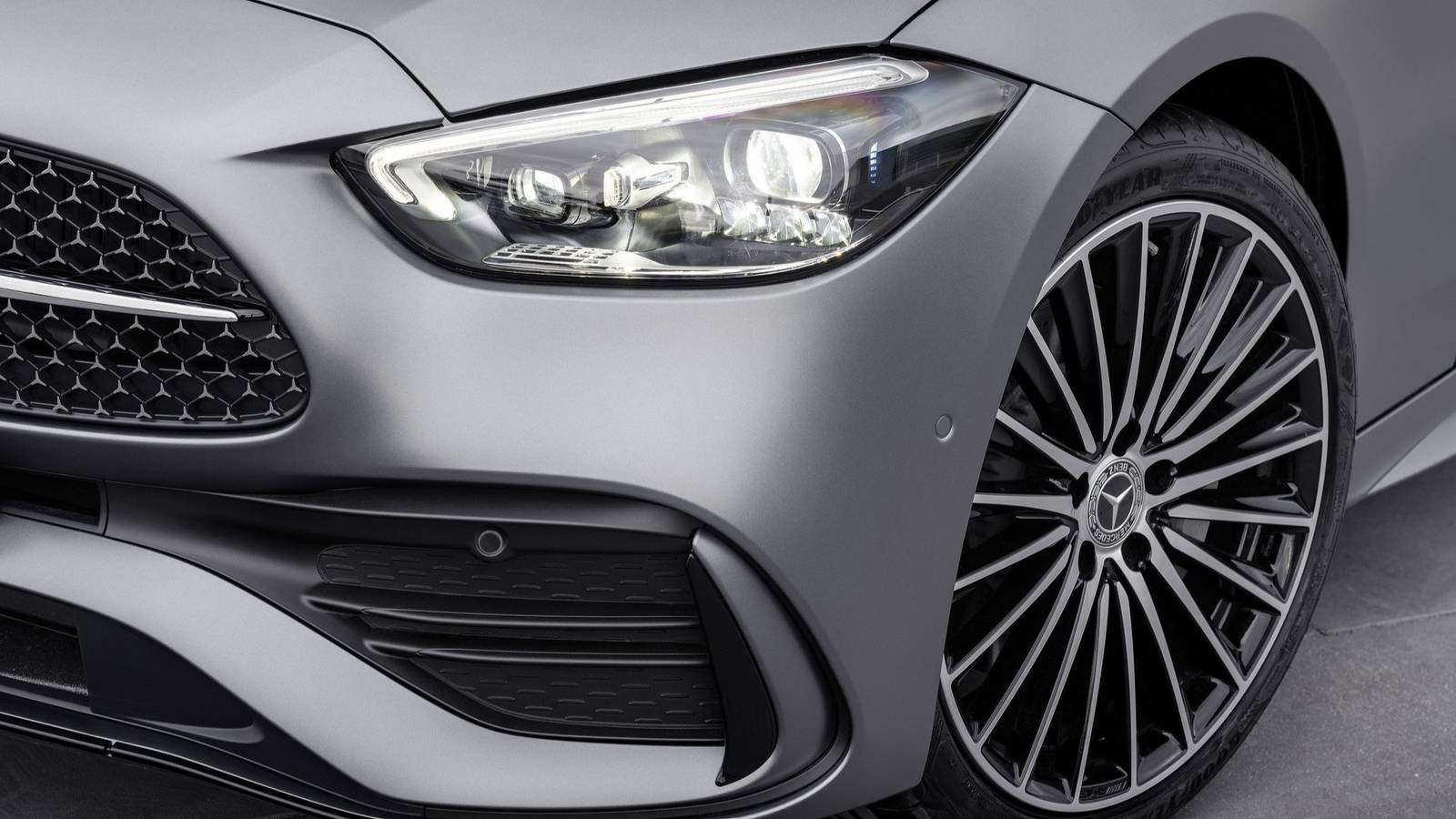
Luxury cars in 2026 are expected to be less popular than in previous years, because of declining affordability. Although demand is niche, wealthier consumers expect their cars to deliver unparalleled luxury and practicality. The gradually reducing demand means that competition in the segment has become a lot more aggressive, resulting in some formerly popular models falling into obscurity on dealership lots.
Crossovers in the premium and luxury segments also continue to command stronger demand, further relegating their sedan counterparts to the opposite end of the quarterly sales charts. If you prefer lower-riding premium sedansthat still excel at providing impressive practicality, there’s one highly underrated German sedan that perfectly suits this need.
How Brands Have Reshaped Compact Luxury

Over the last five years, the U.S. luxury sedan market has faced a sustained uphill battle as consumer preference continues to shift toward SUVs, which now command nearly 60 percent of the luxury segment. While overall new car sales for traditional three-box designs have experienced a relative decline compared to their high-riding counterparts, luxury sedans have successfully stabilized as a high-margin niche by pivoting toward advanced electrification and superior comfort.
The primary difficulty remains a perceived lack of versatility in cargo space and ride height, yet sedans maintain a distinct edge in driving elegance due to their lower center of gravity, which provides sharper handling and a more composed, quiet cabin experience that many top-tier SUVs still struggle to replicate. These vehicles also remain relevant by offering a more aerodynamic and fuel-efficient alternative to bulky crossovers, effectively balancing executive-level prestige with the practical benefits of lower ownership costs and a more engaging driver-centric experience.
Mercedes-Benz Remains Committed To Sedans

Mercedes-Benz is currently navigating a double-sided product strategy in the U.S. that balances a heavy pivot toward high-margin SUVs with a steadfast commitment to its heritage-rich sedan portfolio. While the brand expects utility vehicles to comprise approximately 55 percent of its sales by the end of the decade, it continues to treat its core four-door models as the primary value benchmark and technological laboratories for the entire lineup.
This focus is evident in the brand’s 2026 product-expansion push, which prioritizes significant mid-cycle refreshes and next-generation architectures for its flagship and executive sedans. This direction ensures its products remain the ultimate expressions of aerodynamics and digital innovation. In terms of sales performance, Mercedes-Benz has maintained a relatively stable volume in the U.S. over the last five years, hovering around 300,000 to 350,000 annual deliveries.
This is despite global supply chain fluctuations and shifting market dynamics. Although recent years have seen a slight cooling in overall volume due to strategic stock management and a competitive shift toward electrification, the brand has successfully bolstered its market position by focusing on top-end luxury, where high-performance variants and ultra-luxury sub-brands have reached record-breaking sales levels. This strategy effectively offsets the broader industry-wide decline in traditional sedan demand.

How The C-Class Masters Luxury And Practicality

The 2026 Mercedes-Benz C-Class offers a well-balanced cabin with 40 inches of front headroom and 37.5 inches of rear headroom, complemented by 41.7 inches of front legroom and a competitive 36 inches in the rear. While its 11.6 cubic feet of trunk space is functional, it trails slightly behind the 2026 BMW 3 Series, which leads the segment with a more generous 16.9 cubic feet of cargo volume and offers comparable passenger space, including 38.7 inches of front headroom and 35.2 inches of rear legroom.
The 2026 Audi A5, which has transitioned to a fastback-style sedan that replaces the previous A4, provides a unique advantage with its hatchback-style opening and a massive 22.6 cubic feet of cargo capacity with the seats in place. In terms of passenger comfort, the Audi A5 offers 40 inches of front headroom and 41.3 inches of front legroom, but its sloping roofline results in a slightly more compact 37.2 inches of rear headroom, making the C-Class the more traditional choice for those prioritizing rear-seat vertical space over the Audi’s superior cargo versatility.
Outclassing Its Rivals In Luxury

The 2026 Mercedes-Benz C-Class emphasizes a digital-focused luxury experience, centering its cabin around a standard 12.3-inch digital instrument cluster and an 11.9-inch portrait-oriented central touchscreen. This operating system utilizes the latest MBUX software with biometric fingerprint authentication and voice assistance. Standard comfort features include heated power front seats with four-way lumbar support and memory settings, dual-zone automatic climate control, and 64-color LED ambient lighting that traces the dashboard and door panels.
If you’re seeking higher-tier convenience, the Exclusive and Pinnacle trims introduce a 15-speaker Burmester 3D Surround Sound system with Dolby Atmos, a head-up display, and a 360-degree surround-view camera. The interior’s luxury status is further accentuated by durable MB-Tex synthetic leather, which you can upgrade to Nappa leather and natural grain woods like walnut. There’s also a new Black Fine Structure finish for the center console.

Find Out Which Mercedes Class Perfectly Fits Your Driving Lifestyle
The best Mercedes-Benz SUVs and sedans and who they’re best suited for.
Comfort Remains A Design Priority

The 2026 Mercedes-Benz C-Class is built on the brand’s advanced MRA2 platform, which consists of a four-link setup at the front and a five-arm multilink arrangement at the rear. To bridge the gap between executive comfort and daily utility, the Mercedes-Benz includes its Agility Control selective damping as standard. This mechanically adjusts shock absorber firmness based on road input, softening for rough pavement while firming up during spirited maneuvers.
The optional Airmatic air suspension replaces traditional coil springs with air bellows, allowing for real-time electronic leveling and driver-adjustable ride heights that can soak up road imperfections more effectively than the base setup. The car’s stance and secondary ride quality are further defined by a wide variety of wheel options, starting with standard 18-inch five-spoke alloys designed for optimal sidewall cushioning, and extending to 19-inch AMG multispoke designs that offer a sharper aesthetic and more direct road feel without significantly compromising the suspension’s focus on long-distance composure.
Owner Satisfaction Scores Could Be Better

When it comes to the C-Class’s reputation among owners, it’s clear that the brand has a lot of room for improvement. It currently holds a 3.8/5 average score, with reliability and manufacturing quality, engine performance, and the infotainment system garnering the most criticism. On the plus side, this model gets a lot of praise for its comfort levels, interior space, and value.
J.D. Power gives the 2026 model year an 81/100 consumer-verified overall score, which includes 84/100 for quality and reliability, 82/100 for the driving experience, 77/100 for resale, and 79/100 for the dealership experience. The same model year earns an 8.3/10 overall score from iSeeCars, which includes 7.2/10 for reliability, 7.6/10 for retained value, and 10/10 for safety.

The Mercedes-AMG That Could Become A Used Bargain
This AMG’s swap from its iconic V-8 to a four-cylinder hybrid could potentially cause it to lose value more quickly in the coming years.
A Punchy Downsized Engine

The 2026 Mercedes-Benz C300 features a turbocharged 2.0-liter four-cylinder engine paired with a 48-volt mild-hybrid system and an integrated starter-generator. The German brand sets the state-of-tune for this unit at 255 horsepower at 5,800 RPM and 295 pound-feet of torque between 2,000 and 3,200 RPM.
This powertrain is mated to a 9G-Tronic nine-speed automatic transmission, which drives your choice of the rear or all four wheels via the 4Matic system. In terms of performance, the rear-wheel-drive C300 typically achieves a 0 to 60 MPH sprint in approximately 6.0 seconds, regardless of the drivetrain due to the added traction offsetting its slight increase in curb weight. Both configurations are electronically limited to a top speed of 130 MPH when equipped with standard all-season tires.
Reasonable Consumption Estimates For A Luxury Sedan

When looking at efficiency, the 2026 Mercedes-Benz C300 performs fairly well by the EPA’s standards. The rear-wheel drive model earns a 25/35/29 MPG consumption estimate on the city/highway/combined cycle, while covering 505 miles on a single 17.4-gallon tank. With these results, the EPA estimates that you’ll see yourself spending $1,250 more on fuel over the course of five years compared to the average new vehicle sold in the U.S. This equates to you having to spend $2,400 on fuel every year, $3.97 to drive 25 miles, and $80 to fill the tank up.
If you upgrade to the 4Matic all-wheel drive system, the consumption estimate changes to 24/33/27 MPG, while cutting range down to 470 miles. You’ll spend $2,000 more on fuel over five years, $2,550 on fuel every year, and $4.27 to drive 25 miles.
Sources: J.D. Power, iSeeCars, Edmunds, and EPA.