
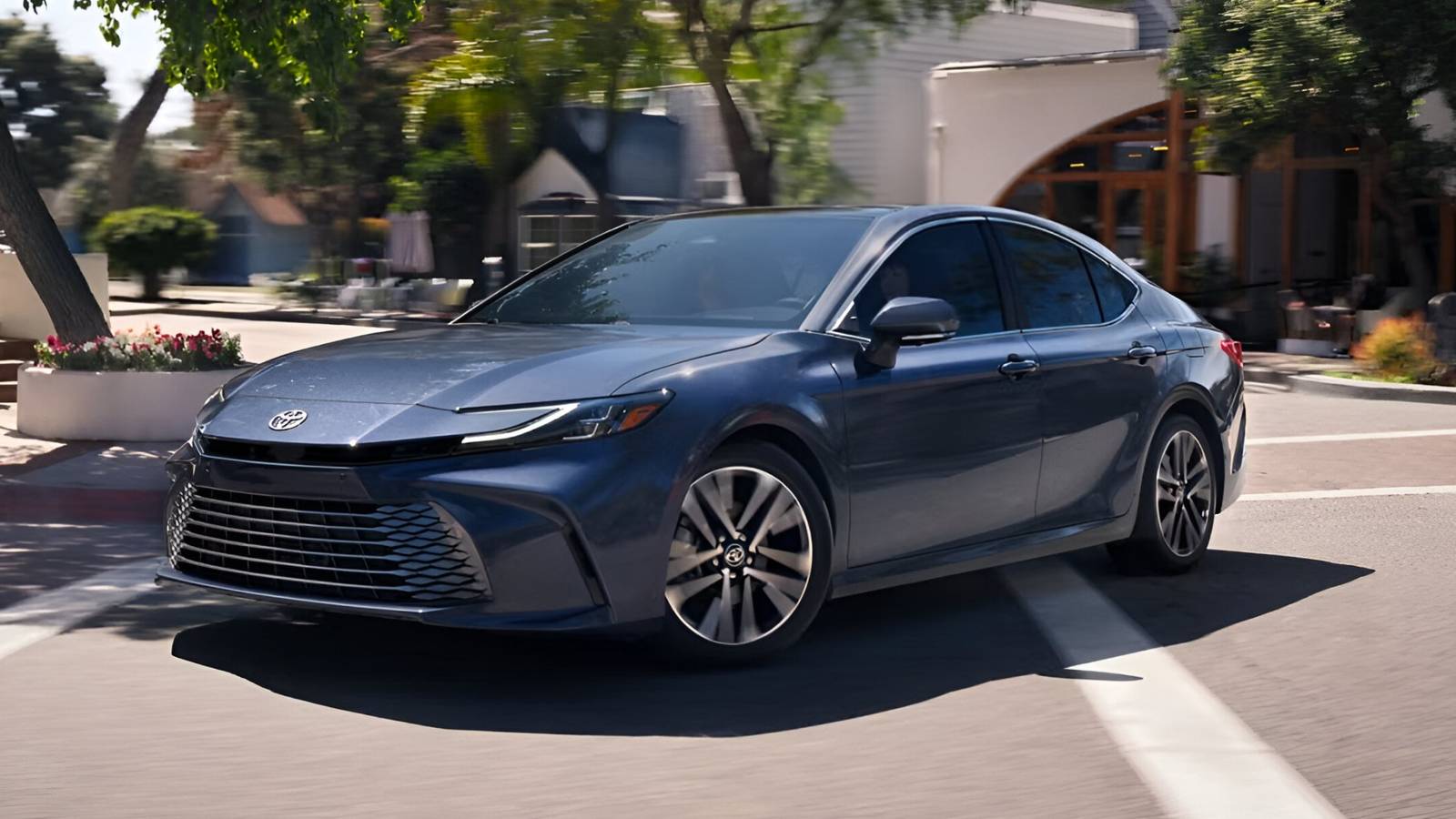
We all know the Toyota Camry as one of the go-to sedans for low starting prices, well-equipped cabins, comfort, reliability, and long lives, and the 2026 model doesn’t look to be any different on the face of things. Starting prices for the 2026 Toyota Camry are low at under $30,000; there is just one engine option, but it is a fuel-sipping hybrid inline-four; it comes equipped with the Toyota Safety Sense 3.0 safety suite, and it has already been rated highly by owners for reliability.
The Camry yet again looks like it is setting the standard for affordable and useful sedans in the U.S., and we can see why so many are predicted to sell. However, there are some hidden costs you should know about, which could make the 2026 Toyota Camry more expensive than it may first seem.
What You’ll Pay Up Front For A 2026 Toyota Camry

The MSRP for the new Toyota Camry is a square $29,000, which, for a mid-sized sedan that ticks a lot of boxes, is a good deal. There are five trims available this year, with the highest MSRP still sitting at a reasonably affordable $35,200. The 2026 Camry lineup and MSRPs are as follows:
- 2026 Toyota Camry LE. MSRP: $29,000
- 2026 Toyota Camry SE. MSRP: $31,300
- 2026 Toyota Camry Nightshade. MSRP: $32,300
- 2026 Toyota Camry XLE. MSRP: $34,000
- 2026 Toyota Camry XSE. MSRP: $35,200
It is worth knowing, though, that while the MSRPs or sticker prices of the 2026 Toyota Camry look enticing, it is highly unlikely this is what you are going to actually pay for one. Unless you are a master negotiator, the actual out-the-door (OTD) is going to be somewhat higher.
Sticker Price vs. The Real Out-The-Door Cost

The OTD price of a new car is the ‘all-in’ price from the dealer, while the sticker price is what you’ll see when you are walking around a showroom (the lower price). The OTD price for a new Camry will include the destination fee and delivery fee (which Toyota applies nationwide), state and local taxes, which, depending on where you live, can really ramp the price up, and then you’ve got title, registration, processing, and licensing fees. Plus, you also need to take into consideration current market conditions, how much individual dealers mark up their prices, and how in-demand the model is, all of which can drive the price up a lot higher than the price you see when you walk into a dealership.
For example, owners of a new Camry in Texas have reported being offered an OTD between $29,000 and $30,000 for the base-level Camry, but ended up paying in the mid-$30K mark after these hidden fees; owners in California, who are subject to typically higher taxation and high registration costs, have reported paying up to $38,000 for the SE trim, and an owner in the South East was quoted $40,000 for a Camry SE, but got the price down to around $32,000 after negotiation.
Taxes, Fees, And Dealer Charges That Add Up Fast

Some of the most wallet-busting charges that are going to be piled on top of the sticker price for a 2026 Toyota Camry are dealer charges and taxes. These are unfortunately unavoidable and contribute a huge amount to the OTD price, and explain why two identical new Camrys can cost vastly different amounts on different sides of the country.
In most places, sales tax plays the biggest part in bumping up the price, but again, how much you pay will depend on where you live. If you live in California, you can expect to pay 9–10% of the sale price in taxes, potentially adding another $3,000 to the bill before driving away, but on the other hand, if you live in Oregon or New Hampshire, you won’t pay any sales tax.
Title fees, legal transfer fees, and registration fees can see you pay up to around $700 on top, but, of course, this could be more; you’ll have to pay dealer documentation fees for the dealership preparing the contracts and submitting paperwork, which can cost up to $1,000 in some states, and you may also be liable to pay for electronic filing fees, temporary tag fees, and state-mandated charges for environmental fees and tire recycling.
As an example, below is a breakdown of the OTD price with fees for buying a 2026 Toyota Camry LE in California.
- Base Price. $29,000.
- Destination & Delivery Fee. $1,075 (standard across all states).
- Sales Tax. State Tax: 7.25% + Approx. Local Tax: 2.25% = 9.5% of $30,075 ($2,857).
- Title Fee. $15.
- Registration Fee. Approximately $200.
- Smog/Environmental Fee. $20.
- Dealer Documentation Fee. $85 (capped).
- Misc. Fee. $50.
The total with all fees and charges is $33,302, or $4,300 more than the sticker price.
The Ongoing Costs Of Owning A 2026 Toyota Camry

Owning a 2026 Camry is more than just the purchase price; beyond what you fork out for one, you also have to think about how you are paying for it, insurance premiums, and dealer add-ons. All of these things can make the typically low ownership costs associated with the Camry fairly pricey.
Financing Traps, Loan Fees, And Insurance Extras

If you are looking at paying monthly instead of cash for a 2026 Camry, finding a deal with low monthly payments is likely to be your priority. However, without fully understanding how loan structure, fees, and interest rates work properly, you could end up paying more for a new Camry. For example, financing a $29,000 Camry LE over 72 months at six-percent interest results in roughly $4,750 in interest compared with $3,200 if the same loan is 60 months. Stretching the term reduces the monthly payment, but increases total interest paid. Dealers also often add loan origination or processing fees of $300–$500, which may be rolled into the loan, silently inflating monthly payments.
Insurance is, as we all know, mandatory. Thankfully, for the average driver (we say loosely), the Toyota Camry’s average annual insurance costs are not the worst, thanks to its safety features, manageable power, and parts availability. However, it is still a cost you have to take into consideration. In states like New Jersey, full coverage typically ranges from $1,500 to $1,800 for the base LE trim, while XSE or XLE trims can reach over $2,000. Optional coverage, such as rental reimbursement, accident forgiveness, and roadside assistance, can also add around $50 per month onto what you are paying.
In high-cost insurance states like New Jersey or Massachusetts, these extras can easily add $500 to $1,000 annually, so it is always important to shop around and take into consideration loan length terms to ensure you are not paying over the odds.
GAP Coverage, Add-Ons, And Monthly Cost Creep
GAP insurance (Guaranteed Asset Protection) and dealer add-ons can also covertly make your monthly payments higher, even if the sticker price looks manageable. GAP coverage is designed to protect you if your car is totaled and your insurance payout comes up short compared to your loan balance. For a new $29,000 Camry in New Jersey, GAP usually costs $500–$700 upfront, or about $20–$35 per month if rolled into a loan. There is no doubt that it is a useful safety net, but it can add up fast when combined with other things a dealer may offer you.
Today, dealers push a huge number of added extras, from VIN etching and paint protection to window tinting and fabric protection. Yes, they can potentially save you a headache in the long run (especially fabric protection if you have kids), but each option can easily run into the $200–$1,000 ballpark. If you finance these add-ons, interest applies, which will then see your cost very surely creep up. For example, if you were to add $1,000 worth of extras to a 60-month 6% loan, interest will be around $20 a month, or roughly $1,150 over the life of the loan.
By adding GAP and multiple extras together, your monthly payments can climb more than you planned, making the famously affordable Toyota sedan not so affordable.

The Real Cost Of Owning A Toyota Camry Hybrid Over Five Years
The Toyota Camry Hybrid benefits from impressively low running costs, and here’s how it fares in the long run.
How The 2026 Toyota Camry Holds Its Value Over Time

The good news about Toyota models is that, typically, they hold their value very well over five and ten years. As a brand, Toyota is ranked first by CarEdge, which says that, on average, the typical Toyota model will hold 64.9-percent of its residual value. In second place, brand-wise, is Subaru, which holds 61.2-percent of its residual value. Historically, and it looks to be carrying on, buying a Toyota and keeping it in good condition and well-maintained could mean you see more of your money back when selling it compared to other brands.
Depreciation, Resale Value, And Trade-In Reality

According to CarEdge, the average depreciation rate over five years for a Toyota Camry is 36-percent, leaving you with a residual value of 64-percent, which is very good in the grand scheme of things. That means, if current trends continue over the next five years, buying a 2026 Toyota Camry could mean you could sell it on again for the following amounts (based on the original sticker price).
|
Model |
Original Sticker Price |
Depreciation Amount |
Five-Year Value |
|---|---|---|---|
|
2026 Toyota Camry LE |
$29,000 |
$10,440 |
$18,560 |
|
2026 Toyota Camry SE |
$31,300 |
$11,268 |
$20,032 |
|
2026 Toyota Camry Nightshade |
$32,300 |
$11,628 |
$20,672 |
|
2026 Toyota Camry XLE |
$34,000 |
$12,240 |
$21,760 |
|
2026 Toyota Camry XSE |
$35,200 |
$12,672 |
$22,528 |
While the average looks good on paper, condition and location always play a big part in what you’ll be able to sell one for down the line. We can presume that prices are going to fluctuate, and you are likely to get slightly less than what is listed above, but this all depends on the market trends at the time. The same can be said if you swap a Camry in at a dealer; the price is likely to be very negotiable, and you will also get less than the average may suggest.
Dealer Add-Ons That Hurt Long-Term Value

Alongside market conditions and the condition you are trying to sell a Camry in, dealer add-ons that sound useful to begin with may actually hurt the resale value in the long term. These extras will typically appear on a second ‘addendum’ sticker separate from the official sticker, and dealers set both the pricing and installation of these extras, which means they often mark them up far higher than their real cost.
Common examples of this include wheel locks, nitrogen tire fills, VIN etching, and even interior protection. However, many of these are cheaper to get from an independent shop, or even sometimes free (like VIN etching through some insurers). Adding extras doesn’t always mean meaningful resale value, so you could end up paying more in cash or financing extras that won’t help retain a Camry’s worth later, and could mean you end up losing more money than you should have on a model that has for years proved itself to hold its value.

Here’s Why The Camry Stands Out Among Toyota’s Hybrid Lineup
Reasonably stylish and packed with value, the 2025 Toyota Camry Hybrid also stands out in one major aspect that’s rarely highlighted.
Everyday Ownership Costs For The 2026 Toyota Camry

The Toyota Camry is one of the best first-time buyer’s cars, and alongside the safety and cabin features, this is chiefly due to its annual costs. Thanks to the Toyota Camry’s impressive RepairPal reliability rating of 4 out of 5, the frugal engine under the hood, typically low maintenance costs, and typically low parts and labor costs, the Toyota Camry is a relatively cheap car to keep on the road.
Warranties, Maintenance, And Repair Expenses

If you buy a 2026 Toyota Camry, Toyota offers a relatively comprehensive set of warranties, so for the most part, major costs and routine maintenance are well taken care of in the first few years. Toyota offers the following warranties for the 2026 Camry:
- New Vehicle Limited Warranty. Covers most components (except wear items) for three years or 36,000 miles.
- Powertrain Warranty. Covers the engine, transmission, and drivetrain components for five years or 60,000 miles.
- Corrosion Warranty. Covered for five years and has no mileage limit.
- Hybrid Component Warranty. Covers hybrid powertrain parts except for the traction battery for eight years or 100,000 miles.
- Hybrid Battery Warranty. Covers the high-voltage battery for 10 years or 150,000 miles.
- ToyotaCare. This complimentary plan includes two years or 25,000 miles of factory-scheduled maintenance and 24-hour roadside assistance with roadside mileage.
The good news, though, is that the Camry also boasts Toyota’s bulletproof reputation. According to RepairPal, it will cost you approximately $388 a year for maintenance and repairs (once you’ve used up the warranties offered by Toyota). This makes it the third-cheapest mid-sized car they monitor in terms of maintenance costs. This also makes it a lot cheaper than the average annual maintenance bill of $526 for other mid-sized cars and the average annual maintenance bill for all other models ($652). CarEdge also reports that owning a Camry for 10 years will mean paying, on average, $4,581 for maintenance, which makes it somewhat cheaper than the market average (between $6,000 and $8,000 for mainstream brands).
Fuel Costs For A 2026 Camry

The 2026 Toyota Camry is only available with one engine option: a 2.5-liter hybrid inline-four. You can choose between front-wheel drive or all-wheel drive, with horsepower rated at 225 horsepower for FWD models and 232 horsepower for AWD models. All models boast an E-CVT, and each engine is paired with the fifth-gen Toyota Hybrid System (THS 5).
According to EPA estimates, the FWD 2026 Camry can achieve a combined mpg rating of 51 mpg, while the AWD can muster slightly less, but still an impressive 44 combined mpg. While no information about fuel costs for the 2026 Camry has been posted on FuelEconomy.gov yet, we can offer an annual fuel insight from the FWD 2025 Camry Hybrid, which boasts the same combined mpg rating, with the following fuel costs and fuel consumption information:
- Annual Fuel Cost. $850
- Cost To Fill Tank. $38
- Cost To Drive 25 Miles. $1.44
- Tank Range. 663 miles
According to FuelEconomy.gov, this means you could save $3,750 on gas over five years compared to the average modern vehicle.

The Hybrid Sedan With The Longest Driving Range In 2025
The best-selling Toyota Hybrid in January 2025 happens to be the one that currently offers the longest driving range.
How To Get The Best Deal On A 2026 Toyota Camry

Up front, and in some aspects of long-term ownership, the 2026 Toyota Camry can be an affordable sedan to own, and thanks to its hardy build and Toyota-grade usability, it should serve you well for a long time. But, to get the most out of the Camry and feel like you’re really getting your money’s worth, you are going to want to get a good deal when you buy one.
Getting the best deal on a new Toyota Camry starts with knowing exactly what trim you need, so research into each one is key; you should also avoid any optional extras that won’t necessarily add any value (or at least expensive dealer-fitted ones). Compare dealer prices regionally and in nearby cities to see if their incentives and fees are better than what you have locally, and always negotiate the out-the-door price, not just the monthly payment scheme. Checking end-of-year sales, removing unwanted add-ons, and agreeing on a solid OTD price could see you save thousands of dollars on a new Camry.
Sources: Toyota, CarEdge, FuelEconomy.gov, RepairPal, and J.D. Power.