
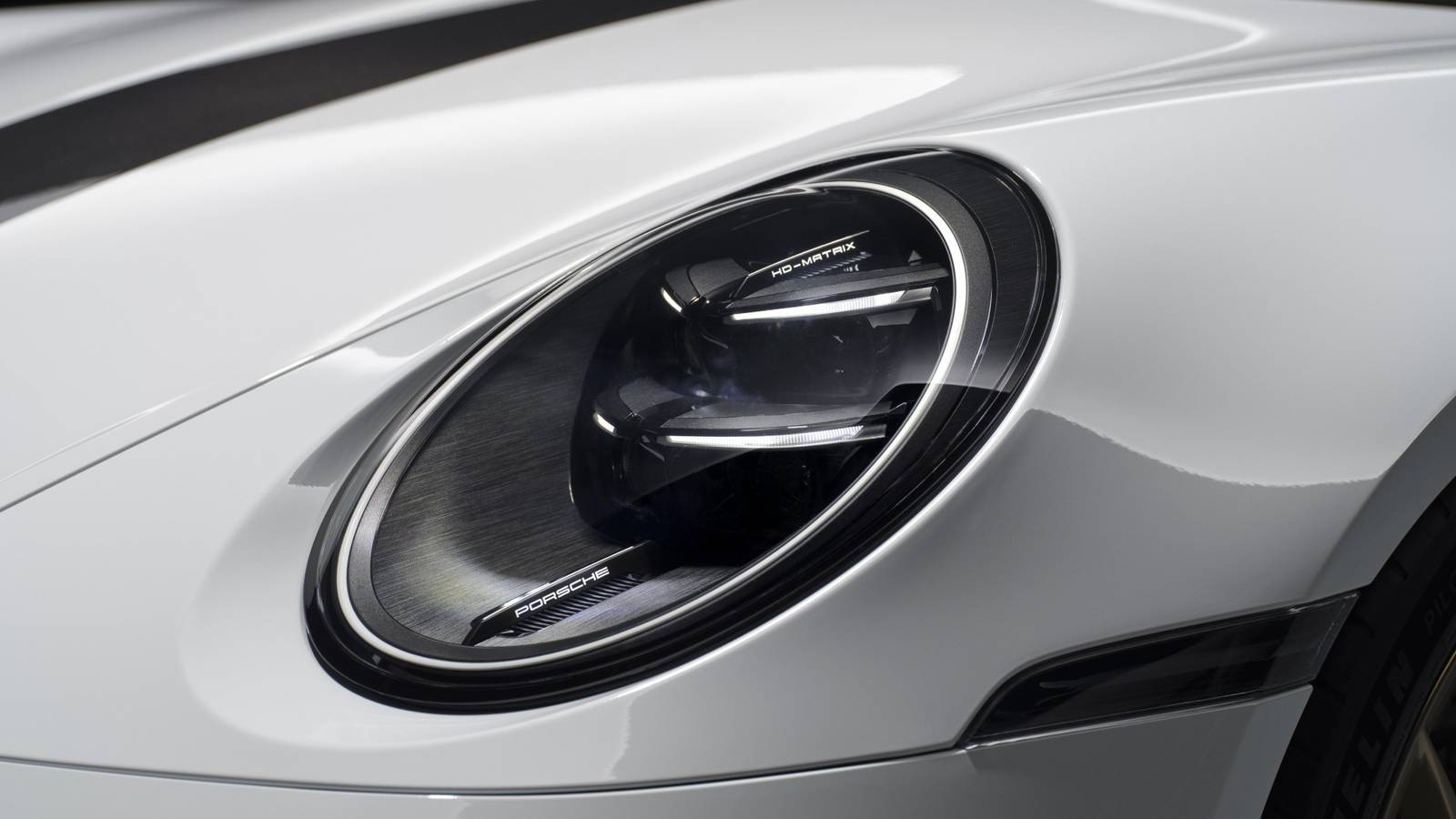
In an automotive world where even six-figure supercars are expected to hemorrhage value the moment they leave the showroom, the Porsche 911 GT3 exists as a remarkable anomaly. It is not just a performance benchmark or a Nürburgring hero, but a car that has repeatedly demonstrated an ability to retain, and in many cases significantly increase, its value over time. While traditional investments like stocks, property, and commodities fluctuate with economic cycles, certain generations of the GT3 have quietly delivered returns that rival, and sometimes outperform, conventional asset classes.
This isn’t the result of hype alone. The GT3’s value retention is rooted in tangible factors: limited production, motorsport-derived engineering, naturally aspirated powertrains, and a fiercely loyal global enthusiast base. Unlike many modern performance cars that lean heavily on forced induction, electrification, or digital abstraction, the GT3 has stayed true to an analog, driver-first philosophy that becomes more desirable with every passing year. For buyers lucky enough to secure one at MSRP, ownership can feel less like purchasing a depreciating liability and more like acquiring a rolling piece of automotive currency.
Why The 911 GT3 Defies Depreciation In A World Of Disposable Supercars

The strongest evidence supporting the GT3’s reputation as a value-retention champion lies in the numbers. While most high-performance cars lose 40 to 60 percent of their value within five years, multiple generations of the 911 GT3 have proven immune to that trajectory.

One of the most extreme examples is the 2011 Porsche 911 GT3 RS 4.0 (997.2). When new, it carried a U.S. MSRP of $180,000. Limited to just 600 units worldwide and powered by the final evolution of Porsche’s legendary Mezger engine, it has since become one of the most sought-after modern Porsches ever built. In recent years, low-mileage examples have sold at auction for between $1.1 million and $1.3 million, representing an appreciation of more than 600 percent over their original purchase price.


Find 2025 Porsche 911 GT3 and more cars for sale on our Marketplace

Even non-RS models show remarkable strength. A standard 2018 Porsche 911 GT3 (991.2) had a base MSRP of around $143,600 before options. Today, well-kept examples regularly list between $160,000 and $190,000 on enthusiast marketplaces and auction platforms like Bring a Trailer, depending on mileage, transmission choice, and specification. Rather than depreciating, many owners could sell their cars years later for more than they paid.

The trend continues with newer models. The 2023 Porsche 911 GT3 (992) started at $161,100, but real-world dealer pricing often pushed transaction figures closer to $190,000-$210,000. Used examples with modest mileage frequently trade in the $230,000-$270,000 range, according to recent listings. That places them firmly above original sticker pricing — an almost unheard-of outcome for a modern production car.

The Sports Car With Toyota Reliability And Ferrari-Level Speed
Discover the engineering marvel that delivers Ferrari-like performance without the fuss of a supercar.
Naturally Aspirated Perfection: The Mechanical Formula Collectors Can’t Ignore

At the heart of the GT3’s enduring value lies its naturally aspirated flat-six engine, a feature that has become increasingly rare in the modern performance landscape. While turbocharging has brought efficiency and headline power figures, it has also diluted the visceral connection many enthusiasts crave. The GT3 resists that trend entirely.
Consistently Prioritizing Raw Driver Feel Over Tech-Driven Flash

From the Mezger-derived engines of the 996 and 997 generations to the 4.0-liter units found in the 991.2 and 992 GT3, Porsche has maintained a high-revving, throttle-responsive powertrain that prioritizes feel over forced induction theatrics. With redlines approaching or exceeding 9,000 rpm, these engines deliver an experience that is both mechanical and emotional, qualities that age exceptionally well in the eyes of collectors.

As regulations tighten and electrification accelerates, naturally aspirated engines of this caliber are effectively extinct. That scarcity makes every GT3 not just desirable today, but increasingly irreplaceable tomorrow. Collectors understand this, and markets tend to reward cars that represent the “end of an era.” The GT3 doesn’t merely benefit from nostalgia—it actively creates it in real time.

Best Of The Best: Greatest Porsche 911 Models Of All Time
Within the 911 lineage, certain models stand out as definitive highlights with milestones that pushed the boundaries of design, technology, and speed.
Production Doesn’t Meet Demand

Another key factor supporting the GT3’s exceptional value retention is Porsche’s disciplined production strategy. While the 911 range as a whole is relatively broad, GT3 variants are produced in limited numbers and distributed through tightly controlled dealer allocations. Demand almost always exceeds supply.
This Imbalance Creates A Self-Reinforcing Loop

Buyers unable to secure new allocations are forced into the used market, where competition keeps prices elevated. Even during broader market slowdowns, GT3 values tend to soften far less than other performance cars, largely because supply never floods the market. Special configurations further amplify this effect. Manual transmission cars, Touring Package variants, and low-mile examples consistently command premiums. As a result, depreciation curves flatten dramatically, or reverse altogether, once production ends. In financial terms, scarcity insulates the GT3 from volatility that impacts more widely produced rivals.

Best Bang For Your Buck Modern Porsche 911 That Money Can Buy
If you are in the market for a bargain supercar killer, it’s hard to do better than the 996 generation 911 Turbo
Motorsport DNA That Translates Directly Into Long-Term Value

The GT3 was never conceived as a lifestyle product. It exists because Porsche needed a homologation platform for GT racing, and that motorsport DNA permeates every generation. From suspension geometry to aerodynamic tuning and engine durability, the GT3 is fundamentally a race car adapted for the road.

Cars with genuine motorsport lineage tend to age exceptionally well. Enthusiasts value authenticity, and the GT3’s credibility is unquestioned. It doesn’t rely on artificial scarcity or cosmetic packages to justify its existence; its purpose is baked into its engineering. As motorsport regulations evolve and manufacturers increasingly separate race programs from road cars, vehicles like the GT3 become historical markers of a purer era. That narrative resonates strongly in collector circles and directly supports long-term value.

12 Sedans That Can Outrun The Porsche 911 In A Straight Line
The quickest sedan on this list that can outrun a Porsche 911 does 0-60 in under 2 seconds.
From Track Weapon To Blue-Chip Asset

Few cars manage to balance usability, performance, and financial resilience the way the Porsche 911 GT3 does. It can be daily driven, tracked hard, and still emerge as one of the safest places to park automotive money. That combination is extraordinarily rare.

While no car purchase should be treated as a guaranteed investment, the GT3’s track record speaks for itself. Certain generations have delivered returns that outperform inflation, equities, and even some real estate markets, all while providing owners with one of the most engaging driving experiences available at any price.

In a world increasingly filled with disposable performance machines and rapidly outdated technology, the GT3 stands as proof that engineering integrity, motorsport authenticity, and scarcity still matter. That is why the Porsche 911 GT3 isn’t just a great sports car; it’s one of the closest things the automotive world has to a blue-chip investment.
Sources: Bring a Trailer, Edmunds, Kelley Blue Book