
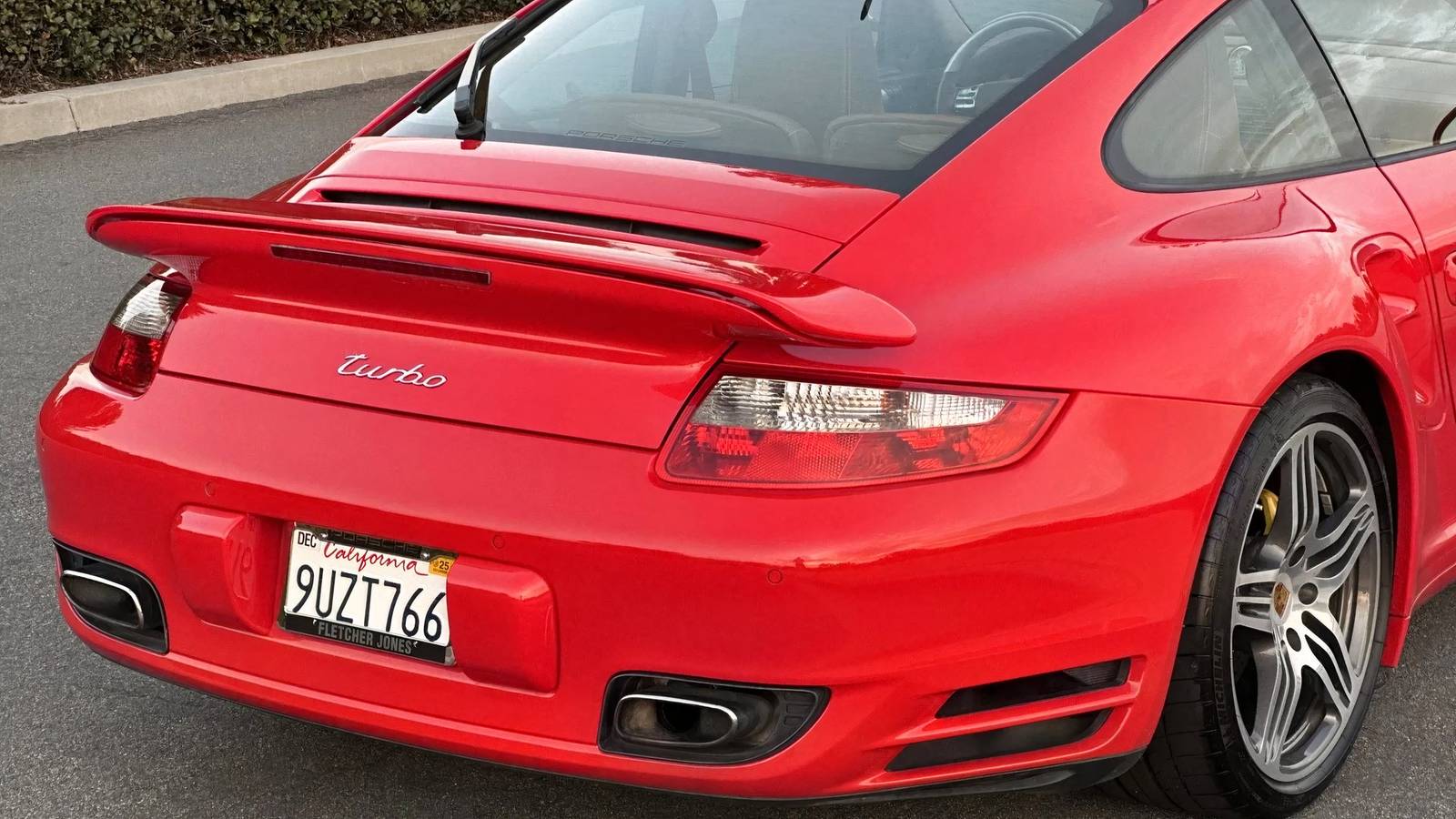
Longevity is rarely part of the conversation when discussing high-performance engines. Sports cars are expected to deliver thrills, not half-million-mile odometer readings. Yet within Porsche’s engineering history lies a flat-six architecture that challenges that assumption — a motorsport-derived engine that has quietly demonstrated remarkable durability in the real world, proving that performance and endurance are not always mutually exclusive engineering goals, even under sustained real-world driving conditions over decades.
Many performance engines are tuned to their mechanical limitations, but one Porsche flat-six became famous for being overengineered, with low stress margins, and tough enough for racing. Some documented high-mileage specimens of select 911 Turbos and GT3 models have gone over 300,000 and 400,000 miles, and in rare cases, even gotten close to or over the 500,000-mile mark, with all of their original parts still working. The Mezger flat-six is at the heart of this story about durability.
Porsche’s Flat-Six Legacy
Why The Boxer Engine Became The Brand’s Mechanical Signature

For many years, the horizontally opposed flat-six engine has been integral to Porsche’s brand identity. The 911 was instantly recognizable for its small stature, low center of gravity, and silky-smooth performance at high revs. The flat-six’s boxer architecture mitigates vibration and promotes mechanical harmony over time, unlike traditional inline or V-configurations, by automatically balancing reciprocating forces.

Porsche iterated on this design for decades, improving it with each new iteration that used air or water cooling. Although the flat-six became an icon of accuracy and performance, not all versions were equally built to last. Some engines prioritized both efficiency and cost. Some others had racing in their DNA from the start. That second group includes the Mezger engine without a doubt.

The German Sports Car With Toyota Reliability And Ferrari-Level Handling
2010’s supercar performance, a Toyota-backed heart, yet untouchable in its German attention to detail.
The Mezger Flat-Six
The Racing-Derived Architecture Behind Its Durability

This flat-six has its roots in Porsche’s endurance racing programs and is named after the renowned engineer Hans Mezger. The standard 911 Carreras of the late 90s and early 2000s used engines with a fundamentally different architecture: the M96 and M97. Significantly, the Mezger engine borrows its crankcase architecture from Porsche’s GT1 racing program. This design is ideal for turbocharged vehicles because it offers increased stiffness under pressure. Another thing it gets rid of is the problematic intermediate shaft (IMS) bearing design that plagued other Porsche engines from that time period, causing significant reliability concerns.

Models including the 996 Turbo, 997 Turbo, GT3, and GT2 featured the Mezger flat-six, designed to withstand prolonged track abuse and high boost pressures. Porsche developed it for extreme operating circumstances with durability headroom in mind, including stronger cylinder walls, sturdy crankshafts, improved internals, and sophisticated oiling systems. Instead of driving components to delicate limits, they were given the room to breathe. The original goal of this overengineering was to make the vehicle more resilient during races, but in reality, it increased its lifespan.

The Most Powerful Naturally Aspirated Flat-Six Ever Put In A Production Car
This venerated manufacturer is known for its high-performance six-cylinder sports cars, and one of them has the most powerful N/A six in the game.
Real-World High-Mileage Examples
Owner Testimonials And Documented High-Mileage 911s

There aren’t many documented high-mileage Porsches, but they’re not made up. Enthusiast groups like Rennlist and Pelican Parts have long posts about owners of Mezger-powered 996 and 997 Turbo models that have gone over 250,000 and 300,000 miles on their original long blocks. Several owners have publicly recorded cars that have gone over 400,000 miles with regular maintenance and mostly intact internal parts.
The Mezger’s Durability Is Widely Recognized

Mainstream car magazines have also talked about how tough the 911 is. Hagerty and Autocar are two magazines that have written about high-mileage 911s, challenging the stereotype that sports cars don’t last long. These papers always emphasize how important preventive maintenance is and how Porsche’s engineering margins are quite low, especially in racing-derived models.

There are very few independently verified 500,000-mile Mezger examples. Still, the fact that so many reported cars have 300,000- to 400,000-mile service intervals shows that the engine’s core construction has an extraordinarily high durability ceiling for a performance powerplant. These occurrences are exceptions, not rules, but they support the idea that the Mezger was designed to last.

The Most Reliable Used German Sports Cars Under $20,000
If you only have $20,000 to spend, but you want to enjoy the driving pleasure of a reliable used German sports car, this is the list for you.
Why These Engines Last So Long
Engineering Design, Cooling Strategy, And Conservative Stress Limits

Several technological elements make the Mezger engine last a long time. To start, the crankcase rigidity is critical. The unique crankcase design minimizes long-term fatigue by maintaining structural strength even under high cylinder pressures. Because turbocharged vehicles are more likely to experience premature wear due to boost-induced stress, this is of the utmost importance. Secondly, the stability of the track was ensured by the creation of the oiling system. Oil continues to flow freely even under high G-forces for long periods of time because of well-developed lubricating pathways. Because of this, bearing starvation, which shortens an engine’s lifespan, is less likely to occur.

The third reason the automobile lasted so long was that Porsche’s factory tuning was conservative. Although they weren’t mechanically optimized, these engines nevertheless generated significant power for their era. In most cases, engines with structural safety margins do not experience as much stress as highly optimized units over time. Last but not least, the quality of the materials and the assembly requirements are important. During the Mezger era, Porsche’s production tolerances and procurement practices prioritized long-term reliability over cost-effectiveness. Together, these engineering choices created an engine capable of handling far more than typical street use would demand.
The Role Of Maintenance: Why Longevity In A Performance Car Is Never Accidental

Engineering alone can’t explain really high mileage. Owners who push a high-performance 911 to 300,000 or even 400,000 miles tend to share similar habits: strict adherence to oil-change intervals, proactive cooling-system maintenance, careful monitoring of turbocharger health, avoiding repeated cold-start abuse, and replacing wear components before they fail. Cars that accumulate primarily highway miles often fare better than those subjected to constant short trips or heavy track use.

Proper warm-up procedures and consistent use of high-quality oil also play a significant role in long-term engine survival. Performance engines, on the other hand, reward owners who pay attention to them. Economy automobiles are built to be ignored. It seems that maintenance discipline has a big effect on how long the Mezger flat-six lasts. Longevity, in this context, becomes a collaboration between engineering and owner behavior.

The Most Over-Engineered V10 Ever Put In A Production Car
Few engines in history have been constructed with this level of development.
What 500,000 Miles Really Means For Porsche
Longevity As A Brand Statement

The idea that a flat-six from a race car can go more than half a million miles runs counter to what most people think about sports cars. It implies that durability and performance are not incompatible characteristics. This story means more to Porsche than just numbers of dependability. It reflects an engineering culture that has always prioritized performance and strength. Even with cars designed to go fast, structural integrity was never an afterthought. Porsche engines are still being redesigned to meet tighter pollution regulations and efficiency requirements. It’s still up in the air whether current turbocharged and hybrid-assisted flat-sixes will last as long as the Mezger.

But the high-mileage Mezger-powered 911s documented show that a well-designed performance engine can go beyond what people expect. That’s not uncommon; half a million miles is. It is not guaranteed. It doesn’t happen to everyone. In rare, well-kept cases, this Porsche flat-six has proved that even an engine made for racing can rev much higher than most drivers thought conceivable. That might be the most interesting thing about performance engineering that will live on.
Sources: Porsche. Hagerty, Rennlist