
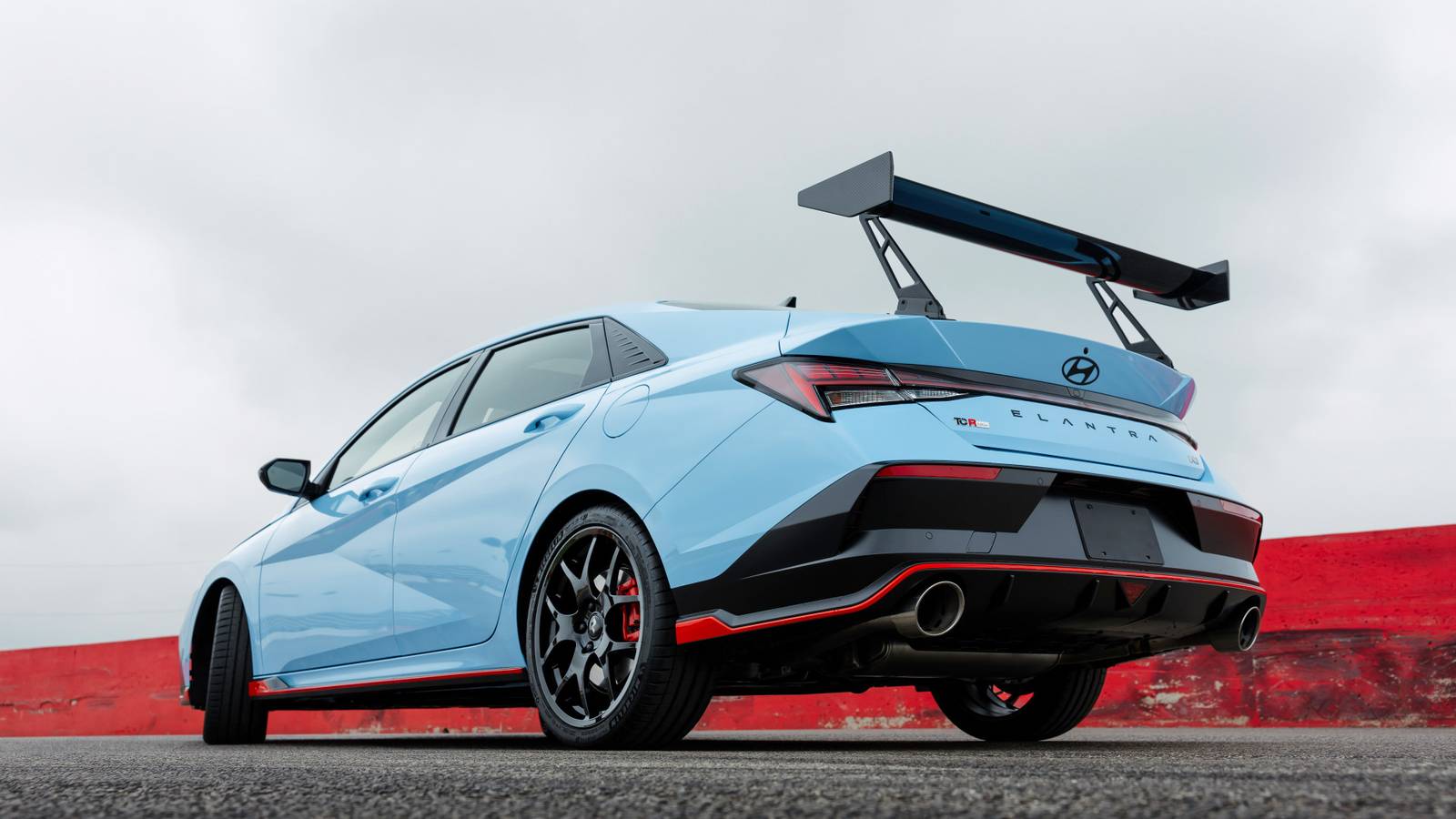
With each year that passes, the sports car market seems to shrink a little bit more, as more new car buyers shift their needs to favor practicality and versatility. Brands have responded to this by investing more in creating performance-oriented models of their most popular products, which has improved relevancy. Reliability is another key factor as to why so few consumers are looking at owning faster cars, but this is an area that seems to be improving as well.
The Hyundai Elantra N is currently an ideal example of a performance car that brings reliability levels that rival the likes of Lexus, while still being able to feel as engaging and agile as the average German enthusiast car. In recent years, Hyundai has been showing an invested interest in its N performance division. This is yielding considerable results in terms of market reception and on-track achievements.
How The Elantra N Nails Reliability

Under the hood of the Hyundai Elantra N sits the South Korean brand’s Theta II turbocharged 2.0-liter four-cylinder engine, producing 276 horsepower and 289 pound-feet of torque to the front wheels via a six-speed manual or dual-clutch automatic transmission. The result is a 5.7-second zero-to-60 MPH acceleration time for the manual and a 5.3-second result for the automatic. Both transmissions will get you to 155 MPH. The Elantra N doesn’t prioritize straight-line speed, but if you want to up things a little, you can initiate the DCT’s N Grin Shift mode, which temporarily increases power to 286 horsepower for 20 seconds, which is ultimately what achieves the aforementioned acceleration time.

The Theta II’s design prioritizes robust materials and design choices that support sustained performance and reliability. Hyundai’s engineers apply high-strength aluminum for the block and head to cut weight and manage heat, while forged steel connects the crank to pistons that run low-friction coatings to reduce wear. The twin-scroll turbo integrates with an intercooler that keeps intake temperatures down under load and holds combustion stability.

Hyundai also fits strengthened pistons and reinforced bearings to handle high cylinder pressures without compromising longevity. The dual overhead cam valvetrain consists of durable guides and springs that resist fatigue during extended high RPM use. Cooling passages sit close to hotspots to aid thermal control and reduce stress on components.
How The Elantra N Scores In Reliability Tests

Despite being a separate model line altogether, most publications group the N with the overarching Elantra range. J.D. Power issues the model with an 86/100 quality and reliability score, together with 84/100 for the driving experience, 86/100 for resale, and 71/100 for the dealership experience, resulting in an 83/100 consumer-verified overall score. iSeeCars backs this with an 8.1/10 reliability score, indicating that it will return an average lifespan of 9.9 years and 132,535 miles, with a nine percent probability of reaching 200,000 miles. It also issues it with 8.4/10 for retained value and 8.8/10 for safety, leading to an 8.2/10 overall score.

RepairPal awards the Elantra with a 4.5/5 reliability score. Key repair costs that you may have to deal with while owning an Elantra N include $171 for a stabilizer bar link kit, $763 for a fuel pressure sensor, $344 for an intake manifold gasket, and $948 for a new throttle body. The Edmunds consumer review section for the Elantra N only features four contributions, with a 4.8/5 overall rating. Key strengths for the model include its driving experience, handling, and value for money, with the range currently starting at $35,100.


Find 2026 Hyundai Elantra N and more cars for sale on our Marketplace

The Hyundai Elantra N Is The Perfect Blend Of Fun And Affordability
The Hyundai Elantra N proves that genuine performance, everyday usability, and attainable pricing can coexist.
Hyundai Backs The Elantra N With A Comprehensive Warranty

Hyundai’s standard warranty offering for the Elantra N covers the repair or replacement of any original component found defective in material or workmanship for five years or 60,000 miles, assuming normal use and maintenance. This covers most mechanical parts such as engine components, transmission, suspension, and electronics within that period. Hyundai also includes a powertrain warranty covering certain engine and transmission components against defects for 10 years or 100,000 miles for the original owner. This reduces to five years or 60,000 miles when transferred.

Covered engine parts include block, head, turbocharger, and internal components when defective, not damaged from misuse. The warranty excludes normal wear and tear and requires proper service. Hyundai supports anti-perforation for rust holes and roadside assistance for five years with separate emissions coverage terms.

As a bonus, Hyundai also includes three complementary maintenance services. The last three model years of the Elantra N are not subject to any recalls, but there was one recall relating to a fuel pump failure in 2023, and four recalls, also for the fuel pump and an improperly welded airbag cover emblem in 2022.
The Elantra N Nails The Apexes

Hyundai prioritizes handling performance with the Elantra N by applying an electronically controlled suspension, adjusting damping force on the fly to suit road surface, speed, and your prescribed drive mode. This system allows it to stay poised on roads and tight corners without having to deal with surface harshness or undercutting stability. Where the suspension is concerned, the Elantra N’s front end sits on a pair of MacPherson struts, while the rear makes use of a multi-link configuration, intended to limit unwanted roll and maintain tire contact consistent under load.
The Elantra N is as athletic, stiff, direct, and engaging as any of its established rivals. I love how loud the exhaust pops can be, or how muted the entire experience can become.
– William Clavey for TopSpeed
Hyundai N’s engineers also add firm lower-control arm bushes to sharpen steering feel without sacrificing compliance, and aluminum knuckles cut unsprung mass for quicker response. The braking system consists of large ventilated discs up front and rear, with high-friction pads sized to resist fade under repeated track use without compromising road use. Standard 19-inch forged alloy wheels wear Michelin Pilot Sport 4S summer tires selected for broad grip and predictable slip limits across wet and dry surfaces.
How the TCR Edition Ups The Ante

The Elantra N TCR Edition adds motorsport-inspired hardware tailored to track use without altering the base geometry. It sits on a set of specialized lightweight 19-inch N TCR forged alloy wheels that cut unsprung mass and pair with N Performance four-piston monobloc front calipers and two-piece rotors for stronger, more consistent braking under repeated high-load cycles.

The highlight of the package is the TCR-design adjustable carbon-fiber swan-neck rear wing. This boosts downforce at speed for added stability through high-speed corners, ideally for track use. Hyundai is yet to publish full revised spring or damper specs, as well as an official market introduction date.

There’s A New Generation Of Enthusiasts Out There, And They Drive Hyundais
There was a time where modifying a Hyundai was something to laugh about. Today, it seems like the cool thing to do.
Hyundai N’s Rapid Rise To Glory

Hyundai created the N performance brand in 2015, when it took to the stage at the Frankfurt Motor Show. The brand promised the new division to promote technical credibility and emotional appeal in the enthusiast space, drawing heavily on its expanding motorsport involvement. Albert Biermann played the central role after joining Hyundai from BMW M, where he brought deep chassis tuning knowledge and a clear philosophy focused on balance, durability, and driver engagement rather than headline numbers.

Hyundai based N development around extensive track testing at the Nürburgring and year-round validation in Korea, embedding motorsport-style durability targets into road cars. Engineers prioritized consistency under hard use, thermal management, and predictable handling, which helped early models earn trust quickly.

The Hyundai i30 N launched its production portfolio in global markets in 2017, followed by the Veloster N, and Elantra N. These three compact models have consistently promoted the idea that Hyundai can deliver serious performance without sacrificing daily usability or warranty confidence. Since its market inception just shy of a decade ago, N products remain competitively priced without compromising on warranty offerings and reliability. Its honest and transparent engineering also helps the brand reach buyers who want substance over badge prestige. In a short time, N has built a reputation for delivering engaging, track-capable cars that withstand lengthy use, proving Hyundai can compete with established performance divisions from German regions, while defining its own identity focused on accessible, reliable performance.
Noteworthy Achievements On The Track

Since its inception, Hyundai N has made notable strides in motorsport, using competition to validate engineering and build credibility for its performance division. The brand’s rally program has been particularly prominent and was the center point of the N division for a long time. The i20 WRC already benefited from a lengthy period of success in the World Rally Championship before Hyundai launched the N brand. This success only strengthened after, despite immense competition from its main rival, the Toyota Gazoo Racing department.

Since 2015, the i20 WRC has secured multiple podiums and manufacturer titles, proving the durability and responsiveness of N‑developed engines, suspensions, and electronics under extreme conditions. Beyond rallying, Hyundai has entered touring car and one‑make series, such as the i30 N TCR, demonstrating the versatility and adaptability of its N platform across track formats.

These efforts emphasize handling precision, thermal stability, and consistent power delivery, reflecting the same engineering principles found in road‑going N models. Motorsport achievements allow Hyundai to refine turbocharging, brake performance, and chassis tuning, which directly informs its consumer cars, helping N carve a reputation for accessible and serious performance, while establishing the brand as a credible competitor to long‑standing German performance divisions.
Sources: J.D. Power, iSeeCars, RepairPal, Edmunds, and the NHTSA