
The modern family car doesn’t look the way it used to. A decade ago, if you needed space for more than five people, your options were pretty straightforward. You bought a sedan and made it work, or you went all-in on a minivan. Today, that decision has shifted almost entirely in one direction. The three-row SUV has taken over. And it’s not hard to see why. Buyers want space, flexibility, and a sense of security, all wrapped into something that still feels modern and capable. SUVs deliver that in a way few other body styles can. They sit higher, carry more, and handle a wider range of real-world conditions without feeling out of place.
But there’s a downside to that popularity. The segment has become crowded—almost to the point where everything starts to blur together. Every brand has an option. Most look similar, promise the same features, and follow a familiar formula: bold styling, a long list of tech, and just enough practicality to tick the right boxes. That makes it surprisingly easy to overlook the cars that actually get the fundamentals right. While some SUVs focus on standing out, others focus on simply working better in everyday life. In a segment like this, that matters more than flashy design or headline-grabbing features.
What Families Actually Need From A Three-Row SUV
It’s Not About Features—It’s About How It Fits Into Daily Life

When you strip away the marketing and the spec sheets, most families are looking for the same core things. Comfort is at the top of the list—but not just in the obvious sense. It’s not only about soft seats or a quiet cabin. It’s about how easy a car is to live with day after day. Can you get in and out without a struggle? Does the third row actually work for more than short trips? Does the ride stay composed on longer drives? The devil is in the details.

Then there’s safety—not as a selling point, but as a baseline expectation. Modern driver-assistance systems have become standard for a reason. Features like adaptive cruise control, lane-keeping assist, and automatic emergency braking aren’t luxuries anymore. For many drivers, they’re part of how they navigate traffic every day. And finally, there’s confidence.

Not every family is heading off-road on the weekend, but real-world driving isn’t always predictable. Wet roads, uneven surfaces, long-distance travel—these are the conditions that shape how a car is actually used. A good three-row SUV should handle all of that without making the driver think twice. That’s where the gap starts to open up between cars that look good on paper and cars that actually feel right to live with.

The Crossover That Delivers BMW Performance At Honda Prices
The Mazda CX-5 delivers BMW-like driving excitement at Honda-level prices, making it one of the most rewarding compact SUVs in its segment.
The 2026 Subaru Ascent Takes A Different Approach
Less Flash, More Substance

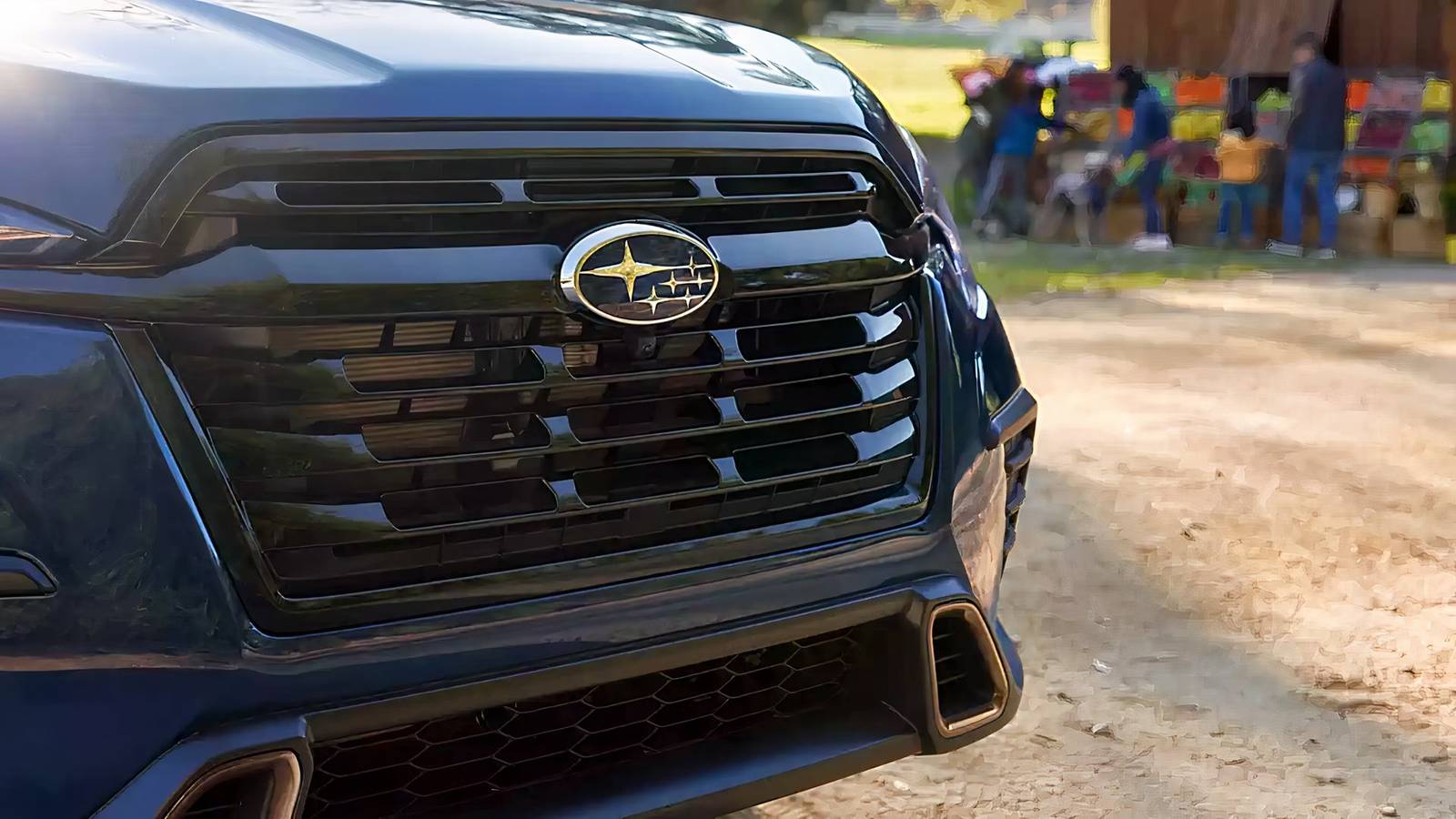
The 2026 Subaru Ascent doesn’t try to dominate the conversation—and that’s part of the reason it gets overlooked. It’s not the most aggressive-looking SUV in the segment, and it doesn’t lean heavily into luxury cues or oversized screens to grab attention. Instead, it focuses on something far less obvious but far more important: consistency. In the cabin, everything is purposeful. The layout is straightforward, built with intent, and keeps the driver in mind.

That might not sound exciting, but it makes a difference. Over time, usability tends to matter more than novelty. Features that stand out initially often fade into the background, while factors like ease of driving, comfort, and overall practicality have become far more important. The Ascent leans heavily into that philosophy. It doesn’t rely on first impressions or standout features—it’s designed to make sense as a long-term family vehicle. Less is really more, and simplicity is always better in the long run.
Safety Is Where The Ascent Builds Its Identity
A System That Works With You, Not Around You

Safety has always been a key part of Subaru’s approach, and it shows clearly here. The Ascent comes equipped with Subaru’s EyeSight driver-assistance system, which bundles features such as adaptive cruise control, lane departure warning, lane-keeping assistance, and pre-collision braking. On paper, that’s similar to what many competitors offer. In practice, though, it’s how these systems behave that matters.

The system is designed to feel supportive rather than intrusive. Instead of constantly drawing attention to itself, it steps in when needed and remains unobtrusive the rest of the time. That balance is especially important in everyday driving, where consistency and predictability matter most. Beyond technology, there’s also a strong focus on structural safety. Subaru’s emphasis on rigid, well-protected cabin design contributes to solid crash-test performance and overall occupant protection. Ultimately, that’s what safety comes down to—not just the presence of technology, but the confidence it’s designed to provide.
Standard All-Wheel Drive Changes The Experience
Built-In Capability That Makes A Real Difference

One of the Ascent’s biggest advantages is something many competitors treat as optional: all-wheel drive comes standard. Subaru’s symmetrical AWD system is built into the car’s core design rather than offered as an upgrade. That approach contributes to consistent traction and stability across a range of everyday conditions, from wet roads to gravel or uneven surfaces. Power is distributed in a way that prioritizes balance and control, helping the vehicle remain composed when conditions aren’t ideal. It’s a system designed to work in the background, without requiring constant input from the driver.

That’s the kind of feature that doesn’t always stand out during a short test drive but becomes increasingly valuable over time. It adds a layer of reassurance that’s hard to quantify until you actually rely on it. And for a
family-focused vehicle, that kind of built-in confidence matters.

Sedan vs SUV: Which One Is Right For You?
Should you drive a sedan or an SUV? What about crossovers? Here are some answers to your questions concerning sedans vs. SUVs.
Performance That Prioritizes Usability Over Excitement
Enough Power, Delivered The Right Way

Under the hood, the Subaru Ascent uses a turbocharged flat-four engine that prioritizes usable performance over outright excitement. It’s modest by most measures. It isn’t aimed at being the fastest SUV in the segment, and that’s not really its focus. It’s well suited to a wide range of driving situations, from city traffic to highway cruising. It’s a different kind of performance, but one that aligns with how most people actually use a vehicle like this. The output is sufficient for carrying passengers and luggage without strain.

The Hybrid SUV That’s A Low-Stress Family Car
This family-friendly SUV prioritizes practical efficiency and everyday usability over flashy performance.
Living With The Ascent Day-To-Day
Where It Quietly Stands Out

Over time, the Ascent’s strengths become more apparent. It’s designed to be easy to drive, with good visibility, intuitive controls, and dimensions that remain manageable for a vehicle in this class. Its size and layout make everyday tasks like parking and maneuvering more straightforward than expected.

Inside, the focus remains on practicality. The seating is designed to provide support, the cabin layout is logical, and there’s sufficient space across all three rows to accommodate longer trips. Storage areas are well considered, and the overall environment is geared toward regular use rather than occasional convenience. Nothing is overcomplicated, which is part of the appeal. In a segment where many vehicles lean into complexity, the Ascent stands out by keeping things simple and functional.

The Quirky Toyota SUV You Forgot About, But Shouldn’t Have
Amid a sea of lookalike small SUVs, the Toyota C-HR stood out with its bold, coupe-like shape. But was that a strength or a drawback?
Why It Often Gets Overlooked
Quiet Strength Doesn’t Always Grab Attention

Despite doing a lot of things well, the Ascent doesn’t dominate headlines. Part of that comes down to visibility. Larger brands with larger marketing budgets tend to occupy more space in this segment, making it harder for quieter options to stand out. Design plays a role, too. The Ascent doesn’t rely on bold styling or dramatic details to attract attention. It’s clean, functional, and understated—which, in a showroom full of more visually aggressive options, can make it easy to pass by. But that subtlety is also part of its strength. Once you move past first impressions, what you’re left with is a vehicle that prioritizes substance over surface-level appeal.

How The Small Toyota Corolla Cross Is Quickly Becoming A Giant In America
The Toyota Corolla Cross quietly stands out as a balanced choice in a market chasing electrification and larger SUVs.
A Smart Choice For Buyers Who Value Substance
Not the Loudest Option—But One of the Most Complete

The Subaru Ascent isn’t trying to redefine the segment. Instead, it focuses on doing the core things well—comfort, safety, usability, and consistency. It doesn’t overwhelm you with unnecessary complexity, and it doesn’t rely on standout features to justify its place. It simply works. For many buyers, that’s exactly what matters. In a world where so many options feel interchangeable, finding something that genuinely fits into your daily life without compromise is more valuable than it might seem at first. The Ascent may not be the most talked-about three-row SUV on the market, but it makes a strong case for being one of the most sensible. And sometimes, that’s the better choice.
Sources: IIHS, Car and Driver, Edmunds