
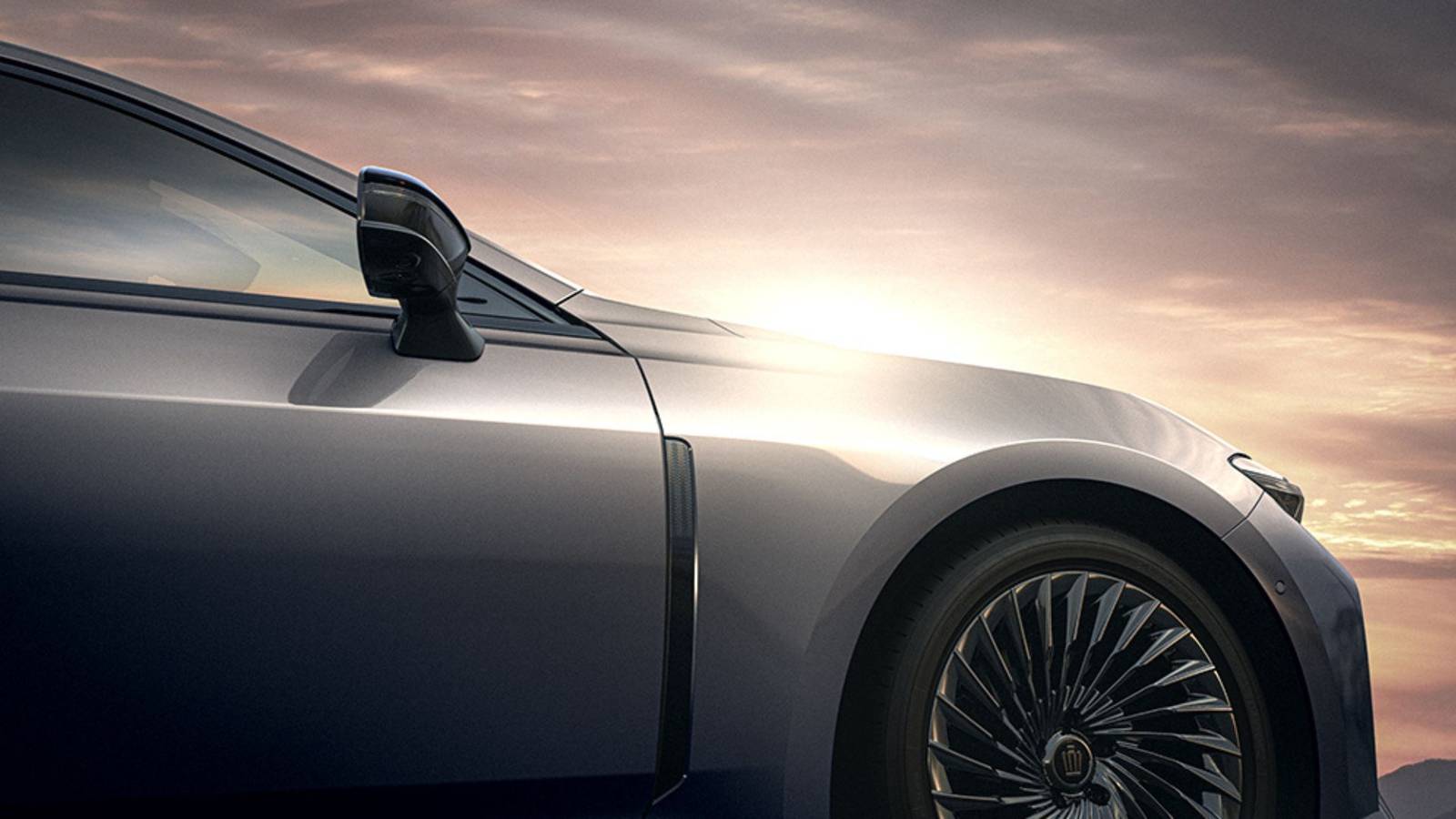
For most of history, the Japanese market was full of vehicles that remained forbidden fruit. Some examples include the S15-generation Nissan Silvia, the Mitsubishi FTO, and, until recently, the Toyota Crown. Actually, it is also the Toyota Crown that’s the subject of today’s article.
The Crown nameplate came back to the American market in 2023 after being discontinued in 1972, marking the return of Toyota’s prestigious luxury sedan. Unfortunately, it wasn’t the Crown I was expecting—or perhaps to some of you, dear readers, as well. It is far from the Crown that, at least I personally wish, would be sold on the North American market. Therefore, the Crown that I or perhaps some of us aspire to see or even own remains a JDM forbidden fruit.
The Crown Jewel Of Crowns

You see, outside the Century, the Crown represented the pinnacle of Toyota’s lineup. Rear-wheel drive (RWD) and with a true luxury orientation, none of these qualities are seen in the Crown that reached North American and global markets. It also has a similar price to our Crown, as the sole fully-loaded Z variant starts at JPY 7,300,000 ($46,884).



We Want The True Crown

The current 13th-generation Crown has been globalized for the first time into four versions, but the one we’re truly interested in is the Japan-exclusive flagship RWD version. The RWD Crown is exported in limited quantities to China, but the crown jewel of Crowns is still a mostly JDM affair that we wish would be sold in the United States. The Crown we get is the nameplate’s first use of a front-wheel drive (FWD) platform—aka the TNGA-K—albeit with electronic AWD as standard.

The true Crown we’re wishing for shares the same platform as the Lexus LS and LC—the TNGA-L platform, to be precise. If the current Crown sedan reminds you of a certain model that barely made an impact in the North American market, that’s because it is closely related to the Mirai hydrogen fuel cell electric vehicle (FCEV) this time around. In Japan, the Crown is also sold in FCEV versions, but the one we’re interested in is the standard hybrid Crown.
A Novel Multi-Stage Hybrid

What powers the hybrid Crown is Toyota and Lexus’s Multi-Stage Hybrid, whose primary goal is refined performance. It all begins with the 2.5-liter four-cylinder, which is the same one that you’d find in the current Camry and RAV4, but adapted for a longitudinal RWD layout. This version of the Crown has no AWD version, so if you’re in Japan and you want an AWD Crown, you’ll have to step down to the lesser FWD-based models that come with electronic AWD.
Japan-Spec Toyota Crown Specifications
|
Engine |
2.5-liter four-cylinder hybrid |
|
Drivetrain |
RWD |
|
Horsepower |
245 hp |
|
Torque |
N/A |
|
Transmission |
10-speed Multi-Stage Hybrid Transmission (4-speed A/T + CVT) |
|
0-62 MPH |
N/A |
|
EPA Combined MPG |
N/A |
The Multi-Stage Hybrid sets itself apart from the Toyota Hybrid System (THS) because it combines a four-speed automatic with a CVT to deliver the feel of a 10-speed automatic. As a result, the Crown’s hybrid system has a linear power delivery and direct throttle feel that you wouldn’t normally associate with a Toyota that uses THS. The Multi-Stage Hybrid is still a series-parallel system, unlike the turbocharged Hybrid Max system of the Crown in North America, which uses a six-speed automatic.

The Most Underrated Hybrid SUV That You Can Buy For Under $50,000
This hybrid SUV has not taken the market by storm and hasn’t presented itself to be a threat, but it has all the potential to disrupt the market.
How It Drives In The Real World
Considering how obscure the real RWD Crown is, I scoured through YouTube just to find a review of this full-size luxury sedan. To no one’s surprise, all the reviews are in Japanese, but there is one video review (video above) where this has been dubbed by YouTube’s algorithm.
An Athletic Hybrid System

Since it shares the same platform and hybrid system as the Lexus LS, it is also not surprising to learn that the Crown feels like the flagship Lexus to drive. Similar, but not the same, since the LS has a V-6, while the Crown uses a 2.5-liter four-cylinder. The system output is 245 horsepower, and Toyota claims that this new Multi-Stage Hybrid enables the system to deliver its full output at just 40 km/h (25 mph), compared to 140 km/h (87 mph) from the prior version. On the road, this hybrid system feels linear and direct—exactly as Toyota intended for the system to be. It also retains its smoothness, but coupled with more responsive performance compared to previous Crown hybrids.
Smoothness With A Degree Of Athleticism

Other reviews add a bit more information into the handling part of the Crown, revealing to the world that this is also a pretty athletic car. The adaptive variable suspension offers a supple ride in most cases, but once you start going through corners, the suspension firms up to deliver taut handling. It’s a well-balanced Crown, offering the supple ride that Crown buyers expect, whilst offering a degree of fun when owners prefer to drive the vehicle themselves.

Worth noting is that the Crown in Japan has torque vectoring by braking. Braking force is applied to the inner wheel or to the wheel that is unsettled, helping the Crown corner better and more smoothly. These braking forces acting upon the Crown’s four wheels allow the vehicle to feel more stable, as this is coupled with the adaptive variable suspension. All of this information is simply making us wish that we had the true RWD Crown even more.

Luxury Cars At The 2026 Detroit Auto Show
It was slim pickings for luxury shoppers in Motown, unless Cadillac and Lincoln were your primary targets.
Crown Reinvented

The reason why the Crown is now being sold in 40 markets worldwide is for Akio Toyoda to let the world experience a Toyota that represents Japan at its most affluent. Citing the Crown as a “symbol of Japan’s affluence and Japanese pride”, four Crown versions have been made, as Akio Toyoda needs the Crown to be attractive to various worldwide markets. For us, however, the true RWD Crown that we actually want remains a Japanese forbidden fruit, perhaps, except in China, to a small extent.
Fastback Looks

The reinvented Crown ditches the three-box design of the past 15 generations in favor of a fastback design. As a result, you now have a curvaceous roofline that tapers all the way to the back of the trunk lid, thus making the Crown sedan share a similar silhouette with the Mirai. At the front, the Crown wears a different interpretation of Toyota’s Hammerhead design motif, wherein the C-shaped LED headlights are connected by a full-width LED light bar. This is also matched with a wide grille containing vertical slats for a more stately look.

For a more stately look, the Crown’s side profile features vertical silver trim just before the front doors. This is the angle where the Crown looks very similar to the Mirai, but whereas the Mirai’s window line has a very subtle kink towards the rear doors, the Crown’s window line is completely horizontal. At the back, the Crown features full-width LED taillights and a predominantly horizontal layout for the trunk lid’s design. Customization is always a thing in Japan, and so you can spice up your Crown by adding a Modellista body kit. If you want even more elegance, the Crown 70th Anniversary Edition adds black exterior details that are matched with Maybach-like two-tone paint.
A True Luxury Interior

The Toyota Crown in Japan is a true luxury car, and as such, its interior makes no pretense to its materials. What you see is what you get. If you think it’s wood, it is actually wood, or if it’s metal, it is actual metal trim. And that’s what the Crown stands for. What we get here in North America is simply a taste of what the Crown could have been, but not actually the authentic Crown experience. Still, the familiar twin 12.3-inch screens run Toyota’s software, and it also comes with other features that will make you rethink your decision on purchasing a Lexus ES.

Rear seat occupants of the Crown have features like power recline, heating, and ventilation, among other features. There are also the obligatory rear shades, and the front passenger’s seat can also move forward if you want more legroom. All of those functions are controlled through a touchscreen mounted in the folding armrest, pretty much like in the Lexus LS. I guess this could put the Lexus ES on the back burner if Toyota decides to bring the actual RWD Crown to the North American market.
Sources: Toyota