
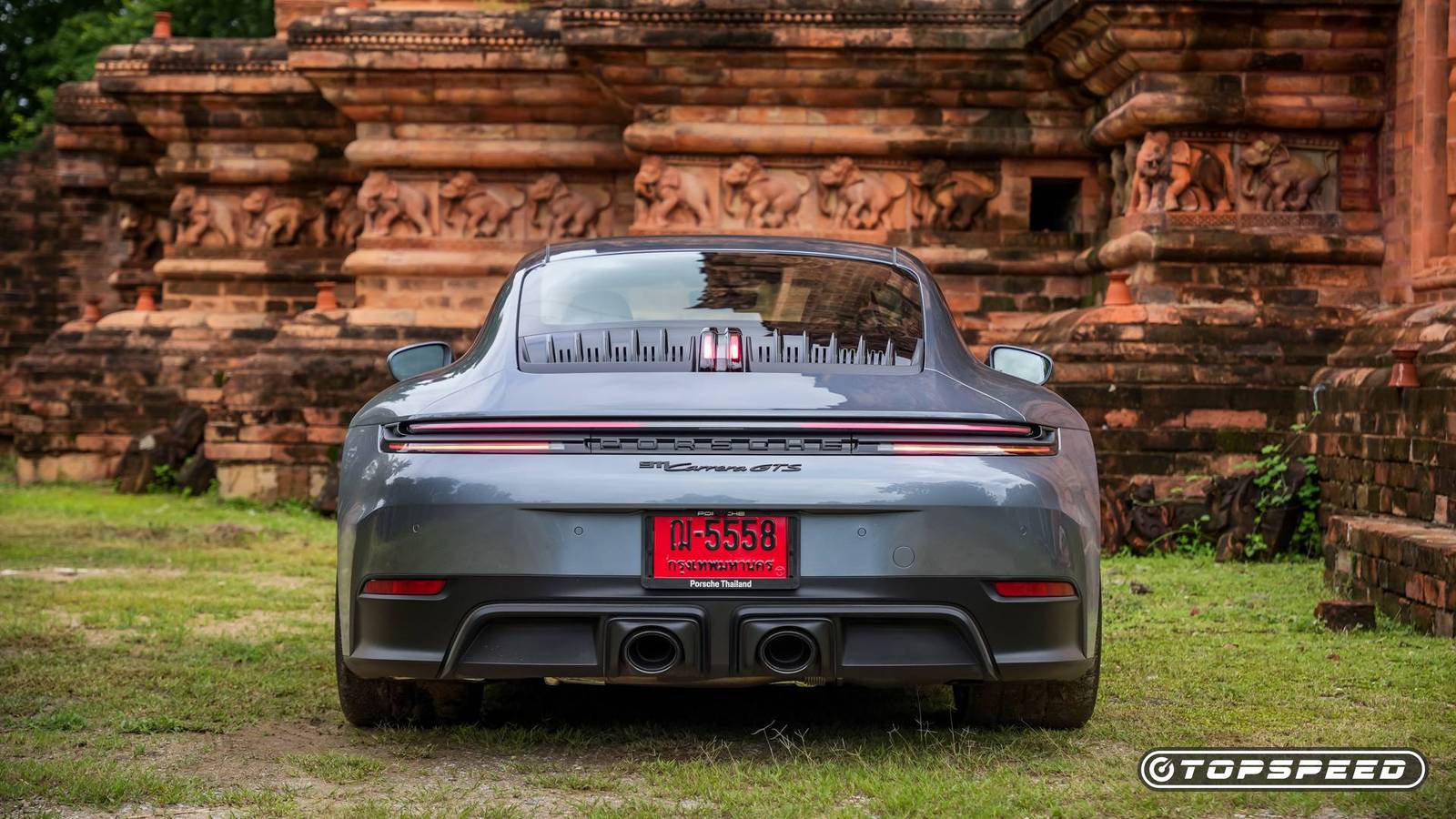
With many manufacturers making bold moves to leverage modern technology, it is understandable that long-term loyal fans of these brands are sometimes upset when they see their favorite cars turn into something they once weren’t. For most, this isn’t so much a problem: a car is a method of getting from point A to point B efficiently, and whether it runs on gas, electricity, coal, or fruit juice, the consumer will not care. Whilst most popular brands attract this sort of customer as their main demographic, it is easier for them to convince the consumer that new and exciting forms of propulsion are the way forward.
However, for a brand like Porsche, which relies heavily upon heritage, man and machine working in unison, and driving purity, it is much harder to convince its core fanbase of committed driving enthusiasts to look outside the box of analog-focused internal combustion. Despite that, the new Porsche 911 T-Hybrid has proved that the company cares more about unlocking new performance through innovation, rather than warming the seat of a long-term 911 fan. With handling, acceleration, and precision as the key markers beyond anything emotional, the new hybrid Porsches are making immense progress.
A Major Industry Moment Which Challenges Purist Assumptions

A heavier 911 with hybrid interference and a digital cockpit sounds like a recipe for not just shaking the hornet’s nest, but using it as a tennis ball for a professional match. With the classic blueprints of Porsche dissolving: low-weight, analog-centric, and internal combustion, the fan response is extremely split.

However, in testing, the reality of the technology is that it performs exceptionally well, proving that Porsche only introduces features into their beloved 911s once they are seriously ready. Whilst the car has gained over 100 pounds from the previous version, Car and Driver recorded an exceptional 2.5 seconds to 60 time, showing that even with its new heft, it can shift like never before.

The saving grace for enthusiasts is that Porsche isn’t trying to delete internal combustion from history. At least for now, anyway. Instead, they are using cutting-edge electronic tech, like the eTurbo, to solve the limitations of gasoline-only vehicles.

With turbo lag being essentially impossible to remove entirely, Porsche engineered this one to have an electric motor inside, creating an instantaneous waft of power that just wasn’t possible on previous 911’s. Edmunds testers have put other hybrid fears to bed, with their comments on how seamless the combination is between the traditional flat-six engine and the electrification, leading it to feel more analogue compared to a typical hybrid system.
There’s an instantaneous response that’s near EV-like. But, unlike an EV, that power delivery builds up linearly as an internal combustion engine (ICE) should. No unpredictability from the spooling of traditional turbos to be found here.
– Isaac Atienza, TopSpeed Journalist
Specifications Of The New Vs. The Old

With a significant overhaul of many of the 911 core staples, the 2025 Porsche 911 needed to feel and perform significantly faster than its predecessor, otherwise the gamble on fan alienation certainly wasn’t worth it. Though the 2024 911 GTS was an excellent-performing car that was just on the edge of true modern supercar territory, the bleeding-edge overhaul has finally taken the GTS over that mark. Despite a $14,000 price increase to $164,900 for the 2025 model, there is much more of an increase in performance than there is in price. With insane 0-60 times, horsepower over the 500 mark, combined with the aggressive punch of that eTurbo, the Hybrid 911 has entered new and exciting territory.
2025 Porsche 911 GTS T-Hybrid Vs. 2024 911 GTS
|
2025 Porsche 911 GTS Hybrid-T |
2024 Porsche 911 GTS |
|
|
Powertrain |
3.6L Flat-Six eTurbo T-Hybrid |
3.0L Flat-Six Twin-Turbo |
|
Transmission |
8-Speed PDK |
7-Speed Manual or 8-Speed PDK |
|
Horsepower |
532 |
473 |
|
Torque |
449 Ib-ft |
420 Ib-ft |
|
0-60 mph |
2.5 seconds (Car And Driver) |
~3.0 seconds |
|
Weight |
3,533 Ibs |
3,433 Ibs |
Though the weight gain of the 2025 GTS of 100 pounds sounds alarming, when you consider this new Porsche has a more sizable, muscular engine with a larger displacement and electric motors, it’s surprising that it wasn’t much more than 100 pounds. They managed to keep weight down in the new car relative to the added tech by actually downsizing the engine itself. With the electrical power taking care of powering ancillaries, there is no belt drive present on the 911. Not only does this eliminate a fragile part of the vehicle’s engine, leading to an increase in potential reliability, but it also reduces weight.

Best Of The Best: Greatest Porsche 911 Models Of All Time
Within the 911 lineage, certain models stand out as definitive highlights with milestones that pushed the boundaries of design, technology, and speed.
Porsche Cares About Handling Just As Much As Speed

The new 911 GTS isn’t just an acceleration increase — far from it. The incredible tech in this vehicle is also for going around corners as fast as physically possible. This 2025 911 now has a 400-volt electrical architecture, which means Porsche’s dynamic chassis control is new, electro-hydraulic, making the system far more powerful than previous generations. Because of this, the car is incredibly planted and handles remarkably flat through corners. With the anti-roll bars and chassis benefitting from that 400-volt system, the car reacts in a matter of milliseconds, virtually eliminating body roll.
More Incredible Handling Features Of The 2025 Porsche 911 Hybrid-T
- Rear-axle steering makes the car feel more agile
- Torque fill encourages linear power on the exit from corners
- Optional 10-piston front brakes and standard high-voltage recuperation braking
- Porsche offers Michelin Pilot Sport Cup 2 R tires
The extra weight itself is carefully distributed and used in the least wasteful way possible, with the hybrid battery mounted low in the front of the car, creating immense stability and an excellent center of gravity. The new active aero flaps also play an important role, closing to reduce drag on the straights, but open accordingly when cornering hard to increase downforce and pin the tires to the ground. All of these intuitive design decisions create a car that doesn’t feel heavier; instead feels dynamic, active, and alive.

The Sports Car With Toyota Reliability And Ferrari-Level Speed
Discover the engineering marvel that delivers Ferrari-like performance without the fuss of a supercar.
The Verdict Of The Bleeding-Edge 2025 Porsche 911

It’s clear that Porsche was so confident in the benefits of the controversial new technology found in the 2025 911 GTS that the company knew it would outweigh the purist skepticism. And whilst it is impossible to please everyone, Porsche couldn’t have gone about an electrification overhaul in any better way. With an even larger straight-six engine in a world of downsizing, paired with a system that effectively eliminates turbo lag, we have a vehicle that would have been simply an impossibility several years ago, and one that feels like a refreshing, brilliant integrator of new technology.

With this new GTS, we get more of what we love in a vehicle, in a vehicle that feels like a distinct turning point in the marriage of traditional mechanical tech with a modern twist on electrification. Yes, on the route to that, we’ve had to accept that the past is an iceberg breaking off from the surface we are currently standing on, but as the transition to the future happens, let’s celebrate all that has passed and all that is new with a car that celebrates the best of both worlds.
Sources: Porsche, Edmunds