
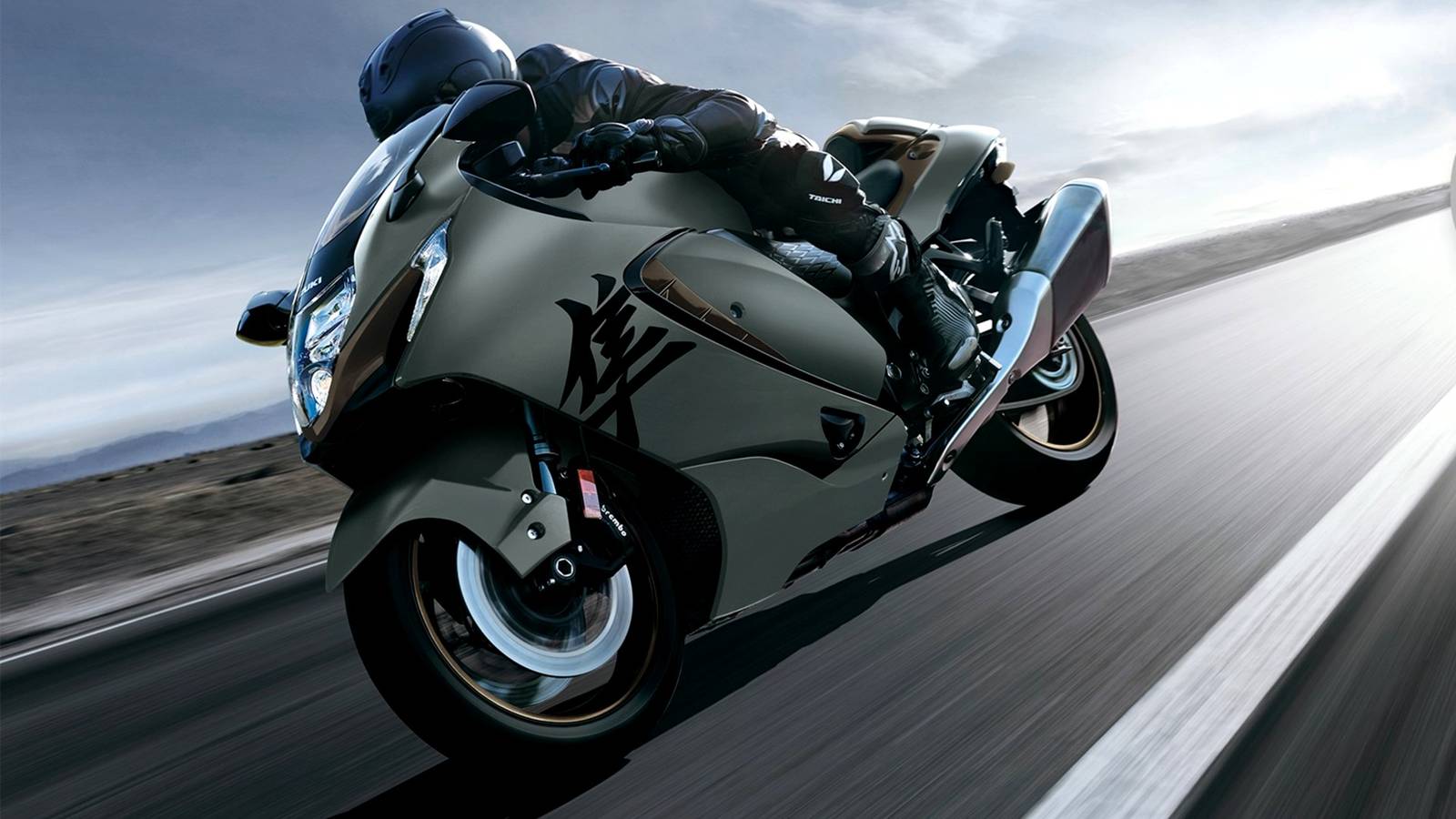
All the way through the 80s and 90s, the Japanese manufacturers became obsessed with speed. This led to the development of several impressive sports bikes, all with a single-minded focus on being the fastest motorcycle in the world. It wasn’t just about bragging rights; it had a very real effect on sales, with consumers paying close attention to the “speed wars.”
Naturally, this kind of thing caught the attention of the authorities and died a natural death. But, not before leaving us with some astonishing motorcycles. These platforms didn’t simply fade into the night, either, even with top speed restrictions in place. These big-bore superbikes all leaned into their sport touring potential, offering buyers a unique blend of performance, comfort, and reliability. The bike in question is now into its third generation, and offers us the opportunity to own a true legend of the motorcycle world.
To give you the most up-to-date and accurate information possible, the data used to compile this article was sourced from Suzuki Cycles. Whereas, the opinions are our own.

10 Motorcycles More Powerful Than The 2025 Suzuki Hayabusa
If 187 horsepower from the Hayabusa isn’t enough, these ten machines deliver even more firepower across superbike and hypersport categories.
The Suzuki Hayabusa Delivers Big-Bike Thrills Without Big-Bike Stress
MSRP: $19,499

The Hayabusa ended up being the big winner of the speed wars, purely because it was the last superbike officially recognized as the fastest production motorcycle in the world. That was almost 27 years ago now. Now into its third generation, the modern Hayabusa is an altogether different beast. Interestingly, it is still competing with a couple of its traditional rivals.

The Kawasaki Ninja ZX-14R has also been through a couple of generations since the Gentleman’s Agreement came into effect, and is still the Hayabusa’s chief competitor. It is a direct descendant of the ZX-11, which was the fastest bike through most of the 90s until Honda and then Suzuki hit back with faster bikes. Today, the ZX-14R is both more powerful and cheaper than the Suzuki, but it doesn’t offer the same level of sophistication.

Surprisingly, the Yamaha FJR1300 is also still around. It has officially been discontinued, but remains available as a 2024 model. Yamaha pivoted to sport touring by the 90s already, and it is a refined offering with electronic suspension. If refinement is what you want, then it is well worth looking at the BMW R 1300 RS. It might be down on power compared to the Suzuki, but it offers an element of luxury and superior build quality.
The Hayabusa Is Built Around An Inline-Four Monster Of An Engine
Power: 185 Horsepower

At its core, this is still that same engine that came out with the original bike all those years ago, but it has been refined and massaged into a thoroughly modern lump. The displacement increased many years ago, but the more relevant update is more recent. The third generation has a ride-by-wire throttle, which allows for more electronic features to be added without much fuss.
More Power Than You Will Ever Need

It has also been optimized for improved midrange performance and efficiency. This is important because getting a huge engine like this through Euro 5 emissions is no mean feat. To be frank, this is not a track bike. So 185 horsepower is significantly more power than anybody will ever actually need on the street. In the past, most of the power resided a little higher up in the rev range. The improved midrange helps make all that power more accessible to the average rider, and also improves roll-on acceleration.

Suzuki Hayabusa: A Revolution In Speed Since 1999
It might not be the “fastest motorcycle in the world” today, but the ‘Busa is still a force to be reckoned with 25 years on
The Hayabusa Is More Comfortable Than You Might Think

While the Hayabusa was initially conceived as a sports bike, the first generation was designed at a very different time. Sports bikes back in the 90s were primarily developed for street use, and were not as track-focused as modern bikes tend to be. The ergos have remained more or less the same over the generations, and while the riding position is certainly more aggressive than the average naked bike, it certainly does not put as much weight on your wrists as a GSX-R, for example. It also has good wind protection and a huge, comfortable seat that makes all-day riding a distinct possibility.

Why This Suzuki GSX-R Sports Bike Still Matters In 2025
An important update has breathed new life into what seemed to be a dead sports bike platform
Modern Tech Keeps This Aging Speed Queen Relevant

The previously mentioned ride-by-wire throttle enables ride modes, a quick-shifter, and cruise control to be added. But, this was not the biggest update. By far the biggest advancement for the Hayabusa was the inclusion of an IMU for the first time. This gives it both lean-sensitive traction control and cornering ABS, two important modern safety features that keep it in the conversation. The dash was also updated, and we have to commend the effort that went into the design of the cockpit.
While the bike itself has never been pretty – although the latest version is not as offensive as the original – the cockpit is a thing of genuine beauty. A small TFT display splits two big analog gauges, which makes everything both easy to read and, in our opinion, more functional. There is an element of theater that comes with a tachometer sweep that seems lost on modern bikes equipped with big tablet-sized TFTs.
At the end of the day, the new Hayabusa is not going to be for everyone. Although it is fairly comfortable and incredibly reliable, it certainly is not as comfortable as a more dedicated tourer. It is also still a very big motorcycle and is not the most versatile of machines. It is, however, ideal for those who want a bike that can cover large distances in a short space of time, without breaking a sweat. It offers all the thrills, without the stress.
Chassis Specifications
|
Chassis |
Twin-spar aluminum |
|
Front Suspension |
Inverted telescopic, coil spring, oil damped |
|
Rear Suspension |
Link type, single shock, coil spring, oil damped |
|
Weight |
582 lbs |