
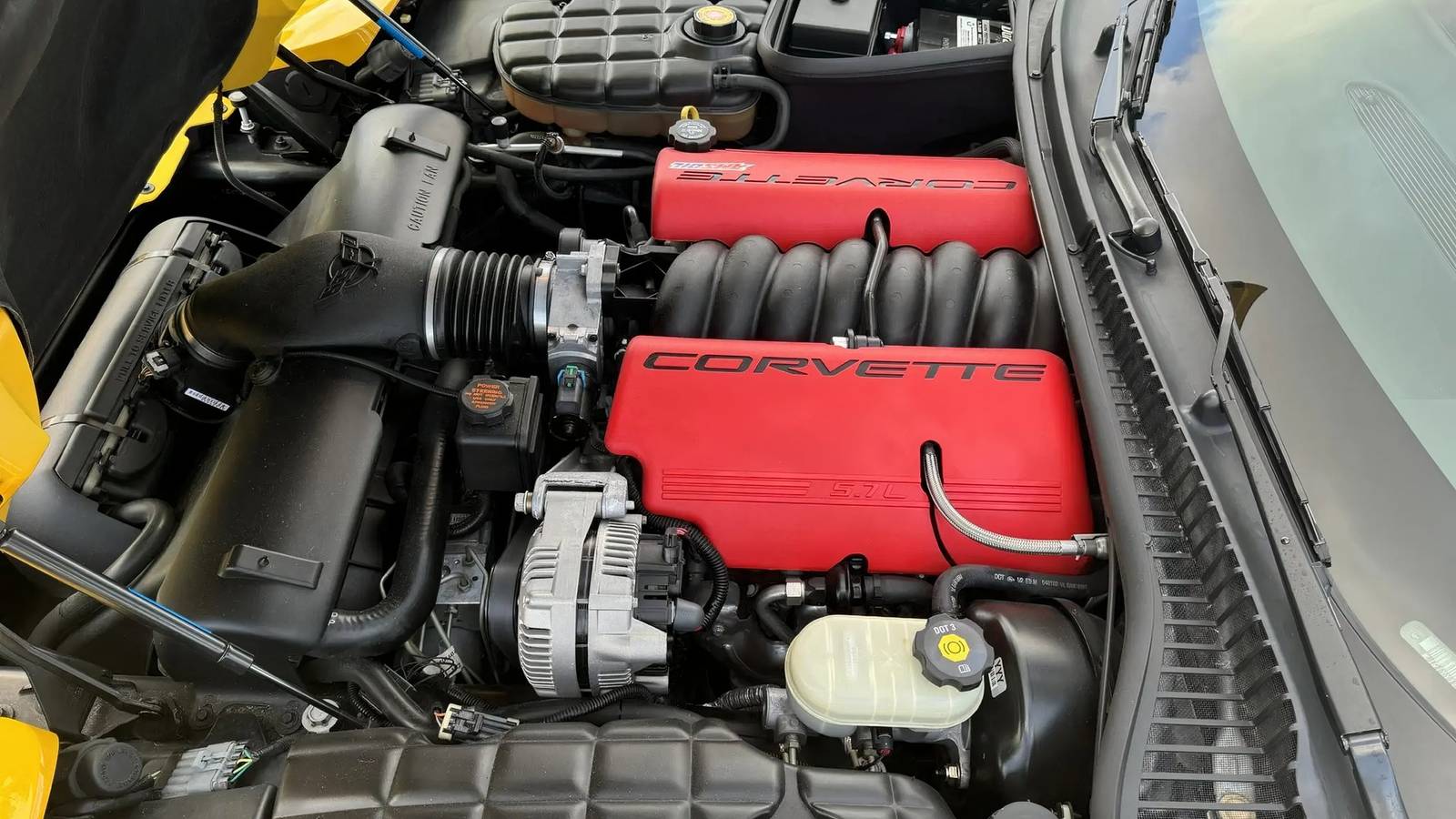
Since the dawn of the automotive industry, there have been hundreds of engine designs applied to various cars across the world, not to mention an array of construction and industrial vehicles such as trucks and airplanes. The engine acts as the heart of the car and is undoubtedly the core component of any vehicle. Of all the engines that have ever existed, there stands one that has been produced more widely than any other.
The Chevrolet small-block V-8 is arguably the most important engine in all of global automotive history, not just American. General Motors has been able to apply this engine to an array of its vehicles, including sports cars, family sedans, vans, and even some light aircraft. Overall, it’s a fairly basic engine with impressive power outputs, resulting in immense popularity despite having been introduced over 70 years ago.
The Genius Chevy Small Block

In 1955, Chevrolet needed to find a successor to its aging Blue Flame inline-six engine, so it came up with the Chevrolet Small-Block V8, which ended up revolutionizing the automotive world with its compact, lightweight, and high-revving design. Due to its compact proportions and high outputs, enthusiasts handed the engine the Mouse Motor nickname. Ed Cole was the lead engineer on the project, which aimed to create a powertrain that was affordable to manufacture and durable enough to stand the test of time.

A design highlight of this engine is its overhead-valve architecture and thin-wall casting. This allows it to deliver significantly more power than the heavier Ford flatheads of the era, meaning that the average driver could now have access to true V-8 performance. The engine’s massive popularity over the last seven decades is largely thanks to its seemingly unmatched versatility. GM has applied this engine to power everything from sports cars like the Corvette and Camaro to millions of Silverado and C/K pickup trucks.

The Small Block V-8 also acts as the heart of cultural icons like the 1955 Bel Air and the Nova, and it even found its way into commercial vans, speedboats, and some industrial equipment. Think of this engine having a Lego-like interchangeability, which results in it benefiting from a massive aftermarket for parts. The small block has become the gold standard for customizers and race car builders, with the 350 cubic-inch unit being the most popular iteration, contributing to over 113 million units produced across its various generations.
The Birth Of Chevy’s Small Block V-8

Chevrolet first introduced the Small-Block V-8 in the 1955 Chevrolet Bel Air and the Corvette. This application instantly transformed the brand’s image from reliable but dull to a performance powerhouse that could finally compete with the likes of Ford and Dodge. The initial engine measured 265 cubic inches and was called the Turbo-Fire V-8. Owners immediately fell in love with the unit because of how it provides high-end performance at a low-end price point.

Companies like Ford were still producing heavier and less efficient Flathead designs during this era, which were relatively inferior to the Chevy Small-Block’s modern overhead-valve architecture and an innovative stamped-steel rocker arm system. This lightweight valvetrain allows the engine to rev higher and more safely than its rivals, reaching upwards of 6,000 RPM. Additionally, the physically smaller design and 41-pound weight reduction from the six-cylinder engine it replaced were noteworthy benefits. It produces significantly more power, with the first generation of the engine producing 162 horsepower in its base form and up to 195 horsepower in the Corvette.

Previous and existing owners loved how easy it is to service the Small Block and how efficient it is, thanks to its over-square design, which also reduces internal friction and wear. This combination of affordability, high-revving thrill, and everyday durability created an immediate cult following; by the end of 1955, Chevrolet had sold over 1.7 million vehicles, many equipped with this new V-8. It effectively launched the hot rod era by providing a cheap, powerful foundation that anyone could modify in their own garage, a reputation that has sustained the engine’s popularity for over seven decades.

The Forgotten Powerhouse: Chevrolet’s Rarest Engine
The 427 Z11 V-8 dominated the drag strip and could have owned the classic muscle car era had GM allowed it.
How The Small Block Evolved Into The 350

The evolution of the Small-Block from the original 265 to the legendary 350 cubic-inch that we’ve come to know today was a journey of gradual displacement increases achieved by enlarging the cylinder bore and lengthening the piston stroke throughout the years. After the 265 proved that the design had impressive real-world potential, Chevrolet released the 283 just two years later, shortly followed by the high-performance 327 in 1962. In 1967, the 350 debuted as a high-performance option for the Camaro SS. This unit combines a four-inch bore with a new 3.48-inch stroke, which GM engineers described as the sweet spot of the design’s internal geometry, resulting in a high-RPM breathing characteristic with massive low-end torque.

The 350 very quickly became the most popular application in the engine’s history because it was the ultimate all-purpose engine. This example was powerful enough for the Corvette, yet durable enough to serve as the standard engine for millions of Silverado trucks, suburban family wagons, and even mail trucks. The 350’s popularity experienced its most notable rise during the 1970s and 1980s. This is when it became the primary V-8 for nearly every rear-wheel-drive GM vehicle.



The Small-Block 350 Finds A Home In Most Any Application

With so many examples produced, parts also benefit from being competitively affordable and available at any auto store in the U.S., making it the default choice for those looking to engine swap their cars. Whether a boater needed a reliable inboard motor or a racer needed a budget-friendly block to build 500 horsepower, the 350 was the perfect option that they could have considered. It remained in high-volume production until 2003, surviving emissions eras and fuel crises to become the definitive American V-8.

Chevrolet’s Most Reliable Truck That Logs 300K Miles With Ease
The highest mileage specimen of this used Chevy pickup truck currently on sale has over 400,000 miles on the odo.
The V-8 Takes Flight
The adaptation of the Chevrolet Small-Block V-8 for aviation is a feat of engineering that leverages the engine’s power-to-weight ratio while overcoming the unique challenges of flight. The most critical modification that the engineers had to conduct to achieve this conversion is the installation of a Propeller Speed Reduction Unit.

Car engines vary RPM through a transmission, while an aircraft engine must allow the V-8 to operate at its high-performance sweet spot, typically around 4,500 RPM. It still has to gear down to keep propeller tips from exceeding the speed of sound as well. Furthermore, because flight requires a sustained high-load output, not too unlike driving a car up a steep hill at full throttle indefinitely, conversions require much more robust heavy-duty cooling systems.

Aircraft engineers replace standard automotive radiators with high-flow aluminum units and add specialized oil coolers to manage the intense thermal stress. To meet aviation safety standards, they then implement redundancy, such as dual electronic ignition systems and independent fuel pumps. The Small-Block offers a cost-effective, liquid-cooled alternative to traditional air-cooled aero engines from the firewall-forward kits used in experimental aircraft.

10 American Cars With The Best V8 Engines Of All Time
As the world turns against the V8, it’s time to remember the best variants of this engine that graced the bays of American cars throughout the years.
The Small Block’s Popularity Remains

Chevrolet’s last production model with the small block left the assembly line in 2003, but the engine itself remains a widely popular and important powertrain, thanks to its crate offering from the brand. The crate engine term refers to a fully assembled engine shipped in a crate for easy installation. Today, General Motors manufactures these brand-new engines in Springfield, Missouri. This continued availability is a testament to the engine’s design. Rather than scavenging junkyards, builders can buy a fresh out-of-the-box zero-mile unit with modern manufacturing tolerances.

A popular modern entry point is the 350 HO, which produces 333 horsepower and 381 pound-feet of torque. It features a sturdy four-bolt main block, cast-iron Vortec cylinder heads, and a hydraulic flat-tappet camshaft. For those seeking more aggressive performance, the SP350/357 steps up to 357 horsepower and 407 pound-feet of torque, utilizing a more modern hydraulic roller camshaft to reduce friction and improve high-RPM breathing. For the ultimate Small-Block experience, the ZZ6 series pushes output over 400 horsepower by incorporating high-flow aluminum Fast Burn cylinder heads. Crate engines allow enthusiasts to drop 1950s history into a modern project with the benefit of a factory warranty and 21st-century reliability.
Sources: RepairPal, MotorReviewer, Kelley Blue Book