
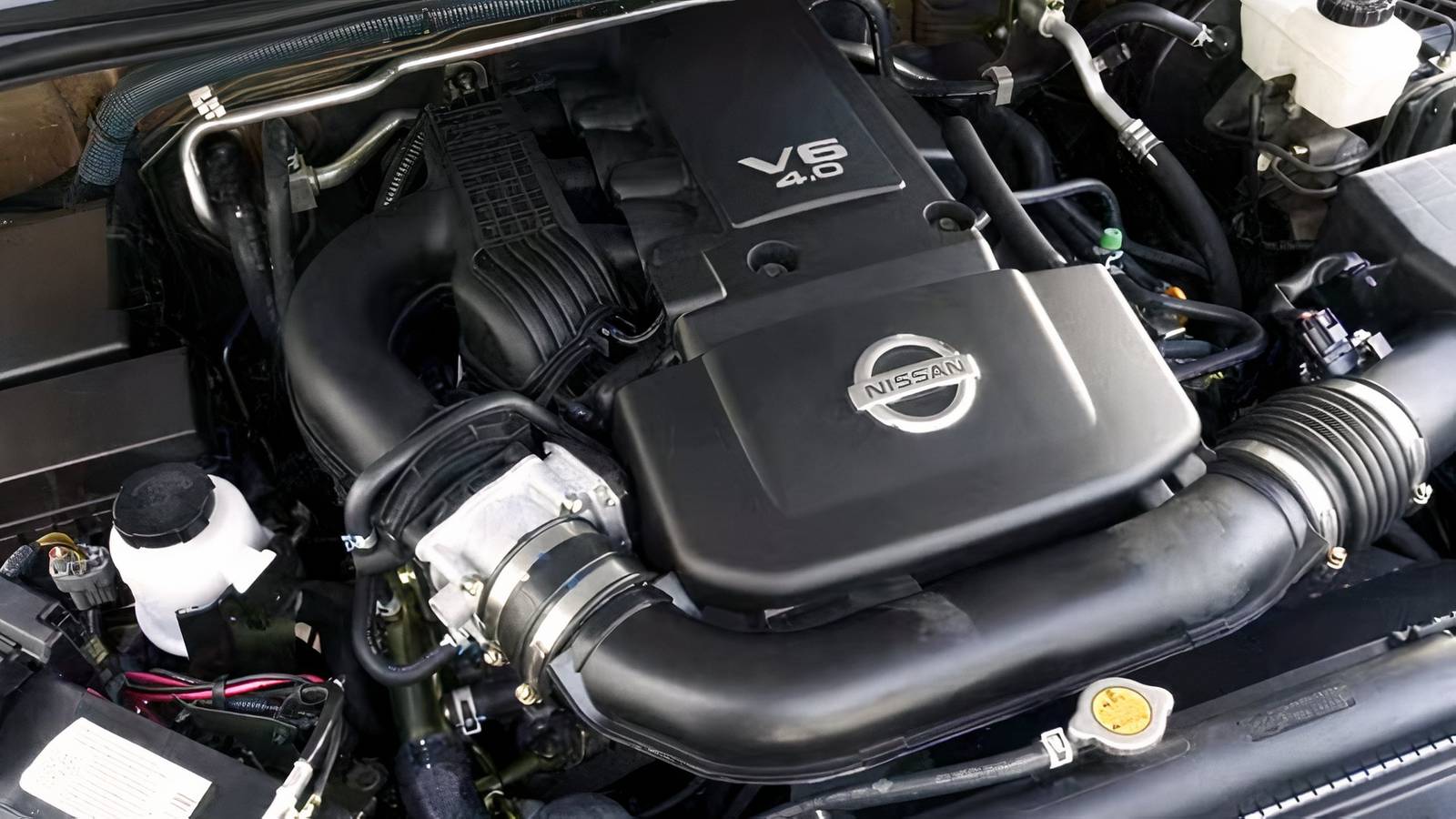
The beauty of internal combustion engines (ICE) is that, with so many variables to deal with, no two ICEs are created equal. Some have bulletproof reliability, while others are filled with so much torque that they can pull mountains. Some engines produce a soulful noise, while others sing a beautiful tone. Some engines combine these factors, that you end up with one of the most multi-awarded engines of all time.
Case in point, the V-6 engine for today’s article. We’re not just talking about one engine, mind you, but rather, one engine family. Though they are different depending on how they are applied, these engines being part of one family means that they all have a common, award-winning trait. Whether fitted to a family sedan, a versatile crossover SUV, or a series of sports cars, this engine serves various duties reliably and soulfully.
Nissan’s Award-Winning VQ Family

The title of the most-awarded V-6, and thus, one of the most awarded engines of all time, is Nissan’s VQ family of V-6 engines. Produced from 1994 up to the present, the VQ engine has powered various Nissan vehicles, from the Altima to the Frontier, and even sports cars like the 350Z and 370Z.
14 Consecutive Awards, 16 In Total

Just how award-winning is the VQ? Well, it only received recognition from Ward’s ’10 Best Engines’ 14 consecutive times since the award-giving body’s inception in 1994 for the 1995 model year, until 2008. The next time that a Nissan VQ engine became part of Ward’s ’10 Best Engines’ would be in 2012 for the Infiniti M Hybrid and in 2016 for the Nissan Maxima. Even today, no other engine has matched the winning streak that Nissan’s VQ engine achieved with Ward’s Auto.
The Vehicles That Received This Engine

The diverse VQ series succeeded the VG engine in 1994. The VG was Japan’s first mass-produced V-6, powering a broad range of Nissan vehicles from 1983 to 2004. VQ built upon the qualities of the VG, namely its reliability and ease of maintenance, whilst adding improvements such as switching from a cast iron block to an aluminum block, along with multi-point fuel injection, and a timing chain replacing the timing belt, among other improvements.

Now, as to what Nissan and Infiniti vehicles received this engine, well, let’s just say it’s too many to mention. The VQ was Nissan’s default V-6 engine from the late 90s to the early 2000s. Just think of any Nissan that got a V-6, and chances are it was powered by a VQ engine, particularly if it was released after 2004, when the last Nissan Xterra with a VG engine was manufactured. All-in-all, the VQ engine was produced from a wide range of displacements, from 2.0-liter to as big as a 4.0-liter. The most ubiquitous among the VQ engines is the VQ35DE, as this saw duty in the Altima, Maxima, Murano, Quest, Pathfinder, and, in the case of Nissan’s luxury brand Infiniti, the QX4, the popular G35, the FX35, and newer crossovers like the JX35, which was rebranded into the QX60 for the 2014 model year.

Here’s Why The V8 Engine Is Still King In A Downsizing World
Today where downsizing and electrification dominate headlines, the V8 engine continues to hold a special place in the heart of car enthusiasts.
The VQ’s Enduring Qualities

But why was the VQ so multi-awarded by Ward’s Auto, and what’s the secret recipe that Nissan implemented to make the engine so versatile?
Robust And Well-Designed

Whether for sports car, SUV, or pickup use, the common trait that’s shared by the VQ engine is its robust mechanicals. The switch to an aluminum block made the engine lighter than the cast-iron VG it replaced. Key to its popularity was its modularity, hence its ability to differ in displacement and be used in various vehicles. The modularity also means minimal unique parts across VQ engine versions, which helps in quality control and parts availability. It’s also a compact engine, which is why you see it in a rear-wheel drive (RWD) sports car like the 350Z and 370Z, or a front-wheel drive (FWD) family sedan like the Altima and Maxima.

The VQ’s inherent strength also means it can handle a lot of power, whether modded or turbocharged out of the factory. The engine can easily last beyond 200,000 miles, and it’s also far more efficient than the VG it replaced. But of course, like other engines, it also has drawbacks, but none that’ll make you think the VQ’s unreliable. The VQ engines do have a thirst for engine oil, while oil leaks due to heat and warped valve cover gaskets do occur. Then again, gasket replacements are common with any engine, anyway. Weirdly enough, the timing chain, which is supposed to be more advantageous than the VG’s timing belt, wears out faster than the VG’s timing belts. This is due to Nissan allowing the VQ to be a lot more powerful than the VG, but this also meant more wear for the timing chain.
High-Performance And Soulful

But perhaps the most enduring quality of the VQ, and it’s why it’s the V-6 engine of choice for many car enthusiasts, is that this engine can sustain a lot of power. I mean, just like with the modded 350Zs and 370Zs on the road, and you’ll easily understand why. The high-revving nature of the VQ, at least relative to other V-6 engines, also gave it a unique sound. It’s a growl that becomes raspy as the revs build up, which easily sets itself apart from other V-6 engines, even today. The distinct engine sound is thanks to Nissan’s designated firing order for every six cylinders, along with its exhaust manifold and intake design.

10 V6 Sports Cars That Deliver V8-Level Performance
For years, the V8 has been the benchmark for sports cars, but these ten V6-powered machines prove that fewer cylinders don’t mean less excitement.
The Future Of Nissan’s V-6

In 2025, however, the relevance of the VQ engine is fading, especially amidst electrification and downsizing trends. Today, the VQ engine’s availability is shrinking, with this engine only being available in the Nissan Pathfinder and Frontier. Over at Infiniti, the VQ was already discontinued for the QX60 since 2024. Don’t fret, however, because a successor has already been developed and fitted to certain Nissan vehicles today.
The VQ Lives On In The VR

Since Nissan is now favoring electrified or small-displacement engines for its mainstream vehicles, the V-6 has become less ubiquitous at Nissan. This has relegated the V-6 to performance applications. Say hello to the VR engine, which builds upon the VQ’s reliability, but with a focus on performance. The VR engine, however, isn’t new, because the first VR engine was produced in 2007 for the, you’ve guessed it, the R35 Nissan GT-R. In the GT-R’s case, it featured plasma-sprayed cylinder liner bores, which is why when it debuted in 2007, it was the most powerful mass-produced engine that Japan has produced. Its 3.8-liter displacement is why it had the VR38DDTT designation.

It won’t be until 2015 that the VR engine will be used in a more accessible vehicle. In this case, it’s a luxury sports sedan called the Infiniti Q50. Initially, from 2014 to 2015, the Q50 received the 370Z’s 3.7-liter VQ37VHR V-6, but this was replaced by the 3.0-liter twin-turbo VR30DDTT. Continuing Nissan’s streak of making award-winning V-6 engines, the VR30DDTT became part of Ward’s ’10 Best Engines’ in 2016 when it was recognized in its application in the Infiniti Q50.
Nissan Vehicles With The VR Engine

Unfortunately, the Q50 ended production for the 2024 model year, turning Infiniti into an all-SUV luxury brand. Go to Japan, however, and the Q50 lives on as the Nissan Skyline Sedan. In the United States, the VR30DDTT is what powers the current Nissan Z and Z Nismo, and oh, what an engine it is when it comes to performance and power delivery. If you want a true linear turbocharged engine, Nissan’s VR30DDTT truly provides such a trait. Its twin turbos are spooled in a way that, when you look at the turbo pressure gauge, they deliberately smooth out how the turbo’s boost pressure is delivered.

Since the VR engine’s application is mostly for performance vehicles, this engine isn’t going to be as common as the VQ. The only other Nissan and Infiniti vehicles with a VR engine include the Nissan Armada and Armada Nismo, as well as the Infiniti QX80. They’re essentially the same full-size SUVs, with the Infiniti being focused on luxury. As the influence of electrification continues to affect what vehicles Nissan makes, the VR engine is still here in 2025, passing on the award-winning torch that the VQ engines carried for the past decades. How long the VR engines will last, only time and perhaps even regulations can tell.
Sources: Ward’s Auto