
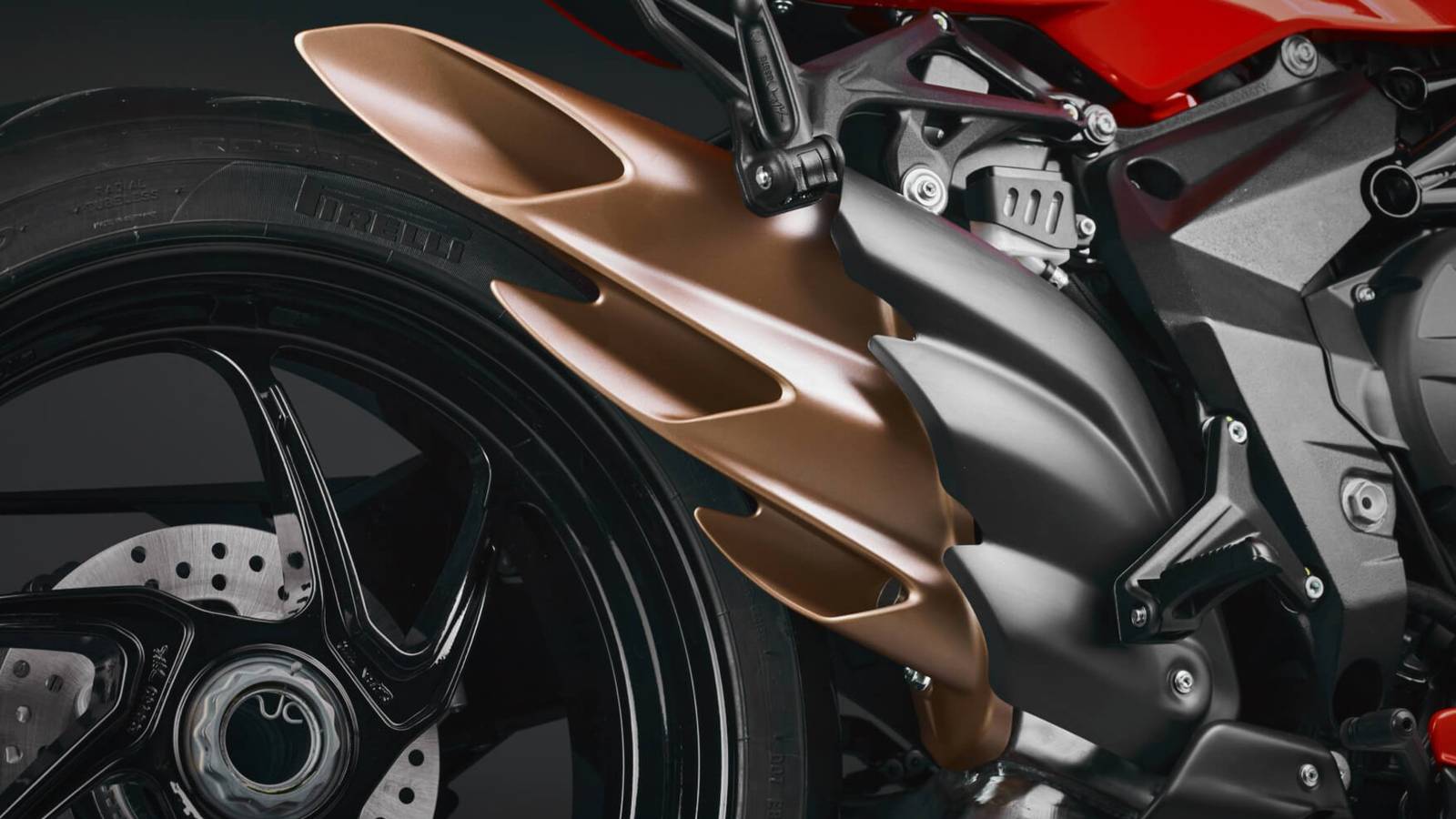
The middleweight sports bike segment has seen a big overhaul in recent years. Chasing horsepower and cutting tenths around a lap is no longer the norm, with comfort and accessibility gaining more importance. That has inevitably made the gap between mid-weight bikes and liter-class bikes massive. Just look at the Ducati Panigale V2 and Panigale V4, and you’ll know what we’re talking about.
Some exceptions remain, however. These offer impressive performance with equally impressive underpinnings and features. So you get a similar experience to liter bikes, minus the unusable performance and soaring prices. So much so that these bikes make liter bikes feel excessive.
Why You Don’t Need A Liter Bike In 2026

Liter bikes are halo products. And as tempting as they are, no one really needs one. For starters, they have way too much for any rider. You can’t use all the power on public roads (unless you’re ready for jail), and you’ll need to have Marc Marquez levels of skill to unlock the full potential on the track. I say this after personal experience of owning an RSV4 and putting over 6,000 miles aboard it in one year of ownership. That includes road rides, touring, and the racetrack.
Then, there’s the cost of admission. Most modern-day liter-class bikes cost close to $20,000, and the premium versions can get close to $30,000 with ease. That’s a lot of money to dump on a single machine, especially one with an uber-limited use case.

10 Sports Bikes That Nail The Sweet Spot Between Speed And Comfort
These sports bikes can be either Dr Jekyll or Mr Hyde, depending on what you want in the moment
The MV Agusta F3 R Makes Liter Bikes Feel Excessive

When you think of top-tier middleweight sports bikes, the mind instantly wanders to OG supersports. This is a really diminishing space nowadays globally, but Americans can still enjoy a few good examples. Out of these, the MV Agusta F3 R justifies the title of a middleweight that makes liter bikes feel excessive. The prime reason for that is its impeccable performance. Its near-800cc inline-triple engine promises you almost 150 horsepower, which makes this one of the most powerful mid-weight bikes of its kind.
In turn, the figure also ensures a mighty top speed of 150 miles per hour. That is fast enough to keep any rider entertained, be it a mildly experienced one or a proper professional. At the same time, the F3 R gets you all the fancy bits you’d expect on a liter bike. That comprises cornering-enabled electronics, fully adjustable suspension, and razor-sharp bodywork for slicing through air.
One Of The Fastest Middleweight Bikes Out There
We’ve already shed some light on this, but it’s time to dive deeper. The F3 R features MV Agusta’s popular inline-triple engine with a 79 mm bore and a 54.3 mm stroke for a total of 798 cubic centimeters of capacity. This, along with a 13.3:1 compression ratio and 50 mm throttle bodies, ensures an output of 147 horsepower and 65 pound-feet. No other modern-day bike comes remotely close to that figure in 2026. You’ll have to either get the aged Suzuki GSX-R750 or the now-discontinued Ducati Panigale V2 to get similar performance from a middleweight.

This Ducati Is The 5-Year-Old Middleweight Sports Bike You Should Buy In 2025
This exotic Italian sports bike offers fantastic value on the used market
60 MPH Can Come Up In Just Over 3 Seconds

Numbers on a spec sheet are one thing, but the F3 R backs it up in the real world. MV’s testing reveals a zero to 62 mph time of just 3.05 seconds, while 124 mph comes up in just 9 seconds. The former is right in the alley of liter-class superbikes. Oh, and let’s not forget, all this is in road-legal trim. If you slap on an exhaust and ECU flash, the output can rise to over 155 ponies with ease.
A Unique Chassis And Fully Adjustable Suspension Make Up The Underpinnings

Japan has long favored aluminum twin-spar frames for its supersport bikes. But Europe has always taken a different approach. The F3 R proves the same, thanks to its ALS steel trellis chassis, a bolt-on aluminum subframe, and a unique-for-the-class single-sided swingarm. Topping this is a suspension setup with 43 mm Marzocchi forks and a Sachs monoshock. Full adjustability is present, just like liter-class superbikes.
Brembo Stylema Brakes To Shed Speed

Speaking of bits inspired by superbikes, the braking package comprises twin 320 mm rotors with Brembo Stylema calipers. It’s worth noting that not even bikes like the Kawasaki Ninja ZX-10R, Suzuki GSX-R1000, and Honda CBR1000RR have Stylemas. You’ll need these fancy brakes, though, as the F3 R is a bit hefty (424 pounds wet without fuel). In comparison, the CBR1000RR weighs 432 pounds fully fueled.
Key Dimensions
- Wheelbase: 54.33 inches
- Weight: 424 pounds
- Seat height: 32.68 inches
- Ground clearance: 4.72 inches
- Tank capacity: 4.36 gallons
Fancy Electronic Aids Back Up MV Agusta’s Exotic Appeal

The F3 R comes loaded from the factory with fancy electronics, as you’d expect. A TFT sits bangsmack in the middle of the cockpit, armed with creature comforts like navigation and an anti-theft system with geolocation. It also gives you access to the rider aids, which include eight levels of traction control, cornering ABS, wheel lift control for both the front and rear, launch control, and cruise control. A recent update also brings a new 9-disc slipper clutch to reduce hopping and reduce lever effort by 50 percent over the previous generation bike.

The Sports Bike That Proves Luxury Can Be Practical
Understandably, this luxury sports bike hails from Italy and has an expensive price tag
The F3 R Justifies The Money Somewhat Well

Finally, let’s talk money. The F3 R sells for $17,998 in 2026. That is more than a few Japanese full-size liter-class superbikes. But let’s not forget that the liter bikes in context have had no major updates in nearly a decade. As for middleweights, the F3 R is cheaper than its arch-rival, the new Ducati Panigale V2 S. That too, by a considerable sum of money. At the same time, the Panigale has less power, less premium brakes, and it doesn’t look as good, either.