
Luxury performance sedans occupy a fascinating corner of the automotive world. They promise the speed of sports cars with the practicality of four doors, combining immense horsepower with comfortable interiors and advanced technology. For buyers who want one car to do everything, these machines represent the ultimate compromise between everyday usability and outright performance. But they also follow a predictable life cycle. When new, they arrive loaded with the latest engineering breakthroughs and price tags that reflect their technological ambition. A few years later, however, the same cars often experience steep depreciation.
The technology that once made them cutting-edge can begin to feel complicated in the used market, and newer models inevitably arrive with even more power and refinement. For enthusiasts willing to look past the headlines, this cycle can create extraordinary value. Some of the most capable performance cars ever built have quietly become attainable on the second-hand market, offering supercar-level speed for a fraction of their original cost. Occasionally, the biggest bargains emerge from cars that sparked controversy when they first arrived.
Why High-Performance Luxury Sedans Often Depreciate Quickly
The Wow Factor Comes At A Hefty Cost Shortly After Driving Off The Lot

Performance sedans sit in one of the most competitive segments in the automotive industry. Every major manufacturer pushes its engineering limits to outdo rivals with more power, sharper handling, and more advanced technology. The result is a constant technological arms race. Cars like the BMW M3 Competition, Audi RS5, and various Mercedes-AMG models compete fiercely for attention, each introducing innovations that quickly raise expectations for the entire segment. What feels groundbreaking today can appear ordinary just a few years later as the next generation arrives with even more performance.

Hybrid technology has complicated this equation even further. Electrified performance powertrains deliver staggering acceleration, but they also introduce new variables for second-hand buyers. Batteries, electric motors, and complex software systems can create uncertainty about long-term ownership costs. Even when the engineering is excellent, perception alone can influence resale values.
High Starting Prices Also Play A Role

Luxury performance sedans frequently begin life well above $80,000 or $90,000, depending on options, and vehicles in that price range often lose a substantial portion of their value within the first five years. When controversy surrounds a model’s launch, depreciation can accelerate. And few modern performance sedans illustrate that dynamic better than one of Mercedes-AMG’s most ambitious engineering experiments.

Luxury Sedans That Depreciate Faster Than Sports Cars
While these models offer posh accommodations and sophistication, they fail to retain value better than the average sports car.
The AMG That Broke Tradition
Why The Four-Cylinder Hybrid Shocked Loyalists

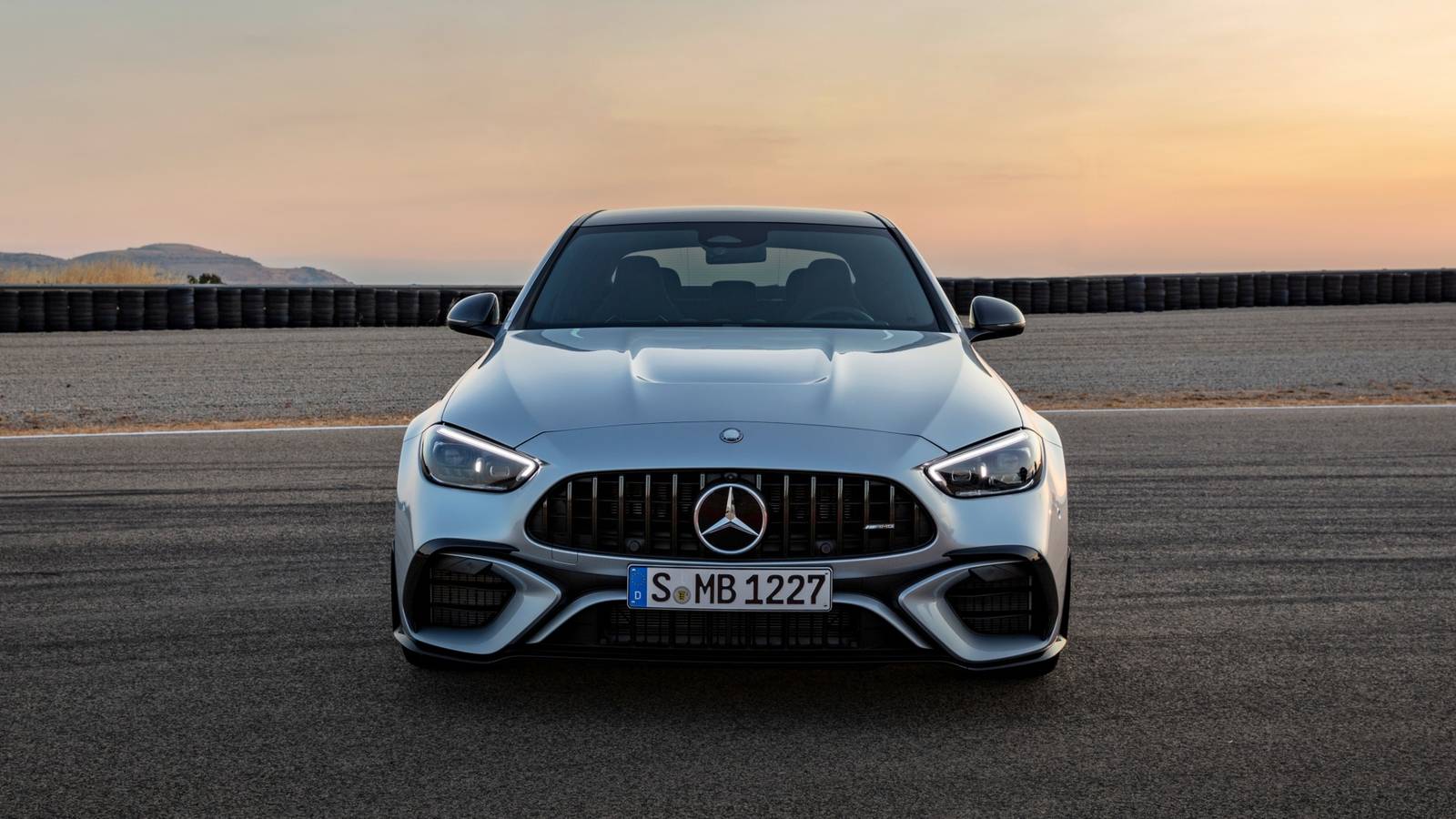
The current-generation Mercedes-AMG C63 S E Performance arrived with enormous expectations. For decades, the C63 badge represented something unmistakable: a compact performance sedan powered by a charismatic V8 engine. Earlier generations built their reputations not only on performance but also on personality.

The W204 C63, introduced in the late 2000s, used a naturally aspirated 6.2-liter V8 that produced thunderous sound and theatrical power delivery. Its successor, the W205 C63, downsized slightly but retained a 4.0-liter twin-turbocharged V8, preserving the aggressive character that AMG fans had come to expect.
Those Engines Were More Than Powerplants; They Defined The Car’s Identity

The latest C63 S E Performance completely broke from that tradition. Instead of a V8, Mercedes-AMG engineered a hybrid system built around a 2.0-liter turbocharged four-cylinder engine, paired with electrification and a rear-mounted electric motor. The change represented one of the most dramatic powertrain shifts in the model’s history. For many enthusiasts, the reaction was immediate and emotional.

Downsizing itself is nothing new in modern performance engineering, but replacing a signature V8 with a four-cylinder hybrid felt like a major departure from what the C63 had always represented. The criticism was not necessarily about performance figures — it was about character. Previous C63 models roared with mechanical drama. The new one delivers its performance through electrification, software, and cutting-edge engineering. Impressive, yes — but undeniably different.

10 Most Reliable Mercedes-AMG Models On The Used Market, Ranked
These are the most reliable used Mercedes-AMG models you can buy today; get yourself a potent machine that will spend more time on the road.
A Technological Masterpiece — On Paper
671 Horsepower Isn’t The Problem

Ironically, the biggest criticism of the new C63 has nothing to do with speed. From an engineering perspective, the car is remarkable. At the heart of the system is AMG’s M139l 2.0-liter turbocharged four-cylinder, which produces 469 horsepower on its own. That makes it the most powerful production four-cylinder engine currently available in a road car.

The combustion engine is paired with a rear-mounted electric motor that generates 201 horsepower, bringing the total system output to 671 horsepower and 752 pound-feet of torque. The hybrid system itself draws heavily from Mercedes’ Formula 1 technology. An electrically assisted turbocharger eliminates lag, while the compact battery system focuses on delivering bursts of performance rather than long-range electric driving.
The hybrid system even fills in the microsecond gaps when the transmission shifts, meaning the power delivery feels relentless, like an EV. We’ve driven many fast performance cars before, but the C63’s linear acceleration made us feel physically ill; it’s that savage.
– Jared Rosenholtz, CarBuzz Journalist

The results are extraordinary. The C63 S E Performance can accelerate from zero to 60 mph in roughly 3.4 seconds, placing it firmly in super-sedan territory. On paper, it is faster than any previous C63 generation. When I drove the car, however, the hybrid hardware was noticeable. The added weight from the battery and electric components subtly changes the character compared with earlier models. AMG engineers counter this with rear-axle steering, adaptive suspension, and a fully variable all-wheel-drive system designed to preserve agility. The result is immense capability. But performance numbers alone have never been the only thing that defines an AMG.

12 Sedans That Can Outrun The Porsche 911 In A Straight Line
The quickest sedan on this list that can outrun a Porsche 911 does 0-60 in under 2 seconds.
The Depreciation Storm Brewing
Why High-End Hybrids Often Struggle In The Used Market

Luxury performance cars almost always depreciate heavily, and the C63 S E Performance may be particularly vulnerable to that trend. One factor is complexity. Hybrid performance systems combine internal combustion engines, electric motors, batteries, and advanced software. While these technologies deliver incredible performance, they can make second-hand buyers cautious. Questions about battery longevity, long-term servicing costs, and overall drivetrain complexity often influence resale demand.
The Car’s High Original Price Also Plays A Role

Depending on options, a well-equipped C63 S E Performance can easily exceed $90,000 when new. Vehicles in this segment historically lose a significant portion of their value within five years, particularly when newer models arrive with updated technology. Perception is equally important because the latest C63 sparked debate among enthusiasts; early demand in the used market may not match its original sticker price. That combination of high MSRP, technological complexity, and mixed public reception creates the conditions for substantial depreciation. For some buyers, that could become an opportunity.

Every Hybrid And Plug-in Hybrid Sports Car Currently Available
If you’re looking for a more eco-friendly performance car, these are your best options.
The Six-Cylinder Question Mark
Could AMG Be Preparing A Course Correction?

Another factor influencing the C63’s future value is the possibility of a shift in AMG’s broader powertrain strategy. Recent reports suggest Mercedes-AMG may increasingly rely on high-performance inline-six engines in certain models as a middle ground between traditional combustion power and full electrification.

The recently introduced Mercedes-AMG C53, for example, uses a 3.0-liter turbocharged inline-six that produces approximately 443 horsepower and 413 pound-feet of torque. While it delivers less peak power than the hybrid C63, the six-cylinder engine offers a more familiar driving character that some enthusiasts prefer.
Competitors Reinforce This Trend

The BMW M3 Competition continues to use a turbocharged inline-six, while the Audi RS5 relies on a twin-turbo V6. If AMG gradually shifts toward six-cylinder performance models as a bridge between efficiency and emotion, the current four-cylinder hybrid C63 could become a transitional chapter in the brand’s history. Cars that represent technological turning points often depreciate quickly at first. Later, however, they can gain recognition as fascinating experiments in the evolution of engineering.

Every AMG Black Series Ever Made: A Look At All Six Hardcore Models
A byword for style and face-melting performance, the Mercedes-AMG Black Series are sports car-defining models – here are the six series models.
The Perfect Used Performance Bargain?
Why This Could Be A Dream Buy In 3–5 Years

Viewed purely through the lens of performance, the C63 S E Performance remains extraordinary. Eventually, a sedan with over 670 horsepower, advanced hybrid technology, and genuine track capability will appear on the used market for a fraction of its original price. That combination could make it an exceptional value. History shows that controversial performance cars often age better than expected.

Once depreciation lowers the barrier to entry, enthusiasts begin to appreciate the engineering beneath the headlines. Behind the debate lies an incredibly capable AMG sedan. The hybrid system delivers explosive acceleration, the chassis offers serious handling precision, and the overall package remains deeply impressive from a technological standpoint.
The C63 S E Performance Could Follow That Same Path

Five years from now, the narrative around the car may look very different. Instead of focusing on what the C63 lost, buyers may begin to focus on what it offers: immense power, cutting-edge engineering, and the opportunity to own one of AMG’s most ambitious performance sedans for far less than its original price. In that context, the current C63 might not be remembered as the car that broke tradition. It may instead become the AMG that quietly turned into a bargain.
Sources: Mercedes-AMG, AutoCar, BMW, Audi, CarEdge