
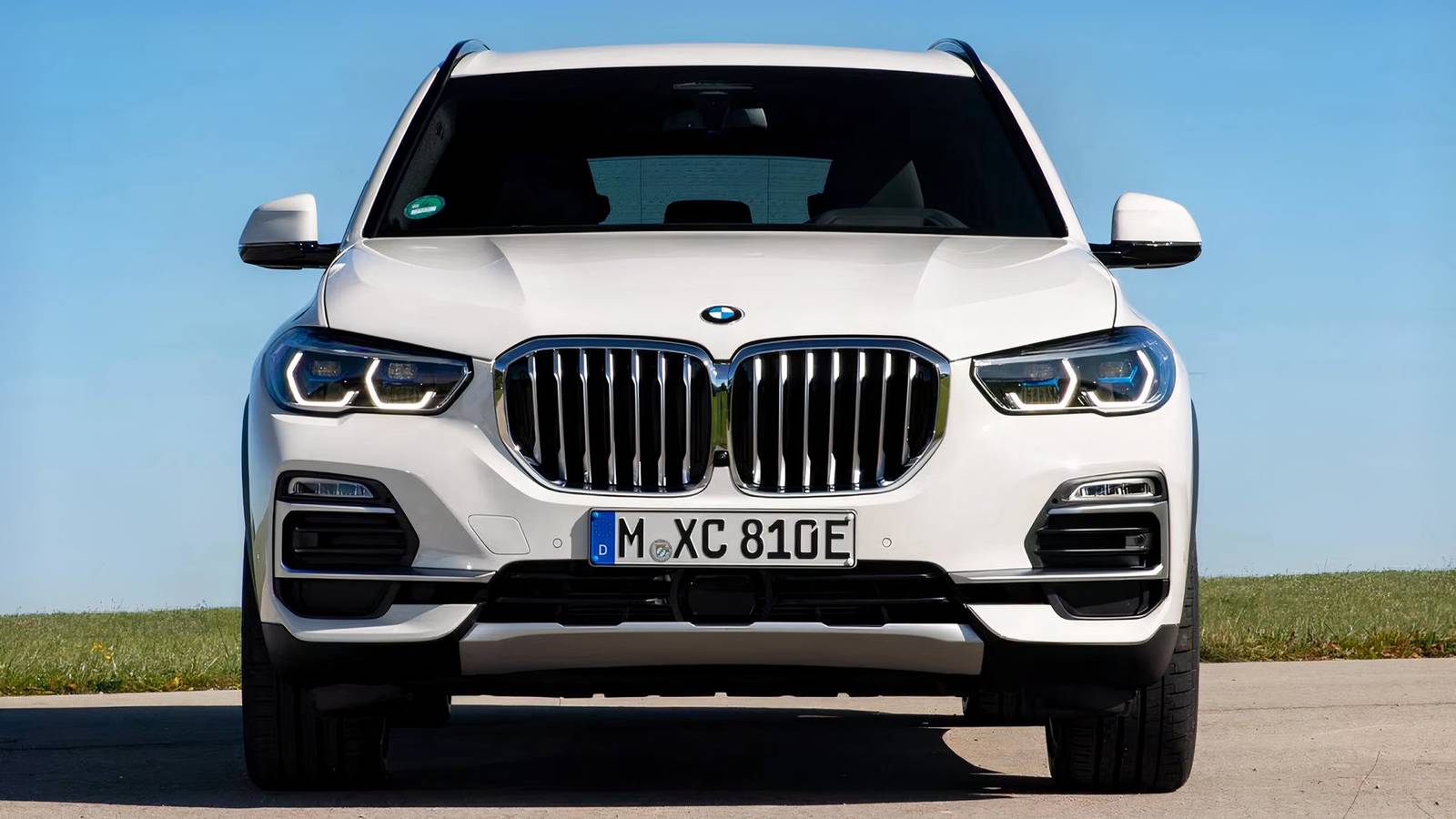
There’s a quiet shift happening in today’s car market, and most buyers don’t even realize it. For decades, the idea of spending big money meant stepping into a luxury showroom, while mainstream sedans represented the safe, sensible choice. But depreciation has rewritten those rules entirely. What once required a six-figure budget can now be had for the same price as a brand-new Toyota Camry, and that changes everything.
This isn’t just about getting more features for your money. It’s about stepping into an entirely different class of vehicle, one built with higher-grade materials, more advanced engineering, and a level of refinement that economy-focused models simply aren’t designed to match. The gap between “premium” and “mainstream” hasn’t disappeared; it’s just become more accessible.
For buyers willing to think beyond that new-car smell, the rewards are substantial. Instead of settling for predictable competence, you can experience genuine luxury, performance, and presence, all for the same outlay. And once you realize what’s possible at this price point, it becomes very hard to justify going mainstream ever again.
Why Paying Camry Money For A Once-Six-Figure Luxury SUV Feels Almost Unreal

There was a time when spending over $60,000 on a luxury SUV felt like an entirely different financial universe to buying a midsize sedan. Fast forward just a few years, and that gap has collapsed in dramatic fashion. A 2020 BMW X5 sDrive40i, which originally carried an MSRP of around $63,000, can now be found on the used market for roughly $25,000 to $30,000, depending on mileage and condition, with some higher-mileage examples dipping even lower.

Put that into perspective, and the numbers become almost absurd. A brand-new Toyota Camry in 2026 can easily push past $30,000 once you move beyond base trims, especially with popular options and hybrid variants factored in. For more precise pricing, the 2026 Camry ranges from $29,300 to $37,225 before options and other charges. That means buyers are now choosing between a factory-fresh, mass-market sedan and a once pricey luxury SUV that has already absorbed the steepest part of its depreciation curve. Real-world listings reinforce just how wide this overlap has become. It’s not uncommon to see clean 2020 models advertised in the mid-$20,000 range, while well-kept, lower-mileage examples hover closer to $30,000. In other words, you’re firmly in Camry territory. And that’s what makes this moment so compelling. You’re no longer stretching your budget to reach luxury; you’re simply redirecting it.

The Small BMW SUV Most Buyers Don’t Consider
The BMW X1 may not have the fame of its bigger siblings, but it embodies much of what makes the brand desirable.
How The 2020 BMW X5 sDrive40i Delivers Effortless Power

At the heart of the 2020 X5 sDrive40i lies one of the most celebrated engines in modern automotive engineering: BMW’s turbocharged inline-six. Known internally as the B58, this 3.0-liter powerhouse produces 335 horsepower and 330 pound-feet of torque, figures that still feel generous by today’s standards.
What makes this engine special isn’t just the numbers, it’s the way it delivers them. Power comes on smoothly and predictably, with none of the harshness or lag that often plagues smaller turbocharged engines found in mainstream sedans like the Toyota Camry. Whether you’re easing through city traffic or merging onto the highway, the X5 responds with a refined surge of acceleration that feels both effortless and composed.

Paired with an eight-speed ZF automatic transmission that shifts with near imperceptible precision, the drivetrain transforms everyday driving into something genuinely satisfying. Even more impressive is how the X5 balances performance and RWD dynamics with usability. Despite its size and weight, it never feels cumbersome. Instead, it carries itself with the confidence of a much smaller vehicle, delivering a driving experience that remains engaging without ever becoming demanding.

10 Luxury SUVs That Depreciate The Most After 5 Years
These 10 luxury SUVs may be stylish, but they lose their value at fast rates over 5 years – not great for new buyers, great for the used market buyers
Inside The Cabin That Still Makes Brand-New Mainstream SUVs Feel Cheap

Step inside the 2020 X5, and the gap between luxury and mainstream becomes immediately apparent. This isn’t just a nicer interior, it’s a fundamentally different approach to design and materials.
Soft-touch leather surfaces dominate the cabin, complemented by genuine wood trim, aluminum accents, and a level of fit and finish that remains difficult to match even in many new vehicles. Every control, every surface, and every interaction feels carefully considered, from the weight of the door handles to the tactile precision of the rotary iDrive controller.

Compared to the interior of a new Toyota Camry, the X5 feels like it belongs to an entirely different segment. Where the Camry prioritizes durability and cost efficiency, the BMW leans into craftsmanship and sensory appeal. Space is another area where the X5 excels. Rear passengers benefit from generous legroom and supportive seating, while the cargo area offers the kind of versatility that sedans simply can’t match. Whether it’s a family road trip or a weekend haul, the X5 adapts effortlessly.
Then there’s the atmosphere. Ambient lighting, panoramic glass, and comprehensive sound insulation combine to create an environment that feels calm, insulated, and undeniably upscale. Even years after its release, it’s an interior that continues to impress, not just for what it offers, but for how it makes you feel.

TopSpeed’s Best Hybrid Of The Year Is The 2025 Toyota Camry
Toyota’s popular midsize sedan goes all-hybrid, but maintains its widespread appeal.
The Tech, Comfort, And Driving Dynamics That Continue To Shame New Sedans

Technology is often where older luxury vehicles begin to show their age, but the 2020 X5 remains remarkably competitive. Its infotainment system is intuitive, responsive, and packed with features that still feel current, including a large high-resolution display, digital instrument cluster, and advanced connectivity options. More importantly, the technology enhances the driving experience rather than complicating it. Controls are logically arranged, menus are easy to navigate, and key functions remain accessible without distraction.

Comfort is another area where the X5 quietly dominates. Adaptive suspension systems smooth out rough roads with ease, while supportive seats make long journeys feel shorter than they are. Compared to the firmer, more utilitarian ride of a typical midsize sedan like the Toyota Camry, the difference is night and day.
But perhaps the most surprising aspect is how the X5 handles. Despite its SUV proportions, it delivers a level of composure and agility that few vehicles in its class can match thanks to its RWD layout. Steering is precise, body roll is well controlled, and the overall driving experience feels cohesive and confidence-inspiring. It’s this combination, technology, comfort, and dynamics, that allows the X5 to outperform not just mainstream SUVs, but many new sedans as well.
Why This Depreciated Luxury SUV Might Be The Smartest Used Buy On The Market Today

Depreciation is often viewed as a downside of luxury car ownership, but for second-hand buyers, it’s a powerful advantage. The 2020 BMW X5 sDrive40i represents the sweet spot where initial depreciation has already occurred, yet the vehicle itself remains modern, capable, and highly desirable. For the price of a new Toyota Camry, buyers can access a vehicle that offers superior performance, higher-quality materials, more advanced engineering, and a driving experience that simply feels more complete.

Of course, ownership isn’t without considerations. Maintenance and repair costs will be higher than those of a mainstream sedan, and buyers should approach with a clear understanding of long-term expenses. But even when factoring in these costs, the overall value proposition remains compelling. This is especially true for enthusiasts and discerning buyers who prioritize driving feel, build quality, and overall refinement.
In the end, the choice comes down to perspective. If the goal is to own something new, predictable, and worry-free, the Camry makes perfect sense. But if the goal is to experience a higher level of automotive excellence without paying a premium price, the used X5 stands in a league of its own, now costing half of its showroom sticker price.
Sources: BMW U.S. & MotorTrend