
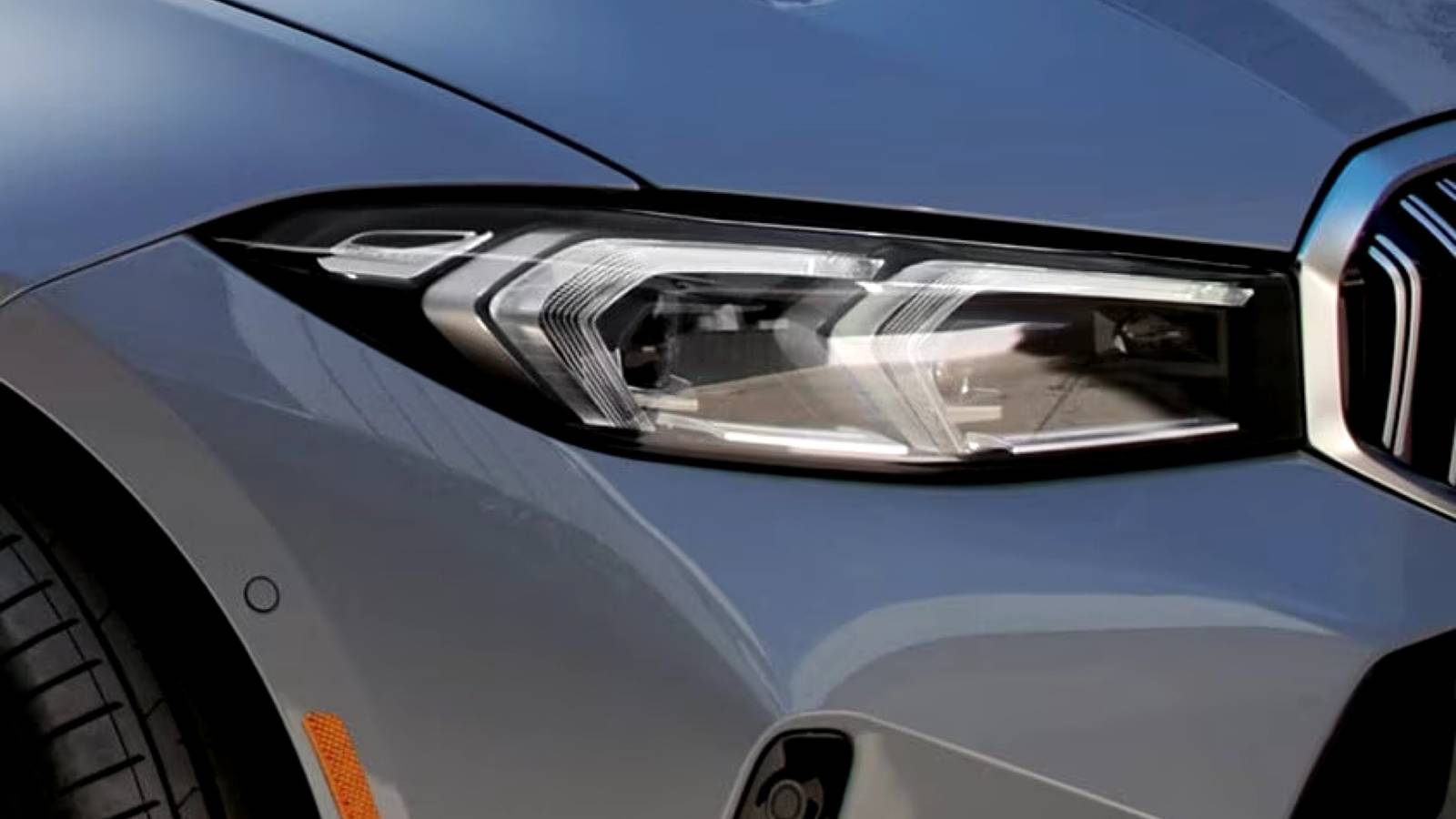
This article couldn’t have come at an opportune time. Gas prices are rising faster than your car’s 0–60 mph time. If electric vehicles (EVs) aren’t an option for you, then you might want to consider a vehicle technology that bridges internal combustion engine (ICE) cars with EVs—the plug-in hybrid electric vehicle (PHEV).
When designed right, a PHEV serves as the best of both worlds—a short-range EV for your daily commutes, while long drives will combine the high-speed efficiency of an ICE with the augmentation of performance by the electric motor—aka traveling as a powerful and efficient hybrid. PHEVs can be considered two vehicles in one for certain people, but the technology is often expensive—unless you’re BYD, but that’s a story for another day. Now, what if you also wanted luxury at a price point that’s more affordable than a mainstream pickup truck like the Toyota Tacoma? For that to be possible, you’ll have to look into the used car market.
Used Luxury PHEVs Are Tempting

PHEVs are great at letting you explore your limits in EVs. If you want to feel what it’s like to own an EV without worrying about range anxiety, the presence of an ICE is pretty much your safety net. When used appropriately, a PHEV can save you fuel costs. Here’s why.
Home Charging Is Overwhelmingly Cheaper

Depending on where you live, electricity costs can vary in price, but regardless of where you are, electricity prices are overwhelmingly lower than gas prices, according to the Southern Alliance for Clean Energy. That affordability gap is even wider today due to the rapid rise in fuel costs. What if you’ve committed to solar energy well ahead of time? Use a PHEV properly by plugging it in every time you’re at home, and you’ll be using the fuel tank a lot less, thus saving you a lot in terms of fuel bills.

The importance of plugging it in couldn’t be stressed enough. Though a PHEV can operate without being plugged in (it is a hybrid, after all), you’re pretty much defeating its purpose if you don’t treat it like an EV with a hybrid system. For one, PHEVs, when operating in hybrid mode, are less efficient than their non-plug-in counterparts due to their added weight; you’re effectively carrying two powertrains after all. Some models, like the luxury PHEV for this article, are even less efficient than their pure ICE counterparts—once again due to increased weight.
German Luxury PHEVs Rapidly Depreciate

Now, if you’re going towards the German luxury brands, then I have good news for you. As the customer of a used German luxury PHEV, you’ll benefit from its rapid depreciation. With Japanese luxury brands like Lexus, their plug-in hybrids tend to hold their value better than their German counterparts. Why is that the case? A Lexus is just as simple to maintain as a Toyota, which makes these vehicles more attractive for used car shoppers.

On the other hand, German luxury cars, whether PHEV or just pure ICE, tend to be more complex when it comes to maintenance and thus, long-term ownership. German luxury cars also have mixed reliability, with some models being very reliable, while others are worth steering away from. For today’s luxury PHEV, its pure ICE version is a reliable car, but the long-term reliability of its short-lived PHEV variant is still unknown.

Why This 3-Year-Old Plug-in Hybrid SUV Beats Most Brand-New Cars In Reliability
This 3-year-old plug-in hybrid SUV offers unmatched reliability, proving itself as a better choice than many brand-new models on the market today.
Say Hello To The BMW 330e

The luxury plug-in hybrid that costs less than a brand-new 2026 Toyota Tacoma, which has a base price of $32,245, is the BMW 330e. This is the PHEV version of the 3 Series that sits between the 330i and the M340i, and here’s what you need to know about it.
Sporty With Good EV Range

The great thing about the BMW 330e is that it combines brisk performance with a good-enough pure electric range. When fully charged, the 330e delivers up to 22 miles of zero emissions driving, though opting for xDrive all-wheel drive introduces a penalty of two miles. For the average American who drives 13,476 miles a year, or about 37 miles per day, the 22-mile electric range means it covers more than half of your journey without consuming a drop of fuel.

Once the 2.0-liter turbo four-cylinder goes to work, though, its combined system output is 288 horsepower and 310 pound-feet of torque—enough for a 0-60 mph time of 5.6 seconds, while the version with xDrive AWD is a tenth slower. Couple that with the signature class-leading sporty handling of the 3 Series, and you’ve got a sporty luxury PHEV that’s satisfying to drive whether in pure EV mode or with the hybrid system delivering the full beans.
2024 Was Its Final Model Year

The BMW 330e, however, was discontinued in the North American market in 2024, though the reason for the discontinuation wasn’t revealed by the company. The 330e wasn’t a sales flop, mind you, but the likely reasoning is that the pricing gap between the fully electric i4 and 330e has narrowed over the years. The BMW 330e was first offered in the previous F30 3 Series in 2016, and was stopped briefly when it transitioned into the G20 generation. The G20 330e was offered from 2020 until its final 2024 model year.
2024 BMW 330e Performance Specs
|
Engine |
2.0-liter turbo four-cylinder PHEV |
|
System Horsepower |
288 hp |
|
System Torque |
310 lb-ft |
|
Drivetrain |
RWD/AWD |
|
0-60 MPH |
5.6 seconds (RWD) 5.7 seconds (AWD) |
|
Transmission |
8-speed automatic |
|
EPA Electric Range |
22 miles (RWD) 20 miles (AWD) |
|
EPA Fuel Economy (Combined) |
27 MPG (RWD) 26 MPG (AWD) |
|
EPA Energy Efficiency (Combined) |
73 MPGe (RWD) 68 MPGe (AWD) |

Why Buying A 3-Year-Old EV Is A Smart Financial Move
The used EV market is experiencing huge mark-downs among top models from BMW, Ford, Mercedes, and more.
Interesting Details You Need To Know

If you made it this far into the article, then you’re probably very serious about considering the BMW 330e. If that’s the case, then here’s what you need to know about the 330e before buying one.
How Much You’ll Pay For One

As mentioned, Japanese PHEVs, whether luxury or otherwise, tend to hold their values well. Make that a German luxury car, though, and this becomes the perfect recipe for a rapidly depreciating vehicle. Using the final 2024 model year as a basis, Kelley Blue Book has determined that the 330e has a fair market value of $29,730, which means that older generations and model years will be cheaper.

That’s less than a brand-new but more utilitarian Toyota Tacoma, which has a base price of $32,245. For reference, let’s compare an equivalently priced (when new) 2024 ES 300h. This midsize hybrid luxury sedan has a much higher fair market value of $35,740. As we’ve stated in numerous articles in the past, the ES has one of the most resilient resale values of any luxury sedan. This is mostly due to the ES being a lot simpler to maintain, while also being proven to be a lot more reliable. For the used car buyer, the ES will last them nearly as long as if they had bought the car when new.
As A Hybrid, It’s Not Exactly The Best

Wait a minute, but shouldn’t the 330e be a luxury sports sedan that combines the best of both worlds? Why yes, yes, it should—at least theoretically. That’s because while it has a good pure electric range of 20–22 miles, when that battery gets depleted, the 330e is slightly thirstier than the non-electrified 330i in both RWD and AWD forms. The 330i RWD and AWD have a combined fuel efficiency of 29 and 27 MPG, respectively, while the 330e RWD and AWD achieve 27 and 26 MPG, respectively. Believe it or not, the 330e is on par efficiency-wise with the M340i, which has the legendary B58 3.0-liter turbo straight-six.

Oh, and that 12 kWh lithium-ion battery? That took a bit of space from the fuel tank. So if you’re expecting the 330e to have a longer total driving range than the 330i, then that’s unfortunately not the case. The 330e RWD and AWD have a total driving range of 310 and 300 miles, respectively, versus the 452 and 421 miles of total driving range that the 330i and 330i xDrive achieve.
Sources: BMW, The EPA, KBB, CleanEnergy.org