
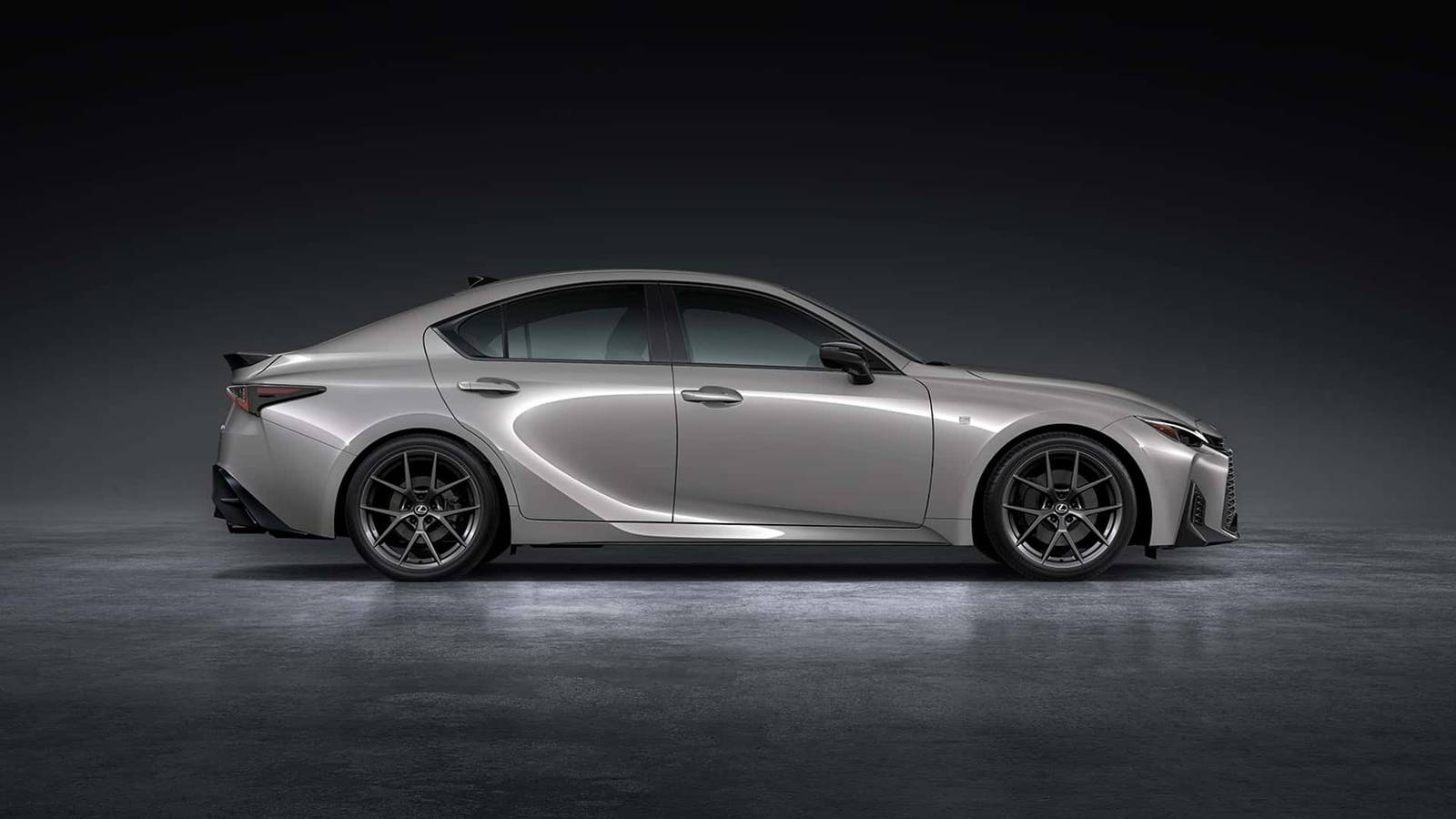
Luxury cars are typically niche and low-volume sellers, with margins decreasing every year. Cars that operate in this segment most likely make for poor investments, with depreciation rates being one of the worst across the entire car market. A big reason for these models suffering from such poor depreciation rates is because of long-term reliability issues. These cars often require a lot of investment to keep them on the road after the warranty has expired, ultimately making them undesirable products.
A lack of appeal in the used market also affects resale, as most people don’t have the need for such luxurious cars as a daily driver. There’s a specific Japanese compact luxury sedan that holds its value fairly well. While not as technically impressive as other products from the brand, it often stands out as a better long-term investment.
How Brands Restrategize Luxury Sedans

Over the last five years, the U.S. luxury sedan market has faced a sustained uphill battle as consumer preference continues to shift toward SUVs, which now command nearly 60 percent of the luxury segment. While overall new car sales for traditional three-box designs have experienced a relative decline compared to their high-riding counterparts, luxury sedans have successfully stabilized as a high-margin niche by pivoting toward advanced electrification and superior comfort.
The primary difficulty remains a perceived lack of versatility in cargo space and ride height, yet sedans maintain a distinct edge in driving characteristics due to their lower center of gravity, which provides sharper handling and a more composed, quiet cabin experience that many top-tier SUVs still struggle to replicate. These vehicles also remain relevant by offering a more aerodynamic and fuel-efficient alternative to bulky crossovers, effectively balancing executive-level prestige with the practical benefits of lower ownership costs and a more engaging driver-centric experience.
Why Luxury Sedans Depreciate So Poorly

Luxury vehicles typically suffer from aggressive initial depreciation, frequently losing 40 to 50 percent of their original MSRP within the first three years. Lexus tends to perform the best when it comes to luxury car value retention, while Mercedes-Benz holds the second spot.
Luxury cars tend to perform poorly in the used market, because of their higher maintenance and servicing costs. Brands also tend to provide luxury products with more significant visual and functional updates during their respective lifecycle. In doing so, the rate at which models become outdated is much higher, resulting in more drastic depreciation rates.

The Most Reliable Mid-Size Luxury SUV That’s Not A Lexus
Stylish when standing still. Powerful when on the move. Luxurious when cocooned inside. And reliable as well. What’s not to like?
Lexus Masters Value Retention With The IS

According to Edmunds, the full cost to own a base rear-wheel drive 2026 Lexus IS 350 comes to $72,112. $19,592 contributes towards depreciation. It’s going to cost you $9,439 to maintain and $1,087 to repair over five years and 60,000 miles. You can also expect to spend $17,377 on fuel and $5,606 on taxes and fees. Kelley Blue Book indicates that you can expect to spend $6,485 on maintenance and $1,189 on repairs during the same period.
To support this longevity, Lexus provides a standard warranty package for the 2026 model that includes a 48-month or 50,000-mile basic warranty, a 72-month or 70,000-mile powertrain warranty, and 72-month corrosion coverage with unlimited miles.
iSeeCars indicates that an IS 350 will run for 17 years or 184,046 miles with a 40.3 percent probability of reaching 200,000 miles, which is an incredible feat for a luxury compact sedan.
For reference, iSeeCars indicates a $23,721 or 47.8 percent value loss for the C300 C-Class, based on its $49,650 MSRP. The Edmunds true cost to own calculator indicates that the base C300 wil lose $32,174 of its value after five years of ownership.
Repairs Are Appropriately Priced

The 2026 Lexus IS 350 stands as a popular choice in the U.S. luxury sport sedan market, backed by substantial data and positive owner feedback. According to the consumer review section on Edmunds, the 2026 model currently holds a strong 4.3/5 average rating, with many owners highlighting its exceptional reliability and manufacturing quality as primary benefits.
Regarding long-term maintenance, the IS 350 is a more affordable option to maintain when compared to key rivals. RepairPal costs for key components include $185 for a stabilizer bar link kit, $420 for spark plug replacements, $1,240 for a new fuel pressure sensor, $2,450 for a new exhaust manifold, and $1,120 for new stabilizer bushings. Major engine work, such as a camshaft replacement, can cost $3,200.

This Japanese Brand Defines Long-Lasting Luxury For Less
In a battlefield where German automotive giants have commanded respect, a Japanese brand has been honing its strengths to mount repeated challenges.
The IS’s Trusty V-6 Engine

The 2026 Lexus IS 350 features the brand’s longstanding naturally aspirated 3.5-liter V-6, producing 311 horsepower and 280 pound-feet of torque. You can opt for the standard rear-wheel drive system with an eight-speed automatic transmission or upgrade to the all-wheel drive configuration, with a six-speed automatic. With all-wheel drive applied, expect to cover a 0 to 60 MPH acceleration run in 5.6 seconds before hitting a limited 143 MPH top speed.
A Powertrain Built For Longevity

Toyota’s 2GR-FKS engine remains a benchmark for naturally aspirated efficiency and smoothness, despite being one of the oldest engine options in the compact luxury sedan segment. The design consists of an aluminum alloy block and heads that optimize heat dissipation and reduce front-end weight for sharper handling. The engine block is engineered for durability and refinement, utilizing a rigid dual-overhead cam valvetrain and a cooling system designed to maintain peak performance under spirited driving.
The engine also benefits from high-strength components, including forged connecting rods and a cast-iron lined block. These components manage thermal loads effectively without the complexity of forced induction. The D-4S dual-fuel injection system is a centerpiece of this engine. It combines direct and port injection for complete combustion, while improving fuel economy and eliminating the carbon buildup issues common in direct-injection-only rivals. Furthermore, Toyota’s Dual Variable Valve Timing-intelligent Wide allows the engine to switch between Otto and Atkinson combustion cycles, optimizing airflow across the entire rev range for both low-end torque and high-end power.

2025 Lexus IS 500 Ultimate Edition Debuts With Bigger Brakes, Unique Finishes
The Ultimate Edition is available in the exclusive exterior color Wind, which is a metallic light gray shade
How To Keep Your IS In Good Shape

The 2026 Lexus IS 350 follows a maintenance schedule centered on 5,000-mile or six-month intervals. As part of the LexusCare program, your first two scheduled visits are complimentary. Minor services every 5,000 miles include tire rotations and multipoint inspections, while major services occur every 10,000 miles to replace the synthetic oil and filter.
Significant milestones include the 30,000-mile service, which requires replacing the brake fluid and engine air filter, and the 60,000-mile service, where spark plugs are replaced, and the transmission fluid is inspected. While the 2026 model has no active recalls as of right now, the IS 350 has a stellar recent record. The most notable recall in the last five years affected certain 2021 models because of a potential fuel pump failure that could cause engine stalling, though this was largely a carry-over from a massive industry-wide Toyota recall that has since been resolved in newer production units.
Fuel Consumption Estimates Could Be Better

According to the EPA, the 2026 Lexus IS 350 all-wheel drive model consumes an estimated 19/26/22 MPG on the city/highway/combined cycle, covering 382 miles on a single 17.4-gallon tank. Over the course of five years, you can expect to spend about $4,500 more on fuel compared to the average new vehicle, with an annual refueling cost of roughly $3,150 and a cost of $5.25 to drive 25 miles.
The rear-wheel drive system provides a slight bump in efficiency, returning an estimated 20/28/23 MPG, and can cover 400 miles on a full tank. Choosing this drivetrain reduces your estimated five-year fuel premium to $4,000, with an annual cost of $2,950 and a cost of $4.92 to drive 25 miles.

Lexus Keeps 2026 IS Sedan Relevant With These Changes
Lexus’ compact sedan gains some worthy changes, including the IS 350 F Sport.
A Pleasant Mix Of Performance And Luxury

While the platform is older than those used by many current models, the 2026 Lexus IS 350 features a modernized interior focused on driver ergonomics and high-tech connectivity. Standard across all trims is the upgraded Lexus Interface, which includes a 12.3-inch touchscreen paired with a matching 12.3-inch digital instrument cluster.
This system includes wireless Apple CarPlay and Android Auto, four USB-C ports, and a standard 10-speaker Lexus Premium Sound system. For comfort, every IS 350 includes NuLuxe synthetic leather upholstery, dual-zone automatic climate control, and a power tilt-and-telescopic steering wheel. The base F Sport Design trim, priced at $46,795, adds heated front seats and a newly standard wireless charging pad, while the F Sport trim benefits from ventilated front seats, a heated steering wheel, and aluminum sport pedals. This costs $49,245.
In-Depth Optional Packages

For those looking to enhance the sedan’s luxury or performance, several optional extras and packages are available. The Technology Package adds advanced driver aids like Traffic Jam Assist and a Panoramic View Monitor, while the F Sport Handling Package focuses on the drive with an adaptive variable suspension and a Torsen limited-slip rear differential.
If you are an audiophile, we’d suggest upgrading to the premium 17-speaker, 1,800-watt Mark Levinson Surround Sound system for a studio-quality listening experience. Additionally, the limited Special Appearance Package offers exclusive aesthetic and functional upgrades, including Hakugin Matte White paint, 19-inch BBS forged alloy wheels, and Triple-Beam LED headlamps, alongside the high-end Mark Levinson audio as standard for that specific configuration. This costs $61,385. All-wheel drive is a $1,610 option, while all models are sold with a $1,295 destination fee.
Sources: Edmunds, iSeeCars, J.D. Power, CarEdge, and the EPA