
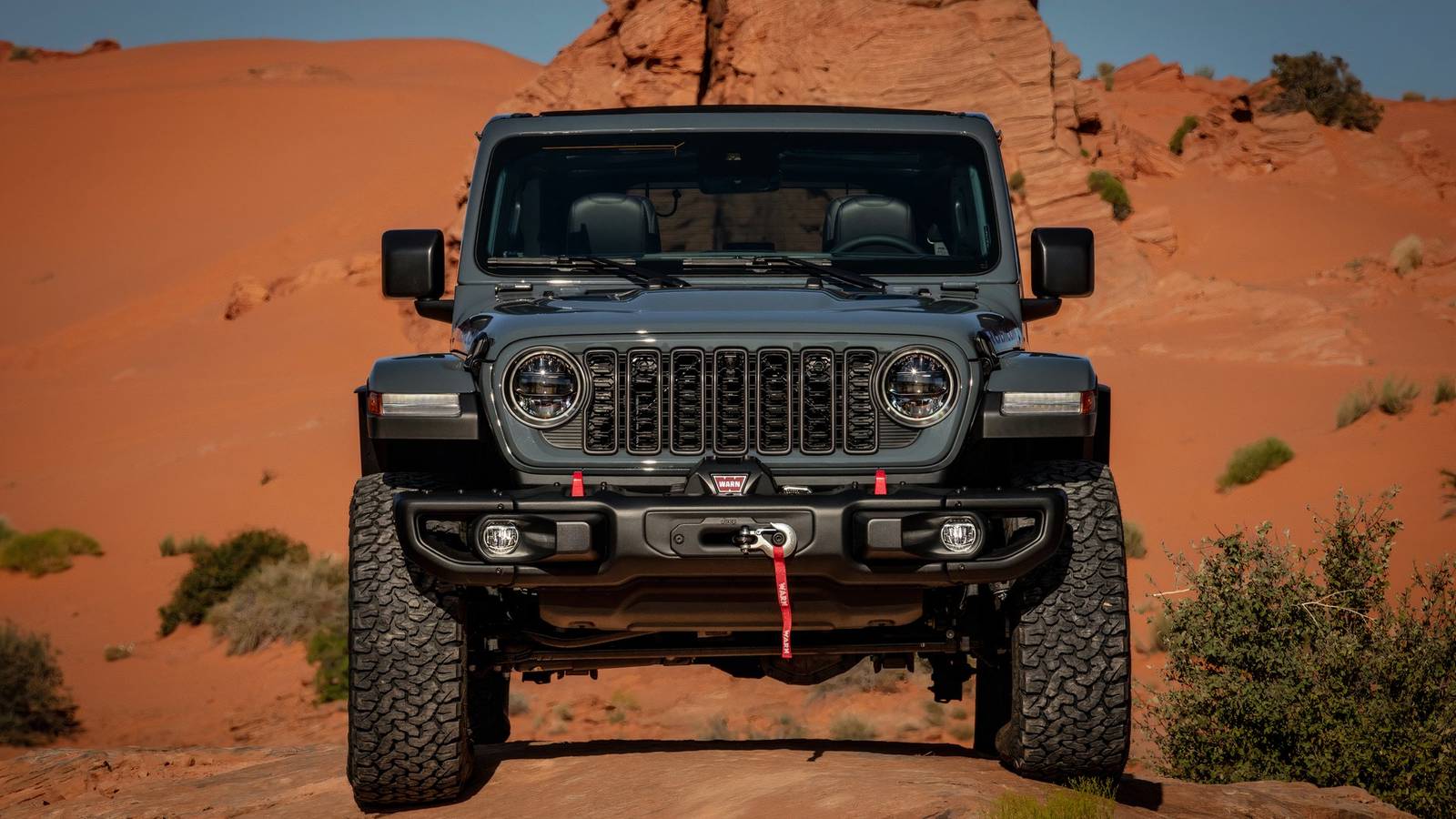
The Jeep Wrangler has never tried to blend in with the mainstream SUV. It’s loud, boxy, unapologetically impractical, and built around identity rather than logic. For decades, that identity was anchored by one engine above all others: Jeep’s naturally aspirated 3.6-liter Pentastar V6. It wasn’t just the default powertrain — it was the emotional core of the Wrangler experience.
In the United States, the V6 is still technically alive. You can still spec it, still buy it, still argue about it online. But its role has quietly changed. Once the center of the Wrangler universe, the V6 has been pushed to the margins as turbocharged engines and electrified alternatives take center stage. This shift isn’t about killing tradition. It’s about regulation, efficiency targets, pricing realities, and what buyers are actually choosing — even when nostalgia says otherwise.
The Pentastar V6 Isn’t Dead — It’s Just No Longer Central
Why Availability Matters More Than Existence

The 3.6-liter Pentastar V6 has earned its stripes. It’s tough, familiar, and, in hindsight, the engine that gave the Jeep Wrangler much of its soul. It puts out around 285 horsepower and 260 pound-feet of torque, delivering power that feels predictable and confidence-inspiring, backed by a proper V6 soundtrack that long-time Jeep fans still love. For years, it shaped how the Wrangler felt, whether you were crawling off-road or cruising on the highway.

The engine hasn’t been discarded — which is good news for purists — but it’s no longer the starting point for the Wrangler lineup. These days, it sits in the background as Jeep pushes more efficient options to the front. Having driven the 2.0-liter turbocharged Wrangler, which produces around 270 horsepower and 295 pound-feet, it’s clear that the engine exists to meet modern regulations and manufacturing realities. It doesn’t have the same character, but it delivers its power low down and suits how most Wranglers are actually used. Jeep hasn’t abandoned the V6 — it has simply eased up on it being the Wrangler’s identity.

Why Pre-Owned Jeep Wranglers Hold Their Value Better Than Most Cars
The iconic Jeep Wrangler holds its value better than most cars on the market, and it isn’t just because of its namesake. Find out why it does so well.
Why The 2.0-Liter Turbo Became The New Normal
Fuel Economy, Emissions, And Daily Usability

The Wrangler’s 2.0-liter turbocharged four-cylinder didn’t arrive as a novelty; it came as a solution. It was engineered to meet tightening emissions standards while preserving off-road credibility; the turbo four represents a shifting philosophy. Upon application, I found it to be less boisterous and to lack the Bravado of the V6 powerplant, but it delivers usable torque and refinement. It prioritizes usable torque and refinement, and, I suppose, it’s about smooth, effortless driving now, not just big engines and tradition.
The Performance Is There, But The Muscle Is Missing

Driving the turbocharged Wrangler shows why Jeep went this route. It pulls smoothly at low speeds and feels strong where the Wrangler is used most, whether off-road or in daily driving. It may not sound as heroic as the V6, but it feels easier to live with. In reality, after spending time in the watered-down variant, it still has that cool factor but lacks the bravado.

How The Ford Bronco’s Comeback Changed The SUV Landscape In The 2020s
The re-introduction of the legendary Ford Bronco changed the overrun SUV market, here is what its comeback did for the SUV segment during the 2020s.
Regulation Didn’t Kill the V6 — It Cornered It
How US Emissions Rules Shape Engine Strategy

Unfortunately, in the evolving and quite progressive motoring world we live in, many brands have to steer by EPA regulations. There was some leniency from the EPA regarding the Pentastar V6, but it is allowed to remain available for a bit longer than in many global markets. Even here in South Africa, pressure is mounting, and Stellantis effectively has no vehicle footprint. Nobody actually buys Stellantis products; perhaps a small pool of people do.
A Strategic Move To Future-Proof The Product

We must acknowledge that turbocharged engines and plug-in hybrids help manufacturers balance emissions across entire lineups. Arguably, the 2.0-liter may not be my cup of tea, but from a strategic point of view for the brand, it may not be the most exciting motor, but it might be easier to defend in boardrooms and compliance meetings.

There’s Only One Jeep Wrangler Model That Really Matters
With all due respect to the current crop, the peak of Jeep already happened 20 years ago.
What Enthusiasts Think Vs What Buyers Actually Choose
The Emotional Pull Of The Naturally Aspirated Engine

Among enthusiasts, the naturally aspirated V6 still carries real emotional weight. It feels honest. It sounds right. It doesn’t rely on boosts or software to deliver its performance. For purists, that matters — and it explains why the V6 continues to have loyal defenders. Showroom reality, however, tells a different story. Modern Wrangler buyers prioritize comfort, technology, and ease of ownership.

Heated seats, a warm steering wheel on cold mornings, a prominent touchscreen, and relaxed drivability matter more than engine layout alone. In real-world driving, the turbocharged Wrangler proves exactly that: it’s not perfect on fuel, still noisy, and still unapologetically boxy — but it’s comfortable, easygoing, and far more livable day to day than its image suggests. It remains iconic, just in a more usable way.
A Modern Balance For The Modern Buyer

That balance between emotion and reality is precisely where the Wrangler continues to win buyers over. Make no mistake — it still moves well, and its looks win hearts instantly. The design stays true to what fans love, from the unmistakable seven-slot grille and chunky wheel arches to the iconic boxy silhouette that traces its roots back to World War II. The latest facelift brings subtle but well-judged updates, including new wheels, refreshed color options, and a revised grille, keeping things fresh without losing its identity.

Step inside and the new 12.3-inch touchscreen immediately stands out. It’s a significant upgrade and is now standard across the range. In Sahara trim, you also get built-in navigation, heated front seats and steering wheel, a 230V plug point, and USB-C ports up front and for rear passengers. It’s built for durability rather than luxury, but it feels modern, comfortable, and genuinely usable. Parking is easy thanks to sensors and a reverse camera — though road noise still creeps in, and that’s very much the Wrangler way.
The Wrangler Isn’t Trying To Be Like Everyone Else

It’s off-road first, everything else second. While many rivals lean into softer, crossover-style comfort, the Wrangler doubles down on rugged adventure. Even the Sahara offers real off-road credibility, while stepping up to the Rubicon brings hardware inspired by the legendary Rubicon Trail in the U.S., one of the most challenging off-road routes on the planet.
Competition Only Reinforces This Shift

Rivals like the Ford Bronco embraced turbocharging from the outset, normalizing boosted engines in the off-road space. Buyers who cross-shop the two no longer see turbocharging as a compromise—they expect it. In the United States, pricing and trim structure further explain why the Wrangler’s turbocharged four has become the default choice. The lineup typically starts in the low-to-mid $30,000 range for base Sport trims and climbs past $50,000 for well-equipped Sahara and Rubicon models, with prices rising quickly once off-road packages and comfort features are added.


Find 2026 Jeep Wrangler and more cars for sale on our Marketplace
Within that structure, the 2.0-liter turbo is often the most accessible and widely stocked engine, while the 3.6-liter V6 is increasingly overlooked in favor of the modern powertrain options. Set against the Ford Bronco, the Wrangler’s approach makes even more sense. The Bronco sits in the same price space, starting in the mid-$30,000 range and climbing well past $50,000 in higher trims, but Ford committed to turbocharged engines from day one. Because of that, boosted powertrains are already the norm at this level, which lowers buyer resistance. In that context, the Wrangler’s turbo four doesn’t feel like a compromise — it feels like Jeep responding to the reality of the segment.

How The Jeep Wrangler Went From Military Workhorse To Cult Icon
The Jeep Wrangler’s journey from a battlefield necessity to a cult icon is a testament to its enduring appeal and versatility.
A Glimpse IntoTthe Wrangler’s Inevitable Future
Why The V6 Will Likely Fade, Not Vanish Overnight

The Wrangler’s future won’t be marked by a dramatic farewell to the V6. Instead, it will fade quietly as turbocharged engines, plug-in hybrids, and electrified variants continue to gain market share. This process is already complete in markets such as South Africa, where the V6 has been removed entirely, and the Wrangler continues without losing its identity.

Jeep understands the Pentastar’s emotional value, which is why it will likely remain available in the U.S. as long as regulations allow. Which, in hindsight, is actually fantastic news, but market forces are clear. The V6 is no longer central — and it likely never will be again. What remains unchanged is the Wrangler itself: still impractical, still iconic, still built for adventure first and everything else second. The engine may evolve, but the soul hasn’t gone anywhere.
Sources: Jeep USA, Ford USA, FuelEconomy.gov