
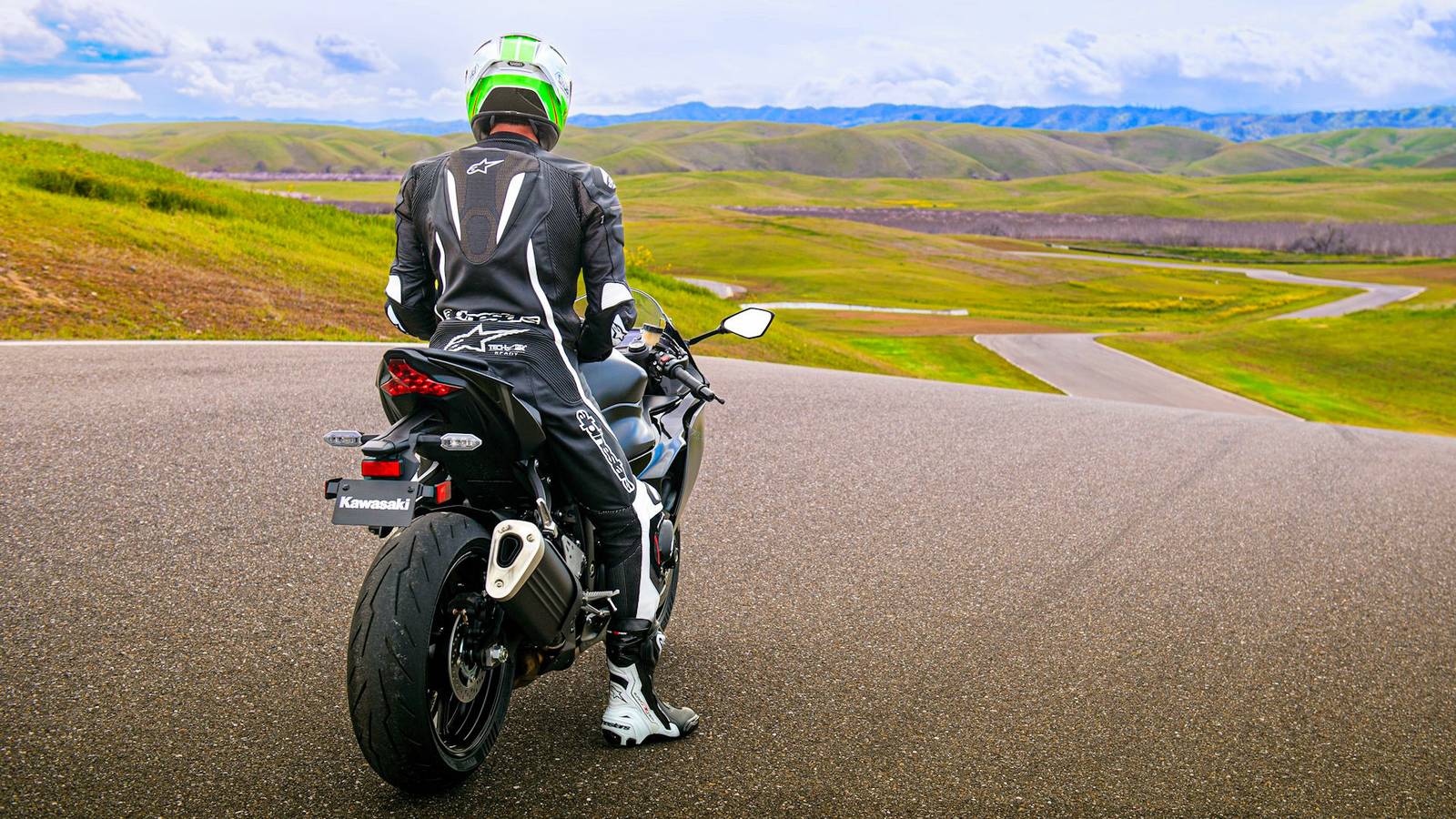
The Japanese started their motorcycle manufacturing with budget products that sold because they were affordable. This isn’t much different from the way that motorcycles from China and India are perceived today. The Japanese did one thing that was very different from the ruling models of the time, though: they were reliable. Before them, breakdowns were accepted as part of the motorcycling experience. After them, reliability became a key requirement, and this gave them a massive edge, especially since they were priced below their European and American competition. This is how the Japanese got a foot in the door. That’s just one half of the story, though.
Phase Two: The Japanese Motorcycles Take Over

Whatever it was that endeared European motorcycles (whether British, Italian, German, or any other nationality) and American motorcycles to the consumer, the Japanese found a way to either replicate it or forge their own path. At some point in the process, they stopped being replicas and started being their own products with their own history and pride. The Honda Gold Wing had all the components that BMW liked to use, but it was nothing like a BMW.

Kawasaki’s two-stroke sport bikes were faster than anything we ever saw at the time. The Suzuki GSX-R750, Honda CBR900RR, and Yamaha YZF-R1 all brought in sea changes to the approach to sport bikes. And there was one sport bike that took a known formula and managed to refine it to such an extent that it is still competent, many years later.
The Kawasaki Ninja ZX-6R Is The Japanese Motorcycle That Quietly Dominated The Segment

The 600 cc sports bike segment has always been one with fierce competition. These are the purest form of sports bikes, to the extent that they sacrifice daily comfort in the pursuit of speed at the racetrack. It might not seem like it today because of how little development is being done in this segment. However, at its peak, this segment was chock full of race replicas that were full of feel and feedback if you were on the right road, or a racetrack.

In the midst of all this, Kawasaki (as it so often has done over the years) decided to break the rules and develop a supersport that was ostensibly of the same class, but offered more real-world performance than the others as well. It did it with a bump in displacement, but it also eked out more power than the competitors. The result was an unbeatable supersport, and its success encouraged others to experiment with the formula as well. The Kawasaki Ninja ZX-6R became the Japanese motorcycle that quietly dominated the segment.
A Price That Is In Line With Its Peers

The Ninja ZX-6R has a base price of $11,599. That is in line with its peers, but if you want ABS, it will cost you $1,000 more, at $12,599. When you compare it with similar products (old-school inline four supersport motorcycles), the value proposition is off the roof here. But when you compare it to more modern competition with similar performance, it seems like it could definitely offer more value. Mainly feature-wise.

10 Sports Bikes That Are Fast, Fun, And Surprisingly Reliable
From entry-level to liter-class sports bikes, these blend speed, excitement, and reliability, making them ideal for both track days and daily rides
The ZX-6R Broke The 599cc Norm

The 600 cc supersport class used to be so similar because the specs were defined by racing series. The best solution was an inline four engine with just under 600 cc, which is why we saw the same format followed by all the manufacturers who participated a lot in racing. There were a few exceptions, like the larger-displacement inline three in Triumph’s Daytona, but odds were that you’d find a 599 cc I4 no matter where you looked in the class.
The 636cc Engine Changed The Game

Kawasaki recognized early that a good race bike doesn’t always mean a good road bike, and it upped the ZX-6R’s displacement to 636 cc in 2002. This gave it better torque in the real world. Today’s 6R has 127 horsepower at 13,000 RPM and 52.1 pound-feet at 10,800 RPM from a compression ratio of 12.9:1. This is sent via a six-speed gearbox with an upshift-only quickshifter to the wheel. Oddly enough, the 599 cc ZX-6R continued to be sold for many years alongside the 636 cc one, only being discontinued globally in 2012. Kawasaki still kept it on sale in Japan, only discontinuing it as recently as a few years ago.
Old-School Chassis Is Still One Of The Best At A Racetrack

An aluminum perimeter frame does duty under the skin of the middleweight Ninja. This hasn’t changed significantly in a while, and to be honest, it doesn’t need to. It is backed up by 41 mm inverted Showa SFF-BP forks. They have rebound and compression damping and spring preload adjustability, and top-out springs. The rear shock is a link-type Uni-Trak shock with stepless compression damping adjustment, stepless adjustable rebound damping, and fully adjustable preload. The travel available is 4.7 inches at the front and 5.9 inches at the rear

10 Japanese Sports Bikes That Redefine Value and Performance
Japanese manufacturers have made some of the most iconic sports bikes. Here are ten from the present day which ace the value and performance cards
This Is A Normal Sized Middleweight Supersport

The Ninja ZX-6R is nearly 80 inches long and exactly 28 inches wide. The seat is a little high, at 32.7 inches, and if you add the compact wheelbase, you should have a machine with razor-sharp handling. Also contributing to the agility is its 436.6-pound weight. Since the weight is par for the course, so is the braking setup. You get dual 310 mm semi-floating petal discs with radial monobloc four-piston fixed calipers. At the rear, there is a 220 mm petal disc with a single piston caliper. 17-inch alloy wheels with radial tires are fitted.
Its Features Could Really Use An Update

We’re not knocking the ZX-6R’s ability – this is a fantastic track tool. However, what is holding it back are the things that make a modern motorcycle usable in less-than-perfect conditions. Kawasaki gave it a 4.3-inch TFT screen with Bluetooth and navigation for the 2024 model year, but it still doesn’t have features that we’d consider essential to a motorcycle today. The throttle is a cable-actuated one, so there aren’t any ride modes, but there are power modes. The cable throttle also means that the quickshifter is an upshift-only one.
Other than that, there is an assist and slipper clutch, traction control, and optional ABS with what Kawasaki calls its intelligent ABS. This also acts as rear wheel lift mitigation. There are no cornering functions because there is no six-axis IMU. It is available in four distinct colorways, though. One of which is the signature lime-green color.

10 Used Ninjas That Can Rack Up Big Miles Without Trouble
All these Kawasaki Ninja sports bikes offer fantastic long-term reliability
It’s Difficult To Replace A Model That Dominates, But…

All of the Japanese middleweight supersport bikes are gems in their own right. However, they’ve all grown long in the tooth, thanks to low sales and ever-tightening emission norms. This is doubly true for the Honda CBR600RR, which is the previous generation model sold even today in the USA. The Suzuki GSX-R600 last got a major update in 2011, putting it in the same ballpark as the Honda. Whereas, Yamaha has discontinued the YZF-R6 entirely.

However, Yamaha has replaced it with the YZF-R9, a sports bike version of the MT-09 that we know and love so much. The new rules for the 600 cc class of racing are allowing different displacements and formats, so the R9 competes with 600 cc I4s in the same class. Moto2 has switched from the CBR600RR engine to a 765 cc inline three derived from the Triumph Street Triple engine. The YZF-R9 has everything you’d expect from a sports bike: a six-axis IMU, by-wire throttle, adjustable parameters like cornering engine brake control, and slide control.
Source: Kawasaki USA