
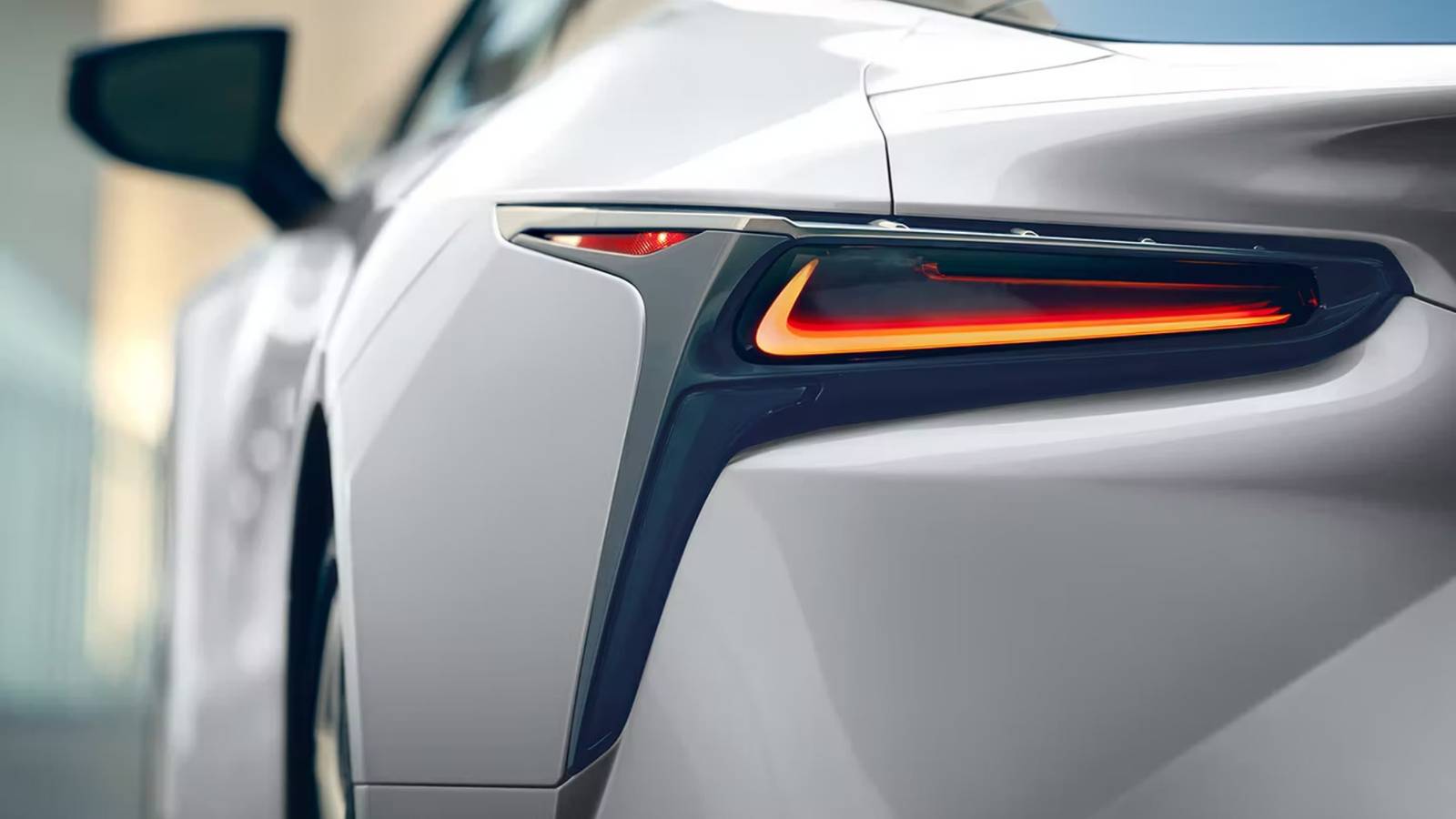
Hybrid sports cars are becoming more of a rarity in the new vehicle market, as buyers insist that conventional ICE systems are the only way forward. We see this trend occurring very clearly just based on sales figures alone, with HEV sports cars that are appealing on paper just failing to sell in the same numbers as their purely gasoline-driven counterparts.


- Base Trim Engine
-
3.5L V6 Hybrid
- Base Trim Transmission
-
4-speed automatic/CVT
- Base Trim Drivetrain
-
Rear-Wheel Drive
- Base Trim Horsepower
-
354 hp combined
- Base Trim Fuel Economy (city/highway/combined)
-
26/33/29 MPG
- Make
-
Lexus
- Model
-
LC Hybrid
- Segment
-
Large Luxury Coupe
The now-defunct Lexus LC500h is a prime example of a great hybrid sports car that didn’t get much love from the market. While its depreciation is far better than some rivals, it still makes for a considerably attractive consideration if you want something ultra-luxurious that’s also comfortable, relatively efficient, and enjoyable to drive.
A True Halo Hybrid Sports Car

The Lexus LC500h was the brand’s flagship grand tourer, occupying the most prestigious slot in their lineup as a halo vehicle that showcases the potential of electrified luxury. Its main audience comprised design-conscious connoisseurs and high-net-worth individuals who appreciated a high-performance experience that aligns with a more modern, environmentally thoughtful lifestyle. It’s quite apparent that this was an extremely niche clientele.
Over its entire availability in the U.S., the LC500h remains an incredibly rare sight, with the brand selling just 258 units in total. It is celebrated as a revolutionary grand tourer because it fundamentally challenged the stigma that hybrid vehicles were clinical or uninspiring, introducing a specialized mechanical interface that provided the rhythmic, tactile gear changes thanks to a highly innovative transmission, and visceral driver engagement usually experienced in traditional, high-performance internal combustion engines.
How The LC500h Came To Be

The Lexus LC model line was born thanks to former Toyota CEO Akio Toyoda’s directive to transform the brand from a rational, reliability-focused manufacturer into an emotional luxury lifestyle icon. The striking grand tourer traces its lineage directly back to the 2012 LF-LC concept and was subsequently developed under the 950A program. Once released, the LC served as a high-prestige halo model intended to occupy the vacuum left by the much more expensive and aspirational LFA. It was also a continuation of the brand’s ambition to master the grand tourer segment regardless of the niche market’s low sales volumes.

To supplement the naturally aspirated V-8 model, Lexus configured a world-first multi-stage hybrid system that paired a V-6 engine with a dual-transmission setup. This consists of a four-speed automatic connected to a direct-drive eCVT with the goal of replicating stepped gear shifts and engagement of its traditional internal combustion counterpart.
Lexus produced its hybrid models alongside the existing ICE model at the Motomachi plant, where the assembly line has been renovated into a pristine and ultra-focused environment. Here, the vehicle was hand-finished by Takumi master craftsmen who utilized specialized techniques and hundreds of manual inspections to ensure that every unit achieved a level of aesthetic and mechanical precision that surpassed standard mass-production capabilities.

The True Cost Of Owning A Lexus LC 500
Here is a full breakdown what it takes to own this breathtaking Japanese sports coupe.
An Ingenious Multi-Stage Hybrid

The Lexus LC500h is engineered around a sophisticated hybrid system that combines Toyota’s 8GR-FXS 3.5-liter V-6 engine with two high-output electric motors and a compact 1.1 kWh lithium-ion battery. This unique drivetrain configuration features a revolutionary transmission that merges a planetary continuously variable transmission with a four-speed automatic torque converter.
These work in tandem to simulate a 10-speed rhythmic shifting experience as found in the ICE model. Power is delivered exclusively to the rear wheels, producing a total system output of 354 horsepower and 369 pound-feet of combined torque, resulting in a 0 to 60 MPH acceleration time of 4.7 seconds. The Japanese brand limits the top speed to 155 MPH.
Appealing Luxury Car Efficiency Returns

The Lexus LC500h may be a hybrid, but it is still a high-output performance-oriented model. The EPA estimates that it will consume 26/33/29 MPG on its city/highway/combined cycle, which isn’t the best by electrification standards. We do have to note that this is incredibly appealing for a grand tourer.
You’ll also get to enjoy as much as 644 miles of range on a single 22.2-gallon tank with some help from the compact battery. With this in mind, the agency indicates that you can expect to spend $2,250 more on fuel over the course of five years compared to the average new vehicle sold in the U.S. Expect to spend $2,000 on fuel every year, $3.33 to drive 25 miles, and $86 to fill the tank.

The Sports Car With Track-Star Handling And Long-Term Reliability
A bold choice in a world of turbochargers, this naturally aspirated V8 defies expectations.
Where Luxury And Passion Converge

The Lexus LC500h represents the best of the Japanese brand‘s interior craftsmanship, based on its Takumi philosophy of obsessive attention to detail. Being a luxury hybrid sports car, the LC500h’s cabin is defined by its driver-centric layout and high-quality materials. Standard fitments include Alcantara-trimmed door panels and deeply bolstered, eight-way power-adjustable front seats.
You also get access to the Lexus Climate Concierge, which coordinates the dual-zone climate control with the standard heated and ventilated seats and the available heated steering wheel to maintain a precise microclimate for each occupant. Lexus offered an optional Touring Package upgrade, which added semi-aniline leather-trimmed seating and an Alcantara headliner.

The 2025 LC500h model year replaces the touchpad interface with a standard 12.3-inch high-resolution touchscreen display running the Lexus Interface. This operating system includes cloud-based navigation, a voice assistant, and dual Bluetooth connectivity. All models include the 13-speaker and 915-Watt Mark Levinson Reference Surround Sound System, specifically curated to suit the LC Hybrid’s unique cabin acoustics. Standard connectivity includes wireless Apple CarPlay and Android Auto integration, alongside a three-year trial of SiriusXM and various Lexus connected services.
Prestigious Digital Features

Convenience equipment is seamlessly integrated into the driving experience, starting with the eight-inch digital instrument cluster that features a physical, sliding center ring inspired by the LFA. To minimize driver distraction, an optional 10-inch color Head-Up Display projects vital driver and navigational information. You also get a SmartAccess keyless entry and a Smart Card. For improved visibility, Lexus also includes a panoramic view monitor with a 360-degree bird’s-eye view.
Lexus also offered the Bespoke Build program for LC500h models, allowing for a high degree of personalization, offering exclusive options like a carbon fiber roof to replace the standard panoramic glass roof, or unique interior colorways like Rioja red and blue and white. This was a very expensive service, so finding these on the used market will yield a higher price and be much rarer.

Lexus LC 500 vs Porsche 911: Two Very Different Takes On Performance
Both the Lexus LC 500 and Porsche 911 are performance legends in their own rights, but they get the job done in very different ways.
Lexus’s Most Underappreciated Sports Car

Pinpointing an exact used price for the Lexus LC Hybrid is a challenge considering the brand sold so few examples. When new, the 2025 model sold for $102,900 MSRP. Edmunds indicates that the average sales price currently sits at $99,141. CarBuzz backs this with a $99,750 average used MSRP. Lexus introduced the LC500h in 2018 with a $96,510 MSRP. These model years now sell for around $60,180, according to iSeeCars.
The publication also indicates that the 2025 model year will lose $28,728 or 27.9 percent of its value over five years of ownership, which is substantially better than the average 37.7 percent depreciation rate applied to the luxury hybrid segment.
Appealing Ownership And Maintenance Costs

The Edmunds True Cost To Own calculator indicates that you can expect to spend $118,993 on this model over five years and 60,000 miles. This includes $11,555 on maintenance, $1,087 on repairs, $53,441 on depreciation, and $13,751 on fuel. CarEdge backs this with a $96,189 ownership cost estimate, which includes $49,696 on depreciation, $7,965 on fuel, and $2,595 on maintenance.
J.D. Power gives this model with an impressive 86/100 consumer-verified overall score, which includes 92/100 for quality and reliability, 89/100 for the driving experience, 69/100 for resale, and 87/100 for the dealership experience.
Sources: iSeeCars, Edmunds, the EPA, CarEdge, and J.D. Power.