
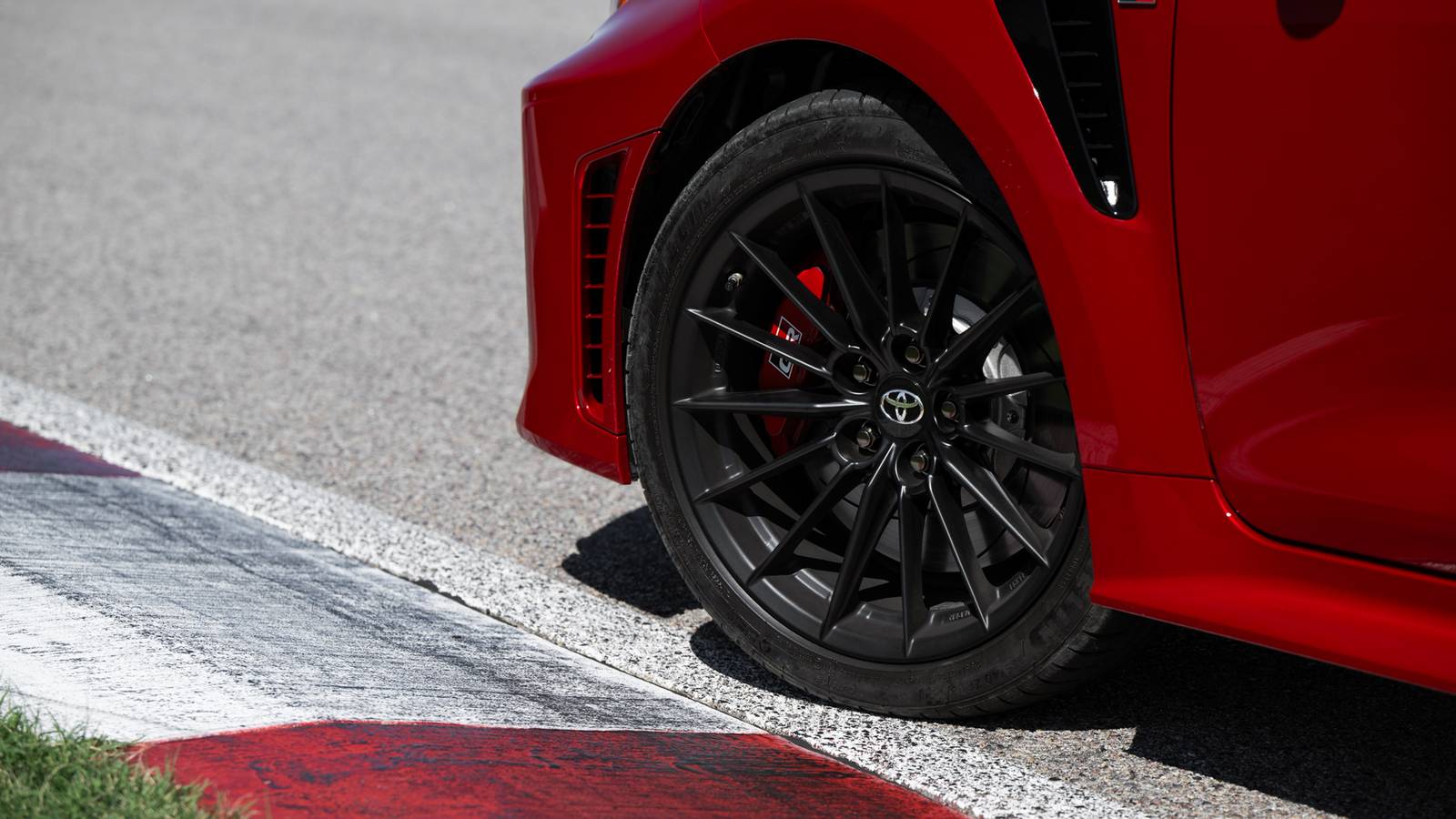
The allure of the hot hatch in the U.S. has always benefited from its unique ability to resolve the conflict between high-performance sports car thrills and everyday practicality. This effectively makes it the original one-car solution for the automotive enthusiast. Drivers gravitate toward these vehicles because they provide the visceral engagement of a conventional performance car. New examples benefit from sharp steering, punchy turbocharged performance, and agile handling. Brands achieve this without sacrificing interior space and conventional tailgate versatility.
SUVs and crossovers remain the popular option, even in the performance sphere, but the hot hatch remains a vital pillar of the automotive segment. This is thanks to these low-slung models effectively democratizing speed with comparatively affordable prices. The enduring hot hatch legacy is deeply tied to the segment’s giant-killer status, with modern options evolving to supercar levels, especially on winding backroads. In some cases, these hot hatches can even venture off the beaten path without sacrificing speed or capability.
The State Of Hot Hatches In 2026

As of 2026, the American hot hatch market has transformed from an abundance of accessible entry-level heroes into a high-performance niche defined by extreme engineering and premium pricing. Over the last two decades, these vehicles have evolved from simple tuned economy cars with manual gearboxes into purpose-built technical powerhouses. New-generation models typically feature advanced driveline systems and motorsport-derived suspension configurations that allow them to outperform their segment on a track.
This more focused and dedicated approach, together with a declining overall demand for entry-level hot hatches, has come at the cost of variety. The segment has shrunken significantly as manufacturers have pivoted toward the compact crossover market’s higher profit margins and greater consumer demand. Many iconic nameplates have vanished from U.S. showrooms because crossovers are now the preferred versatile daily driver for the average buyer. This effectively leaves traditional low-slung performance hatches to survive as a specialized, low-volume offering for dedicated enthusiasts who are willing to pay a significant premium for mechanical engagement.
Toyota’s Dedicated Approach To Performance

Toyota approaches performance with a motorsport-first philosophy, where its GR-branded products are now born from the grueling requirements of global rally and endurance racing. By reversing the traditional development cycle, Toyota has integrated specialized all-wheel-drive systems, reinforced chassis, and driver-centric cockpits that feel like direct extensions of their track-only counterparts.

Toyota’s relatively newfound commitment to mechanical authenticity has resonated deeply in the U.S. market. Over the last two sales years, these performance-focused offerings have seen remarkable success, effectively acting as halo products that have revitalized the brand’s image among enthusiasts. While they represent a small fraction of total volume, their high demand and critical acclaim in 2024 and 2025 have proven that there is a significant, profitable appetite for purpose-built machines that prioritize driver engagement and competition-bred durability over traditional mass-market compromises.

GR Corolla Customers Rewarded By Toyota
GR Corolla drivers are part of a small, rabid fan base. Now, Toyota is rewarding them with part upgrades and other goodies.
The GR Corolla Is A True Rally Car For The Road

The 2026 Toyota GR Corolla remains a defiant masterpiece of mechanical engineering that finally brings the mundane moniker into an evolutionary performance realm. The brand’s flagship hot hatch serves as its visceral rally car for the road, sourcing inspiration from its World Rally Championship dominance. The GR Yaris is Toyota’s current WRC champion, but the GR Corolla directly benefits from its success.

For the 2026 model year, Toyota has refined the chassis with an additional 45.6 feet of structural adhesive to maximize rigidity. The circuit-tuned MacPherson strut front and a double-wishbone rear work in tandem with Toyota’s rally-developed GR-FOUR all-wheel-drive system. Via a cabin-mounted dial, you can set the driveline to a 60:40 split for daily stability, a perfectly balanced 50:50 for maximum gravel-stage traction, or a rear-biased 30:70 Track mode. The system also benefits from standard front and rear Torsen limited-slip differentials.
The Peak Of Downsized Performance

Powering the 2026 Toyota GR Corolla is the brand’s high-output G16E-GTS 1.6-liter turbocharged three-cylinder engine, producing 300 horsepower at 6,500 RPM and 295 pound-feet of torque. When paired with the six-speed intelligent manual transmission or the newly refined eight-speed direct automatic transmission, the GR Corolla sprints from 0 to 60 MPH in 4.9 seconds. It also clears the quarter-mile in 13.3 seconds at 105 MPH before hitting its electronically limited top speed of 143 MPH.

This revolutionary powertrain benefits from a lightweight aluminum block and head, forged connecting rods, and high-strength T-shaped pistons with a Ni-Resist insert in the top ring groove. To ensure rally-grade durability, the engine utilizes a three-piece block construction with a massive bearing girdle, an offset crankshaft to reduce cylinder wall friction, and a sophisticated D-4ST dual-injection system that combines port and direct injection. For 2026, the thermal management has been significantly bolstered with a new sub-radiator and improved brake ducts, ensuring that it can maintain peak boost ranging between 20.3 and 26.3 psi.

2026 Toyota GR Corolla Interior And Exterior Picture Gallery
With a 300-hp engine, GR-FOUR AWD, premium interior tech, and rally-inspired design, the 2026 GR Corolla delivers exhilarating everyday driving.
Transmission And Drivelines Set The Stage

Toyota’s manual gearbox is the choice for purists, featuring a short-throw shifter with a springier, snappier clutch feel for 2026 and rev-matching technology that you can toggle with a dash-mounted button. In contrast, the DAT is a performance-focused unit that uses predictive software to sense brake and accelerator inputs. This allows it to downshift aggressively during deceleration, simulating the logic of a professional driver rather than simply reacting to vehicle speed.
While both versions utilize the GR-FOUR system and a front and rear limited-slip differential, the automatic provides a slight advantage in consistency and includes a dedicated launch control feature. Mechanically, the DAT models come standard with a dedicated transmission fluid cooler to handle the thermal loads of high-performance driving, and the eight-speed’s additional gear ratios allow for a more relaxed highway cruise, though it incurs a slight fuel-economy penalty of 22 MPG on the combined cycle versus the manual’s 24 MPG result.
Toyota GR’s WRC Success Story

While the GR Corolla is a rally car for the road, the GR Yaris Rally1 remains its premier contender in the World Rally Championship. The GR Corolla shares the same G16E-GTS engine architecture and GR-FOUR DNA as the Rally1. The only noteworthy difference between the rally and street-legal Yaris models is the former’s bespoke spaceframe construction, built to adhere to FIA regulations, resulting in a 2,601-pound curb weight.
For 2026, the WRC car has transitioned away from the complex hybrid units of previous years to focus on a lighter, more agile 1.6-liter turbocharged inline-four. This engine produces over 370 horsepower and 313 pound-feet of torque. Despite these mechanical differences, the Corolla name has made a triumphant return to the dirt in the American Rally Association, with the newly developed GR Corolla RC2, specifically designed to dominate North American stages.

Toyota’s motorsport efforts have been staggeringly successful; the brand secured three consecutive WRC manufacturers’ championships through 2024 and achieved a near-total mastery of the 2025 season by winning 12 out of 14 rounds. Most recently, in March 2026, the team celebrated a historic milestone at Safari Rally Kenya, where Takamoto Katsuta secured his first-ever WRC victory, further cementing Toyota’s status as the dominant force in global rallying.

Hot Hatch, Hotter Sales: GR Corolla Up 17% Halfway Through 2025
A recent refresh and all-season usability combined with increased production means the GR Corolla is getting its day in the sun.
Comprehensive Specification For Toyota’s Rocketship

The 2026 Toyota GR Corolla starts with a base MSRP of $39,920 for the standard grade, while upgrading to the Premium Plus increases the price to $45,965. Standard convenience features across the lineup include a 12.3-inch digital gauge cluster, an 8.0-inch Toyota Audio Multimedia touchscreen with wireless Apple CarPlay and Android Auto, and a wireless smartphone charging pad. Moving up to the Premium Plus adds a suite of high-end equipment, most notably a nine-speaker JBL Premium Sound System with a subwoofer and Active Sound Control, which pumps synthetic engine notes into the cabin to enhance the sensory experience.
Other premium touches include a head-up display, heated front sport seats upholstered in Brin Naub suede and synthetic leather, and a heated steering wheel. The cabin architecture is unapologetically driver-centric, intentionally prioritizing ergonomics that support performance driving; the shift lever is positioned for a short throw, the mechanical handbrake is retained specifically for corner-entry rotation, and the digital display features a dedicated GR Meter that highlights turbo pressure, gear position, and the driveline mode settings.
Sources: The EPA and Motor Reviewer