
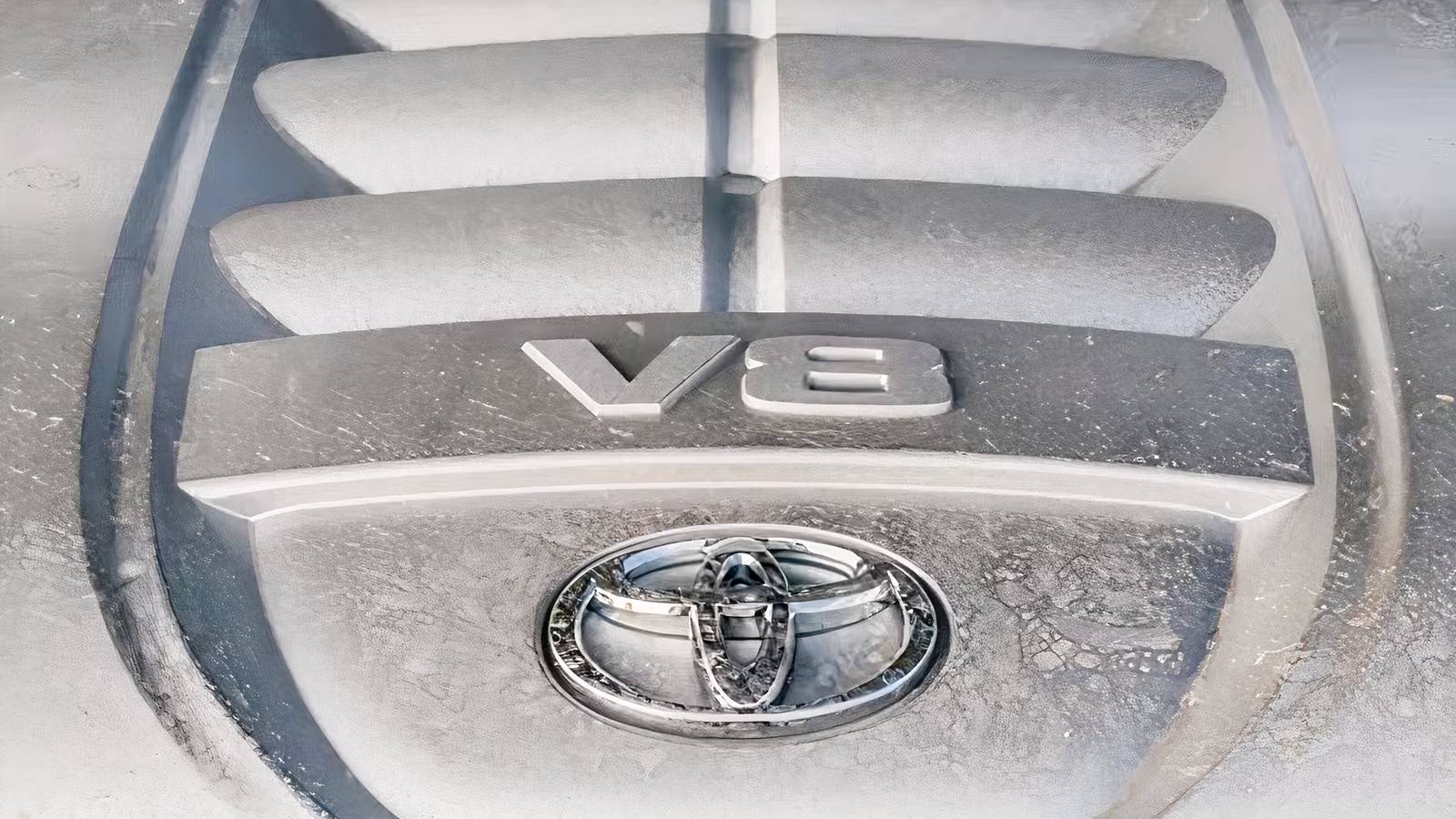
Toyota is well-regarded for its engines. Whether that be the 4.7-liter V8 2UV-FE engine or the 2GR-FE 3.5-liter V6, amongst countless others over the years. The former was an exceptional V8 engine that paved the way from the late 1990s to the early to mid 2000s, which delivered excellent reliability that they were well-regarded for. By the mid-2000s, amid challenges of emissions and higher competition from American rivals, it was time to come back fighting. An engine that would deliver the same formula, but one that was even better. Toyota didn’t achieve this through turbocharging or downsizing displacement. They created an epic 5.7-liter V8 engine known as the 3UR-FE, alongside its 1UR counterparts.
In many ways, this felt like a final celebration of the completely over-engineered, fantastically robust, and incredibly versatile flavor of the V8 engines — a time in history just before the pivotal point of downsizing becoming king. An era where, to make a better engine, you would usually make a bigger engine. This was a mindset that worked flawlessly, with this V8 being part of many heavy-hauling trucks, notably durable SUVs, and the remarkably similar 1UR engine being used in prestigious sedans.
A 5.7-Liter V-8 That Would Amplify Anything
Overbuilt Machinery Made For Any Road Ahead
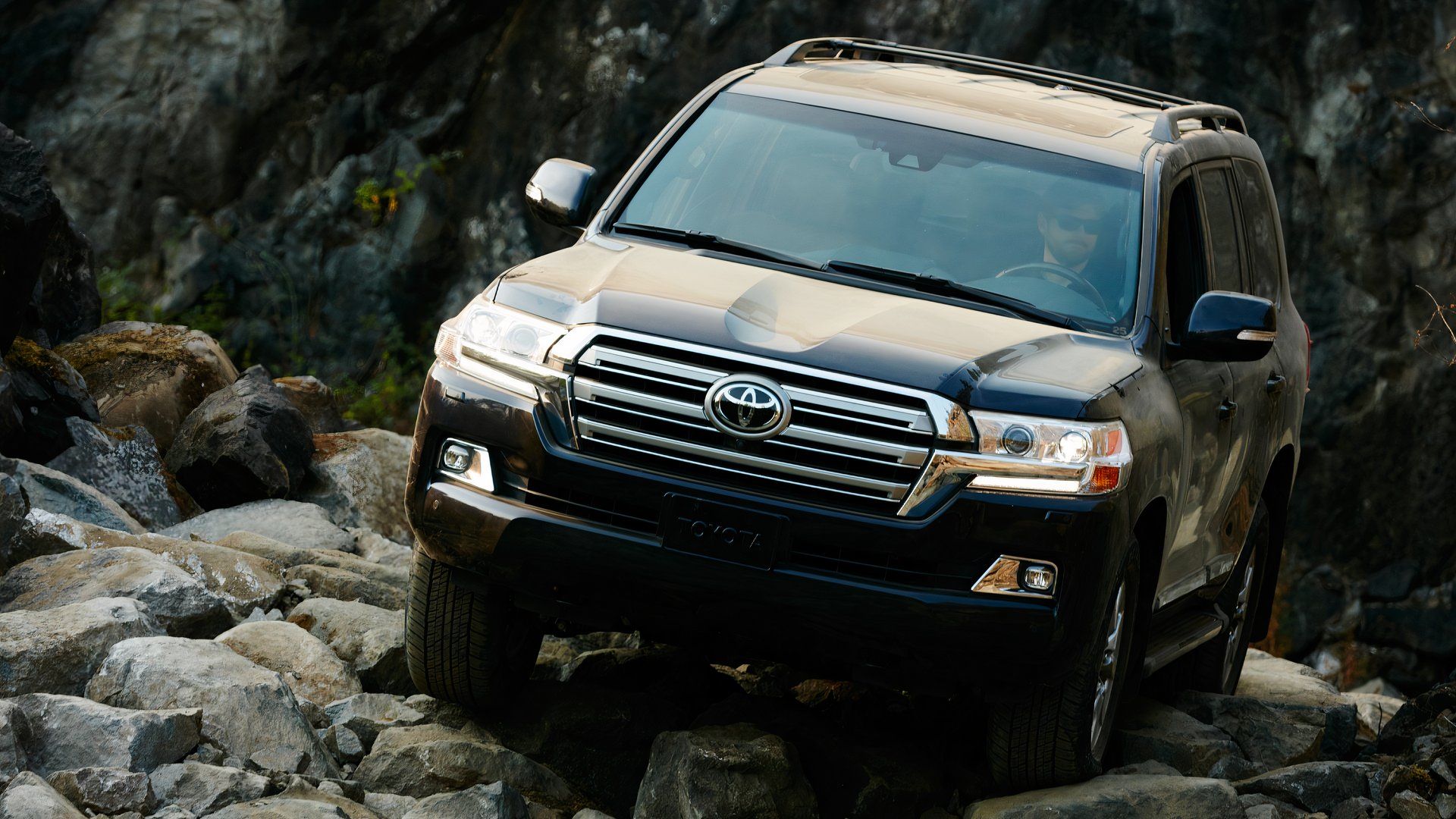
The typical use scenario for this engine was in SUVs and in pickups, due to its phenomenal torque figures and ability to tow heavy loads. One of the most rugged and famous usages of this engine was in the legendary Toyota Land Cruiser, a vehicle that is known for such durability that an equally strong engine to match was essential.
Toyota Land Cruiser 200 (5.7-Liter V-8) Specs
|
Horsepower |
381 |
|
Torque |
401 Ib-ft |
|
Weight |
5,715-5,815 pounds |
|
Towing Capacity |
8,100 pounds |
|
Economy |
15 mpg (combined) |
This first example of the 3UR-FE’s usage is a version made for ultimate reliability. This engine could go beyond the 381-horsepower mark, but for the Land Cruiser, total longevity was the absolute goal. This meant that even in heavy-duty use, the Land Cruiser’s V8 would still be under-stressed, given its sensible cap on horsepower. Not all applications would follow this same approach; it was an engine designed to be tuned for more power and handle it. 381 horsepower for the Land Cruiser was ample, and it provided a bedrock powertrain for its iconic bulletproof status.



The Lexus LX 570 Had A Powerful SUV Application

The later models of the Lexus LX 570 (2016-2021) prove to have the absolute highest torque and horsepower outputs of any application of this engine, slightly edging out the Land Cruiser. Lexus knew that their consumer base would give the engine a more gentle life than in an extreme off-roader, concluding that the V8 would be cruising on the highway more commonly, as opposed to driving up steep, multi-terrain hills.
What Lexus Did To Optimize The Engine For The LX 570
- Tuned for smoothness and comfort over towing heavy loads
- Silent operation
- Lower RPM torque
- A few more horsepower and pound-feet of torque
This helped with the engine feeling more premium and quieter than it did in the Land Cruiser, which was optimized for different scenarios. The use of this powertrain and subtle tuning meant they could easily compete with their luxury rivals. This was key in not only establishing Toyota’s presence in the growing luxury SUV landscape but also in guaranteeing that its product could outlast said competition when it came to maintenance costs and longevity.

10 Legendary Toyota Engines That Refuse To Die
These are the engines that built Toyota’s legacy of reliability.
The Huge V8’s Smaller Brother For Sedans
Same Bulletproof Quality, Smaller Applications

There was an engine that captured the spirit of the 5.7-liter V8, more aimed towards high-end sedans, and it was a bold choice. For an engine originally intended for the ability to tow heavy loads, it was a surprise that an engine so similar would find its way into anything but an SUV or truck. The car in question is the 2009-2018 Toyota Crown Majesta, and it came with the 1UR-FSE. By all means, a very similar engine to the 3UR, but one that was more intended for vehicles that didn’t require as much pulling power.
Toyota Crown Majesta (1UR-FSE V8) Specs
|
Horsepower |
347 |
|
Torque |
339 Ib-ft |
|
Weight |
3,900 pounds |
|
0 – 60 mph |
6.1 seconds |
|
Economy |
21 mpg (combined) |
This iteration was slightly different from those used in the SUVs and pickups. It was the way this engine was tuned that was the most interesting aspect of the engine. Take away those responsibilities that more utility-based vehicles face, and you have an opportunity to explore an engine’s limits with more certainty. This version of the engine was very similar in terms of architecture and core design principles, but was made with the intention of ultimate serenity and peaceful driving. The 1UR-FSE used direct injection instead of port injection and had higher compression. It also had a smaller displacement that proportionally aligned with having less weight to lug around compared to an SUV or truck.
The Demise Of Huge V8 Engines In Toyota’s Lineup

Unfortunately, the 3UR-FE was never going to last forever, especially given that its core principles don’t align with how engines are made these days. By the early 2020’s, production was slowing down for the engine and was completely discontinued by 2024. By modern standards, it was a thirsty and polluting engine that just didn’t suit the modern landscape.

Instead, Toyota started using other methods to achieve impressive power and torque. The 3.5-liter twin-turbo V6 was the most common engine that was used for similar tasks. There was also a 3.3-liter twin-turbo V6 diesel, which produced 100 horsepower less, but around 40 extra pound-feet of torque — useful for those who were interested in extreme low-RPM torque and pulling power.

10 Modern Sedans With V6 Engines That Skipped The Turbo Trend
These models prove that natural aspiration, though a fading aspect, still delivers solid results in today’s market.
Farewell To The Legendary 3UR-FE Engine
Greatness Cannot Outrun Progress

The death of this V8 signified the end of Toyota’s relationship with its love for lots of cylinders and a huge displacement. Efficiency has come a long way since the introduction of the 3UR-FE, and in many ways, the six-cylinder replacements are technically better. More fuel efficient, even more torque than the 5.7-liter V8, and a lighter engine, which meant weight balance and dynamics were easier to achieve. Not only that, but emissions-wise, the V6 is far more future-proof and compliant than any V8. And despite early quality concerns, Toyota’s reputation for reliability remains intact and proves strong in the modern, downsized era of heavy-duty motoring.

No matter how effective smaller engines and turbochargers are, there is no doubt that there is something insurmountable about a rumbling V8. Whether it be the deep growl, the heritage it seems to ooze, or the lack of turbo lag, just a pure brute force approach. The turbocharged V6s also don’t have the same raw simplicity as the endlessly capable V8s. It’s for all of these reasons that many people will keep their legendary 5.7-liter V8 motors on the road for years to come, because knowing the 3UR-FE, it will never stop working.
Sources: Lexus, Toyota, iSeeCars