
Plug-in hybrid electric vehicles (PHEVs) are a great choice if you want to explore your limits with pure electric vehicles (EVs). That’s because most PHEVs have a long-enough pure EV range for your usual drives, since the average American drives 13,476 miles a year, or about 37 miles per day. When the battery gets low enough, the vehicle switches to hybrid mode, thus serving as a sort of backup if you want to drive your PHEV beyond its pure EV range.
Now, the thing is, seven-seaters PHEVs are rare—at least up until a certain price point. That’s where our impossible PHEV crossover that seats seven comes in. Its drivetrain offers a 64 MPGe efficiency rating on combined driving scenarios, along with a commendable pure electric range of 45 miles. Let us learn more about three-row PHEVs and which lifestyles these vehicles fit the most.
Here’s When PHEVs Suit You

PHEVs, when treated right, are effectively two vehicles in one. They’re perfect for families that want efficiency and flexibility, and the format works really well in a seven-seater SUV.
A Pleasant EV For Daily Drives

A lot of consumers are still hesitant about reinventing how they operate and own vehicles, hence the reluctance to switch to an EV. EVs work if we change our mindsets, such as the fact that we only need to charge as much as we need in order to get home and to the rest with our home charger, but that’s an EV mindset story for another day. If making the pure EV switch sounds terrifying, then PHEVs let you test your limits. Once the battery becomes low enough, it simply operates in hybrid mode.
Lower Fuel Costs

Gas prices today are high, and they’re still climbing as we speak. A PHEV also lets you save tons of money if your daily driving distance is within its pure EV range, or even if its pure EV range covers half of your daily commutes. Then again, based on our aforementioned statistics, you are the minority and not the majority. This is the part where we emphasize how treating a PHEV right saves you money. Charge it on a daily basis, and you’re fully maximizing its cost-saving benefits. Otherwise, you’re wasting the capabilities of its large battery, especially since it becomes merely a ballast by then.

Reasons To Buy A Plug-in Hybrid Vehicle Over An EV You Shouldn’t Overlook
Discover how plug-in hybrid vehicles offer a seamless blend of modern electric and traditional gasoline power across these key factors.
Say Hello To The Mitsubishi Outlander PHEV

Now, the three-row PHEV that we’re talking about in this article is the Mitsubishi Outlander PHEV. It is America’s most affordable three-row PHEV, and this article couldn’t have come at the right time. Mitsubishi just announced its 2026 updates for the Outlander PHEV, and it finally brings in the mid-cycle facelift that was already introduced in the gas version.
Enhanced Looks

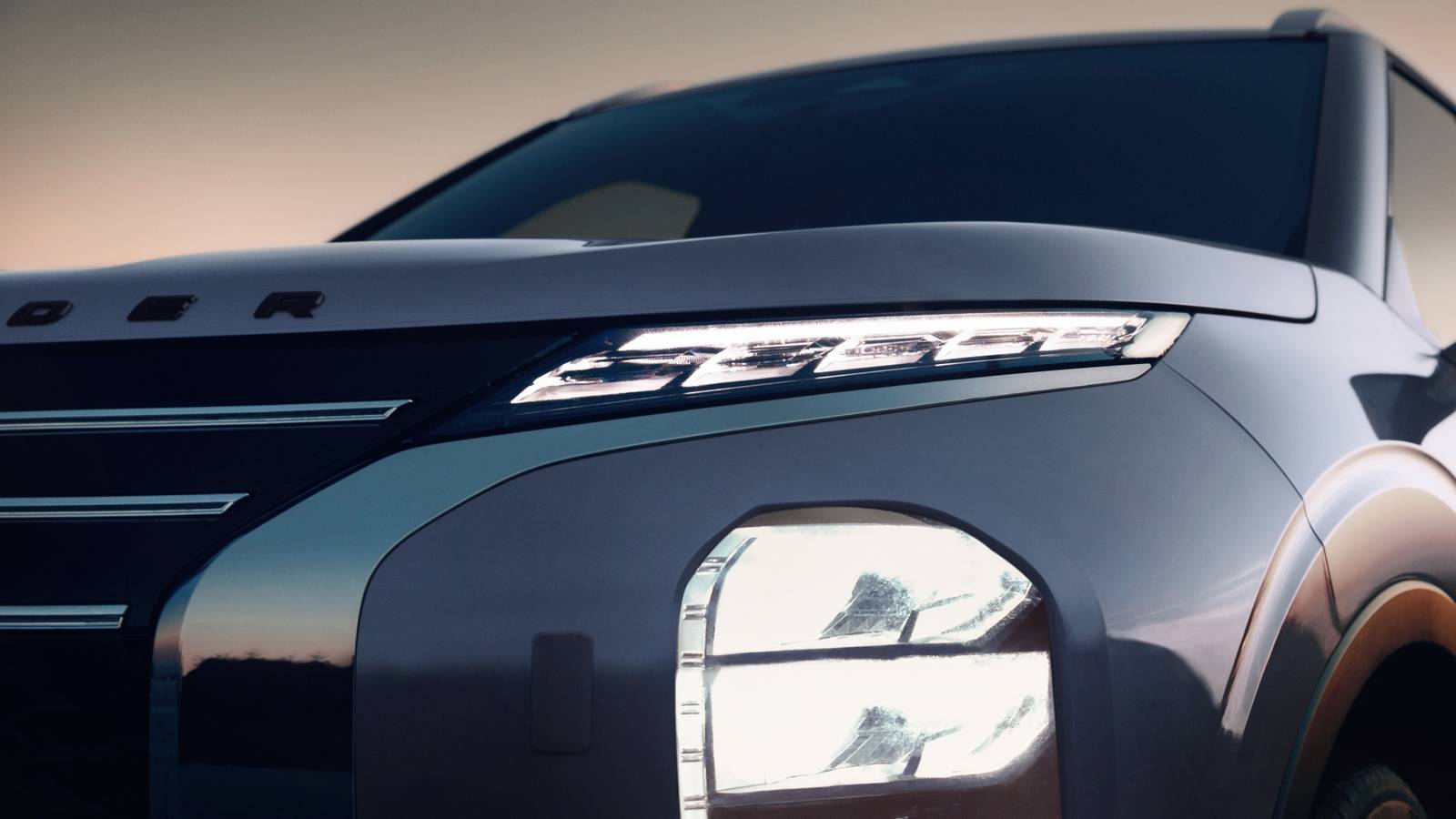
The 2026 Mitsubishi Outlander PHEV’s enhanced looks begin with its front fascia. The front grille has been slightly revised, and this is matched with tweaked LED headlights and new 20-inch multi-spoke alloy wheels. The lower-spec ES rolls on 18-inch wheels, however.

A Black Edition is eventually coming, which will introduce a lot of gloss black elements to its design. Also, new for this facelift is the switch from aluminum to steel for the fenders and hood, which is supposedly meant to improve noise, vibration, and harshness (NVH) suppression.

More sound-deadening materials have also been introduced inside. Complementing the improvement in refinement is an interior that features more refined touchpoints. More interior color options are being introduced in the base ES on top of the usual black color scheme.

Higher trims feature semi-aniline leather seats with diamond stitching, along with an increased use of plush soft-touch materials and more leather surfaces. In terms of tech features, a new 12.3-inch infotainment system with new graphics has been introduced, while a 12.3-inch gauge cluster carries over from the pre-facelift model. Limited to the higher trims is a new Dynamic Sound Yamaha 12-speaker premium audio system.
A Lot More Potent, Yet More Efficient

Perhaps the biggest change made to the 2026 Mitsubishi Outlander PHEV is what’s underneath its chassis. Yes, the 2.4-liter four-cylinder largely carries over, but the electric motors, power control unit, and batteries are new. From 20 kWh, the lithium-ion battery size has increased to 22.7 kWh, which allows for an increased pure EV range from 38 to 45 miles. Even the power figures have risen quite dramatically, from 248 to 297 horsepower. With electronic all-wheel drive (AWD), the electric motors on the rear wheels don’t have a mechanical connection with the front axle.
2026 Mitsubishi Outlander PHEV Specs
|
Engine |
2.4-liter four-cylinder plug-in hybrid |
|
Horsepower |
297 hp |
|
Torque |
332 lb-ft |
|
Transmission |
e-CVT (Single-speed, drive mode switchable reduction gearbox) |
|
Drivetrain |
AWD |
|
Fuel Economy (Combined) |
TBA |
|
Energy Efficiency |
73 MPGe (64 MPGe 2025 MY) |
|
EV Range |
45 miles |
|
Base MSRP |
$43,245 |
Oh, and did we mention that the new Outlander PHEV is even more efficient? The outgoing model achieves the 64 MPGe stated in this article’s title, but the 2026 model that’s arriving soon at dealerships is more efficient at 73 MPGe. All of this power and efficiency is routed through Mitsubishi’s take on an e-CVT. In this case, it’s a single-speed, drive mode switchable (from parallel drive to series recharge mode) reduction gearbox. Unfortunately, though the Outlander PHEV has a DC fast charge port, it uses Japan’s ChaDeMo port standard as opposed to the to-be-phased-out CCS1 or the upcoming NACS.

The PHEV With The Best Mileage For Long-Distance Travel
If you’re looking to save fuel while going the distance, you should be looking at this PHEV SUV
Other Seven-Seater PHEVs To Consider

As mentioned, there are other three-row PHEVs worth considering, and to be fair, these two alternatives solve a slight con with the Outlander PHEV—its third row. You see, the Outlander PHEV is a compact crossover SUV, which means the third row is best for short journeys or emergency use only. These two recommendations are both midsize SUVs, thus offering more space for all occupants.
Kia Sorento PHEV

With the Outlander PHEV starting at $43,245, it’s only natural for us to look for a model that’s priced the closest. For about $5,000 more, the Kia Sorento PHEV might be worth a look for $48,290. It is a true midsize three-row SUV with a 1.6-liter turbo four-cylinder and an electric motor integrated into the six-speed automatic. As such, it has a total system output of 261 horsepower and 258 pound-feet of torque. The Sorento PHEV is offered in two well-equipped trims, with the EX and X-Line SX Prestige AWD both featuring two 12.3-inch screens, power-adjustment for the front seats, and a powered tailgate, just to name a few. A Bose sound system with captain’s chairs and panoramic sunroof is optional in the EX, and standard in the X-Line SX Prestige.
Mazda CX-90 PHEV

Those craving for the sportiness that only a Mazda could deliver should splurge for the CX-90 PHEV. It combines Mazda’s familiar 2.5-liter four-cylinder with an electric motor integrated into its eight-speed automatic, delivering a strong system output of 323 horsepower and 369 pound-feet of torque. Though it is AWD, the CX-90 has a rear-biased setup, which allows for a sporty power delivery. Do note, however, that early models had a reputation for having a jerky tuning for their eight-speed automatic, but software updates have mostly remedied these complaints. Nevertheless, at $50,495, it is the most expensive PHEV in this article, but you’ll probably accept its price tag once you start gazing at its elegant design and top-class interior premium feel.
Sources: Mitsubishi, The EPA, Federal Highway Administration