
Hybrid cars and SUVs are increasing in popularity at an accelerated rate in the U.S. market. The primary reason for this is that more consumers prioritize fuel efficiency today than ever before, due to rising costs covering all aspects of life. Fuel remains a substantial commodity that you have to account for in your budget, so picking a more efficient vehicle without crossing over into a fully electric vehicle is the most logical choice.

- Base Trim Engine
-
2L I4 Hybrid
- Base Trim Transmission
-
8-speed automatic
- Base Trim Drivetrain
-
All-Wheel Drive
- Base Trim Horsepower
-
250 HP @5500 RPM
- Base Trim Torque
-
275 lb.-ft. @ 3000 RPM
- Base Trim Fuel Economy (city/highway/combined)
-
21/29/24 MPG
- Base Trim Battery Type
-
Lead acid battery
- Make
-
Lincoln
- Model
-
Nautilus
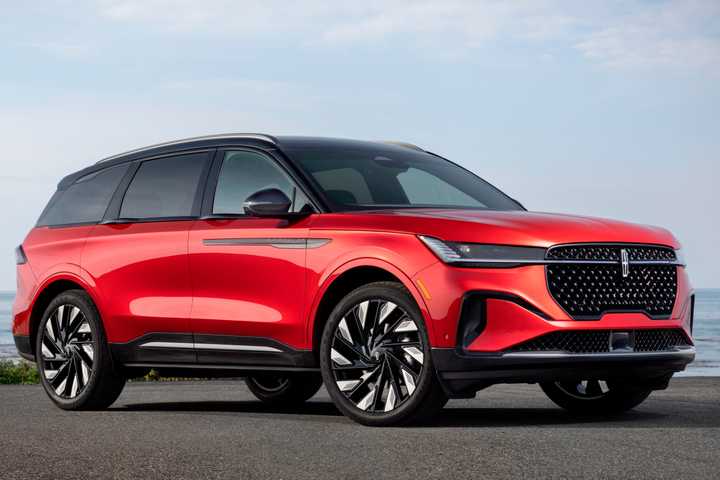
While the hybrid SUV segment may be up in popularity, the 2026 Lincoln Nautilus Hybrid seems to be losing appeal in the new vehicle market, as per last year’s sales records. Pricing is obviously a fundamental factor that affects its sales performance, but considering the brand has created a well-rounded SUV in the luxury hybrid space, it’s worth diving into why so many buyers tend to overlook this as their next family vehicle purchase.
Lincoln’s Overlooked HEV SUV

The 2026 Lincoln Nautilus Hybrid occupies a critical space in the marque’s portfolio as its premier mid-size, two-row luxury SUV, bridging the gap between the compact Corsair and the larger, three-row Aviator and flagship Navigator. This model remains a cornerstone of Lincoln’s recent commercial success. The premium American brand delivered a total of 106,868 units in 2025, with the Nautilus itself representing nearly a third of that volume at 33,744 sales. It maintained some sales momentum into 2026 with a reported 9.8 percent sales increase in January. Bear in mind that Lincoln doesn’t disclose the sales split between ICE and HEV variants, but regardless of the variance, this model’s sales performance is merely fractional when compared to the top-sellers of the hybrid SUV segment.
The Nautilus is widely considered an impactful force in its segment because it spearheads Lincoln’s Quiet Flight evolution, pivoting the brand toward a globally-sourced production model that prioritizes a tranquil, sanctuary-driven cabin environment over traditional performance metrics. Unfortunately, the sales records show that this just isn’t enough to make it competitive against its key Japanese rivals from the likes of Lexus.
A Fitting Product In Its Lineup

Lincoln introduced the Nautilus moniker in 2019 as a rebranding of the second-generation MKX. This action signaled the brand’s decisive pivot away from traditional sedans like the Continental and MKZ to a dedicated, high-demand SUV lineup. Lincoln initially developed this newcomer on the Ford CD4 platform shared with the Ford Edge. The first-generation model acted as a transitional product that prioritized a refined driving experience. However, the current generation represents a radical departure, migrating to a modified version of the Ford C2 platform to accommodate advanced hybridization.
This shift integrated a more modern gasoline-electric hybrid engine that focuses on seamless electric-gasoline synergy. To facilitate this global evolution, Lincoln moved the Nautilus’s primary assembly from the Oakville plant in Canada to the Hangzhou Assembly in China, making it the marque’s first truly global SUV imported to North American shores to meet the modern luxury consumer’s appetite for tech-heavy, electrified crossovers.

10 Hybrid SUVs That Hold Their Value Best
Here are 10 hybrid SUVs that not only save you money in fuel costs, but will pay you back well when you go to sell them.
A Truly Luxurious Interior Experience

The 2026 Lincoln Nautilus offers a tech-heavy interior experience that aims to act as a mobile sanctuary for daily commuters. The brand splits this experience across three defined trims, including the Premiere, Reserve, and Black Label. For 2026, the range maintains its expansive 48-inch panoramic display as standard across the range, taking advantage of the Lincoln Digital Experience operating system with integrated Google apps.
The $56,995 Premiere trim serves as the foundation of the range, including an 11.1-inch center touchscreen, offering wireless Apple CarPlay and Android Auto, as well as a 10-speaker audio system. Bolstering convenience is the standard inclusion of Lincoln BlueCruise 1.5, limited to four years of service. Comfort features include heated front seats, a heated steering wheel, and Lincoln Soft Touch upholstery. You can opt for the $3,000 Jet Appearance Package for a darker exterior aesthetic and 20-inch wheels.
True Luxury In The Reserve And Black Label

Upgrading to the $66,595 Reserve trim introduces genuine leather-trimmed seating with ventilation for the front seats. Entertainment receives a major boost with the standard 14-speaker Revel Audio System. The Reserve also adds the Panoramic Vista Roof and a hands-free power liftgate. If you are seeking a more comprehensive cabin experience, the $4,455 Reserve III Package adds 24-way Perfect Position front seats with massage, a 28-speaker Revel Ultima 3D Audio System, and the Lincoln Rejuvenate spa mode, which coordinates lighting, seating, and digital scents.
The flagship $80,660 Black Label trim is the pinnacle of the Nautilus lineup, coming standard with exclusive interior themes like the new Aurora Allura Blue leather with wood accents or Chalet. The 28-speaker Revel Ultima 3D system and Perfect Position massaging seats are standard here. You also get access to the Lincoln Black Label Member Privileges, which include four years of complimentary maintenance, mobile service, and pickup and delivery for repairs. Lincoln applies a $1,995 destination and $825 aquisition fee to all Nautilus Hybrid orders.
Intelligent And Powerful HEV Performance

Powering the 2026 Lincoln Nautilus Hybrid is Ford’s turbocharged 2.0-liter four-cylinder engine connected to a 100-kW electric motor and a 0.6-kWh lithium-ion battery. This system produces a combined 310 horsepower and 295 pound-feet of torque directly to all four wheels via the brand’s eCVT-driven Intelligent All-Wheel Drive system.
In terms of performance, the hybrid SUV achieves a 0 to 60 MPH acceleration time of approximately 6.6 seconds and reaches an electronically limited top speed of 112 MPH. Despite its focus on electrified efficiency and cabin serenity, the Nautilus Hybrid remains capable for light-duty utility, offering a maximum towing capacity of 1,750 pounds when equipped with the available Class II Trailer Tow Package.
A Great Balance Of Efficiency

The 2026 Lincoln Nautilus Hybrid delivers an EPA-estimated 29/31/30 MPG on the city/highway/combined cycle while returning 600 miles of range on a full 20-gallon tank of gas with some help from the compact battery pack.
Based on these estimates, the EPA indicates that you can expect to save $500 on gas over the course of five years when compared to the average new car sold in the U.S. You’re likely to spend $1,450 on gas every year, $2.43 to drive 25 miles, and $58 to fill the tank.

10 Hybrid SUVs For Budget-Friendly Driving
Hybrids are fuel efficient, but how would the size or purchase price of a hybrid SUV influence the cost per mile? Here is a look at some of these.
Reasonable Reception From The Market

Despite its relatively poor market performance, critics and owners hold the 2026 Lincoln Nautilus range to a fairly high standard. J.D. Power awards the model with an 80/100 consumer-verified overall score, including 80/100 for quality and reliability, 83/100 for the driving experience, 77/100 for resale, and 80/100 for the dealership experience.
According to Edmunds consumer reviews, the luxury SUV only holds a 3.3/5 average rating. Key strengths include its visual appearance, fuel consumption returns, and comfort levels, while others tend to criticize it for its reliability and manufacturing quality, value, and braking performance.
Naturally, depreciation is a fundamental aspect that might influence your decision when looking for a long-term hybrid SUV purchase. iSeeCars suggests that this model will lose $28,511 or 52.8 percent of its value after five years or 60,000 miles of ownership, which is a bit worse than some of its key rivals.
Noteworthy Issues You Need To Know About

While the 2026 Lincoln Nautilus Hybrid benefits from a mechanically sound HEV system, the current generation is subject to some issues relating to electronic and digital systems. Common owner-reported problems since the 2024 redesign include persistent software glitches within the Lincoln Digital Experience. This includes unresponsive displays or GPS connectivity drops. There’s also a recurring 12-volt battery drain issue that can leave the vehicle unable to start.
Additionally, a technical service bulletin was issued to address a distinct grunt noise from the front brakes during initial application. The model has faced several notable recalls, most recently in October 2025 for a software error that prevented the hybrid-specific pedestrian warning sound from emitting at low speeds. Other critical recalls affecting the current generation include a non-compliant automatic window reversal system, potential engine block heater overheating that posed a fire risk, and early 2024 and 2025 production units recalled for blank panoramic display screens and malfunctioning rear exterior lighting.
Sources: Edmunds, J.D. Power, iSeeCars, the EPA, and the NHTSA