
In the motorcycle world, Honda has always been a brand that quietly goes about its work. No unnecessary marketing shenanigans, no “leaked” spy shots, and rarely any segment-defining innovations. Yet, this is the world’s largest motorcycle manufacturer in the world. So you best believe that it knows exactly what it’s doing.
The result is a lineup of bikes that quietly go about their business in their respective segments, roping in sales numbers each month to beat the rivals. We’re diving deep into one such bike here, and it not only goes about its business quietly, but it quietly leads the segment as well.
There Are Many Quietly Impressive Honda Bikes On Sale In 2026

Nearly every motorcycle segment has a quietly impressive Honda today. For instance, the CB300R and Rebel 300 E-Clutch don’t make much noise, but they impress with their proven engines, easy-going dimensions, and just the necessary infusion of technology for under $5,500. At the opposite end, we have the Honda CBR1000RR-R Fireblade SP.

It is somewhat underrated because the bikemaker doesn’t market it as much as Ducati markets its Panigale or BMW markets its S 1000 RR. Yet, the RR-R is the most powerful naturally aspirated inline-four motorcycle on the market right now. It also debuted the Ohlins Smart EC3.0 suspension, and the feature list is second to none. You’ll notice the same story with the company’s middleweight segment, which is where we find the Honda that quietly leads its segment.
The Honda CB750 Hornet Quietly Leads The Segment

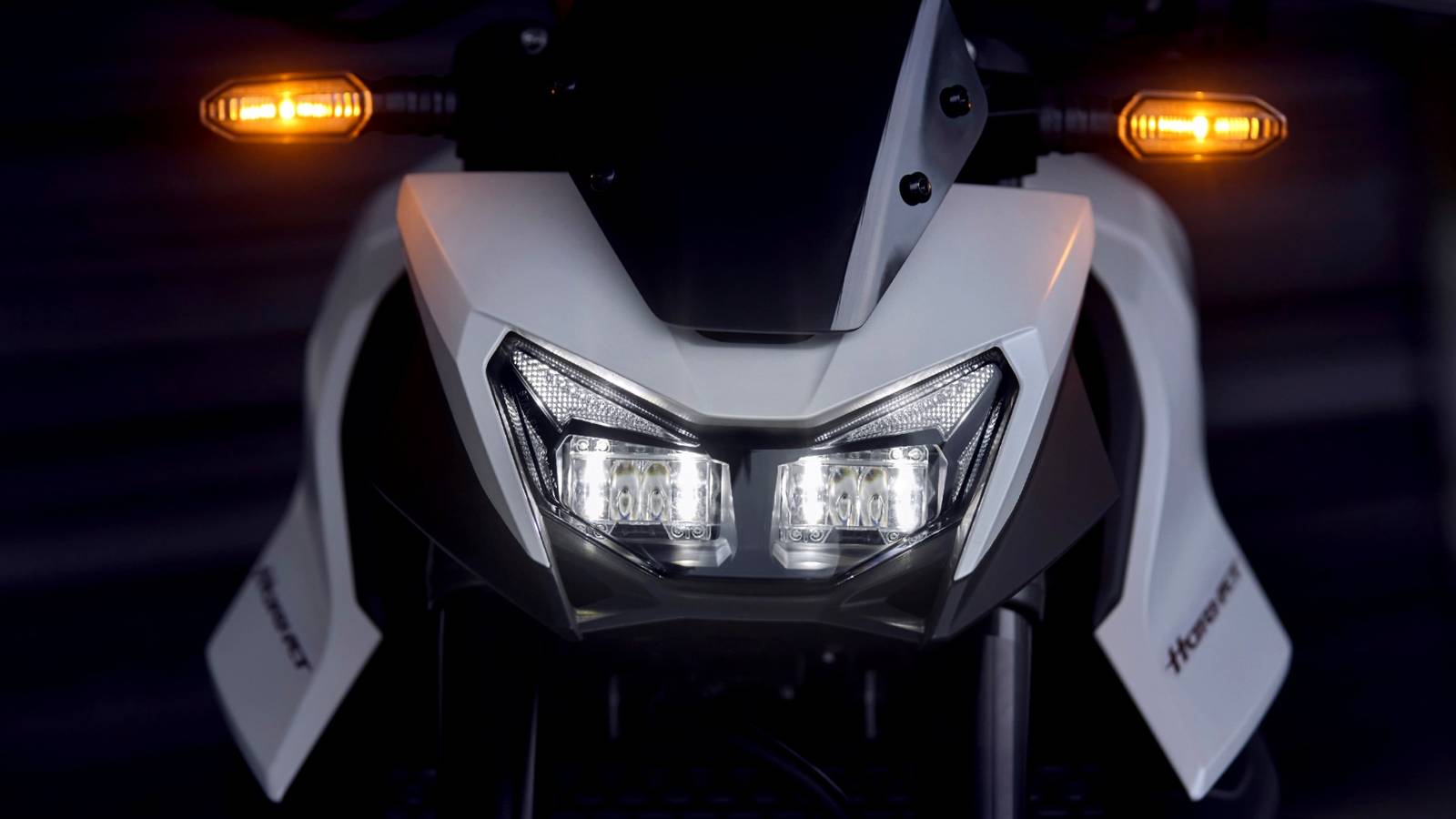
Case in context is the Honda CB750 Hornet. This is one of Honda’s newest motorcycles, revealed just a couple of years ago. Yet, the bikemaker has already given it a notable update just last year. In its current self, the Hornet easily leads the budget middleweight naked segment for a number of reasons.
Chief among these is its blend of a strong MSRP, class-leading performance, and modern-day features as standard. In comparison, its popular rivals like the Yamaha MT-07, Suzuki GSX-8S, Kawasaki Z650, and Triumph Trident 660 all fall short in at least one criterion compared to the Honda. Let’s dive deeper into the details.
Class-Leading Parallel-Twin Performance From A 755cc Engine

As the ‘750’ in its name suggests, the middleweight Hornet features Honda’s new 755cc, parallel-twin engine shared with the XL750 Transalp. The mill has an 87 mm bore and 63.5 mm stroke while running a relatively understressed 11:1 compression ratio. Topping this is a 270-degree crankshaft for ensuring a spread of power.
Speaking of which, the output lies at 90 horsepower at 9,500 RPM and 55 pound-feet at 7,250 RPM. These numbers are higher than its direct parallel-twin rivals by a sizable margin, while they’re a few ponies short of the triple-cylinder Trident 660 and CFMoto 675NK. The latter two have considerably lower torque, though.
|
Engine |
Power |
Torque |
Transmission |
Top speed |
|
755cc, Parallel-twin, 270-degree crankshaft |
90 HP @ 9,500 RPM |
55 LB-FT @ 7,250 RPM |
Six-speed |
~127 MPH (claimed) |
E-Clutch Makes Life Easier

All that performance reaches the wheel via a six-speed transmission. And it ties up with the party trick: the E-Clutch. This is a standard inclusion for MY26, and it omits the use of the physical clutch lever. So you can go up or down the transmission, and even start off from a standstill without ever touching the clutch lever. When in the mood, you can switch it off to do things the old-school way. Oh, and if you stay easy on the gas, this will return almost 55 miles per gallon.
Lightweight Chassis And Showa Suspension Make Up The Underpinnings

Housing the engine is Honda’s steel diamond frame. It weighs just 36.6 pounds while joining hands with a steel double-sided swingarm and Showa suspension. The latter includes 41 mm upside-down Separate Function Fork Big Piston (SFF-BP) forks, said to have divided functions. A Big Piston pressure separation damper in one leg and the spring mechanism in the other help improve damping, although there’s no adjustment. At the rear is a Pro-Link monoshock with preload adjustability.
17-inch Wheels House Nissin Brakes

Topping this is a set of 17-inch cast alloy wheels. The front houses dual 296 mm disc brakes with Nissin calipers, while the rear has a single 240 mm rotor. These should be enough to slow you down, given the accessible curb weight of just 432 pounds fully fueled. The seat height of 31.3 inches and the wheelbase of 55.9 inches should further improve the ease of rideability.
Top-Drawer Features Help The CB750 Reign Supreme

This is where the CB750 truly shines. Although it has an aggressive price, the feature list is right up there with way more premium bikes. For starters, there’s a 5-inch TFT instrument cluster with multiple viewing modes and smartphone connectivity via Bluetooth. This also lets you access the rider aids, which include five ride modes (Sport, Standard, Rain, User 1, User 2), three engine brake modes, three engine power modes, and three traction control modes.
Dual-channel ABS and wheelie control are present, too, although there’s no adjustability. Other nitty-gritty premium touches include:
- All-LED lights
- Auto-cancelling indicators
- Emergency Stop Signal
- USB type-C
- Immobilizer
The 2026 Honda CB750 Hornet Undercuts Its Rivals

Last but not least, we have the MSRP. The CB750 Hornet sells for a stunning price of $7,999. Interestingly, the price has remained the same, even after the MY26 updates (including the E-Clutch and new TFT). This helps it undercut already competitively priced bikes like the $8,599 Yamaha MT-07, $9,249 Suzuki GSX-8S, and $8,995 Triumph Trident 660.

The only direct rival undercutting the Hornet is the Chinese-made $7,499 CFMoto 675NK. The KTM 790 Duke is also a worthy rival, but it’s not listed on the official site due to the recent tariff troubles. As mentioned, it’s worth noting that neither of these bikes gets you the same well-rounded package as the Hornet. For instance, the GSX-8S and MT-07 have lower performance for a higher price. Whereas, the 675NK and Trident 660 can’t match the feature list of the Hornet.