
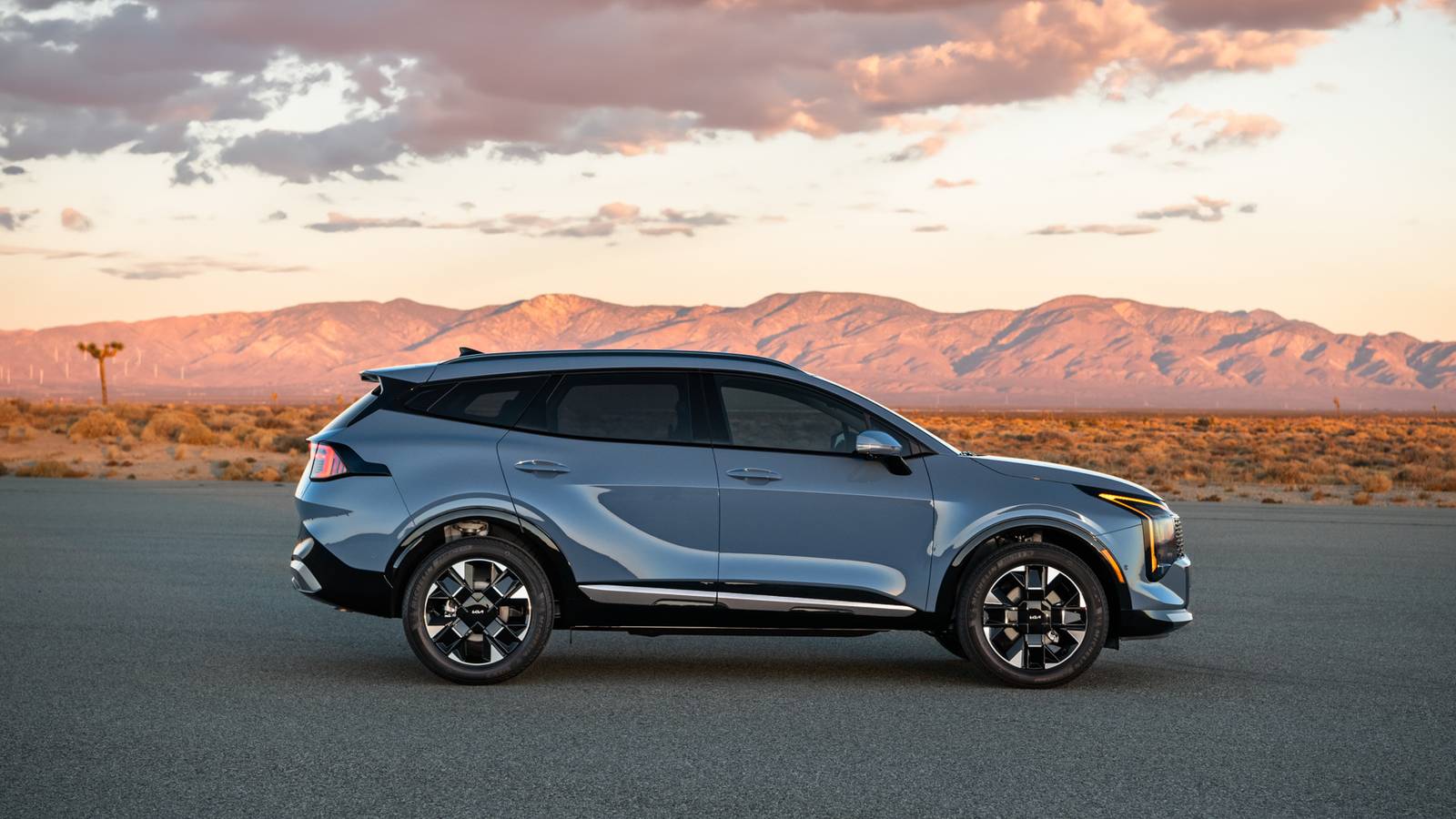
Choosing a hybrid SUV is no longer just about defaulting to the safest, most obvious option. For years, the Toyota RAV4 Hybrid has been the benchmark for buyers seeking a reliable, practical, and fuel-efficient family car. But the arrival of the 2026 Kia Sportage Hybrid comes at exactly the right time to challenge that status quo. With consumers increasingly wary of rising fuel costs, hesitant about going fully electric, and more focused on overall value, Kia’s hybrid SUV feels less like an alternative and more like a genuine contender. The key difference is simple: Kia isn’t trying to reinvent the segment—it’s giving buyers more of what they already want.
That matters, because today’s compact SUV buyers aren’t chasing excitement. They want something modern enough to justify the monthly payment, spacious enough for everyday life, comfortable to live with, and efficient to run. The 2026 Kia Sportage Hybrid fits that brief well. It offers class-leading rear-seat legroom and generous cargo space, while the front-wheel-drive LX delivers up to 42 mpg city/44 mpg highway/43 mpg combined. Put simply, it meets the demand for efficiency without sacrificing the practicality and comfort that made compact SUVs so popular in the first place.
Why The 2026 Kia Sportage Hybrid Arrived At The Perfect Time
Rising Demand For Hybrid SUVs In The Compact Segment

Out on the road, the Sportage Hybrid feels settled and easygoing, whether you’re in stop-start traffic or cruising longer distances. Inside, it’s a clean, user-friendly space with materials and tech that feel a step up from what many expect at this level. It all adds to a package that makes sense for everyday use. That’s where things get interesting for Toyota. The RAV4 Hybrid still brings strong efficiency—up to 44 mpg combined—and the kind of reputation buyers trust. But fuel economy alone isn’t the deciding factor anymore. Buyers are looking at the full picture: space, features, pricing, and how the car fits into daily life.

This is where the Sportage Hybrid makes a compelling case. It combines competitive efficiency with a more modern cabin and clever packaging, giving it a broader kind of appeal. Rather than trying to outdo the RAV4 in one area, it spreads its strengths across the things that matter most. A big part of that appeal is how well it balances efficiency with usability. The hybrid system delivers solid economy, but it’s the practicality that stands out. Rear-seat space and boot capacity are genuinely useful, not just good on paper. For families, that means a more comfortable back seat. For anyone traveling with gear, it means fewer compromises when loading up.

That focus on real-world use carries through to the cabin. The layout is modern without being overwhelming, with clear digital displays and a dashboard that feels more premium than expected. Even lower trims come well-equipped, and the mid-range options hit a sweet spot in terms of value. In the end, the Sportage Hybrid works because it gets the basics right—and then adds a layer of design and usability that makes it feel like a smart, well-rounded choice.
2026 Kia Sportage Hybrid Specifications
|
Powertrain |
1.6L turbocharged inline-4 + electric motor |
|
Hybrid System Output |
227 hp (combined) |
|
Torque |
258 lb-ft |
|
Transmission |
6-speed automatic |
|
Drivetrain |
FWD standard / AWD available |

The Unexpected Budget Alternative To A Mercedes GLC
Mercedes-Benz’s compact SUV is one of the most desired premium family-movers in its class, but it’s easily matched in ability and surpassed in price.
How The 2026 Kia Sportage Hybrid Compares To The Toyota RAV4 Hybrid
Key Differences In Space, Features, And Pricing

The RAV4 Hybrid remains a formidable rival. Toyota brings scale, decades of hybrid experience, and a product that continues to evolve. Claimed fuel consumption of around 41 mpg city/38 mpg highway/39 mpg combined with all-wheel drive keeps it competitive in the segment. Still, that edge isn’t as decisive as it once was. A small difference in efficiency is just one part of the buying decision. What matters more now is the overall package. Buyers are paying closer attention to space, features, warranty, and how usable the car feels day to day. That’s where Kia’s approach lands well. The Sportage Hybrid leans into what families actually value, rather than chasing headline figures.

Space and presentation play a big role here. The RAV4 has always been dependable, but it hasn’t led the segment in interior design or packaging. Kia, on the other hand, makes a stronger case with generous rear legroom, a more flexible boot, and a cabin that feels fresher and more contemporary. It’s the kind of upgrade that buyers notice the moment they step inside. Pricing and spec also shift the conversation. The Sportage Hybrid S, in particular, stands out as a well-judged middle ground, bundling all-wheel drive, heated seats, driver-assist features, and the expected tech without pushing the price too far. The RAV4’s reputation still carries weight, but it can sometimes mean buyers accept less equipment for the badge alone.

Kia is clearly betting that more shoppers will start to question that trade-off. The Sportage Hybrid doesn’t need to outperform the RAV4 in every area to make an impact—it just needs to feel like the more complete, better-considered option for the money. And in many ways, it does.

The Plug-in Hybrid That Just Makes Sense In 2025
If you’re looking for a plug-in hybrid that’s jam-packed with convenient features, this one may be the one for you.
Why Buyers Are Starting To Notice The Kia Sportage Hybrid
Strong Value, Modern Design, And Growing Brand Confidence

A decade ago, many buyers saw Toyota as the safe choice and Kia as the budget alternative. That gap has narrowed considerably. Kia’s products have improved across the board—design, quality, and overall feel—and that shift in perception is starting to show. Cars like the Sportage Hybrid are now getting attention from buyers who might not have considered the brand before. That change in mindset is a big part of why the Sportage Hybrid feels like a genuine threat to the RAV4. Today’s hybrid buyers are still practical, but they’re also more open to trying something different if it makes sense on paper and in daily use. Value, quality, and a sense of getting a well-thought-out product all matter—and Kia is tapping into that.

The Sportage Hybrid fits that thinking well. It stands out visually, feels spacious and modern inside, and stays true to what this segment is about: comfort, efficiency, and ease of use. Add in Kia’s strong warranty backing, and there’s an added layer of reassurance for buyers weighing their options.

Toyota still sets the standard in many ways, and the RAV4 remains a benchmark. But being the default choice can also work against it. When expectations are so established, anything that feels fresher, more spacious, or better equipped starts to stand out more. The Sportage Hybrid doesn’t try to reinvent the formula—it simply executes it extremely well, with a mix of design and value that’s becoming harder to overlook.

The Hybrid SUV That’s A Low-Stress Family Car
This family-friendly SUV prioritizes practical efficiency and everyday usability over flashy performance.
Why The Kia Sportage Hybrid Could Be The Smarter Buy For More People
It Does Not Need To Beat The RAV4 Everywhere To Matter

The Kia Sportage Hybrid matters—not because it clearly outperforms the Toyota RAV4 Hybrid on paper, but because it doesn’t need to. The most effective challengers don’t win every category; they change how people evaluate the segment. That’s what the Sportage Hybrid does. It combines strong efficiency, clever use of space, current tech, and a more distinctive interior into a package that feels complete. Toyota’s hybrid reputation will always carry weight, and for many buyers, that’s reason enough to stick with the RAV4. But there’s a growing number of people willing to look past the badge if something else fits their needs better.

For those buyers, the 2026 Sportage Hybrid feels right in step with what a modern compact SUV should be. It’s easy to live with, well-thought-out, and has a more contemporary, slightly more premium feel than expected. That balance counts in a segment where decisions are usually driven by logic rather than emotion. If a buyer walks in expecting to choose a RAV4 but ends up preferring the Sportage, that shift alone is significant.

And that’s where Toyota starts to feel the pressure. The RAV4 has held its position largely because nothing else has made a strong enough case against it. The Sportage Hybrid changes that. It arrives at the right moment, meets the demand for efficiency, and offers a spacious, refined alternative that feels well judged for the price. In a class built around practicality, it stands out as one of the most convincing rivals Toyota has faced in years.

The 2-Year-Old Toyota Hybrid SUV That You Should Buy Used
This hybrid SUV is still one of the best-selling ones on the market, and here’s why even a two-year-old model is worth looking at today.
Why This Shift Matters

What makes this moment interesting is what it says about how buyers have changed. Compact SUV customers today are better informed, more selective, and less tied to a single brand than they used to be. Value isn’t judged on one headline figure anymore. It’s about the full ownership experience—how the car looks, how it feels inside, the tech it offers, and how comfortable it is to live with day to day. Kia has played this shift well. The Sportage Hybrid doesn’t try to mirror the RAV4; it takes its own approach to what a hybrid SUV should offer. That difference matters. Buyers aren’t only comparing specifications—they’re thinking about how a car fits into their routine.

By offering something that feels modern, easy to use, and a touch more premium than expected for the price, Kia positions the Sportage Hybrid as a smart, considered alternative rather than a fallback option. That’s often how segments begin to shift—not through one model dominating outright, but through a competitor that prompts buyers to rethink what they actually want. Right now, the Sportage Hybrid is doing exactly that, quietly challenging long-held assumptions around value, efficiency, and what a vehicle in this class should deliver, without needing to make a song and dance about it. It also speaks to a growing appetite for hybrids that feel like a natural step forward, not a compromise, especially in everyday driving conditions.
Sources: CarAndDriver, Edmunds