
Some of you remember the 1950s. Others, not so much. Either way, the ‘50s were a long time ago, in a time of the American Civil Rights Movement, a burgeoning space race, and a baby boom. What it wasn’t, however, was an era of asphalt-cracking horsepower. At least, not in the same way that the 1960s and early, pre-Malaise 1970s were. The V8s on North American boulevards and highways tended to skew a bit more anemic than the over-muscled coupes of the ‘60s, with a few notable exceptions.
That said, the exceptions were pretty boss. For instance, from the GM side of things, you could get a 325-horsepower Cadillac or a 312-horsepower Oldsmobile in 1957. The Blue Oval, however, did things a little differently. Ford sort of concealed a factory-forced-induction option in plain sight. And Ford offered that factory supercharged mill at a time when emissions testing and regulation were years away.
A Time When Superchargers Weren’t The Norm

Don’t get me wrong, superchargers weren’t an impossible find in the 1950s. In the previous decade, warplanes were often fitted with superchargers. Supercharging helps produce power and works better at altitude than natural aspiration, a must for a fast-climbing aircraft. Naturally aspirated engines have more difficulty “breathing” the thinner air at altitude, and forced induction allowed the warbirds to produce consistent, usable power higher above sea level.

Supercharging wasn’t as popular with the auto industry, though. Instead, most American cars followed a formula: a free-breathing, carbureted V8 up front, devoid of turbocharging or supercharging, sending power to the rear wheels. And by 1957, some applications were making respectable power figures. For instance, you could get a 1957 DeSoto Adventurer with a brawny 345 horsepower from a 345-cubic-inch V8. That’s a pony per cubic inch of V8 displacement, a rarity for the time. But Ford also slipped a factory supercharged option into the mix. It was power-producing, whining witchcraft.
Hidden In Plain Sight

Back in the 1950s, like today, you had options when speccing out an automobile. One of those more substantial decisions involved picking the engine and transmission you wanted in your car on the options sheet. You could thumb through the library of different cylinder numbers, configurations, and displacements before deciding on the straight-six, V8, or what have you. For 1957, Ford offered a $340 factory supercharger option that made it into only so many cars, including the deceptively muscular “F-Bird.” That was a big deal, mind you. Today, it’s no big deal to scroll through page after page of factory-supercharged Ford Mustangs, Dodge Challengers, and even luxury cars like the Jaguar F-TYPE. Back then, it was unheard of.

The Fastest Supercharged Cars From The Last Decade
These machines all have the following things in common – they’re fun, powered by superchargers, and can all hit 60 mph in four seconds or less.
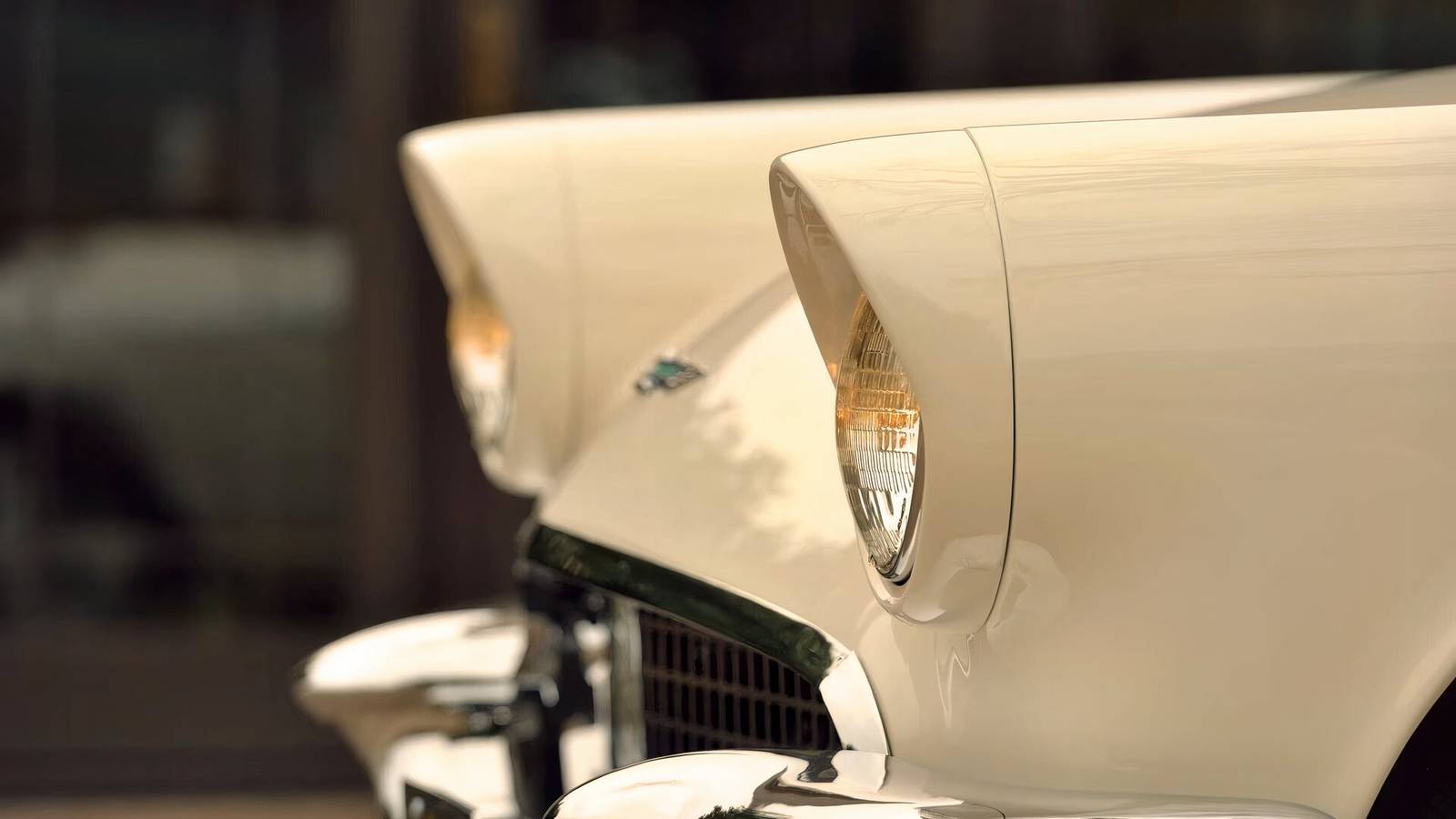
The 1957 Ford Thunderbird: Factory Supercharged Nearly 70 Years Ago

In 1957, you could have the Ford Thunderbird with a choice of engines: the D-code, E-code, and F-code V8s. The D and E engines were naturally aspirated versions of the Ford 312-cubic-inch V8. There was also a “C” model featuring a 292-cubic-inch V8 pumping out 212 horsepower. Then there was the F option.

Customers who opted for the F model got Ford’s 312-cubic-inch Y-block V8 with a McCulloch-Paxton variable ratio, centrifugal supercharger. Unlike a positive displacement supercharger, a centrifugal unit is typically a smaller, turbo-esque application using centrifugal force to spool up and force-feed air into the engine. Paired with Ford’s Y-block 312-cubic-inch V8, the little VR57 supercharger brought the factory-rated output up to 300 horsepower. That’s as much as a factory S197 Ford Mustang GT from half a century later. Not too shabby.
A T-Bird With 300 Ponies

300 horsepower might not seem like an astronomical figure nowadays. Hell, it wasn’t the burliest V8 you could get in 1957, either. It was, however, something special. From a comedy standpoint, enthusiasts sometimes call it an “F-Bird.” No, it’s not in reference to the gesture you can make to other cars as you show them a round set of taillights and tire smoke. Instead, the F-Bird references the F-code of the factory supercharged 312-cubic-inch, Y-block V8. If that wasn’t fun enough, the F-code Y-block V8 established itself as the first factory supercharged engine for a production Ford car.
1957 Ford Thunderbird ‘F-Bird’ Engine Specs
|
Engine Type |
312-Cubic-Inch Supercharged V8 |
|
Supercharger Type |
McCulloch-Paxton Variable-Ratio VR57 Centrifugal Supercharger |
|
Horsepower, Torque |
300 HP, 340-440 LB-FT |
Though it wasn’t very common. Of the 21,380 Thunderbirds the Blue Oval sold for the 1957 model year, fewer than 220 had the supercharged engine. Granted, the F-code engine made it into other Ford cars, but the supercharged V8 wasn’t (and still isn’t) a typical sight. All the options list craziness happened years before emissions testing was a thing, too. Ford offered the McCulloch-Paxton supercharger on its Y-block 312-cubic-inch V8 exclusively for the 1957 model year. California, on the other hand, didn’t start cracking down on emissions control mandates until 1966, nearly a decade after Ford offered its supercharged F-Bird.
Know Where To Look

So, let’s say you want one of these superpowered 1957 Ford Thunderbirds so you can essentially flip an F-Bird to your neighbors and jealous friends. You’ll need to know where to look. The factory 1957 Ford Thunderbird F-Birds had the letter “F” as a prefix on the VIN. It’s as simple as that. If the code starts with any other letter, you aren’t dealing with a factory supercharged F-Code Thunderbird. Be thee warned, though: the rare (and frankly cool) nature of these cars makes them a hot commodity.
How Much Are They Worth Today?

Just how rare are we talking? In 2022, a Starmist Blue example with just 3,000 miles indicated on the odometer racked up $101,000 in bids on Bring a Trailer. Another example hoarded bids up to $106,000 as recently as last December. But neither example sold for the six-figure amounts. When sellers do agree to let their F-Birds go, it’s for big money. For instance, a 1957 Ford Thunderbird with the supercharged Y-block engine sold last month for an eye-watering $134,400. Hagerty says a #3 condition F-code 1957 Ford Thunderbird in “good” shape is valued at around $80,400. In short, these rare, factory-supercharged Fords aren’t going to come cheap.
Not The First Time

Of course, this isn’t the first time an automaker “hid” killer engine options in plain sight. And flying-under-the-radar options weren’t limited to the Blue Oval, either. As if to create an insiders’ club, Chevrolet offered a potent engine option for the Mustang-rivaling Camaro as part of the GM brand’s Central Office Production Order (COPO) program. Years after the wildness of the factory-supercharged 1957 Ford Thunderbird, buyers could option a first-generation Chevrolet Camaro with an iron-block 427-cubic-inch V8 spitting out 425 horsepower and 460 pound-feet of torque. But you wouldn’t find a go-fast supercharger on the big COPO 9561 option V8 in the Camaro as you would under the hood of Ford’s first fan-favorite factory supercharged production car.
Sources: Ford Motor Company, Audrain Auto Museum, Bring a Trailer, Classic.com, Hagerty, Over-Drive