
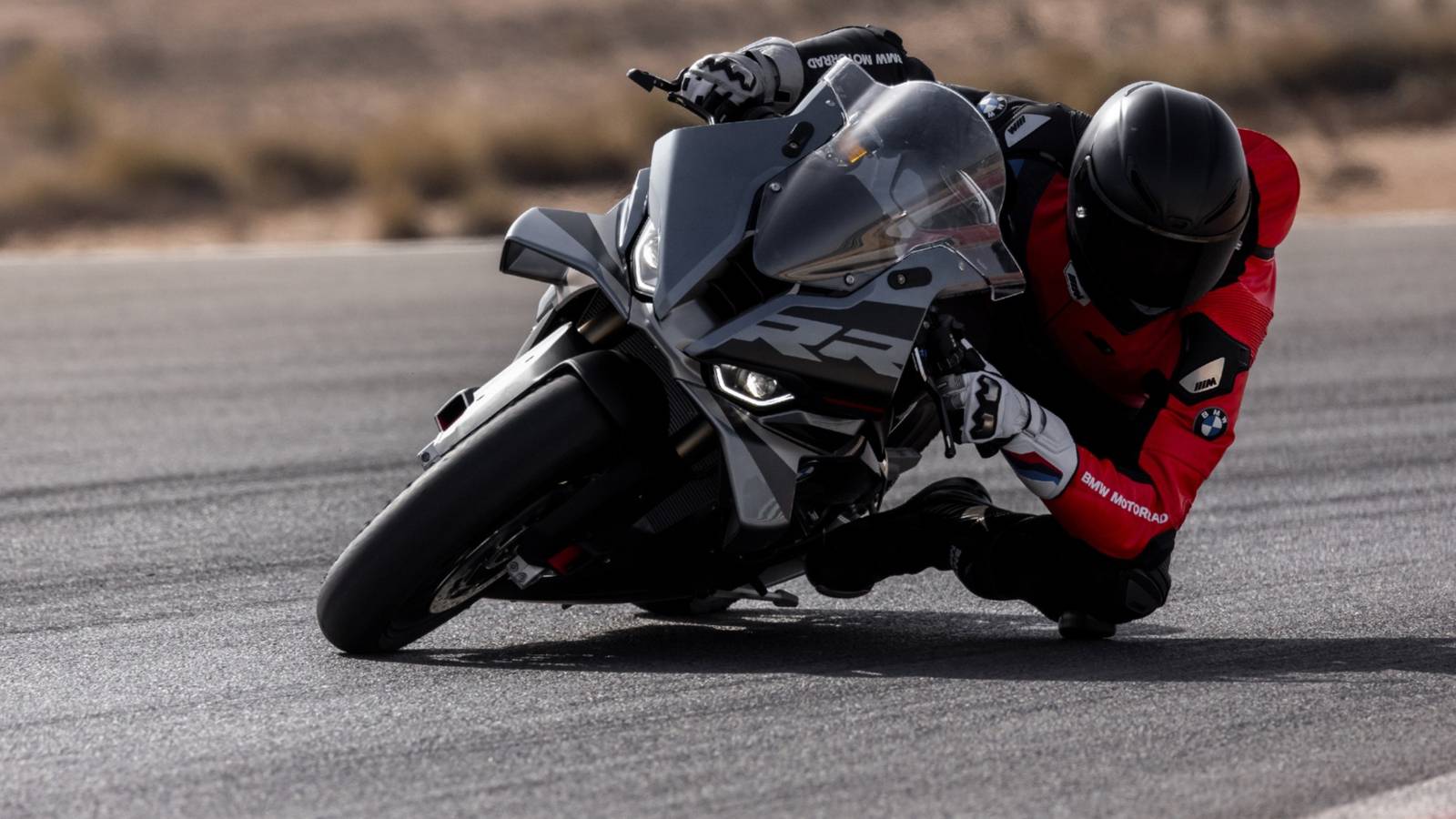
A sports bike that gets the balance right sounds like an oxymoron. After all, these full-faired bikes were always supposed to chase lap times and reach blistering speeds, while overlooking things like reliability and comfort. But with the market trend favoring comfort and speed rather than aggression, sports bike brands have had to change their approach.
Undeniably, Japanese companies have had an upper hand in this regard, but European companies have somewhat caught up. Among the European brands, things narrow down further when you consider German sports bikes in particular. So when you think of a German example that gets the balance right, there is only one bike that promises to hit the nail on the head.
The BMW S 1000 RR Is The German Superbike That Gets The Balance Right

To address the elephant in the room, yes, we know there aren’t many German superbikes on offer. You only have two, per se: the BMW S 1000 RR and M 1000 RR. Technically, the R 1300 RS comes close to being a well-balanced sports bike, too. But BMW calls it a sports tourer, so we’ll leave that out. Between the two RRs, then, it’s the S 1000 RR that gets the balance right.
What exactly does it balance, you ask? Well, peak performance, electronic wizardry, dazzling design, and overall comfort (yes, on a superbike). The latter comes from personal experience of riding the bike, where I felt it’s less committed and abusive on the body than its rivals like the Honda CBR1000RR-R SP, Aprilia RSV4 1100, and Ducati Panigale V4. Its weight and seat height are also lower than those of some of its counterparts.

As for its price, the S 1000 RR has received a pretty sizable hike in 2026. It used to cost $18,995 last year, which made it an immensely value-for-money proposition by superbike standards. But today, that figure has crept up to $19,895 for the base color. That makes it pricier than the bikes it used to undercut last year (the Aprilia RSV4 1100 and the Yamaha R1). The moolah is still justified, though, considering you get one of the most updated bikes in the segment and still save a lot on other rivals (the Panigale V4 and CBR1000RR-R).

The BMW That Shuts Down The “German Reliability Myths”
The BMW R 1300 GS can survive round-the-world adventure abuse.
Powered By An Advanced Inline-Four Engine With ShiftCam Technology

Inline-four engines used to dominate the liter-class superbike segment. Then Ducati whipped up its Stradale V4 engine, and Aprilia bored out its own V4 mill. Suddenly, inline-four engines are on the backfoot with very few bikes actually able to take on the V4s. Luckily, the S 1000 RR is one of these bikes.
It does so with its unique 999cc inline-four engine, armed with a certain ShiftCam technology. This is essentially an advanced version of variable valve timing, which ensures a spread of power all over the rev range. Does it work, you ask? Well, we’ve all seen Toprak outdrag Bulega on a Ducati. Coming to the road-legal numbers, you get 205 horsepower and 83 pound-feet of torque from the factory. This will take you to over 186 miles per hour with ease.
The Underpinnings Include Adjustable Suspension And A Twin-Spar Chassis

Diving deeper, the engine sits inside a twin-spar aluminum frame (BMW calls it a bridge-type chassis). This joins hands with a race-derived aluminum swingarm and subframe, where the former has hollow sections to save weight. These work in tandem with 45 mm USD forks and monoshock, both of which have full adjustability as standard. There’s an option to get electronic control via DDC for extra money, too.

The Overlooked BMW That Offers High Performance For Less Money
This Beemer gets you 170 horsepower for under $15,000
The S 1000 RR Weighs Under 440 Pounds

All that use of aluminum, along with the aluminum wheels, helps the RR tip the scale at just 436 pounds fully fueled. That is lighter than nearly all of its rivals. At the same time, you get a super accessible 32.8-inch saddle height to make the bike more manageable for the masses. Oh, and you can shave around 10 pounds by opting for the optional M package.
Updated Features Enhance The Riding Experience

Just like the low seat height and weight, BMW has made sure the feature list focuses on improving usability, too. So you get a handful of creature comforts here, such as cruise control, hill hold control, smartphone connectivity, and emergency calling services. This is topped with a full suite of electronic aids. Traction control, quickshifter, ride modes, engine braking control, cornering ABS, adaptive wheelie control, rear lift mitigation–you name it, and the RR has it. You’ll also appreciate the M Quick Action throttle, which was introduced just last year.


Why BMW’s Take On The V-Strom Is Worth The Upgrade
The F 900 GS might cost more, but you get more than your money’s worth when you upgrade from the V-Strom 800DE
Finally, we come to the design. In its latest iteration, the S 1000 RR takes heavy inspiration from BMW’s WSBK racebike. So you get new aerodynamic wings at the front, which are some of the largest in the business. These are said to generate 13 pounds more downforce than the previous bike at 186 miles per hour. I personally liked the old design and will happily take the less downforce. Feel free to disagree in the comments!
2025 S 1000 RR Vs 2024 S 1000 RR Downforce
|
Speed |
S 1000 RR 2024 |
S 1000 RR 2025 |
Difference |
|
93 mph |
9.5 lbs. |
13.0 lbs. |
+3.5 lbs. |
|
124 mph |
16.8 lbs. |
22.7 lbs. |
+5.9 lbs. |
|
155 mph |
26.2 lbs. |
35.9 lbs. |
+9.7 lbs. |
|
186 mph |
37.7 lbs. |
50.9 lbs. |
+13.2 lbs. |