
The 2026 Toyota Camry continues to defy all odds as America’s favorite midsize sedan, despite the market showing a clear preference towards crossovers and SUVs. With the current-generation model, the Japanese brand has created the perfect balance of affordability and efficiency, without compromising on overall quality. With prices starting at $29,100, it remains a reasonably priced car, but there are many who can’t budget for it in today’s economic climate.
If you want to experience the highest levels of luxury on a budget, and don’t fear high long-term maintenance and running costs, the used market may be more of an appealing sector for you to look at. There’s currently a highly appealing seven-year-old full-size German luxury sedan selling for about $5,000 less than a new Camry, packed to the brim with the brand’s best and highest quality features and materials.

American consumers often find superior value in the used luxury market because these vehicles suffer from aggressive initial depreciation, frequently losing 40 to 50 percent of their original MSRP within the first three years. This allows a buyer to access high-end materials, advanced safety technology, and superior driving dynamics at a price point comparable to a brand-new economy car. By letting the first owner absorb the steepest financial hit, a second-hand shopper can often afford a higher trim level or a more prestigious badge than their budget would otherwise permit in a new-car showroom.
Furthermore, many of these vehicles are available through Certified Pre-Owned programs, which provide manufacturer-backed inspections and extended warranties that mitigate some of the risks of buying used. However, this decision carries notable downsides, including higher out-of-warranty maintenance costs, more expensive specialized parts, and the gradual obsolescence of older infotainment and driver-assistance software.
The New Camry’s Appealing MSRP

Toyota kicks the Camry range‘s pricing off at $29,100 for the base LE front-wheel drive model, making it the most competitively priced hybrid vehicle in the segment. A lower starting price point for a newer car is always going to be a strong strategy, which is a factor that is clearly evident in its sales results.
The most expensive Camry option is the XSE, which starts at $35,200. Toyota offers the all-wheel drive system across all trims for an additional $1,525. All of these prices exclude the brand’s $1,195 destination fee. There are some optional extras available across all trims, but they are relatively few and far between, as the brand prefers to take a more defined five-trim pricing strategy.
The Toyota Camry has always been a value proposition that caters to those wanting a decently sized family car that doesn’t compromise on build quality or reliability. The lower trim models may not be the most prestigious options that you can consider, but the current-generation examples are much more comprehensively kitted out compared to previous generations.

BMW 7 Series Reliability And Depreciation In Detail
Exploring the BMW 7 Series: A thorough analysis of reliability and depreciation factors, shedding light on ownership costs and value retention.
BMW’s Worthy Luxury Alternative

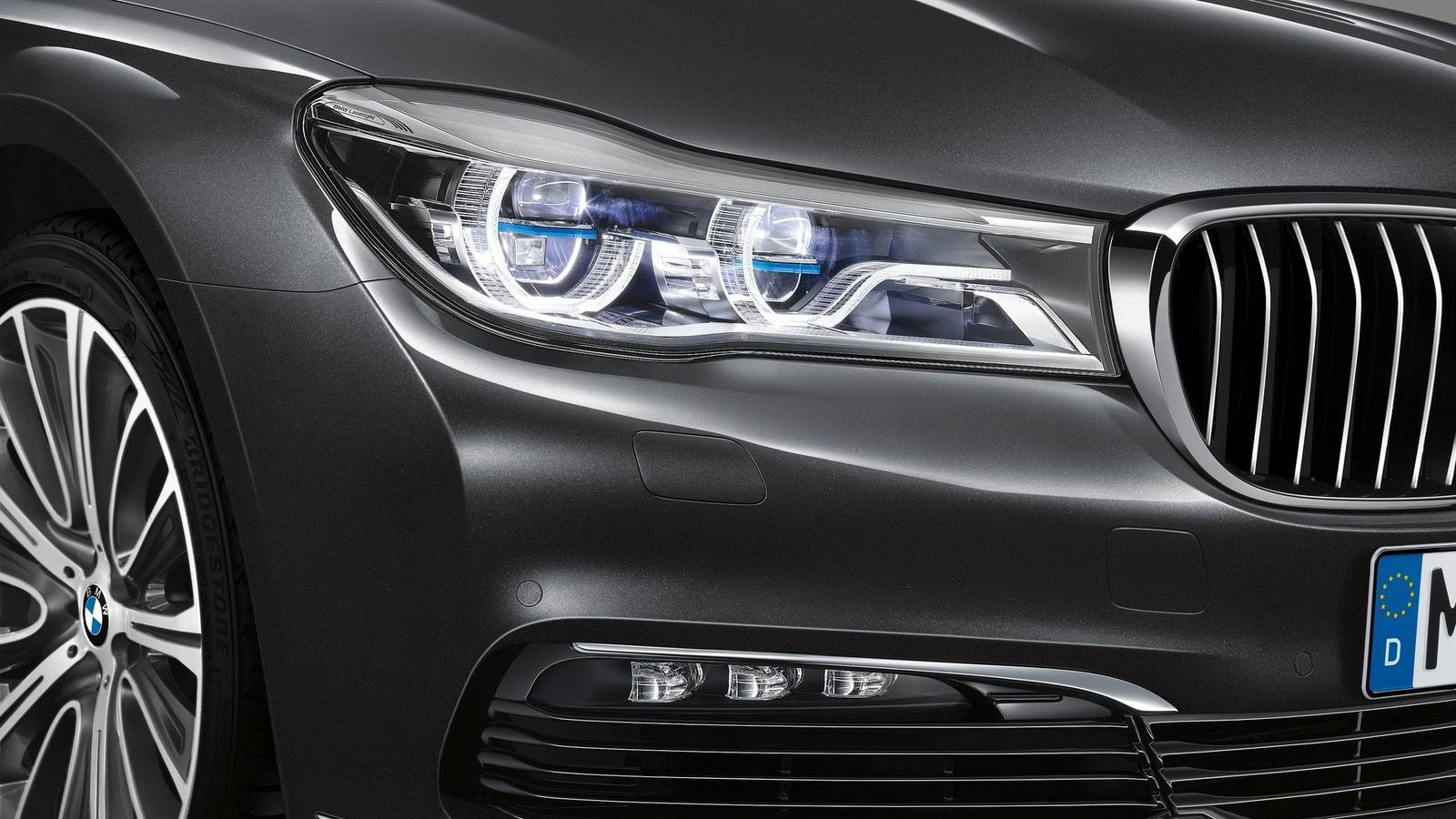
The 2019 BMW 7 Series originally entered the market with a starting MSRP of $99,300 for the base 740i, climbing to over $124,700 for the flagship M760i xDrive. The range features a versatile selection of powertrains, including a 3.0-liter turbocharged straight-six in the 740i, which is the model we’ll be focusing on for this feature.
According to current data from J.D. Power, Edmunds, and iSeeCars, the range has experienced significant depreciation, with typical used values now spanning from $24,980 to $54,565 depending on the specific trim and condition. While the 740i and 750i models commonly trade in the mid-to-high $20,000s, the flagship M760i remains the most valuable, often commanding prices in the $50,000 range.
Be Prepared For High Running Costs

The catch with owning a seven-year-old BMW 7 Series is that it will be an incredibly expensive car to keep in outstanding condition, which is in your best interest to do if you want a relatively problem-free ownership experience and better value retention. CarEdge indicates that you can expect to spend $115,676 on a base 740i over the course of five years.
A whopping $57,944 of this accounts for depreciation, which is to be expected given its position in the brand’s lineup. $28,870 will go to insurance, $8,250 for gasoline, $15,686 to financing, and $4,926 for maintenance and repairs. According to Kelley Blue Book‘s five-year cost to own data, a used 7 Series in this age bracket can incur over $40,000 in total ownership costs, with significant portions allocated to fuel, insurance, and financing.

Specifically regarding maintenance and reliability, RepairPal estimates the average annual repair cost for a BMW 740i at $847, which is considerably higher than the average for all vehicle models.
Common expenses include oil changes ranging from $147 to $175 and a high probability of severe repairs as the vehicle ages. RepairPal further notes that BMW as a brand ranks near the bottom of its reliability scale, meaning you should expect to conduct one visit to a service center for noteworthy repairs every year.
iSeeCars also highlights a $61,386 or 61.8 percent depreciation rate for the entire 2019 7 Series range, which is a bit worse when compared to key rivals. On the reliability front, it suggests that you can expect an average lifespan of 8.6 years or 94,789 miles, with only a 0.2 percent probability of reaching 200,000 miles.

The Luxury Car With An Engine Nobody Asked For: BMW 740i’s Six-Cylinder Surprise
The BMW 7 Series has a nearly six-digit starting price, yet you still don’t get an eight-cylinder engine. What gives?
The Best Of Bavaria’s Interior Design

The 2019 BMW 740i comes standard with a Dakota leather upholstery, 10-way power-adjustable heated front seats with driver-seat memory, and a panoramic sunroof. Convenience is prioritized through a power-adjustable steering column, four-zone automatic climate control, power-folding heated mirrors, and a power trunk, while standard entertainment features consist of the iDrive 7.0 system featuring a 10.2-inch touchscreen, navigation, gesture control, and a 16-speaker Harman Kardon surround-sound system.
There was an optional Executive Package, which added 16-way multi-contour front seats with ventilation and massage functions, alongside ceramic control dials and a head-up display.
Rear-seat passengers can be equally pampered via the Luxury Rear Seating Package, which introduces heated, ventilated, and massaging rear seats, a heated steering wheel and armrests, and a removable 7.0-inch Touch Command tablet for localized climate and media control.
High-end standalone options further elevate the 740i with features like the Sky Lounge panoramic glass sunroof, which uses 15,000 LED light sources to create an atmospheric glow. There’s also a 16-speaker Bowers and Wilkins Diamond Surround Sound system, and a Rear-Seat Entertainment Professional system with dual Full-HD touchscreens.
The B58’s Most Luxurious Application

The 2019 BMW 740i is powered by the B58 TwinPower turbocharged 3.0-liter straight-six engine, consisting of a twin-scroll turbocharger, high-precision direct injection, and Valvetronic variable valve timing. This refined engine produces 320 horsepower and 330 pound-feet of torque, with the torque peak arriving as early as 1,380 RPM. Power is managed by a standard ZF eight-speed Steptronic automatic transmission with manual shift modes and launch control, sent to your choice of the rear wheels or all four wheels if you opt for the xDrive model.
The rear-wheel drive configuration enables the large sedan to accelerate from 0 to 60 MPH in 5.4 seconds, which is an impressive result for an entry-level engine option. The 740i is electronically limited to a top speed of 130 MPH in its standard guise, but models with the M Sport package benefit from a 155 MPH top speed.

A Love Letter To BMW’s B58, An Inline-6 You Should Own Now
No other brand does inline-6s like BMW and chief among those engines is the ever-ubiquitous B58–an engine that’s so good, it’s nearly flawless.
Fuel Costs You’d Expect From A Luxury Car

The BMW 740i achieves reasonably impressive fuel consumption returns, despite its size and engine displacement. The EPA estimates that the rear-wheel-drive model achieves 21/29/24 MPG on the city/highway/combined cycle, while achieving a 494-mile range estimate from the 20.6-gallon tank.
The EPA indicates that it will cost $2,400 to refuel every year, which means you’ll be spending $4,250 more on fuel compared to the average new vehicle currently on sale in the U.S. Filling the tank up will cost around $80, and a 25-mile drive will set you back by $4.02.
Opting for the xDrive model changes consumption to 20/29/23 MPG, while cutting range to 474 miles. You’ll spend $100 more on fuel every year, and $4.20 to drive 25 miles. This means that you’ll end up spending $4,750 more on fuel over five years.
Sources: J.D. Power, iSeeCars, CarEdge, and EPA.