
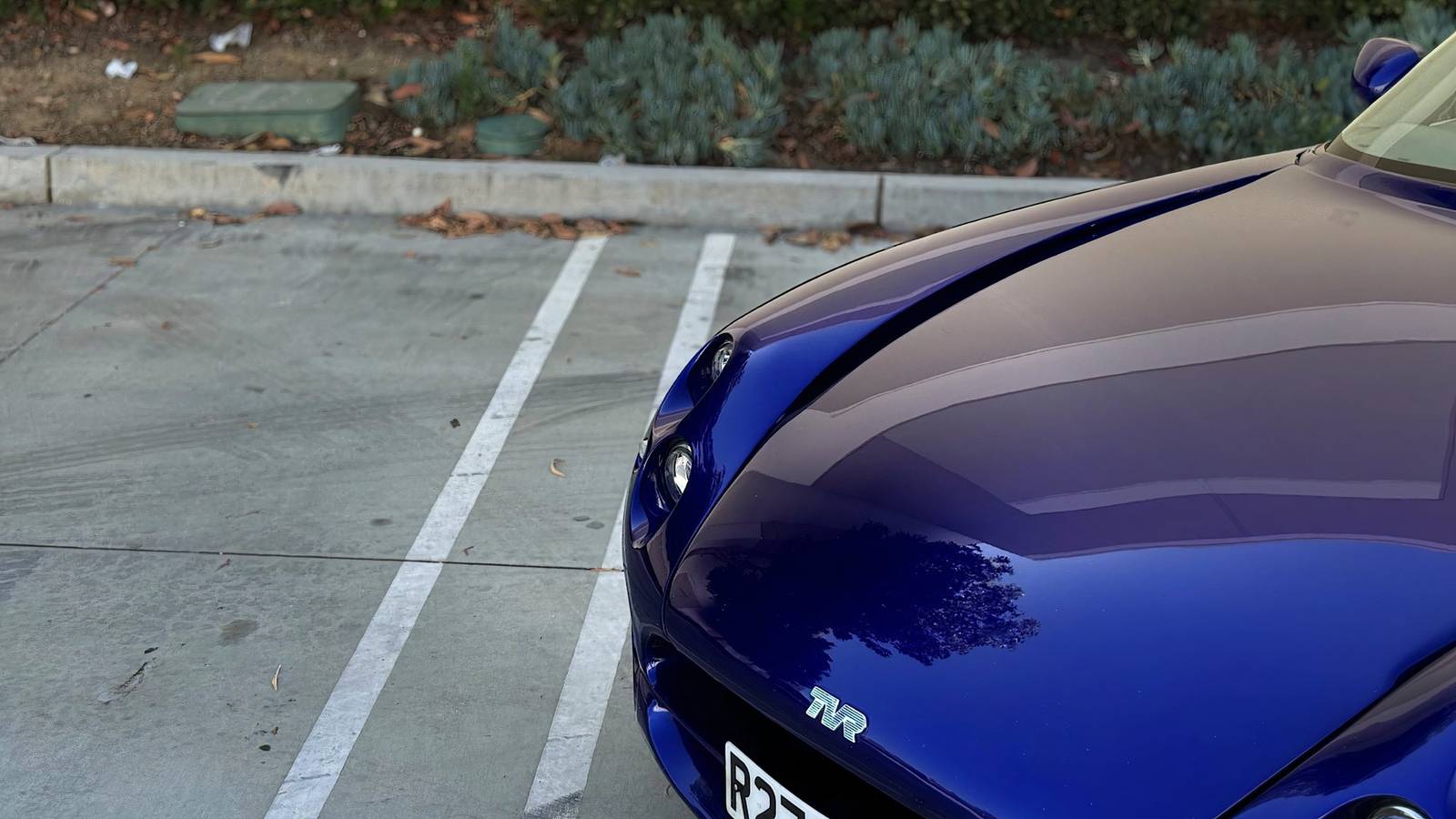
Porsche is one of those auto brands that other brands hate to love and love to hate – they produce some of the best sports cars on the market, with the 911 pretty much defining sports cars, and can make other cars look like cart horses on the straights and leave them in the dust in the corners. But, there are, of course, plenty of well-known sports cars, like the Audi R8, the Nissan GT-R, and the Aston Martin Vantage, that can take it to Porsche models, but there is one forgotten British sports car that, in the mid-1990s and 2000s, that was giving Porsche a run for their money.
We are taking a closer look at this forgotten British sports car and have brought you information about its performance specifications, how it goes up against the Porsche models from the era, how much it is worth today, and other rare and expensive British sports cars.

All the TVR Models Ever Produced
These are all production models from the British carmaker TVR, in the brand’s history, so far
The 1996–2006 TVR Cerbera: The Porsche-Chasing Brit

Built by the UK-based TVR, the automaker renowned for producing exciting but somewhat terrifying models, the limited-production Cerbera is the British sports car that can take on the mid-90s and early 2000s Porsches for style, speed, and performance credentials. Boasting a collection of beefy engines, a front-engine and rear-wheel-drive layout, sculpted body lines, and an athletic interior design, the 1996 (1997 model year) -2006 TVR Cerbera is everything a sports car should be, but is sorely overlooked compared to the likes of Porsche, Dodge, Chevrolet, and Mercedes-Benz sports cars.
 TVR Cerbera Performance Specifications
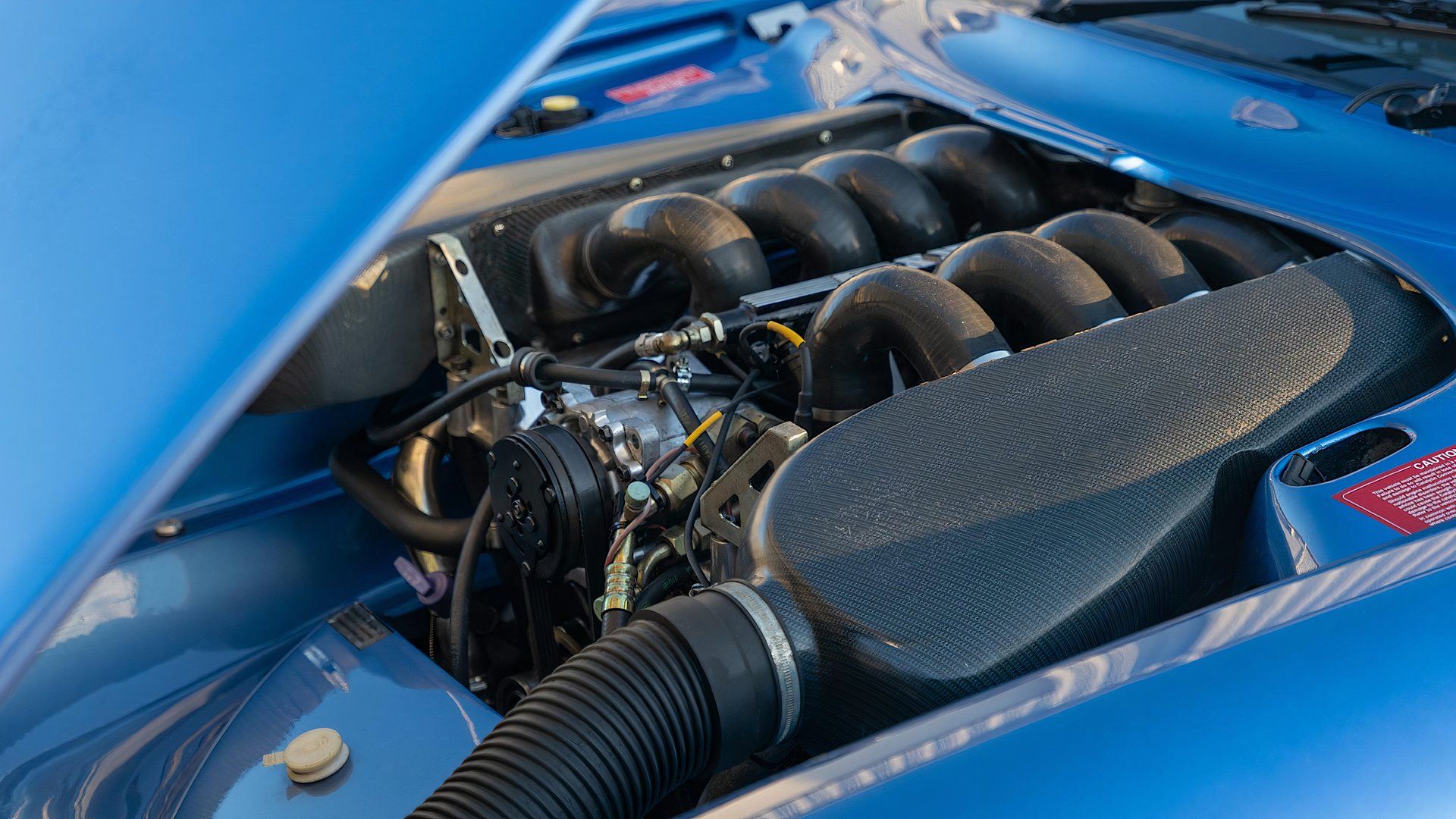
Packing some seriously unique, in-house-designed mills, making it a real standout against other sports cars. The 4.0-liter inline-six Speed Six boasts a lightweight construction, showcasing an aluminum alloy build, a long stroke (3.27 inches), and a narrow bore (3.9 inches), which helps it deliver a strong, linear powerband, while a DOHC setup allows for high-revving performance (6,800 RPM).
|
Engine |
4-Liter Inline-Six |
4.2-Liter V-8 |
4.5-Liter V-8 |
|
Transmission |
Five-Speed Manual |
Five-Speed Manual |
Five-Speed Manual |
|
Horsepower |
350 Horsepower |
360 Horsepower |
420 Horsepower |
|
Torque |
330 LB-FT |
320 LB-FT |
380 LB-FT |
|
Driveline |
Rear-Wheel Drive |
Rear-Wheel Drive |
Rear-Wheel Drive |
|
0-60 MPH |
4.4 Seconds |
4.2 Seconds |
4.1 Seconds |
|
Top Speed |
170 MPH |
180 MPH |
185 MPH |
The Speed Eight (AJP8) V-8, available as a 4.2-liter or 4.5-liter, boasts a 75-degree flat-plane crank, which not only gives it a raw, high-pitched exhaust note, but also very sharp throttle responses. Both variants also run a DOHC setup with four valves per cylinder, maximizing airflow for better combustion, while the dry-sump lubrication system ensures the engine stays well-fed with oil.
What also sets the Cerbera apart is that all the engines utilized are built in-house, the first time TVR had ever done it, instead of using mills produced by Rover, Triumph, and Ford. From the ground-up, this TVR is a TVR-built beast with some impressive 0-60 MPH times across the board.
The “Red Rose” Cerbera

Things get even better when it comes to the Red Rose Cerbera. It is even more powerful thanks to the beefed-up ”Red Rose” 75-degree DOHC V-8 with reshaped exhaust and inlet ports that spit out a huge amount of torque and horses, giving it some supercar-esque speeds – pushing way past some of what the Porsche road cars of the time were achieving when they were produced.
|
Engine |
4.5-Liter V-8 |
|
Transmission |
Five-Speed Manual |
|
Horsepower |
440 Horsepower |
|
Torque |
402 Horsepower |
|
Driveline |
Rear-Wheel Drive |
|
0-60 MPH |
3.9 Seconds |
|
Top Speed |
193 MPH |
To put things into perspective, the 1996 Porsche 911 Carrera (993) can sprint to 60 MPH in 5.3 seconds, the 2000 911 can hit it in 5 seconds, the 2004 Turbo Cabriolet can reach 60 MPH in 4.9 seconds, and the 2006 911 can dash to 60 MPH in 4.1 seconds. The 1998 Dodge Viper GT can achieve the sprint in the same time as the Red Rose, while it is only marginally beaten out by the ’97 Ferrari F50 (3.8 seconds), and the ’97 Porsche 911 Turbo S (3.7 seconds).

From Garage To Glory: Restomodding Classic Cars For Modern Performance
Restomodding cars has become a common practice in the collector and aftermarket community, but what is it?
The Cerbera Is Made For More Than Just Speed
Like some of the best sports cars ever created, the Cerbera is made for more than just straight-line speed and looking good. Though we think it definitely stands out alongside Porsche for looks, it is built for all-round athletic fun, thanks to a lightweight build of 2,337 pounds and 2,646 pounds, and hands-on, engaging driving chops that owners have praised in bucket loads.
“Ballistic performance. You have to experience the 4.5 Cerbera to totally get your head around it. Cracks 60 mph in around 3.8 seconds and on to 190 mph flat out. Joins the wonderful world of sportsbikes. Sound effects are drool-inducing both in quantity and quality – well, it is a TVR after all.”
– Owner review of their 1999 TVR Cerbera on Car Survey.org
Sleek Style And Pin-Point Steering

The Cerbera is pure automotive drama on wheels with its low-slung stance, wide haunches, and aggressive curves, which should make it a lot more recognizable. Also, unlike most GTs of its era, the Cerbera is built with aerodynamics while maintaining a raw, handcrafted feel – not just one or the other. The showcased long hood and short rear deck give it a purposeful look, while details like the flared wheel arches and sculpted side intakes make it look as performance-orientated as it is. The equipped frameless doors and minimalist side mirrors reduce drag, while the absence of external door handles keeps the bodywork smooth and interrupted.
But, it is handling where the Cerbera truly shines – quick-ratio steering, lightweight construction, and a stiff chassis make it a razor-sharp British sports car. The V-8-toting models have an ultra-direct two-turn lock-to-lock steering, making it extremely responsive, while the Speed Six flavor features a slightly slower 2.4-turns lock-to-lock ratio for a more progressive yet still snappy feel.

The Cerbera isn’t equipped with traction control, but the long-travel throttle compensates for it, allowing fine-tuned control over the power delivery. This setup can feel “twitchy” to untrained drivers – it demands respect with small inputs for the best results, but once you have it tuned in, it makes for an exceptionally fun sports car to be behind the wheel of. Pair this with a double-wishbone suspension and the rear-wheel-drive layout, and it is a true purist’s driving machine.
An All-Round Sports Car Made For Driving

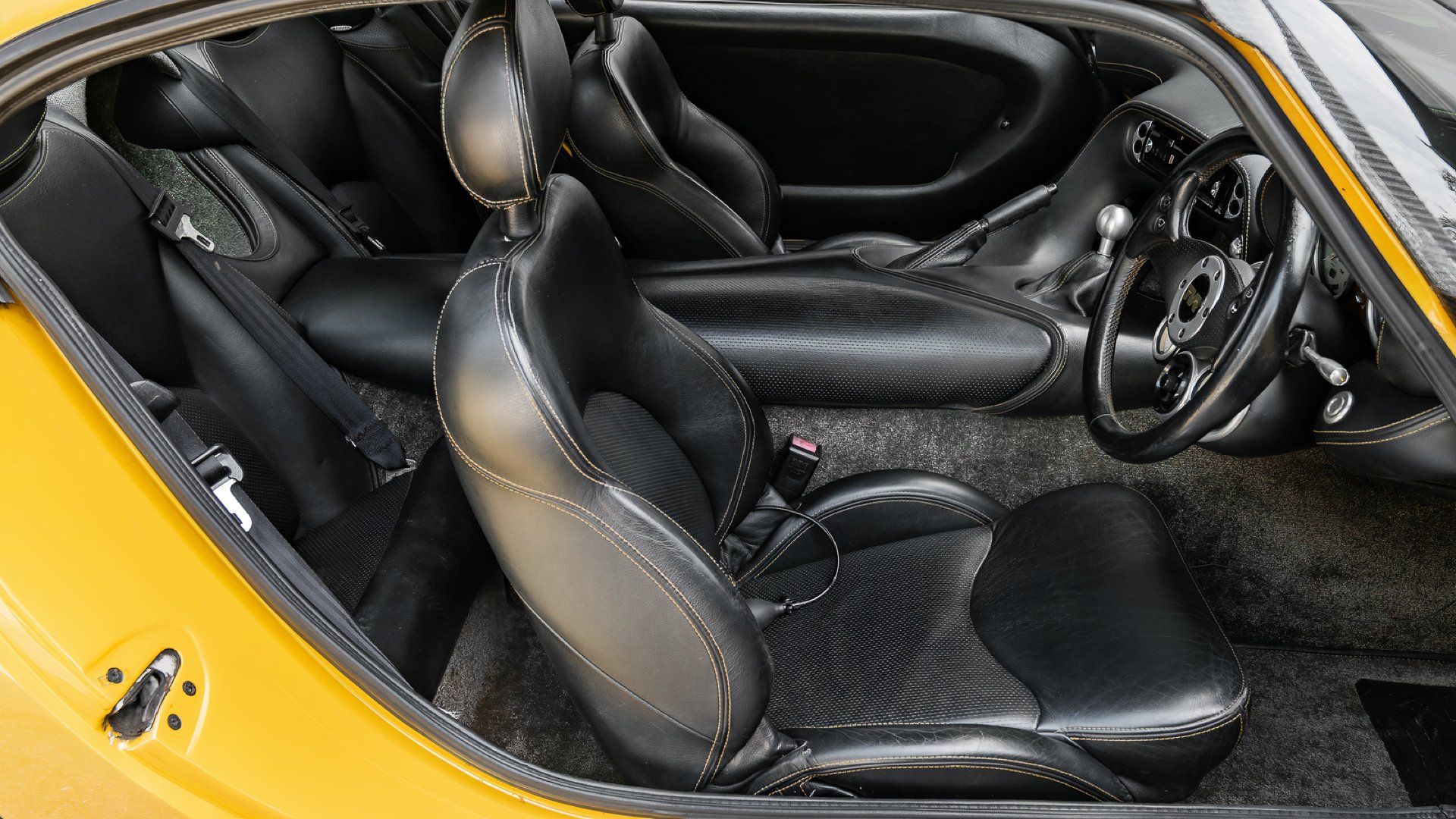
Everything about the Cerbera is designed for performance. Boasting a fiberglass body, a minimalist yet futuristic dashboard layout that wraps around you, an instrument cluster that is placed centrally, a unique cowl extending from the dashboard to shield the gauges from glare, and a two-spoke steering wheel not only offers a unique touch, but ensures you can see the controls easily. Also, the Cerbera showcases steering wheel-mounted buttons instead of column stalks for wipers and indicators, so you can keep both hands on the wheel all the time, giving it a very bespoke and race-inspired feel.
Despite being a 2+2 coupe, which TVR dubbed the layout “3+1”, meaning the passenger seat slides further forward than the driver’s to allow extra legroom for the admittedly cramped rear space. The materials inside also reflect TVR’s handcrafted nature – examples today are on the used market with custom leather combinations, unique stitching, and even bespoke dashboard finishes, and unlike many sports cars and supercars of the time, it isn’t overloaded with unnecessary tech – it is all analog. No traction control, raw feedback, no digital interference – just pure mechanical engagement built for those of us who love to drive an unfiltered sports car with oodles of power under the hood.

10 Affordable Sports Cars From The 90s That Are Rising In Value
These classic sports cars cost less than a new Mazda Miata, showing signs of increasing in value as time passes.
Limited Production Numbers Mean High Auction Prices

Only 1,490 were produced throughout the Cerbera’s relatively short run, which means today, they are expensive sports cars to buy. So, not only is it a complete weapon of a British car, but it is also a real collector’s item that is seldom seen screaming around the roads today.
The current average auction price for the TVR Cerbera, of all model years, is $92,872. Only 13 have been sold via online auction in the last five years, with the cheapest model selling for $16,863 and the most expensive selling for $748,656.
The “Last Cerbera”
2006 marked the end of the Cerbera and TVR wanted to make a big deal of it. With an original price of around $46,000 in 2002, the Cerbera was cheaper than the Porsche 911 in 2002 by a long way – the 911 had a base price of just over $70,000 in the same year. TVR set up a dedicated website to say a last goodbye to the Cerbera, thelastcerbera.com, and to handle the auction, but unfortunately for TVR and the last Cerbera, but not for the owner, it didn’t command a huge price at the time.
TVR set a reserve price of £45,000 ($58,100) for the last production, Speed Six Cerbera, but no one bid that highly on it. Despite this, TVR sold it anyway to the highest bidder – and today is worth a heck of a lot more.
The Rarest TVR Cerbera Ever Built

In ’97, TVR took the Cerbera a bit further, though they created a truly weaponized flavor. Initially dubbed “Project 7/12”, the TVR Cerbera Speed 12 was created as an audacious attempt to dominate both the road and the racetrack as a GT1 endurance racer, mainly aimed at competing at Le Mans and competing with the McLaren F1. The “7/12” moniker hints at its monstrous 7.7-liter V-12 under the hood, a powerplant that was designed to kick out around 1,000 horsepower, though it was officially rated at 840 horsepower. There are some reports, urban legends now, that the two inline-six engines spliced together to create the engine equipped in the Speed 12 was so ferocious that it snapped the 1,000-horsepower dyno input shaft during testing – it is a complete animal.
Unfortunately, only one example was ever created by TVR as a homologation model because GT1 racing regulations after its debut and a few races had changed so much that it made it obsolete for the race scene. The end of the Speed 12 arrived even faster when TVR boss, Peter Wheeler, took a prototype of the road-going models home one night, and himself said that it was too raucous for the road. It took until 2005 for a complete one-off model to be hand-built by three race engineers, with the final example of the best of the Cerbera weighing in at 2,204 pounds and boasting an 850 horsepower and 900 pound-feet of torque V-12 under the hood, giving it an insane power-to-weight ratio of 0.38-horsepower-per-pound.
The last time the TVR Cerbera Speed 12 went up for auction, it was sold for £601,500 ($776,566).

Top 10 Obscure British Cars That You’ve Probably Never Heard Of
These obscure British cars will blow your mind, make you laugh, and maybe even shake your head
Other Forgotten British Sports Cars That Deserve More Of The Limelight

British sports cars are not always the most remembered here in the U.S.A. – we do have our own collection of legendary American sports cars that have changed the course of automotive history, but if you are a proper gearhead, you’ll know there are a number of lesser-known and obscure British sports cars that deserve a lot more attention than they get for their stylish and unique designs, raucous engines, and proper performance guts.
- Strathcarron SC-5A. Horsepower: 125 hp. Torque: 81 pound-feet.
- Evante 140TC. Horsepower: 140 hp. Torque: 140 pound-feet.
- AC 3000ME. Horsepower: 138 hp. Torque: 192 pound-feet.
- Connaught Type-D GT. hp: 300 hp. Torque: 274 pound-feet.
- Marcos Mantis. Horsepower: 506 hp. Torque: 452 pound-feet.
The Rarest And Most Expensive British Sports Cars
Some of the rarest British sports cars ever sold at auction have commanded some huge prices at auction, and are very hard to come by today. Some of the rarest include the Lotus Elise GT1, which was only limited to a one-off-road-legal build due to Lotus’ limited budget, the TVR T440R, which only has one known example built, the Noble M10 only has six known examples built, the Ascari Ecosse had a limited run of only 19 models built, and the Jaguar XKSS was originally built with a run of 25 in mind for competition use only.
Jag only sold 16 of the XKSS – the last nine were destroyed in a factory fire back in ’57, but Jaguar produced the remaining nine as the Jaguar XKSS Continuation ’16 to be sold to their most loyal customers – which were quickly snapped up, but an original real deal XKSS is worth up to $11.5 million in mint-condition. Some of the most expensive British sports cars ever sold at auction include:
- 1964 Aston Martin DB5 4.2. Auction Price: $914,535.
- 1924 Vauxhall 30-98. Auction Price: $1,600,034.
- 1935 Aston Martin Ulster. Auction Price: $2,038,753.
- 1955 Aston Martin DB3S. Auction Price: $3,883,953.
- 1956 Aston Martin DBR1. Auction Price: $22,550,000.
- 1955 Jaguar D-Type. Auction Price: $21,780,000.
- 1963 Aston Martin DP215. Auction Price: $21,455,000
- 1995 McLaren F1. Auction Price: $20,465,000.
Sources: Classic.com, Car & Classic, and Iconic Auctioneers