
If you’re in the market for a vehicle that satisfies your speed desires but is on a (somewhat) limited budget, chances are you are looking at the Japanese brands. That’s because the Japanese brands have long offered sports cars at a relatively accessible price point, especially next to what the Europeans tend to bring to market.
With that in mind, what is the fastest Japanese car for under $50,000? Why $50,000? Well, according to Kelley Blue Book, the average new car transaction price for a new car in January 2026 was at $49,191, which also led to the disappearance of the sub-$20,000 vehicles in recent years. Unfortunately, it doesn’t necessarily mean that more Americans have more purchasing power than ever, but whatever the case, $50,000 suddenly seems like the norm when purchasing a new car.
Why We Are Paying More For Cars

To understand why we are paying more for new cars, we have to evaluate how consumer demand has changed and what kind of vehicles automakers are offering to satisfy these conditions.
Newer Equals More Features

When a vehicle gets redesigned, it is considered a “step up” if it improves in various respects. One of those is having more standard features, because, of course, why would you pay more for a 2026 Honda Civic versus a 2025 model year if it didn’t come with more standard kit. This has led to vehicles also becoming more upscale—another measurement of improvement. Journalists and/or consumers complain about an interior not having a lot of soft-touch plastics, but that, of course, comes at a price.
This is what Reuters reports as a stark example of the so-called “K-shaped U.S. economy”, wherein the market is driven by more affluent consumers, while middle- and lower-income people are relegated to the used car lot. Besides, if most of the auto market’s revenue is coming from those who can afford better-equipped vehicles, why would they still cater to the lower end of the segment? Budget cars have lower profit margins, which means they should be sold in droves to make a decent revenue, but the irony is, this market is also experiencing fewer buyers. Just take a look at what the best-selling cars in America are, and you’ll see that barely anyone is also buying sub-$20,000 cars.
Sports Cars That Cost Less Than The Average Transaction Price

This leads us to an interesting dilemma. Did you know that a lot of Japanese sports cars cost well below the average new car transaction price of $49,191? In fact, for that amount, you can already get a well-equipped Japanese icon, such as a range-topping, fully loaded Mazda MX-5 Miata or a fully loaded Toyota GR 86. Heck, even the GR Corolla and Civic Type R are already within your price points. The question now is, though these are great and extremely fun Japanese performance cars, which among these is the fastest for under $50,000?

The Sports Car With Toyota Reliability And Porsche-Level Handling
Here’s a German roadster that is as reliable as a Toyota and as lively as a Porsche.
The Fastest Japanese Car Under $50,000 Is…

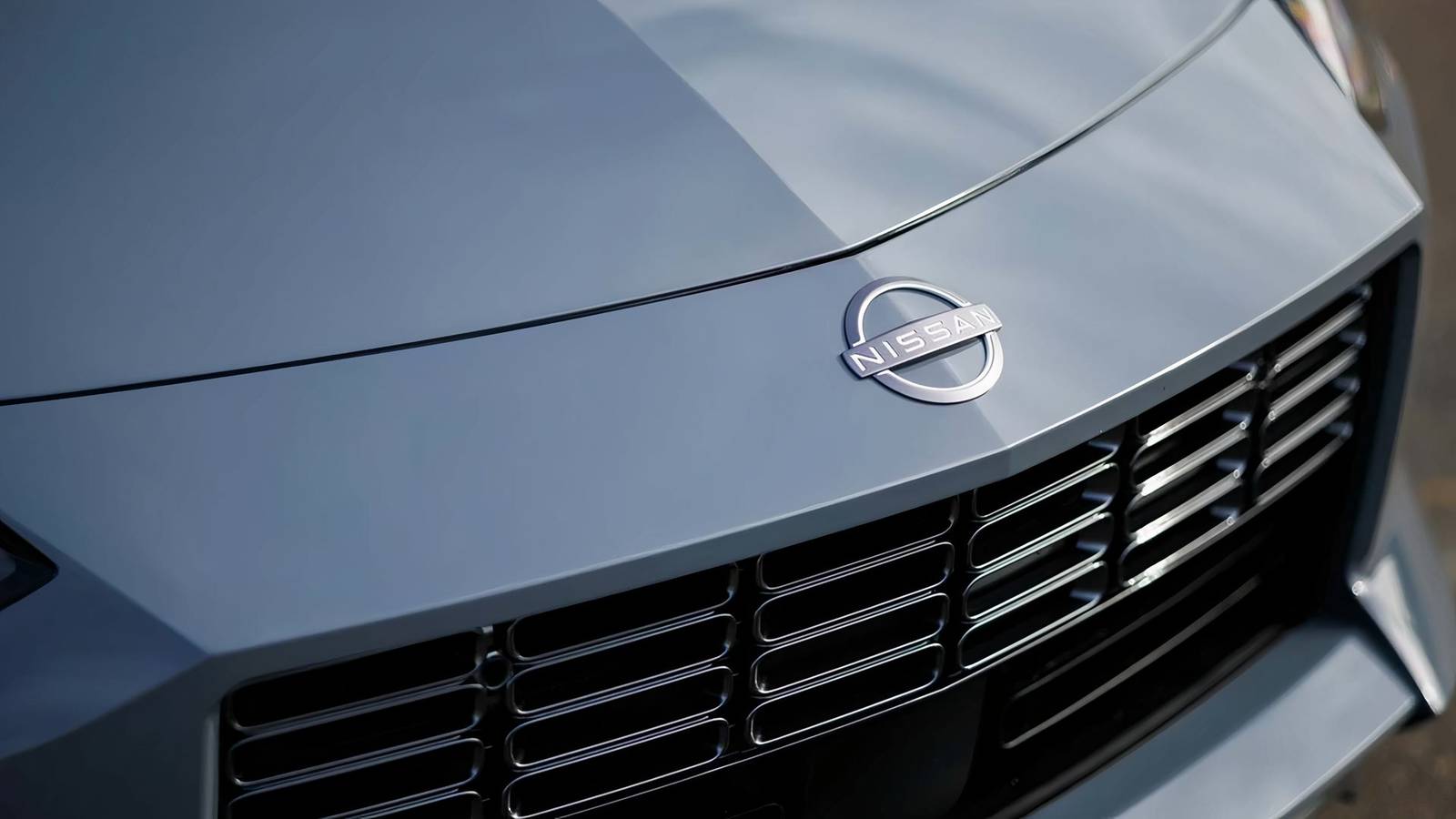
That would be the 2026 Nissan Z, which, for that money, offers the fastest 0–60 mph time of 4.3 seconds for the nine-speed automatic, while independent tests for the manual show a 4.7- to 4.9-second 0–60 mph sprint.
But You’ll Have To Get The Base Sport

But for you to achieve this price point, you’ll have to settle for the base Sport. With this variant, rather than having the 19-inch RAYS forged aluminum wheels, the Akebono brakes, and the more eccentric paint choices of the Performance variant, you end up with 18-inch aluminum alloy wheels. Nevertheless, the Z’s beautiful design remains intact, with a simple front end, a long hood, full LED exterior lighting, and the silver trim piece that highlights the Z’s sleek shape.

Inside, there’s also less feature content in the Sport variant, such as the downgrade to an eight-inch Nissan Connect infotainment and the removal of the Bose sound system. In hindsight, I’ve already reviewed the Nissan Z, and I wasn’t impressed with the implementation of the Bose sound system here, so you’re not necessarily missing out. You also get fabric seats here. On the upside, the usual features like a digital gauge cluster, plus wired Apple CarPlay and Android Auto, remain standard. So do the Nissan Intelligent Mobility features, like automatic emergency braking, blind spot warning, and even adaptive cruise control.
How A Z Drives

As I’ve reviewed the Z in Performance trim with the nine-speed automatic, I can tell you that this sports car shares a similar philosophy with the Mazda MX-5. With the Z being touted by their own engineers as a “ballet dance partner”, the Z isn’t about delivering the sharpest handling out there. With a suspension that’s tuned with just enough softness for daily use, as well as to communicate its body movements to you through the corners, the Z is fun to drive within legal speed limits. This is in contrast to the Z Nismo, whose ultra-stiff suspension makes it handle like it’s on rails, but is therefore best enjoyed at higher speeds. The Z Nismo’s suspension also means the ride is undearable unless you’re on the smoothest of asphalt.
2026 Nissan Z Specs
|
Engine |
3.0-liter twin-turbo V-6 |
|
Layout |
RWD |
|
Horsepower |
400 hp |
|
Torque |
350 lb-ft |
|
Transmission |
6-speed M/T 9-speed A/T |
|
0-60 mph |
4.3 sec. (A/T) |
|
Top Speed |
155 mph |
|
Base MSRP |
$42,970 |
The standard Z’s steering also balances softness, as the Z Nismo feels more direct and heavy. All of this is in line with the Z’s original intent of always being this grand tourer (GT), wherein you’ll have enough fun to hustle it through corners, whilst remaining comfortable and compliant for long drives. Heck, with its spacious cargo area, the Z is perfectly usable on a daily basis. The 3.0-liter twin-turbo V-6 delivers linear power, while the nine-speed automatic is both very responsive for winding roads and smooth for daily driving. Oh, and did I mention I average 23 MPG with this vehicle? That’s pretty good for a vehicle with 400 horsepower and 350 pound-feet of torque; the EPA places the 2026 Nissan Z’s combined MPG at 22.

The Sports Car That Aged Better Than Its Rivals
This aging Japanese roadster still looks young and fresh.
The Z Is Getting Updated

If you’re still not yet purchasing the Z, there’s a good reason to wait, as there’s a mid-cycle facelift coming in the following model year—perhaps a 2027 update.
Sharper Exterior, More Elegant Interior

From the outside, the Nissan Z gets quite a glow-up. The reshaped front bumper features a canard-like front chin, along with a revised front grille. This also lengthens the front section by 1.2 inches. By adding the canard-like design to its front bumper, the front lift has been reduced by 3.3 percent, which is similar to what happened to the Z Nismo. This should improve front wheel traction, while according to Nissan, aerodynamic drag has been reduced by an incremental one percent. Other changes to the new Z include new, black 19-inch wheels with a silver rim, along with a new paint option called Unryu Green. As for the interior, it remains the same, save for a new tan interior color scheme. Overall, these
Incremental Chassis Improvements

The 3.0-liter twin-turbo VR30DDTT V6 engine also remains unchanged, as it still produces 400 horsepower and 350 pound-feet of torque. What’s new, however, are the monotube shock absorbers. The pistons are incrementally larger by five millimeters, which enhances how the Z handles corners, whilst also improving comfort levels. What’s also new is the addition of a manual transmission option for the Z Nismo, but like this facelifted Z, this has yet to arrive in the United States. The likely scenario is that this will be introduced in the 2027 model year, together with the facelifted standard Z.