
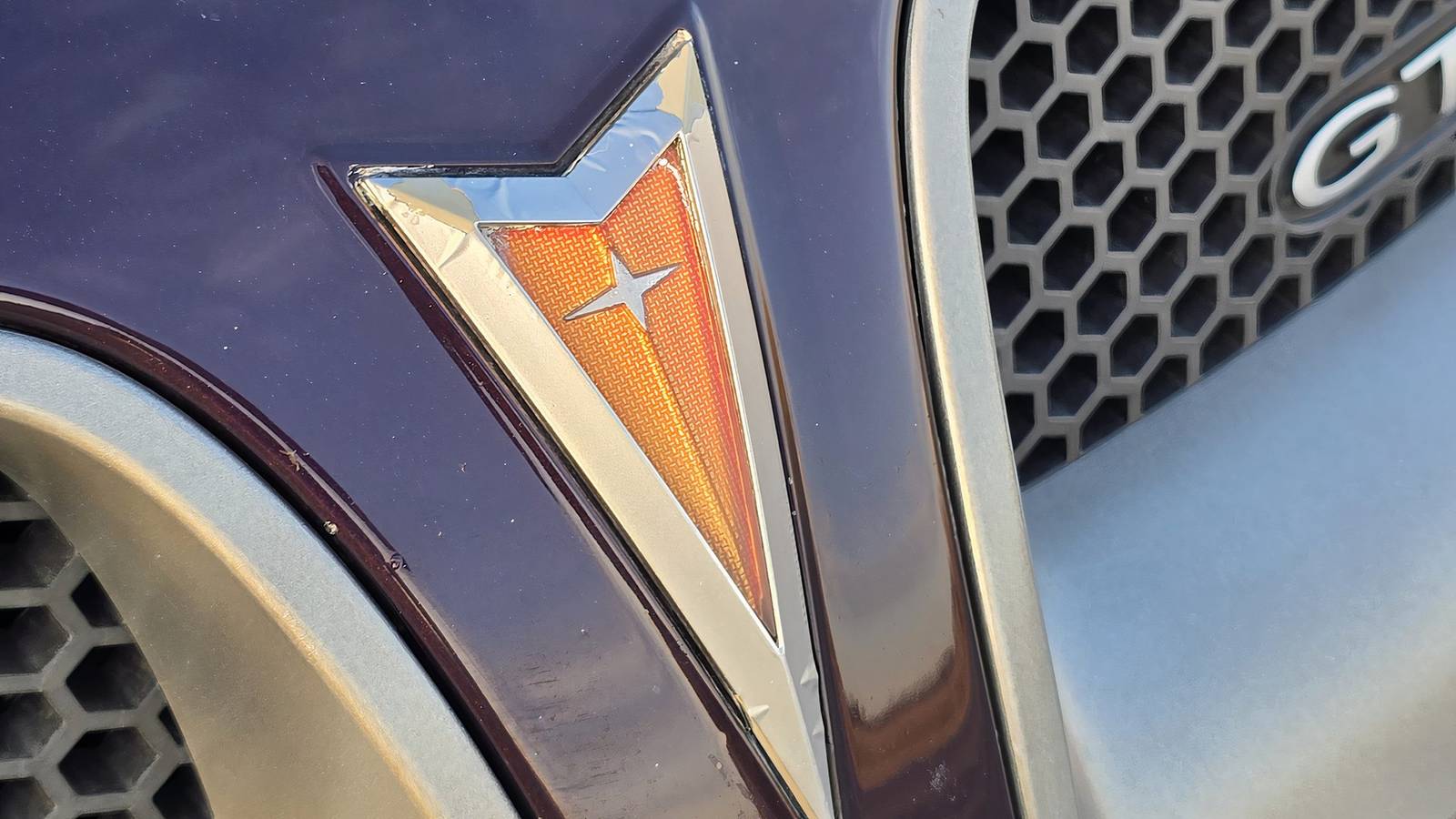
There isn’t a car type more American than the muscle car, and over the last 70 years or so, just the slightest mention or thought of the segment conjures up images of models like the Ford Mustang, Chevrolet Camaro, Plymouth Barracuda, and a whole lineup of Pontiac beasts. We tend to refer to the 1960s and early 1970s as the golden age of muscle cars before emission controls strangled the engines, and at the time, one of the most revolutionary models to emerge was the Pontiac GTO.
Known for its insanely powerful engines, comfortable style, aggressive-looking designs, and all-around baddassness, the GTO is a proper muscle legend, so when Pontiac brought the nameplate in the late 1990s, it certainly turned some heads and raised some questions about whether it was a good idea to re-use the legendary moniker. What do you think? Do you think the resurgence of the Pontiac GTO was a good idea?

How The Pontiac GTO Revolutionized Muscle Cars In The ‘60s
The Pontiac GTO isn’t just the G.O.A.T., it started a revolution of American performance and launched the Golden Age of muscle cars.
Was It A Good Idea To Bring Back The Pontiac GTO?

The year was 2000, and General Motors North America Chairperson Bob Lutz read a report in Car & Driver about the Holden Commodore SS that was being built by the Australian GM subsidiary, Holden. The report said, at the time, it was one of the best cars that GM offered – a V-8-toting, rear-wheel drive car with some impressive handling credentials and a top speed of 155 MPH (in line with most BMWs), but it was not available in the U.S.A.
Along with some other GM executives, he had the idea of importing the rear-wheel-drive Holden to the U.S.A. and making something of it. After a lot of very long and difficult discussions about the autonomy of North American GM and its overseas subsidiaries and a test drive in Australia, it was decided that it could work. But was all the trouble worth it?
The 2004-2006 Pontiac GTO

The design that was landed upon for the U.S.A. market was the Holden Monaro – a relatively pedestrian-looking yet fairly sleek coupe that had proven itself in Australia, but by the time it landed in the U.S.A. at the end of 2003, it was looking a bit dated already. Nevertheless, the plan had to go ahead, and GM started selling the re-badged Holden Monaro as the fifth-generation Pontiac GTO.
As it did when it was released, the name got some muscle car purists’ backs up, and because, at the time, the Australian Dollar was in a strong position compared to the U.S. Dollar, it increased the price of the new GTO from an initial price point of around $25,500 to approximately $34,000.
- 2004 Pontiac GTO. Original MSRP: $33,495.
- 2005 Pontiac GTO. Original MSRP: $34,295.
- 2006 Pontiac GTO. Original MSRP: $32,995.
Ultimately, the increased price, the use of the legendary namesake, and the less-than-muscular look compared to what we all know and love about the ’60s and ’70s GTOs was not a good start. But, depending on where you sit on the fence with the fifth-gen GTO, the engines that GM planted under the hood could be its saving grace.



A Different Look But Decent Power: 2004-2006 Pontiac GTO Specs

Yes, it doesn’t look like a muscle car, but equipped in the 2004-2006 Pontiac GTO MYs are two potent LS V-8 options, which are both very well-matched to sit under the hood of a muscle car. The 2004 model boasts a 5.7-liter naturally aspirated LS1 V-8, while the last two model years are equipped with a 6.0-liter LS2 V-8.
|
Engine |
5.7-Liter V-8 |
6.0-Liter V-8 |
|
Transmission |
Four-Speed Automatic or Six-Speed Manual |
Four-Speed Automatic or Six-Speed Manual |
|
Horsepower |
350 Horsepower |
400 Horsepower |
|
Torque |
365 LB-FT |
400 LB-FT |
|
Driveline |
Rear-Wheel Drive |
Rear-Wheel Drive |
|
0-60 MPH |
5-5.3 Seconds |
4.3 Seconds |
|
Top Speed |
160 MPH |
180 MPH |

Even the first iteration of engines can achieve some impressive 0-60 MPH times that take on the likes of the 2004 BMW Z4 3.0i, which can dash to 60 MPH in around 5.4 seconds, and the 2006 Chevrolet Monte Carlo SS, which can do 60 MPH in 5.5 seconds, but the 2005 and 2006 GTOs take it a step further.
The LS2 V-8 under the hood flaunts the same one that is utilized in the Chevrolet Corvette C6 and is made for an even faster sprint time, more horsepower, and a generally more spirited and torquey ride. The 4.3-second 0-60 MPH times are wholly impressive for the time and beat out the likes of the 2006 Dodge Charger SRT8 (5 seconds) and, maybe a lot more incredibly, the 2007 Roush Stage 3 Mustang, which has a sprint time of 5.1 seconds.

This Classic Muscle Car Could Outrun Modern Performance Cars
The 1970 Chevelle SS 454 set a muscle car performance standard the lasted almost four decades and still impresses.
The Warming Muscle Car Market Of The Mid-2000s

The GTO did come around for GM at a good time because almost overnight, in the 2000s, the muscle car market got the shot in the arm it needed, turning the gas-guzzling wagons of noise into something desirable again. This is especially the case for classic muscle cars that led the way back in the golden era, with their values skyrocketing. This resurgence in interest also opened the doors for new muscle owners of the time who were looking for something with the grunt of a legend but the mod-cons of the new century.
Despite its less-than-muscular appearance compared to other re-emerging 2000s muscle cars and its namesake, the 5th-gen GTO can perform like it should with all the ingredients that make a muscle car a muscle car, namely a front-engine/rear-wheel-drive configuration. And though it doesn’t quite look as beefy as some may like, if it is straight-line performance you are looking for, the revitalized GTO does get the job done.
Standout Performance Features Of The ’04-’06 Pontiac GTO

For some, the raucous V-8 engine and acceleration alone would be enough to convince them that GM wasn’t just trying to milk a cash cow from a holy name in the muscle car world. And though you may still think that was the case, GM also tweaked the Monaro’s design to create a relatively good all-round performer.
Unlike many muscle cars of the time, like the Mustang, Camaro, and Challenger, the GTO features fully independent rear suspension with semi-trailing arms, coil springs, and control links, all of which offer decent cornering ability, relative comfort, and a smooth ride compared to its traditional solid-axle rivals. It is worth noting, though, that some owners have complained about axle tramp under hard acceleration, which can be improved with upgraded dampers and bushings. Up front, it rides on MacPherson struts that boast variable spring rates and a direct-acting stabilizer bar, so body roll is kept in check in fast corners.

Aerodynamics are understated but effective, with a low ride height of four inches, a subtle trunk-lip spoiler, a wide stance of 72.5 inches, and a wheelbase of 109.8 inches – all resulting in a drag coefficient of around 0.31. The 2005 and 2006 GTO boasts a curb weight of 3,725 pounds, giving it a power-to-weight ratio of 0.11-horsepower-per-pound – so not too shabby at all – while to bring it all to a stop, the GTO features PBR twin-piston calipers that grip onto 11.7-inch front discs and 11.3 rear discs. Yes, we know the jury is still out on it, but GM did throw quite a lot at their 2000s risky move to make sure that the GTO name wasn’t smeared.

15 Modern Muscle Cars That You Shouldn’t Overlook
Here’s a comprehensive list of models that perfectly capture the essence of old-school muscle, and blend them with modern-day conveniences
How Drivers Rate The Revived Pontiac GTO

The real test of how a car stacks up, though, is how its owners respond to it. And, look away now if you think that the GTO nameplate should have stayed belonging to the original lineup, but the 2004-2006 GTO has been given some good feedback.
Admittedly, it is a mixed bag. For the 2004 model, 57% of owners said they would buy another Pontiac based on driving it; the 2005 MY sees that drop slightly to 50%, and the 2006 MY sees that percentage jump up to 67%. What is also telling about it, which is also a mixed bag, is how it is rated across the board for performance, reliability, comfort, and running costs.
|
Model |
2004 Pontiac GTO |
2005 Pontiac GTO |
2006 Pontiac GTO |
|
Average Performance Marks |
8.9/10 |
8.7/10 |
9.1/10 |
|
Average Reliability Marks |
7.3/10 |
6.5/10 |
8.1/10 |
|
Average Comfort Marks |
8.9/10 |
8.6/10 |
8.3/10 |
|
Average Running Costs |
5/10 |
5.4/10 |
6/10 |
Even according to owners, who seem to dig its performance guts, it is hard to pin down if it was a good move by GM to reintroduce it in terms of it being an all-round good car.
How The GTO Stacks Up Against Other Mid-2000s Muscle Cars

What could help answer whether it was a good idea to bring back the Pontiac GTO or not could lie in how it performs up against 2004-2006 muscle cars made by other American brands. The most powerful Mustang for the 2004 MY came in the shape of the 2004 Ford Mustang SVT Cobra, which boasts a 4.6-liter supercharged V-8 mill that is good for 390-horsepower – so in the first year of the resurgence of the GTO, it was outpowered by some way by the similarly priced Mustang (the coupe had an MSRP of $34,860).
However, when 2005 rolled around, the SVT Cobra was dropped from the lineup, and the most powerful factory Mustang you could have bought was the Mustang GT Premium, which was originally cheaper than the GTO ($30,745) but a lot less powerful, with a 300-horsepower V-8 under the hood. The same can be said for the 2006 Mustang MY.

It is the same story when we look at similarly aged muscle cars from the likes of Chevrolet, Dodge, Cadillac, and Chrysler – the GTO has some upsides but also has some downsides in comparison.
|
Model |
2006 Cadillac CTS-V |
2006 Dodge Magnum SRT8 |
2008 Dodge Challenger SRT8 |
2002 Chevrolet Camaro SS |
2004 Chrysler 300C SRT8 |
|
Engine |
6.0-Liter V-8 |
6.1-Liter V-8 |
6.1-Liter V-8 |
5.7-Liter V-8 |
6.1-Liter V-8 |
|
Horsepower |
406 Horsepower |
431 Horsepower |
431 Horsepower |
325 Horsepower |
431 Horsepower |
|
0-60 MPH |
4.4 Seconds |
4.8 Seconds |
4.5 Seconds |
5.4 Seconds |
4.6 Seconds |
|
Original MSRP |
$51,395 |
$37,995 |
$38,045 |
$30,165 |
$36,000 |
Owning A Fifth-Generation Pontiac GTO Today

If you don’t care what some muscle car fans say about owning the newest iteration of the GTO, good for you! It can still perform well, it holds a legendary name, it is still a muscle car, and it can still take on some newer muscle cars in terms of speed. If you are keen to find one, it is going to cost you $21,625, on average, at an auction. But different model years are commanding different prices today, with the most expensive MY being the 2006 GTO, with an average fair purchase price of $16,171.
- 2004 Pontiac GTO. Average Fair Purchase Price: $12,267.
- 2005 Pontiac GTO. Average Fair Purchase Price: $13,067.
In comparison, if you are looking for a vintage GTO, prices for a second-gen model (1968-1972) are in the region of $77,000.
Low used prices may be one thing, but don’t expect much in the way of fuel economy from any model year due to the large displacement V-8s used across the board. The 2004 GTO can achieve a maximum combined MPG rating of 19 MPG, which will cost you roughly $3,250 on gas; the 2005 GTO can eke out 18 combined MPG when equipped with the manual box, costing you around $3,400 on gas, and the 2006 MY can achieve the same.
This car is an absolute blast; a fusion of Euro-quality luxury and raw American muscle. You get a Corvette engine in a 2 + 2 coupe. The GTO won’t outperform a Lotus Elise in turns, nor most of Japan’s or Germany’s higher-end sports coupes, but with the exception of a very few, it will absolutely destroy them in a straight sprint. – Owner review of their 2006 Pontiac GTO on Car Survey.org

Rendering: The Pontiac GTO Judge Reborn
The Pontac GTO Judge is, by far, one of the most legendary muscle cars of all times, and we’ve taken the liberty of bringing it into the modern ages.
Other Cars That Were Controversially Revived

At the end of the day, if it is performance and low used prices today that float your boat, bringing back the GTO in the 2000s was a good idea hatched by GM. If you care more about heritage and styling, then it wasn’t. Among muscle car fans, the question will be argued until the end of time, but what will likely be agreed on is that bringing back the GTO in the 2000s got people talking again about muscle cars, the legend of the GTO, and re-charged an interest in American brute force in the auto market – which can be seen as genius stroke by GM.
The Biggest Flops Of Revived Car Models

GM is far from the only automaker to have played with fire over the years in bringing back legendary names, and these revived nameplates didn’t exactly hit all the right notes when they were re-badged and re-released some time after their predecessors put them on the map. Again, they are all up for debate and discussion, so if you have any thoughts on whether the 2000s GTO was a good idea or not, or on any of these models, please let us know.
- 1989 Lotus Elan. Only circa 560 units sold in the U.S.A., and didn’t live up to what Lotus laid down in the 60s and 70s.
- 2002 Ford Thunderbird. It boasts a 252-horsepower V-8, but is heavy (3,775 pounds) and only stayed on the market for four years.
- 1999 Mercury Cougar. Brought back as a sedan after seeing action as a muscle car, drop-top, and hatchback, the Cougar ended up using its last life in a less-than-dignified end in 2002.
- 1985 Chevrolet Nova. Though some may love this boxy ’80s machine, the tiny 1.6-liter mill that wisps out a mere 75-horsepower does not live up to the once-strong Chevy nameplate.
The Most Successful Revived Car Models

On the other hand, though, some nameplate phoenix from the ashes moments have garnered some very impressive results, with brands like Toyota, Acura, Chevrolet, and Nissan all hitting the nail on the head.
- Toyota G86. Though it looks a lot different from , it harnesses the same spirit, with an NA mill, fun driving dynamics, and a lightweight build.
- Acura NSX. Epitomizing the “usable supercar”, the NSX was re-released onto our streets with a 576-horsepower V-6 and all the style cues we loved about the original ’90s model.
- Chevrolet Camaro. Though some MYs are debatable, the reintroduction of the Camaro in 2009 did a great job of paying homage to the original 1960s models and keeping us all interested in what Chevy can do.
- Nissan GT-R. Although the GT-R was off our shelves for only a couple of years, with the re-introduction of the legendary namesake back in 2007 with the R35 GT-R, JDM fans everywhere rejoiced when Nissan didn’t ruin what its predecessors had achieved in the decades before.