
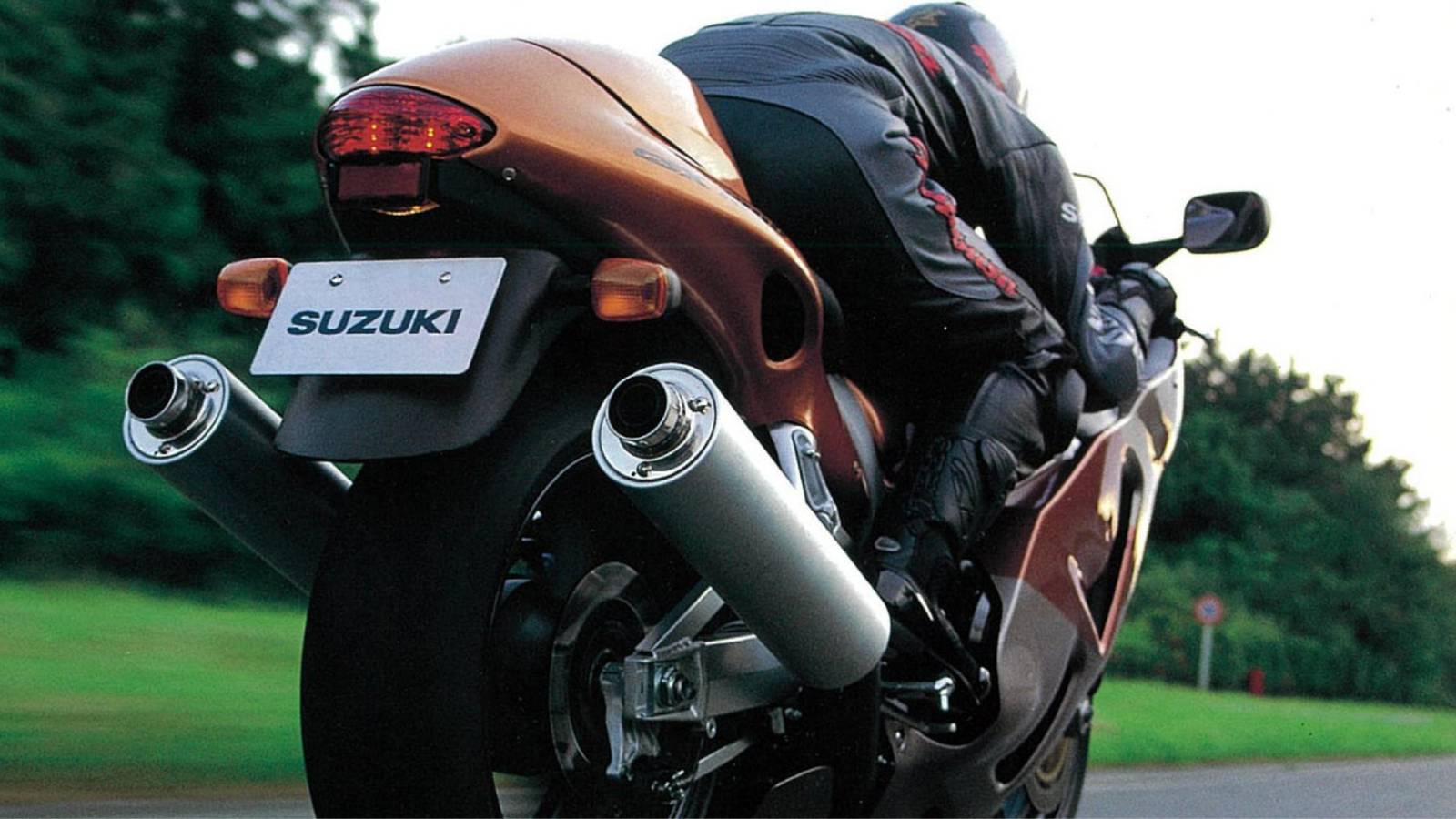
For the motorcycle industry, the 90s were the decade of speed. Motorcycles had gotten faster than ever, with chassis, tire, and suspension technology all playing catch-up to the potent inline-four engines most of these speed machines were making use of. This quest for speed had captured the imagination of the Japanese brands in particular. The fastest motorcycle offered more than just bragging rights; it translated into sales.
Customers were willing to go out and buy whichever liter-class sports bikes were touted as the fastest, even though they would likely never even come close to replicating that speed. In some respects, it became a spec sheet war, but the one thing it gave us was some genuinely incredible motorcycles capable of speed previously not thought possible. But all good things must come to an end, and by the end of the decade, these bikes pushing the 200 MPH mark were deemed unfit for public consumption.
Buying a used motorcycle always has an element of risk attached, so please do your research and proceed with caution.
Old Speed Queens Offer Some Serious Sport Touring Potential

By the middle of the decade, the Honda CBR1100XX Blackbird had been crowned the fastest motorcycle in the world with a top speed of 177 MPH. Today, these motorcycles can be found for under the $5k mark, usually with high mileage. While these big, heavy superbikes were never really designed for the track, they are pretty comfortable, and the Honda has become a popular budget sport tourer. Kawasaki ruled most of the decade with the old Ninja ZX-11, but today it is the Ninja ZX-12R that can be found for next to nothing. It was supposed to be the next “fastest bike”, but with the Gentleman’s Agreement coming into effect by the year 2000, all bikes, including the ZX-12R, were henceforth limited to 186 MPH. Largely thanks to the bike in question.

Here’s Why Your Sport Bike Is Restricted To 186 MPH
A deep dive into the Gentleman’s Agreement–the reason your sport bike is capped at 299 kph
The 2002 Suzuki Hayabusa Is Best Inline-Four Motorcycle You Can Buy For Under $5k
Price Range: $3,000 – $6,000

Hayabusa is the name of a peregrine falcon indigenous to Japan. Famous for its ability to close in on its prey at 300 km/h, Hayabusa is truly an ultimate predator. – Suzuki
Suzuki was not subtle. By naming it the Hayabusa, the brand effectively declared war on the aforementioned Blackbird. The Blackbird was named after the SR-71 – the world’s fastest ever jet aircraft – but out in the wild, the peregrine falcon ate blackbirds. Which is exactly what the Hayabusa did, recording a top speed of 194 MPH. It will go down as one of the fastest ever production motorcycles, but just like the SR-71, there just isn’t much of a real-world application for something quite this fast. It was almost immediately deemed to be too fast for public roads, and with the Gentleman’s Agreement coming into effect, all subsequent models – including this 2002 bike – would be limited to 186 MPH.
Even by modern standards, this is still an incredibly fast motorcycle, and you can buy one for next to nothing, all things considered. Trade value is moot because nobody is going to trade in one of these bikes, but for the sake of reference, it is pegged at $3,555. Retail value is the more important number, and that is sitting at just over $5k. So it stands to reason that you can find a decent bike in good running condition for under $5k.

Suzuki Hayabusa: A Revolution In Speed Since 1999
It might not be the “fastest motorcycle in the world” today, but the ‘Busa is still a force to be reckoned with 25 years on
The Hayabusa Has A Massive Inline-Four Engine
Power: 173 HP

When the bike came out back in 1999, it wasn’t just the fastest production motorcycle; it was also the most powerful. Its massive 1298cc DOHC inline-four made 173 horsepower, more power than some contemporary inline-four sports cars. This monster of an engine has since been put in a wide variety of other vehicles thanks to its immense performance potential and relative affordability.
Buttery Smooth Power

By the mid-00s, there were already several liter-bikes that had more power than the Hayabusa, but all of those sports bikes – including more powerful modern sports bikes – make their power in a very different way. The Hayabusa builds power in a smooth, linear way that makes it far easier to ride than any of those highly strung sports bikes with all their power sitting near the top of the rev range. While it is a massive bike, it is not as intimidating as you might initially imagine. Or at least, not as intimidating as equally powerful bikes from the era. It is also planted at speed thanks to how long the chassis is and how heavy it is. But everything changes once you approach the first corner.

10 Motorcycles More Powerful Than The 2025 Suzuki Hayabusa
If 187 horsepower from the Hayabusa isn’t enough, these ten machines deliver even more firepower across superbike and hypersport categories.
The Hayabusa Is Bold And Bulbous

Contrary to popular belief, the first-generation Hayabusa was not particularly innovative. From an engineering perspective, everything was already well established. The engine was fuel-injected, which was rare on motorcycles back then, but this engine was closer in displacement to that of a car, so it follows. Its twin-spar aluminum chassis was, by then, tried and tested, and the suspension was adjustable, but otherwise unremarkable. With its weight and long, low stance, corner carving is not on its agenda.
Once you get to that first corner, you will suddenly feel all of its 474 pounds (dry). The turn in is slow, uninspiring, and for some, a little disconcerting. This is a bike designed for straight-line speed. Its slippery design is by far the biggest innovation. It is also what makes the bike so distinctive, with the designer following what wind-tunnel data suggested would be the best shape. Suffice to say, it is not particularly pretty, but that is the main reason why these old bikes are faster than modern superbikes in a straight line.
Some First-Generation Bikes Really Are Too Cheap
Over two decades later, they are still among the fastest motorcycles on the planet, and while it is fair to say this kind of speed is unnecessary for a road-going machine, it is still impressive. These incredible machines were always fairly accessible, even more so on the used market, but this is a double-edged sword. At this end of the market, due diligence is required, as some bikes have been neglected. Any bike that seems too cheap is a red flag, and paying more for a solid bike with some form of service history is most certainly in your best interests.
Source: KBB