
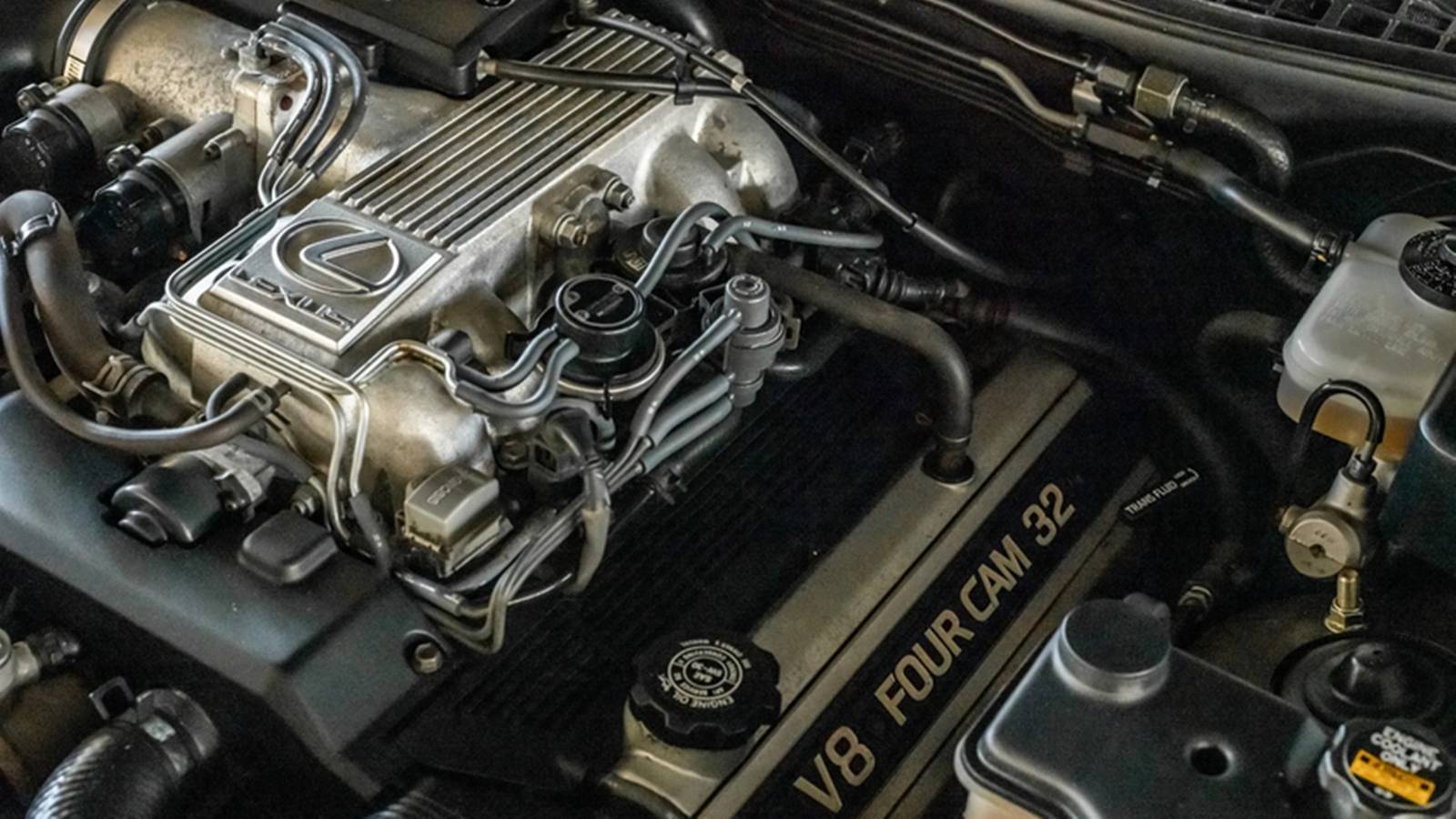
Japanese engines are notoriously reliable – especially those produced by Toyota. With four-cylinder hybrids becoming the norm for a range of modern-day vehicles across all segments, the nature of a simplistic and bulletproof V8 somehow feels like a distant memory. One of the core fundamentals of any durable engine is simplicity. Regardless of all the stress-testing and preventative measures taken for longevity, if the powertrain is complicated and requires a specialist to work on it, it’s difficult for it to be truly reliable.
One of the engines that defined Japanese reliability came in the late 1980s, and it laid the groundwork for how a singular platform could power sedans, SUVs, and pickups alike. Around this time, Japanese engineering was in the pursuit of perfection. With seemingly endless resources and money being poured into a no-compromise family of engines, the nation was about to show America and Europe how to make a forever engine.
Why Toyota Engines Are So Well Renowned

The heart of the Japanese approach to powertrains is prioritizing a different set of values than other manufacturers. While many engines utilize a V8 for maximizing horsepower or introducing complex gadgetry for the highest level of sophistication, Toyota tends to do the opposite. By focusing on thermal management, strong internals, and long-term refinement, Toyota’s powertrains certainly don’t have the same shock factor as many rivals’ engines. But when the cars using those engines are broken, Toyota’s equivalents could still have years’ worth of life left in them.

There are a few classic Toyota powertrains that prove this. The F-Series engine-powered Land Cruisers were kept in production for over 40 years – a testament to their bulletproof construction. Even today, engines like the T24A 2.4-liter turbo have a reputation for their reliability. They use a dual-injection system that cleans the valves, an excellent fix for carbon buildup, which clogs many other modern turbo vehicles.

The Japanese Six-Cylinder Engine Is So Reliable It’s Still In Production After Almost 25 Years
Toyota’s venerable turbodiesel remains a cornerstone for one of its most iconic vehicles.
The Toyota UZ Family Of Engines

In the 1980s, Toyota had an obsession with making the best engine it had ever released. They took this very seriously, so much so that they hired 1,400 engineers and 2,300 technicians in the six years of the UZ’s development. 900 prototypes and one billion dollars later, the 1UZ-FE was ready. Its first application was in the 1989 Lexus LS 400, and the engine redefined how quiet and smooth operation could be in a luxury sedan.

Due to a six-bolt bearing design, a construction usually dedicated to heavy-duty vehicles or race cars, Toyota managed to reduce noise, vibration, and harshness immeasurably. These engines soon made it into other segments too, like workhorse pickup trucks. After the underpowered Toyota T100 was released, the manufacturer decided to adapt a 1UZ engine to make its future truck offerings more capable. After switching to a cast-iron block and increasing the displacement to 4.7 liters, the Toyota T100’s successor, the Tundra, became a truck that had incredible low-end torque and long-term usability.
The Most Notable Applications Of The UZ Powertrain

Other than the Lexus LS 400’s first debut of the engine, which proved it was a masterpiece in reinventing how a luxury-car powertrain should feel, the Toyota Tundra was the vehicle that gave the UZ-family its million-mile reputation. The 2000-2009 Tundra, which used the 2UZ-FE, had examples of original engines that crossed over one million miles. Toyota tuned this specific engine to only produce two-thirds of its actual potential, and that, combined with the heavy-duty cast iron block, meant that its components were never stressed – even in the most taxing of scenarios.
2000 Toyota Tundra (2UZ-FE) Specifications
|
Transmission |
4-speed automatic |
|
Power |
245 Horses |
|
Torque |
315 Pound-Feet |
|
Weight |
4,400 Ibs |
|
0-60 mph |
8.0 seconds |
|
Towing capacity |
7,100 Ibs |
Not only was the Toyota Tundra capable of heavy-duty work, but it was also surprisingly quick. Sure, eight seconds to 60 doesn’t sound fast by modern standards, but 25 years ago, for a truck that was made for the sole purpose of longevity, towing, and strength, it was generously swift. The four-speed automatic transmission is low on gear count but also contributes to the Tundra’s bulletproof reliability, not at all bottlenecking the engine’s long-term ability with an early transmission failure.

Toyota’s Most Reliable Truck That Regularly Hits 400,000 Miles
Toyota’s unconventional approach to truck engineering has created a vehicle that lasts for decades.
The Incredible Capability Of The UZ Engines

The UZ family of engines was also impressive for its performance in certain vehicles. The most capable production car in terms of speed that utilized this engine was the Lexus GS 430. These were given a flavor of the powertrain, which was tuned for a tad more aggression than the more sedate Lexus LS 430. This 3UZ variant featured variable valve timing, giving the GS 430 more punch at certain RPMs. Not only that, but it also had a tuned induction system which optimized power across the RPM range, meaning power was always available.
2006 Lexus GS 430 4.3-Liter V8 (3UZ-FE) Specifications
|
Transmission |
6-speed automatic |
|
Power |
300 Horses |
|
Torque |
325 Pound-Feet |
|
Weight |
3,865 Ibs |
|
0-60 mph |
5.7 seconds |
|
Top Speed |
155 mph |
There were also some other, more absurd applications of the UZ series of engines. One of which was a 360-horsepower 1UZ-FE developed for a small aircraft. With twin turbochargers bolted onto the original engine, it impressively gained full FAA certification and runs flawlessly. In 2003, Toyota made the move towards utilizing a specially tuned version of the 3UZ-FE for the Japanese Super GT racing series. With over 500 horsepower, this proved how much potential the powertrain truly had, and it propelled Supras to win several championships. This powertrain has also been used for drag racing builds. With fully forged internals, XAT Racing managed to push this engine past 2,000 horsepower, showing once again just how incredible this engine truly was.
The Toyota Land Cruiser
The Land Cruiser 100 Series was tuned to have perhaps the most conservative approach of any UZ engine vehicle. With just 230 horsepower, depending on the market, stress levels were even lower on this vehicle than on the Tundra. This proved to be a perfect match for the ruggedness of the Land Cruiser, helping to cement its legacy as a somewhat indestructible vehicle even more. Not only that, but it also kept the Lexus’s signature powertrain smoothness, meaning that at one moment it could be an off-roading weapon that could climb every mountain, and the next it could turn into a refined cruiser.
Even More Vehicles Which Utilize A UZ Family Engine
- 2001 to 2009 Toyota Crown Majesta
- 1989 to 2006 Toyota Celsior
- 2003 to 2009 Lexus GX 470
- 2003 to 2009 Toyota 4Runner

How Lexus Redefined Luxury With Its 90s Sedan Lineup
In the 90s Lexus could almost do no wrong and the secret to its success was style, refinement, features, great engines, and of course, luxury.
The Conclusion On This Incredible Engine

The UZ series of engines’ release was the pivotal moment where the rest of the automotive world looked at Toyota in awe and realized that capable and refined powertrains had been propelled into a new era. From world-class heavy-duty utilitarianism to the smoothest of rides, the UZ series cemented Toyota as a powerhouse of incredible commitment to longevity and proved that rugged didn’t have to mean primitive.

This engine’s philosophy of durability over power set the blueprint for decades to come for Japanese design philosophy and is still a common engine today. With true determination to make a bulletproof engine, expect to see plenty of healthy examples of UZ-engined cars on the road in 2026.
Sources: Toyota USA, Lexus, iSeeCars