
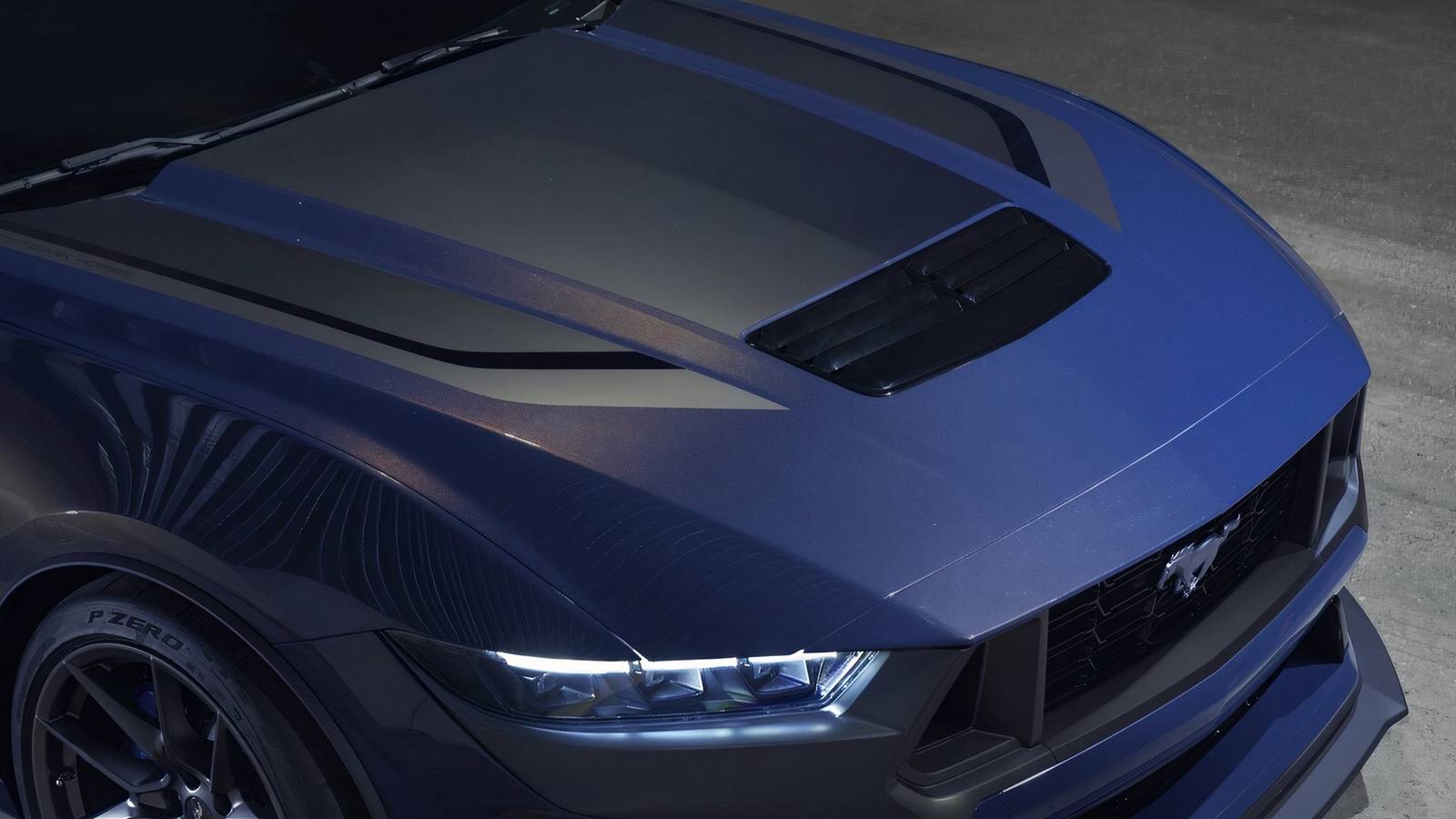
In the modern performance car landscape, few debates stir passion like the one between affordable American muscle and high-priced precision-engineered European sports cars. Traditionally, spending six figures on a BMW M car has been the accepted entry fee for elite performance, blending cutting-edge chassis technology, high-revving engines, and decades of motorsport pedigree. Cars like the BMW M4 Competition are marketed as the pinnacle of road-going performance coupes, offering immense speed wrapped in luxury and technical sophistication.
Yet the performance hierarchy has shifted. Vehicles like the Ford Mustang, particularly in Mach 1 and Dark Horse form, have evolved beyond their straight-line muscle car roots. Modern Mustangs now feature adaptive suspension, track-focused aerodynamics, and chassis tuning developed on some of the world’s most demanding circuits. When objective metrics such as lap times, power-to-weight ratios, and braking performance are analyzed, the data increasingly show that a significantly cheaper Mustang can match or even outperform BMWs that cost nearly twice as much.
The Ford Mustang Vs. Precision German Engineering

BMW’s reputation for precision engineering is well-earned. The BMW M4 Competition delivers over 500 horsepower from its twin-turbocharged inline-six engine, paired with an advanced eight-speed automatic transmission and, in some trims, all-wheel drive. Its chassis uses extensive aluminum and high-strength steel, combined with electronically controlled dampers and torque-vectoring differentials to extract maximum grip and stability.
The Old-School American Muscle Philosophy

The Ford Mustang approaches performance from a different angle. Rather than relying heavily on turbocharging and electronic complexity, the Mustang’s naturally aspirated 5.0-liter V8 emphasizes linear throttle response, high thermal durability, and mechanical simplicity. In Dark Horse specification, output approaches 500 horsepower, closely matching the M4 while maintaining rear-wheel drive and a traditional performance layout.

Where the Mustang begins to challenge German dominance is in weight and packaging. Despite BMW’s extensive use of lightweight materials, the M4 carries additional mass due to luxury equipment, sound insulation, and drivetrain complexity. Performance-oriented Mustangs, particularly track-focused trims, often undercut similarly equipped BMWs in curb weight, narrowing or even reversing the advantage suggested by price and prestige.

The Sports Car With Supercar Speed And Sedan Practicality
Four seats, All-Wheel Drive, GT car usability, and supercar thrust.
How Power-To-Weight And Chassis Dynamics Shape Lap Times

Lap times are rarely determined by horsepower alone. Power-to-weight ratio remains one of the most reliable predictors of on-track performance, influencing acceleration, braking distances, and corner exit speeds. A lighter car with slightly less power can often outperform a heavier, more powerful rival over a full lap.

In performance trims, the Ford Mustang compares extremely well in this regard. The Shelby GT500, for example, offers one of the strongest power-to-weight ratios of any production coupe, while the Mach 1 and Dark Horse trims focus on reducing unsprung mass, improving cooling, and stiffening chassis response. These factors directly influence consistency during repeated hot laps.
This is an unforgiving Ford built for speed. It’s almost civilized with the adaptive suspension, but just barely.
Chassis Dynamics Also Play A Crucial Role

BMW’s suspension geometry excels in maintaining tire contact over uneven surfaces, giving the M4 excellent composure during rapid direction changes. However, modern Mustangs equipped with MagneRide adaptive dampers and wider performance tires generate cornering forces that rival European competitors.

10 Fastest Cars With Manual Transmissions You Can Buy Today
Can you still get a fast car with a manual transmission? There are fewer than ever, but enough still exist for you to have fun, power, and speed.
Lap Time Evidence From Road Atlanta To The Nordschleife

The Nürburgring Nordschleife remains the ultimate equalizer for performance claims. Documented lap times show the Ford Mustang Shelby GT500 recording a lap in the 7:39 range, comfortably quicker than recorded times for the BMW M4, which sit closer to the high-7:50s. This margin is significant on a circuit where seconds are earned through balanced performance rather than raw speed alone.

Closer to home, North American circuits like Road Atlanta further highlight this performance parity. With its combination of high-speed straights, blind crests, and technical braking zones, Road Atlanta rewards cars with strong power delivery and predictable chassis behavior. Track day data consistently shows well-driven Mustangs running lap times comparable to, and sometimes faster than, BMW M cars in the hands of equally skilled drivers.
Modern Performance Advancements Have Pushed The Mustang Further Than Ever

Even in handling-focused testing such as figure-eight or short-course evaluations, Mustangs no longer lag behind. Modern tire technology, improved weight distribution, and track-specific aero packages have erased much of the historical gap between American and European performance cars.

10 Practical Cars That Are Secret Sports Car Killers
Sports cars advertise their performance, but some cars are more covert about their unfettered power
Why Driver Skill Can Narrow The Gap Between Lap Times

Driver ability often matters more than hardware once performance reaches a certain threshold. Highly complex cars can mask driver input, intervening electronically to maintain stability. While this makes it easier to drive quickly, it can also limit a skilled driver’s ability to fully exploit the chassis. The Mustang’s more transparent feedback allows experienced drivers to better sense weight transfer, throttle modulation, and grip limits. This can result in more confident corner entries and earlier throttle application on exit, two areas where lap time is frequently gained or lost.

On technical circuits, a skilled driver in a Mustang can close or eliminate the performance gap to a more expensive BMW by optimizing braking points and maximizing exit speed. In many amateur and semi-professional track environments, it is common to see affordable, well-driven cars outperform far more expensive machinery simply because the driver understands the car’s behavior at the limit. This reinforces a crucial point: performance potential is only as good as the person behind the wheel.

Mustang GT 0-60: Is It fast Enough To Beat Its Rivals?
The C8 Corvette, Toyota GR Supra, Chevy Camaro, and more challenge the Mustang in the sports coupe arena. Here’s how the GT holds up.
Value On The Track: Cost-Per-Second Performance And The Case For Affordable Speed

When performance is evaluated through a value lens, the Mustang’s advantage becomes impossible to ignore. A BMW M4 Competition can easily exceed $100,000 when optioned, while a Mustang Dark Horse or Mach 1 typically undercuts that figure by tens of thousands of dollars.


Find 2026 Ford Mustang and more cars for sale on our Marketplace
Cost-To-Maintain Comes Into Play When Considering Hard Driving

If both cars produce similar lap times, the Mustang delivers a lower cost per second of performance. That metric becomes even more compelling when factoring in maintenance, consumables, and depreciation. Track use accelerates wear, and replacement parts for European luxury performance cars often cost significantly more than their American counterparts. Lower ownership costs allow Mustang owners to spend more time on track, improving driver skills and extracting even more performance from the car. In contrast, the higher operating costs of a BMW M car can discourage frequent track use, limiting real-world performance gains.
Sources: Ford, BMW, Cars.com