
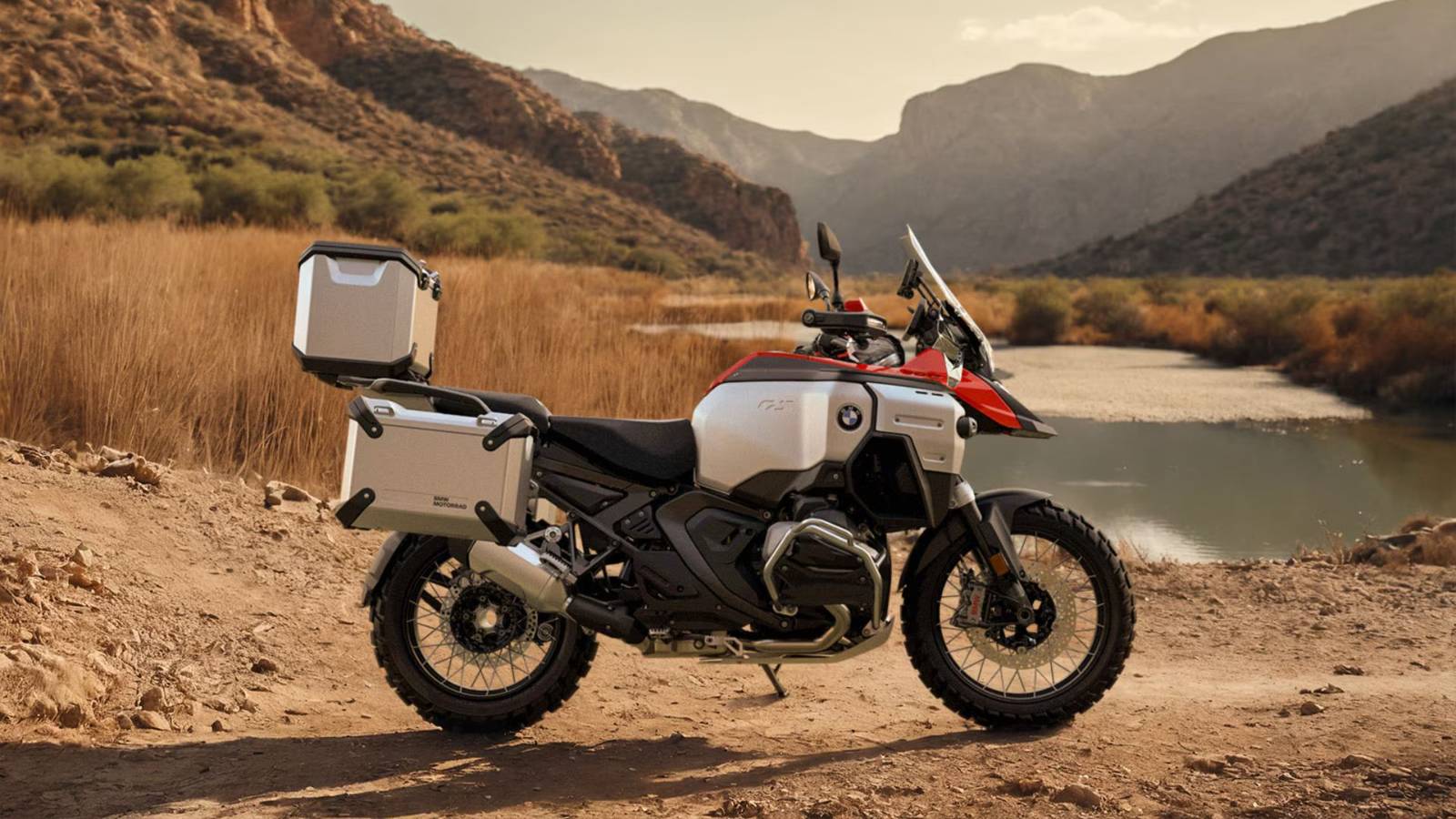
Adventure motorcycles were built for one reason: taking you to places that most other vehicles would just refuse to go. From a road where most cars would stop to a single track walking trail, ADVs don’t shy away but look at everything as the next challenge. These routes are thrilling, and most ADVs have the capability to traverse them. However, most of them have tanks just a little bit larger than the rest.
So the big bulk in front of your hip hides electronics and machinery, with the tank itself being a little smaller inside. That mountain pass in the distance or the remote desert trail you’ve been wanting to take becomes far less fun and more stressful when you start running on fumes with no gas station in sight. There is one motorcycle, though, that’s been sitting at the top of this range dilemma.
Why Range Matters In The World Of Adventure Bikes

Adventure motorcycles are essentially mechanical passports. They were designed not only to cross borders but also every terrain in every environment in between those borders. Highways, forests, mountains, deserts, all of this is fair game for the humble ADV, but the further away from civilization a rider ventures, the scarcer and more unpredictable a fuel station becomes.
A commuter bike may survive with a modest tank. These guys chill in cities where the next gas station is right around the corner. On remote highways, such as Ladakh, the Australian Outback, or even the ‘loneliest road in America’, Route 6 in Nevada, where the next stop could be hundreds of miles away, fuel needs to be managed carefully. Sometimes a station marked on a map may be closed, or dry, or simply gone, and this could spell trouble when help is nowhere in sight.

This is why range is so important. Large-capacity fuel tanks, along with better, more refined engines, have seen ADVs pushing the boundaries of how far they can go without stopping. This may not truly define what an ADV is, but it is definitely something everyone looks at before making a purchase, and one of the most sought-after ADVs is also the one with the best fuel consumption figures right now.
The Appeal Of Ultra-Long-Range ADVs

ADVs have evolved dramatically over the last decade. There’s a lot more technology involved these day and they are much faster and more capable off-road than their early ancestors. But the most appreciated improvements have been range. A decent ADV today is capable of crossing vast regions without the need to constantly stop and refuel. All of this while keeping the rider as comfortable as possible.
The BMW R 1300 GS Adventure sits at the top of this requirement in 2026. BMW’s heritage, experience, and love for motorcycling have resulted in one of the greatest adventure bikes so far. We are sure that in the future we will get to see newer, better motorcycles, but for the moment, the R 1300 GS Adventure is the king.

The Middleweight Adventure Bike That Most Buyers Don’t Consider
From blind spot radar to ride modes, the Ibex 800 E delivers big-bike tech in a middleweight package riders often overlook.
The BMW R 1300 GS Adventure Can Go Over 370 Miles In One Tank

BMW’s GS line of bikes has been pushing the boundaries of ADV capability. From long, straight roads to dirt trails through several villages, the BMW GS bikes are all brilliant machines. All of them are able to cover miles of road before exhausting their fuel, but the Adventure variant is another matter altogether.
The R 1300 GS Adventure is the top variant in the R 1300 GS line, and what makes it unique is its absolutely massive 7.9-gallon fuel tank. It is one of the largest fuel tanks currently fitted to any production motorcycle. In addition, the Adventure has a consumption rate of 4.9 liters for every 100 km. This works out to about 48 MPG. Factor in the fuel tank, and the GS Adventure is capable of covering at least 379 miles before needing a drink.
The GS Legacy Of Long-Distance Exploration

Ever since the early boxer days, the GS badge has been associated with long-distance touring. These bikes have crossed continents, taking on a number of the most demanding routes on this planet, and the R 1300 GS Adventure only builds on that reputation. Now, while fuel capacity and consumption are part of the equation, adventure riders need a lot more.
Stability, reliability, and even comfort over multiple hours in the saddle are required. BMW has been refining this platform for decades now, and for the moment, the R 1300 GS is the culmination of that experience. With a platform specifically designed for endurance riding, the GS Adventure can endure long stretches of highway, unpredictable weather, and rough terrain without batting an eye.
The BMW R 1300 GS Adventure’s 1,300cc Engine Produces 145 HP

At the heart of the GS Adventure sits a 1,300cc boxer twin, a powerplant that pretty much balances both efficiency and performance. Producing 145 horsepower and 110 pound-feet of torque, the flat-twin has been a signature engine design for BMW for a while. There is more than enough muscle to power through any terrain with fully-loaded luggage.
Boxer Engine Brings A Few Advantages

The key advantage of the boxer-twin, however, lies in its layout. Two cylinders sitting low and punching sideways help lower the overall mass of the bike. This helps with keeping the bike stable at low speeds and even makes it easier to manage on tricky roads (or lack of them). And then there’s the fuel efficiency we already spoke of. Even if 48 mpg is nothing to brag about, the big fuel tank will make sure you reach home to brag.

The Adventure Motorcycle That Balances Comfort, Capability, And Confidence
This bike offers ultimate versatility in a package that nails the sweet spot.
The Adventure’s Chassis Is Built For Long-Distance Stability

We spoke of the engine, and we spoke of the fuel tank, but one more thing that BMW has given the GS is a well-balanced chassis. The 1300 GS is built around a steel sheet metal main frame and paired with an aluminum rear subframe. According to BMW, this structure improves the ride’s rigidity but still keeps its weight in check. The GS Adventure isn’t the lightest ADV out there, but when on the move, the chassis manages to reduce that feeling of heft quite significantly.
Unique Telelever Suspension

Suspension duties are handled by BMW’s lovely Telelever front suspension and Paralever rear system. At the front, the Telelever system reduces front-end dive under braking by separating the steering and suspension functions, while at the rear, the paralever system helps keep the shaft drive stable and smooth under acceleration. The whole operation helps the bike feel composed regardless of whether the road is paved or just a bunch of dirt.
BMW’s Closest Rival In the Range Game

Now, while the BMW R 1300 GS is the leader of the pack in 2026, there is one other heavyweight ADV that also takes endurance riding a little too seriously. It’s a famous name: the Triumph Tiger 1200. There are a total of four variants here, namely, Rally, GT, Rally Explorer, and GT Explorer. We’re going to focus on the Explorer variants.
Interestingly, even the Tiger Explorers have the same 7.9-gallon fuel tank as the 1300 GS Adventure, so that’s probably a tie. The fuel consumption numbers, on the other hand, break that tie. According to Triumph, the Tiger Explorer consumes about 5.5 liters every 100 km, working out to a total range of 337 miles on a full tank of gas. So while the Triumph delivers almost the same experience in terms of long-distance capability, it falls just shy of the GS because of this.