
In an automotive landscape increasingly defined by trucks and SUVs, it’s easy to forget that pickup trucks once had a very different identity. Long before today’s oversized, luxury-laden haulers dominated American roads, there was a time when compact, car-based pickups carved out their own niche.
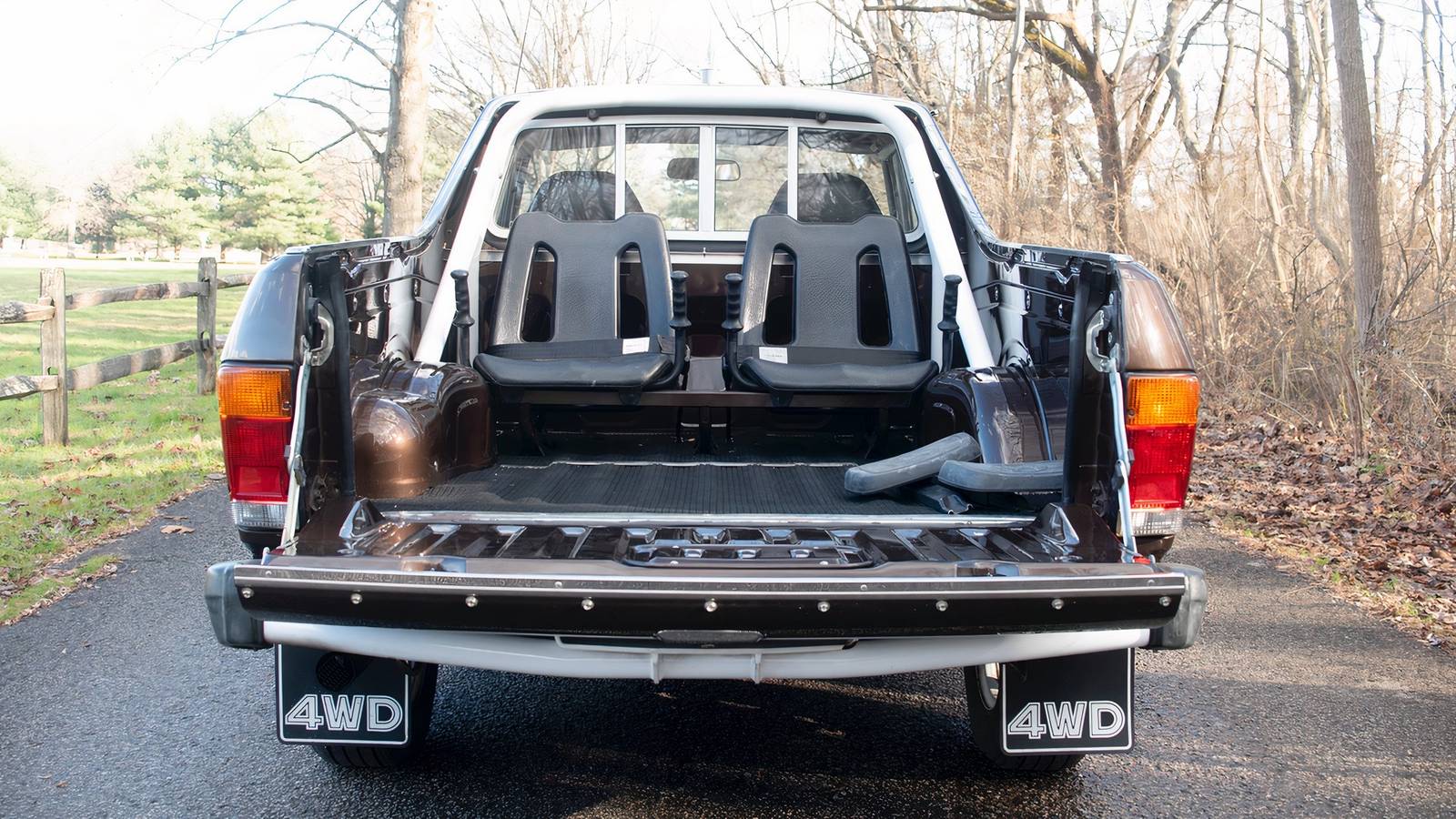
With a name short for “Bi-drive Recreational All-terrain Transporter,” this pickup wasn’t just another model trying to capitalize on practicality. It was a bold, slightly eccentric experiment that fused a go-anywhere ethos with a playful disregard for convention. With its quirky proportions, standard all-wheel drive system, and famously bizarre rear-facing jump seats bolted into the cargo bed, this pickup stood apart in a segment that already thrived on creativity.
Despite its relatively short lifespan in the U.S. market, it left a lasting impression. Today, it’s remembered not just as a product of its time, but as a symbol of how automakers once dared to take risks. This is the story of the quirky pickup America forgot, and why it still matters.

The Nissan SUV You Should Buy Used
The Nissan Armada is the brand’s fastest-depreciating SUV, making it worth considering as a used purchase.
How Japan’s Compact Utility Experiments Created One Of The Strangest Pickups

To understand the roots of this pickup, you have to step back into the automotive landscape of the 1970s, a time when Japanese automakers were rapidly expanding their global footprint. Fuel crises, shifting consumer demands, and tightening emissions regulations created an opportunity for smaller, more efficient vehicles to thrive, particularly in the United States. Japanese manufacturers responded with a wave of compact utility vehicles that blurred traditional categories. Models like the Datsun 620 pickup and Toyota Hilux offered affordable, efficient alternatives to full-size American trucks.

Rather than developing a traditional body-on-frame pickup, Subaru leaned into its strengths. The BRAT was based on the Leone platform, a unibody passenger car architecture, giving it a fundamentally different character from its competitors. This decision resulted in a vehicle that drove more like a car than a truck, with better ride comfort and handling than the typical compact pickup of the era.
But Subaru didn’t stop there. The BRAT came standard with the brand’s signature all-wheel drive system (marketed at the time as “Bi-drive”). While most small pickups were rear-wheel drive, the BRAT offered superior traction in adverse conditions, making it particularly appealing in regions with harsh weather or rough terrain.
This pickup, in many ways, was less about utility and more about lifestyle. It appealed to buyers who wanted versatility without sacrificing efficiency or individuality. And in doing so, it carved out a niche that no other vehicle quite matched.

The Sports Car With Honda Reliability And Porsche-Level Handling
This American V8 sports car starts from $70,000 and even has models with over 1,000 horsepower, while being more reliable than Hondas and Toyotas.
Why The Subaru Brat Became A Cult Classic With Its Rear-Facing Jump Seats

If there’s one feature that defines the Subaru BRAT in the public imagination, it’s the pair of rear-facing jump seats mounted in the cargo bed. These seats weren’t just unusual, they were borderline absurd, and that’s exactly why they became iconic. At first glance, the idea of placing passengers in the bed of a pickup seems impractical, if not outright unsafe by modern standards. But in the context of the late 1970s and early 1980s, it was a clever solution to a very specific problem.

Subaru’s workaround was ingenious: by installing rear-facing seats and seatbelts in the cargo bed, the BRAT could be legally classified as a passenger car rather than a truck. This allowed Subaru to avoid the 25% import tax (known as the Chicken Tax) in favor of the 2.5% passenger car tariff and price the BRAT competitively. But what started as a regulatory loophole quickly became a defining characteristic. The jump seats transformed the BRAT from a simple utility vehicle into a social experience. Whether it was friends piling into the back for a short drive or the novelty of riding in open air, the seats added a sense of fun.
Of course, practicality was another matter. The seats were exposed to the elements, offered minimal comfort, and would never pass modern safety regulations. But that wasn’t the point. The BRAT wasn’t about maximizing utility; it was about embracing a carefree, adventurous spirit. This unique feature helped cement the BRAT’s status as a cult classic. It was a conversation starter, a curiosity, and a symbol of a more experimental era in the automotive world.

The Performance SUV With Bulletproof Reliability And Low Used Prices
This SUV combines sports-car handling with strong reliability scores and increasingly attainable used prices, making it a compelling luxury bargain.
Part Car, Part Truck: The Engineering Compromises That Made The Brat Unique

The Subaru BRAT’s charm lies in its contradictions. It was a pickup truck that handled like a car, a utility vehicle that prioritized comfort, and a rugged machine that didn’t take itself too seriously. But achieving this balance required a series of engineering compromises.
At its core, the BRAT was built on a unibody platform derived from the Subaru Leone. This construction method offered several advantages, including reduced weight, improved ride quality, and better fuel efficiency. However, it also limited the BRAT’s payload capacity and towing capability compared to traditional body-on-frame trucks. Under the hood, the BRAT featured modestly powered flat-four engines, starting with a 1.6-liter EA-71 producing 67 horsepower, later upgraded to a 1.8-liter EA-81 producing 73 horsepower. These engines prioritized reliability and efficiency over outright performance. A turbocharged option was available for 1983-1984 models, producing 94 horsepower. While the naturally aspirated engines weren’t particularly fast, they were well-suited to the BRAT’s intended use as a light-duty utility vehicle.

The inclusion of all-wheel drive was perhaps the BRAT’s most significant technical advantage. At a time when four-wheel drive was still relatively uncommon in compact vehicles, Subaru’s system provided enhanced traction and versatility. This made the BRAT especially appealing to outdoor enthusiasts and drivers in snowy climates. Inside, the BRAT borrowed heavily from its passenger car roots. The cabin was simple but functional, with a focus on usability rather than luxury. Later models introduced features like air conditioning and upgraded audio systems, reflecting the growing expectations of buyers.
The cargo bed itself was relatively small, limiting the BRAT’s ability to haul large loads. However, this was offset by its versatility. The combination of a compact footprint, all-wheel drive, and car-like dynamics made it an ideal vehicle for a wide range of activities, from light hauling to weekend adventures. Ultimately, the BRAT’s engineering compromises were a reflection of its purpose. It wasn’t designed to compete with full-size trucks; it was designed to offer something different. And in that regard, it succeeded brilliantly.

The AWD Sporty Hatchback That’s Cheaper Than A Mazda Miata
Discover the unexpected choice that blends sporty performance with everyday practicality, redefining affordable driving.
From Regulatory Loophole To Lifestyle Icon: How The Brat Outsmarted U.S. Import Taxes

The story of the Subaru BRAT is as much about policy as it is about engineering. The “Chicken Tax,” introduced in the 1960s as a response to European tariffs on American poultry, had a profound impact on the automotive industry. By the time the BRAT arrived in the U.S. market, it had become a significant barrier for foreign automakers looking to sell pickup trucks.
Subaru’s solution was both simple and ingenious. By adding those now-famous rear-facing seats, the BRAT qualified as a passenger vehicle, effectively sidestepping the 25% tariff. This allowed Subaru to offer the BRAT at a competitive price, making it an attractive option for budget-conscious buyers. But the BRAT’s success wasn’t solely due to its clever classification. It also tapped into a growing demand for vehicles that combined practicality with personality. In an era when cars were becoming more standardized, the BRAT stood out as something refreshingly different.

Marketing played a key role in shaping the BRAT’s image. Subaru positioned it as a fun, versatile vehicle for active lifestyles, appealing to younger buyers and outdoor enthusiasts. Advertisements often highlighted its all-wheel-drive capability and adventurous spirit, reinforcing its identity as more than just a utility vehicle.
Over time, the BRAT evolved from a niche product into a cultural icon. Its distinctive design and quirky features made it instantly recognizable, while its affordability ensured broad appeal. Even as the market shifted toward larger, more conventional trucks, the BRAT maintained a loyal following. By the time production ended in the late 1980s, the BRAT had already secured its place in automotive history.
Why The Subaru Brat’s Oddball Charm Still Resonates With Collectors Today

Decades after it disappeared from American showrooms, the Subaru BRAT continues to captivate enthusiasts and collectors. In a world where modern vehicles often prioritize refinement and predictability, the BRAT’s unapologetic quirkiness feels like a breath of fresh air. Part of its appeal lies in its rarity. The BRAT was never produced in massive numbers, and many examples have been lost to time. Finding a well-preserved model today is no easy task, which only adds to its desirability among collectors.
But rarity alone doesn’t explain the BRAT’s enduring popularity. It’s the vehicle’s personality, the sense that it was built with creativity and a willingness to take risks. From the jump seats to the T-top roof, every aspect of the BRAT reflects a playful approach to design. There’s also a growing appreciation for analog driving experiences. The BRAT’s simple mechanics, lightweight construction, and engaging driving dynamics offer a level of connection that’s increasingly rare in modern vehicles. It’s a reminder of a time when driving was less about technology and more about feel.

For Subaru enthusiasts, the BRAT represents an important chapter in the brand’s history. It embodies the company’s commitment to innovation and individuality, qualities that continue to define Subaru’s identity today. Perhaps most importantly, the BRAT stands as a symbol of an era when automakers weren’t afraid to experiment. It challenges the notion that vehicles must fit neatly into predefined categories, proving that sometimes the most memorable designs come from thinking outside the box.
Sources: Subaru U.S.