
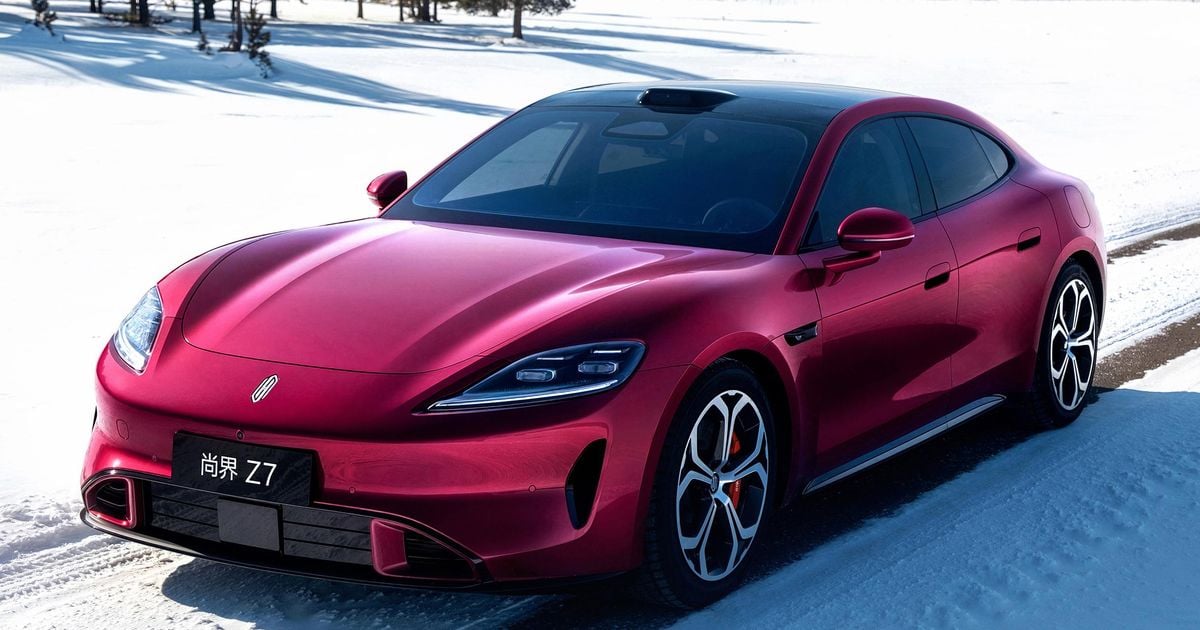
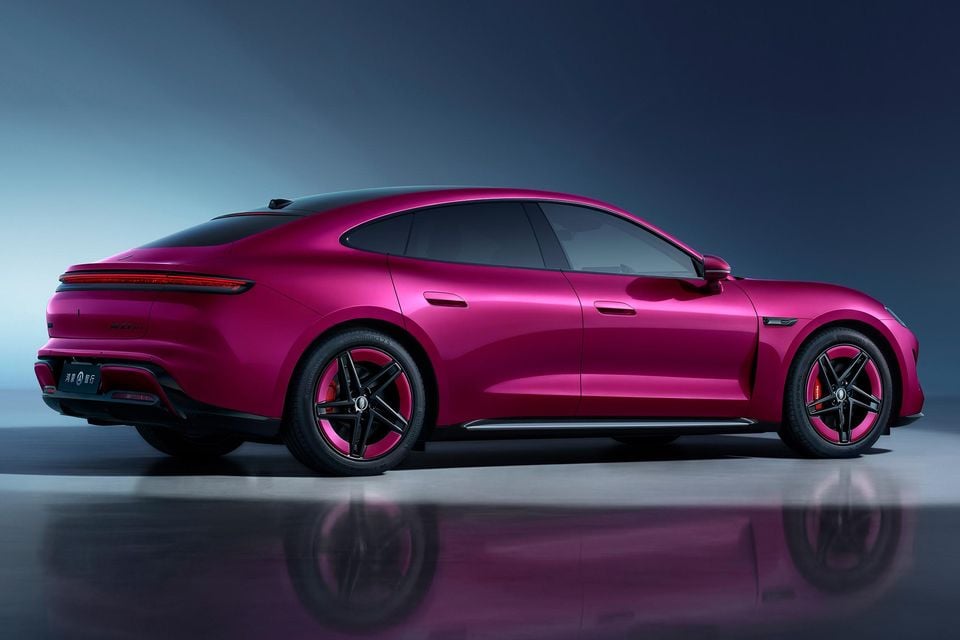
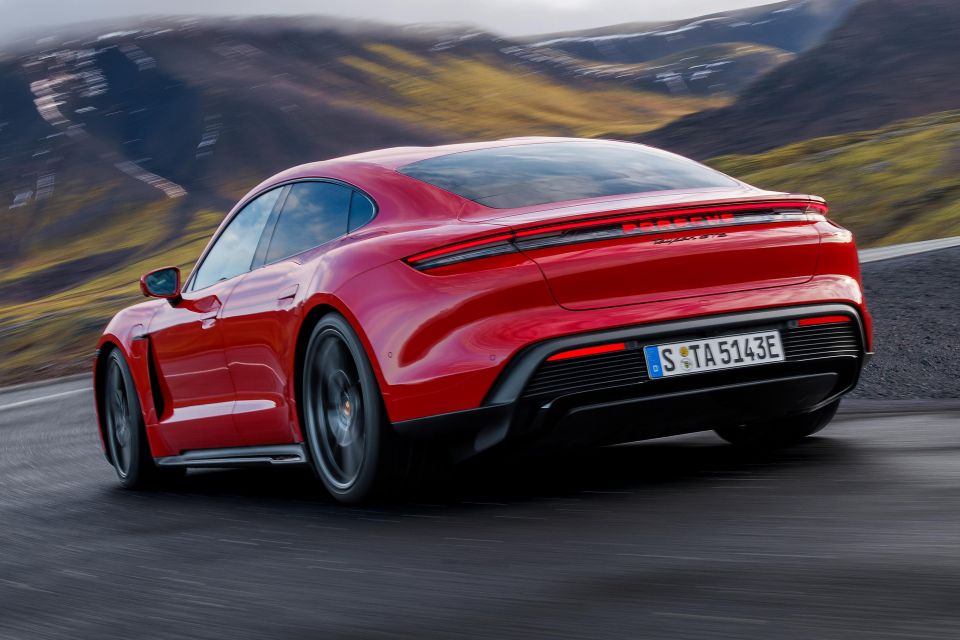
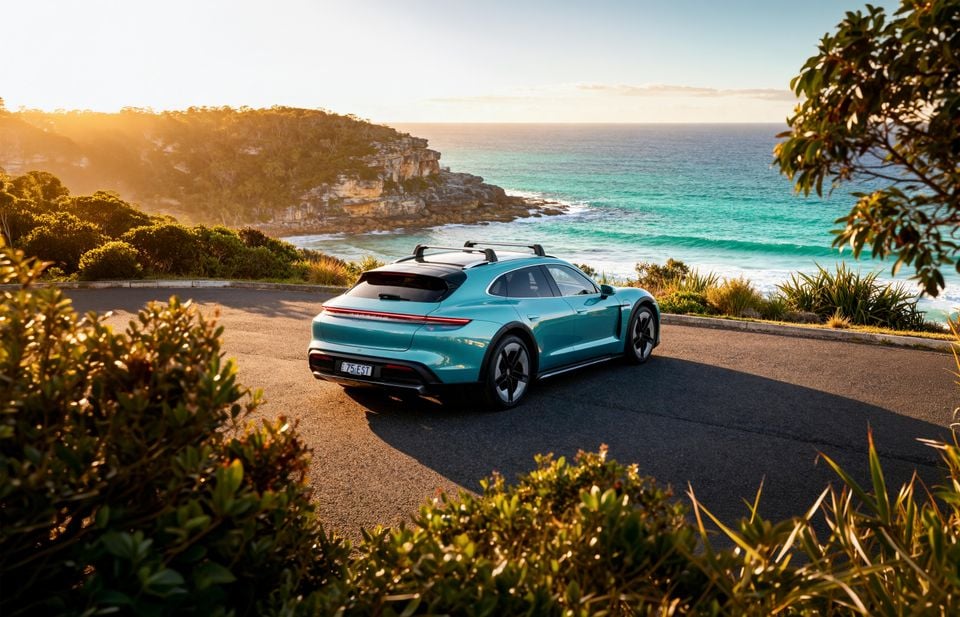
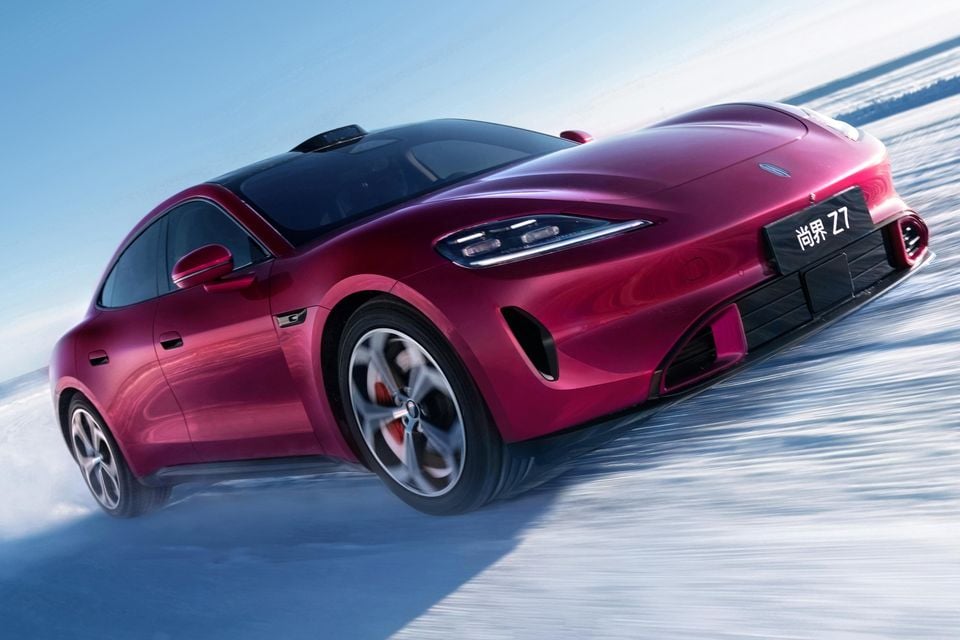
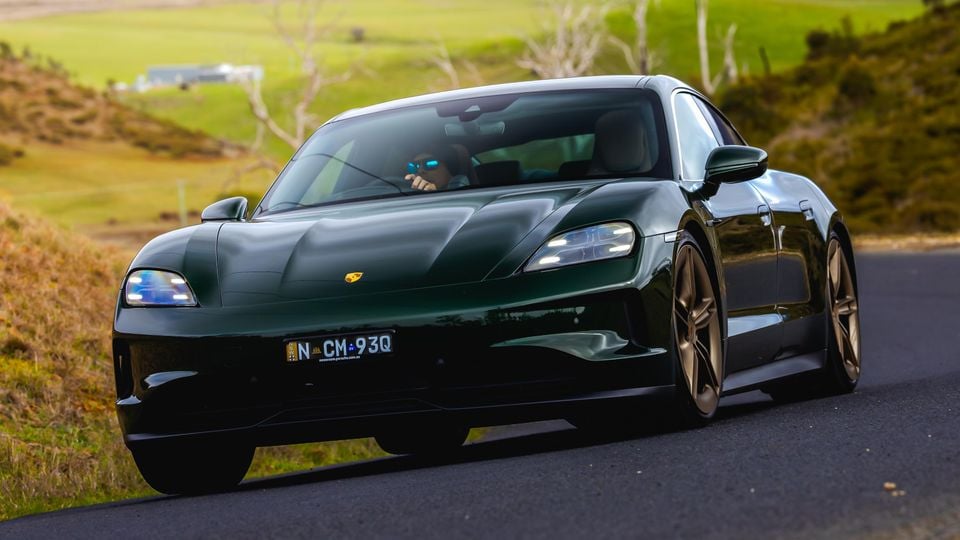
From almost every angle the new SAIC Z7 looks to be rather heavily inspired by the Porsche Taycan. Not content to ape just the sedan, there’s also the Z7T, which has an uncanny resemblance to the Taycan wagon.
Not only does the Z7 share the Taycan’s silhouette and body surfacing, but many of the details too, including the tiny vent at the trailing edge of the front fender, the diffuser cutout in the rear bumper, and the small vertical air intakes at edge of the front bumper.
The headlight and tail-light designs are similar, but not identical. Indeed, the Z7’s tail-light graphics include an interesting sparkle effect.
CarExpert can save you thousands on a new car. Click here to get a great deal.
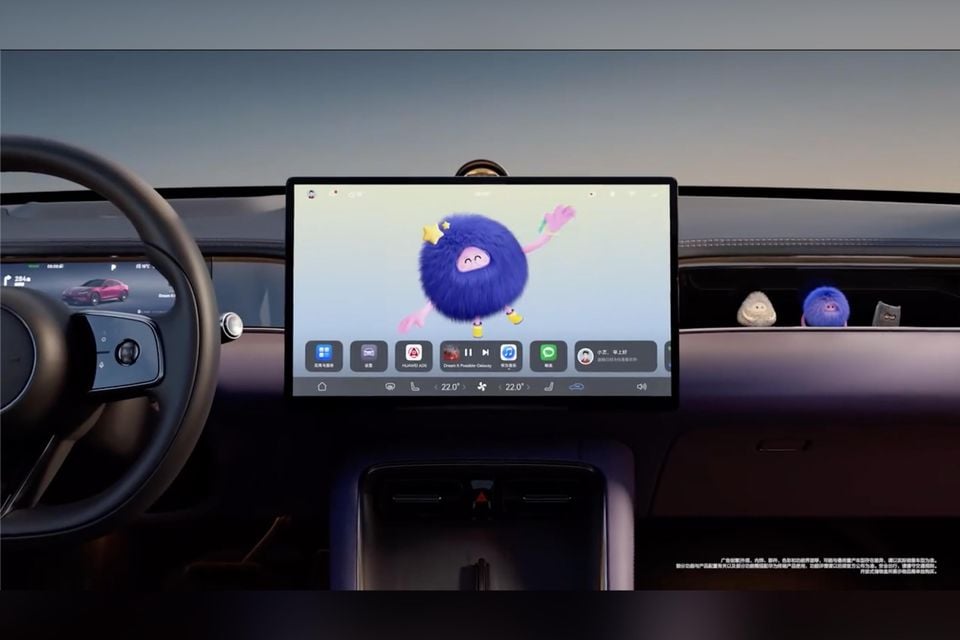
Probably where the design of the Z7 and Taycan diverges the most is the interior. Whereas the Porsche has screens neatly integrated into the dashboard and centre console, the Z7 features a massive freestanding touchscreen that can move in “four dimensions”, that is it can be electronically tilted left, right, up and down.
Available features include a head up display, panoramic glass roof, matrix LED headlights, illuminated badges, cross-drilled brakes with Brembo calipers, and an advanced driver assistance with a roof-mounted LIDAR pod.
Some of the models pictured here ride on 20-inch alloy wheels shod with 275/40 Continental EcoContact 7S tyres.
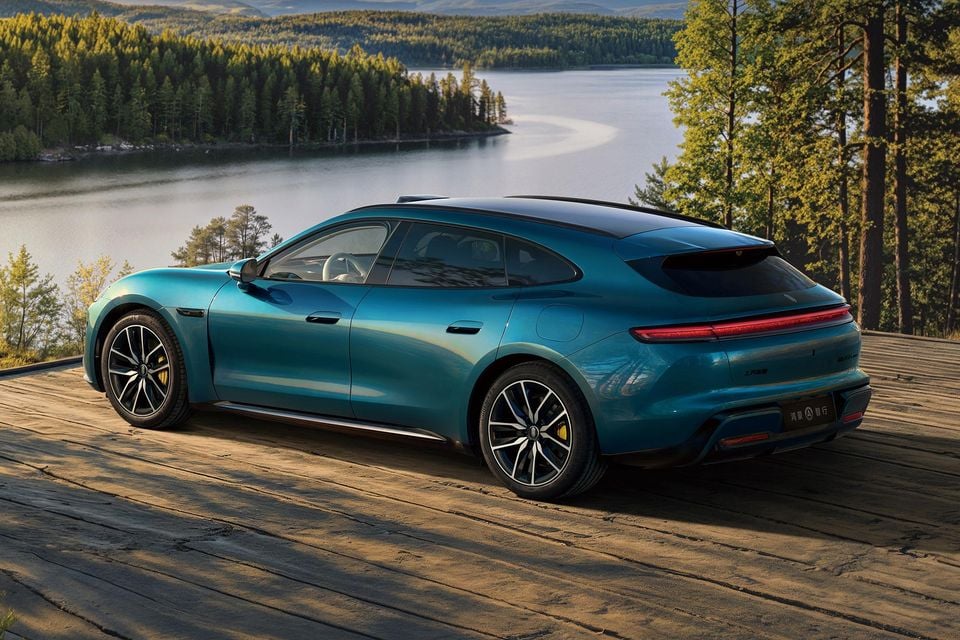
Technical specifications for the Z7 and Z7T has yet to be announced, although the company is scheduled to release more details at the end of March.
According to My Drivers, the Z7 and Z7T will have pure electric drivetrains with the rear-wheel drive variant using a 80kWh battery, and all-wheel drive versions featuring a larger 100kWh pack.
It will reportedly be pitched against the Xiaomi SU7, and will be priced between ¥220,000 and ¥310,000 (A$45,500 to A$64,100) in China.
That’s significantly less than the fully imported, and therefore heavily tariffed, Taycan, which has a sticker price of between ¥918,000 and ¥1.57 million (A$190,000 to A$324,400) in the Middle Kingdom.
Confusingly the new SAIC brand is one of five brands being launched by HIMA, a joint venture between Huawei, the electronics company, and SAIC, the Shanghai-based automaker.
If SAIC isn’t familiar to you, some of its brands — MG, IM, LDV, and Maxus — may be. The automaker also operates joint ventures with GM and Volkswagen.
While the SAIC Z7 and Z7T are clearly inspired by the Porsche Taycan range, the other models released so far by HIMA aren’t as closely patterned on existing designs from elsewhere.
It’s been a while since a Chinese manufacturer released a vehicle that so closely resembles one from a foreign automaker. Notable examples from the past include the 2015 Landwind X7 (Range Rover Evoque), 2009 BYD F3 (Toyota Corolla), and 2003 Chery QQ (Daewoo Matiz).