
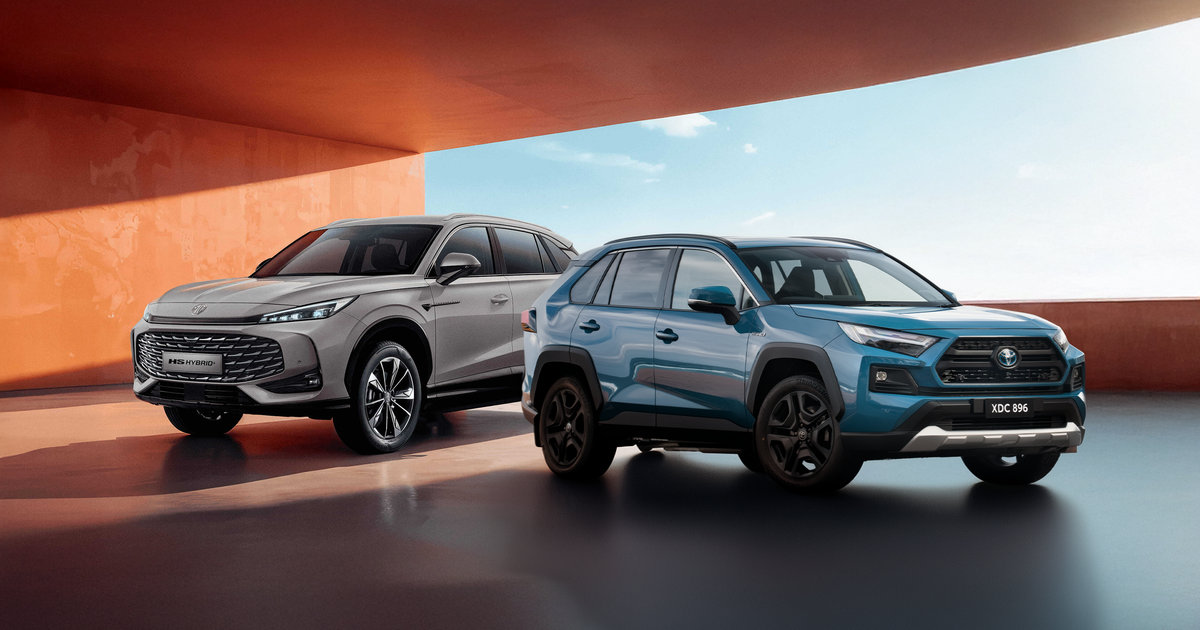
The hybrid vehicle market has changed forever as new technology and new arrivals reshape the world of green motoring.
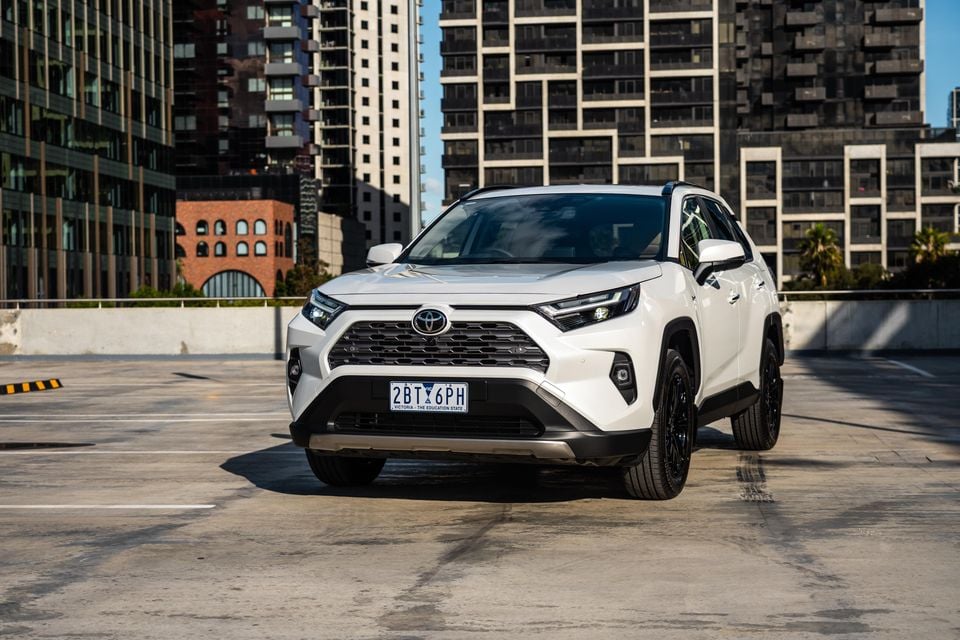
Petrol-electric hybrids have been around since a little-known compact car, the Honda Insight, arrived Down Under in 2001. Toyota has since done the heavy lifting with everything from the original Prius to a full range of hybrid offerings that will soon extend all the way up to the LandCruiser.
But now there is a dramatic change in the landscape as plug-in hybrids, called ‘Super Hybrids’ by some of the most significant new auto brands, continue to arrive in growing numbers with the promise of real freedom when it comes to electric motoring.
A battery range of more than 100km is considered the starting point for these Super Hybrids and, combined with an efficient internal combustion engine (ICE), a total range of at least 800km – and much more – is not unusual.
These plug-in hybrid vehicles (PHEVs) get their name from the fact their batteries can be charged from a household power outlet instead of relying only on an on-board generator, as in a plugless hybrid.
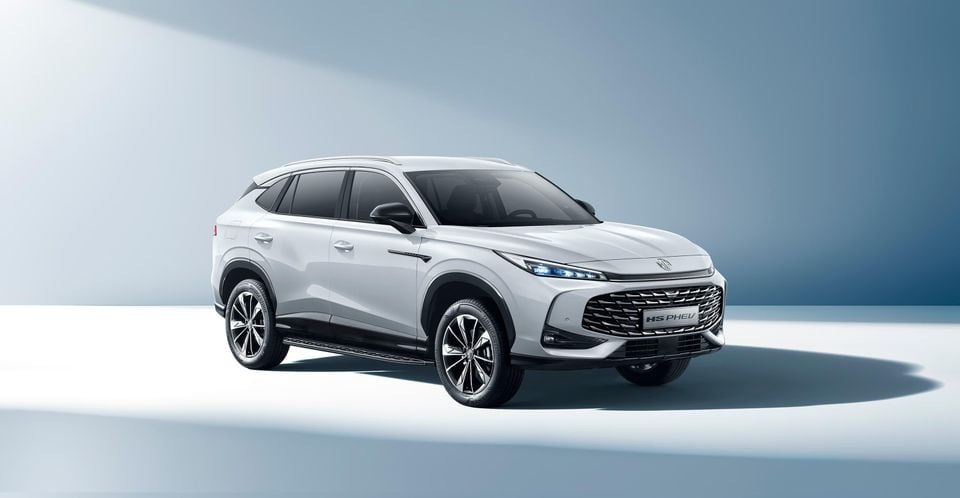
In the ultra-competitive mid-size SUV market, where so many families do their shopping, the hybrid revolution has also triggered a new type of showroom battle.
The Toyota RAV4 is still the benchmark, a position proven each month by official sales data and continuing long waiting times, but the MG HS is now slamming down a solid challenge.
The MG HS Super Hybrid is helping to rewrite the rules for families who want to take a significant step down the green road into the future. With a claimed electric vehicle (EV) range of 120km from a fully-charged battery, it makes a compelling case for the best of both the EV and ICE worlds.
How much?
Hybrids have never been the cheapest options in a model range, but MG is changing the game by putting a much stronger emphasis on its petrol-electric contenders, including the HS Essence with Super Hybrid drive.
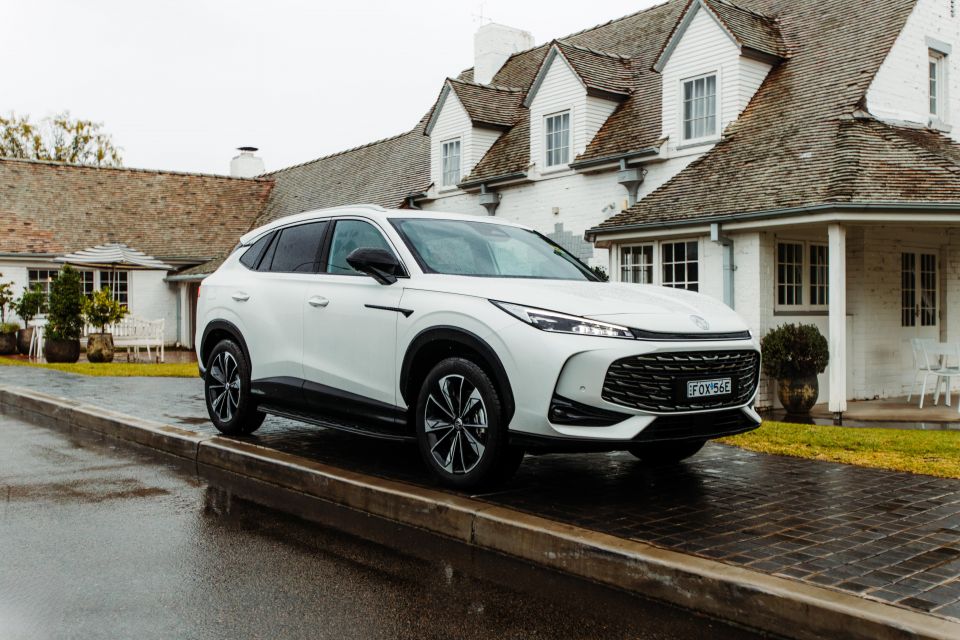
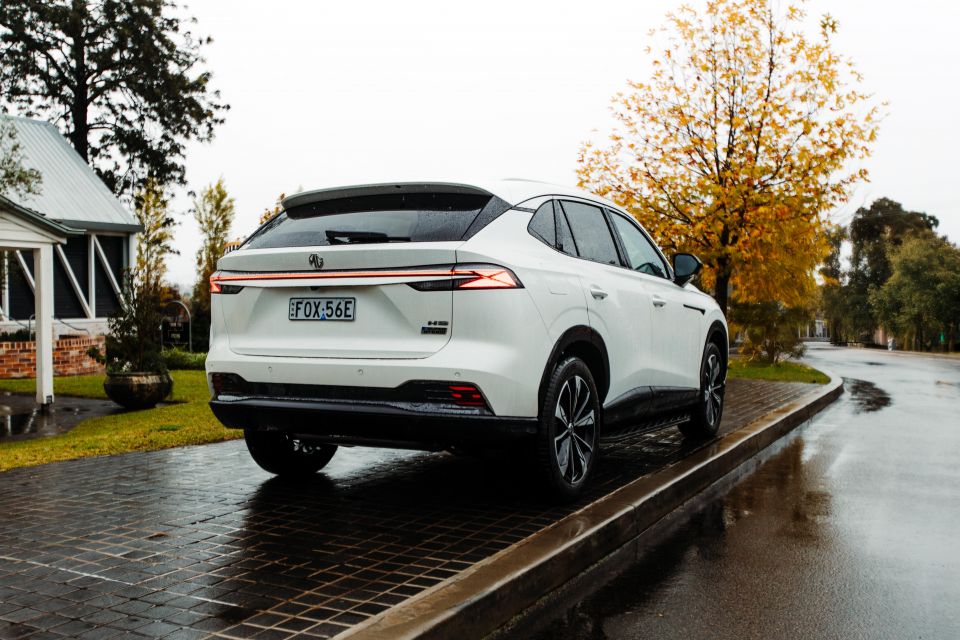
It’s highly competitive at $52,990 drive-away, in an HS range which starts from $33,990 drive-away.
The first of the regular HS Hybrid models, at $42,990 drive-away, is a serious value contender with 1.5-litre engine and Excite trim level. And that’s without any of MG’s regular discount deals.
It’s the $55,990 drive-away price of the flagship MG HS Essence Super Hybrid that frames this contest with the all-wheel drive hybrid RAV4 Cruiser, even though the Toyota is not a plug-in hybrid, because their sticker prices are so similar.
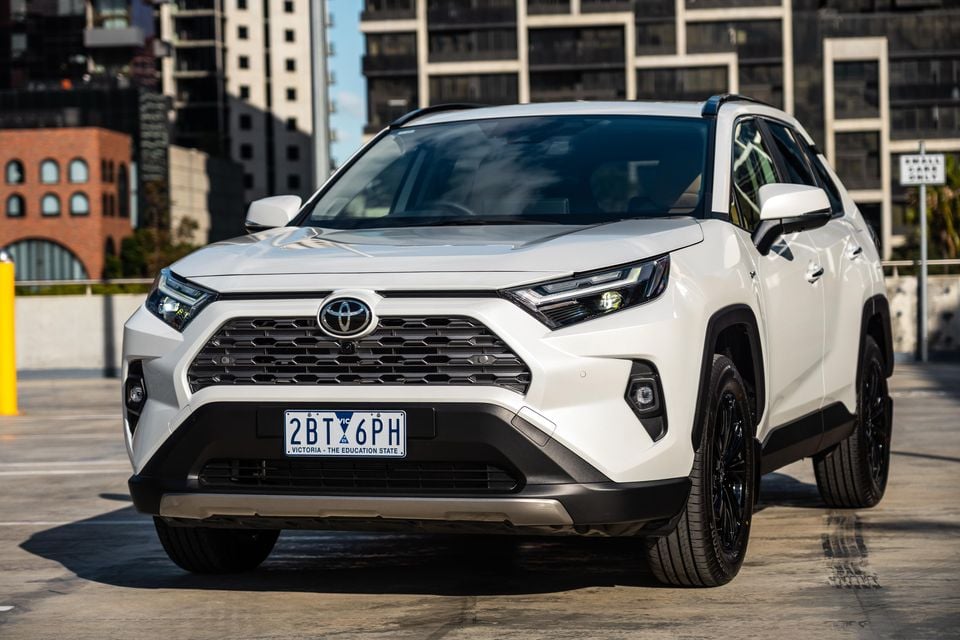
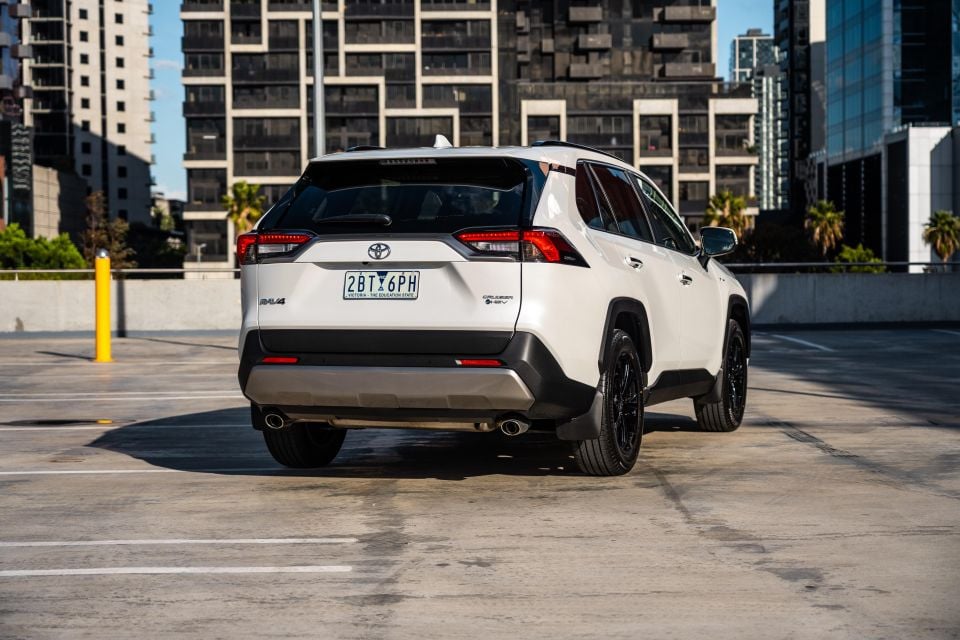
The headline number for the RAV4 Cruiser AWD is $54,410, but that’s before on-road costs. A new-generation RAV4 is just around the corner and it will include, for the first time, plug-in hybrid powertrain options. But it will also arrive with steep price rises across the board.
So for now, we’re focusing on the comparing the new MG HS with the soon-to-be-superseded RAV4, plenty of stock of which remains available ahead of the new hybrid model’s arrival by the end of March, followed by the PHEV’s release in the third quarter of 2026.
What do you get?
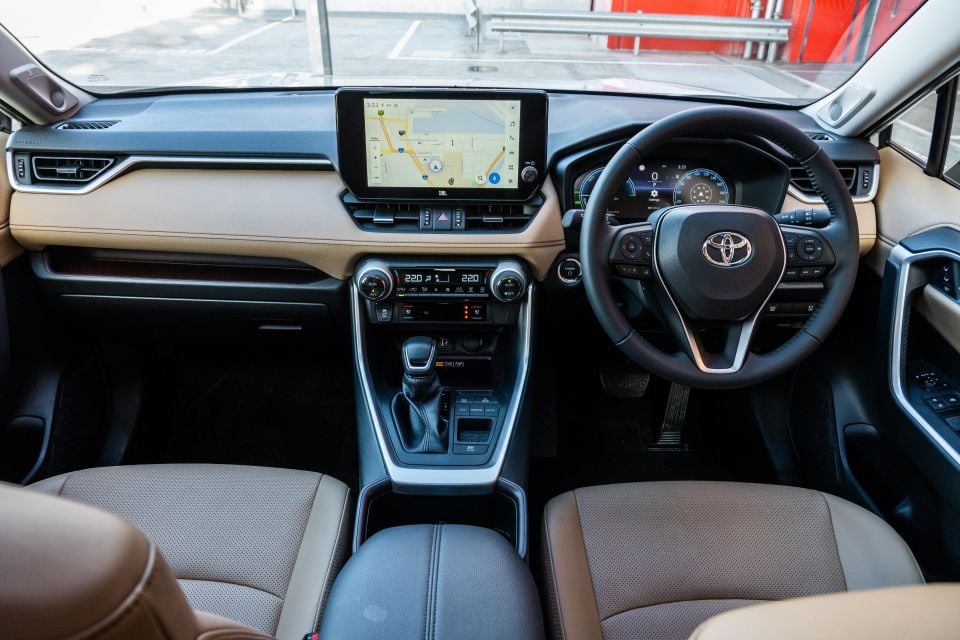
The Cruiser badge sits near the top of the RAV4 range and comes loaded with gear, including a standard sunroof – also fitted to the MG – plus it has nine speakers in the sound system and partial leather seat trim.
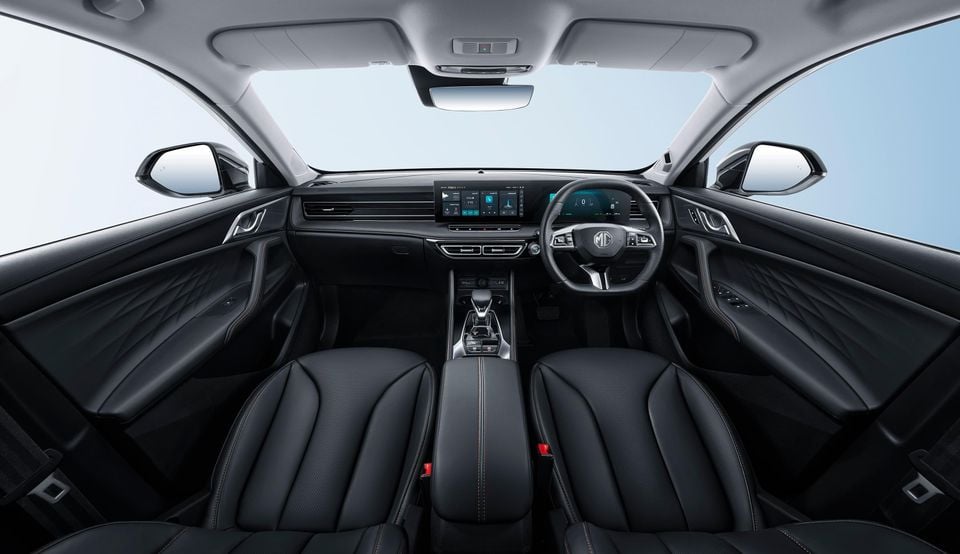
On other fronts, the MG has the edge. It has bigger alloys, at 19 inches, as well as a kick-to-open open power tailgate and a 360-degree camera system.
Importantly, for a lot of people, it has the bigger – 12.3-inch – infotainment screen and there is electric adjustment for the front passenger seat.
But, overall, both are extremely well equipped and share the following features:
- Keyless entry/push-button start
- Automatic LED headlights
- Heated, power-folding exterior mirrors
- Satellite navigation
- Wireless Apple CarPlay and Android Auto
- DAB+ digital radio
- Wireless phone charger
- Heated electric front seats
- Dual-zone air-conditioning
- Rear privacy glass
- 60:40-split/folding rear seats
Are they safe?
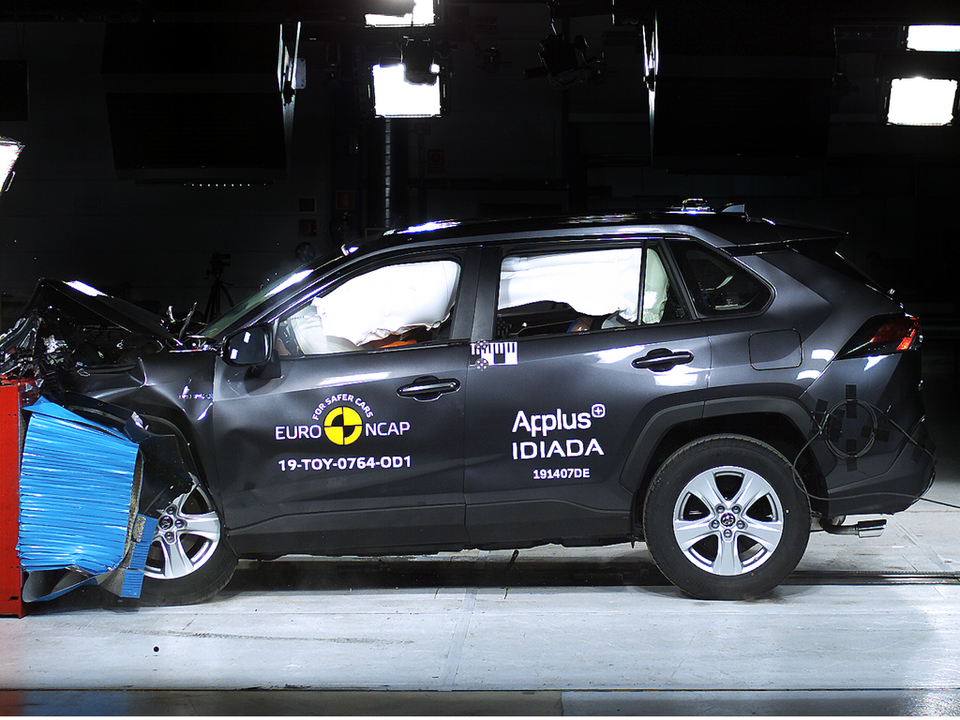
Both models have a benchmark five-star rating from ANCAP and a full suite of Advanced Driver Assistance Systems. But…
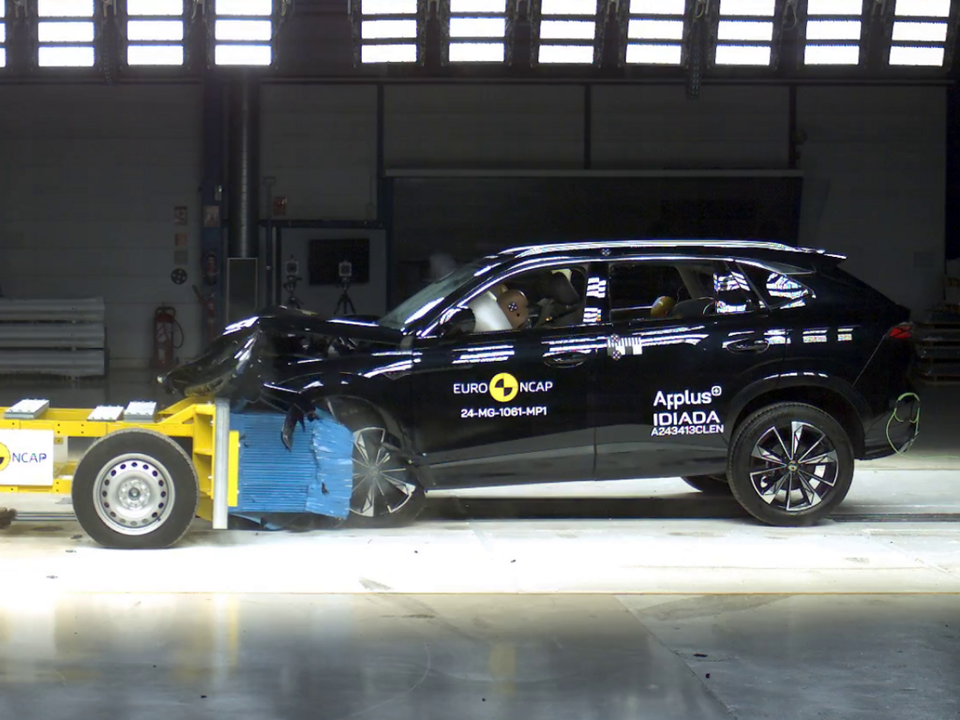
Officially, and despite being assessed according to 2024 protocols, the MG HS rating only applies to non-hybrid versions of the HS. It’s unlikely to be any different for the Super Hybrids, but it’s still worth mentioning.
It’s similar but different for the RAV4, which was tested back in 2019. Since then, the ANCAP test protocols have changed significantly.
The Toyota does not have all the very latest driver aids, whereas the MG has lane-change assistance, speed-limit assistance and a driver attention monitor.
Still, both are well equipped with standard safety equipment including:
- Adaptive cruise control
- Autonomous emergency braking
- Blind-spot monitoring
- Lane-keeping assistance
- Speed-limit assistance
- Rear cross-traffic alert
What are they like inside?
Both the HS and the RAV4 are comfy and very well equipped. There is lots of storage space and a multitude of USB outlets, while dual-zone climate control air-conditioning makes things more enjoyable.
With an all-new model about to arrive in showrooms, the Toyota is now showing its age and the obvious giveaway here is the undersized infotainment touchscreen and its position. It looks like more of an afterthought compared to the more modern and better integrated sweep of the twin-screen digital display across the dashboard of the MG.
The round-oid steering wheel in the HS also makes its cabin look more modern as the top and bottom edges are both flattened in a move that improves space and visibility.
But the RAV has what it needs, and the finishing is as good as expected with a Toyota. The operation of all switches is positive and confident, whereas the MG’s can feel a touch flimsy.
The shaping of the front seats is good in both cars and both back seats are fine for family duties, and also offer added flexibility with 60:40-split/folding functionality.
What’s under the bonnet?
The Toyota and MG both still have a conventional combustion engine at their heart.
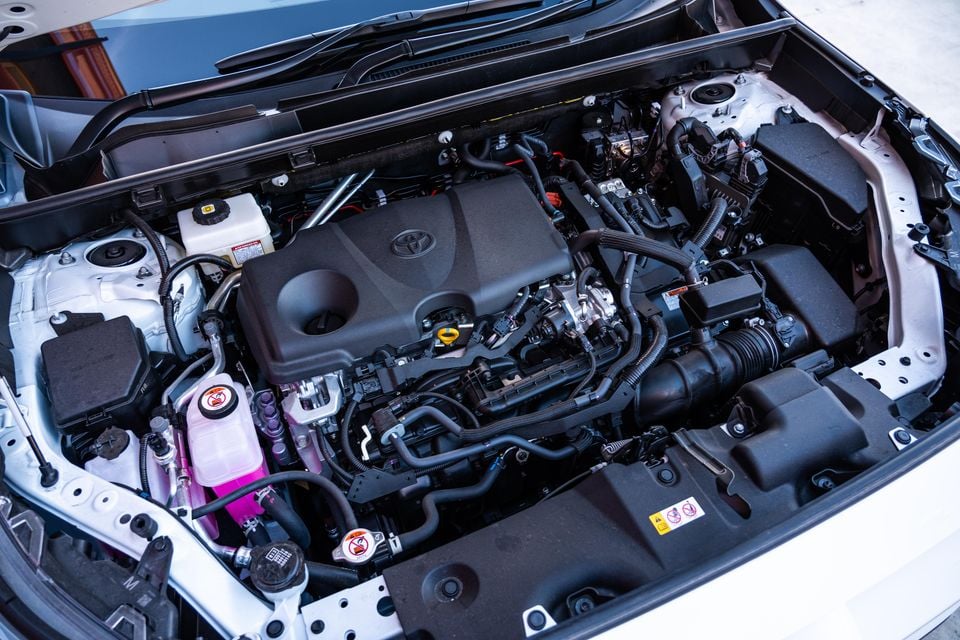
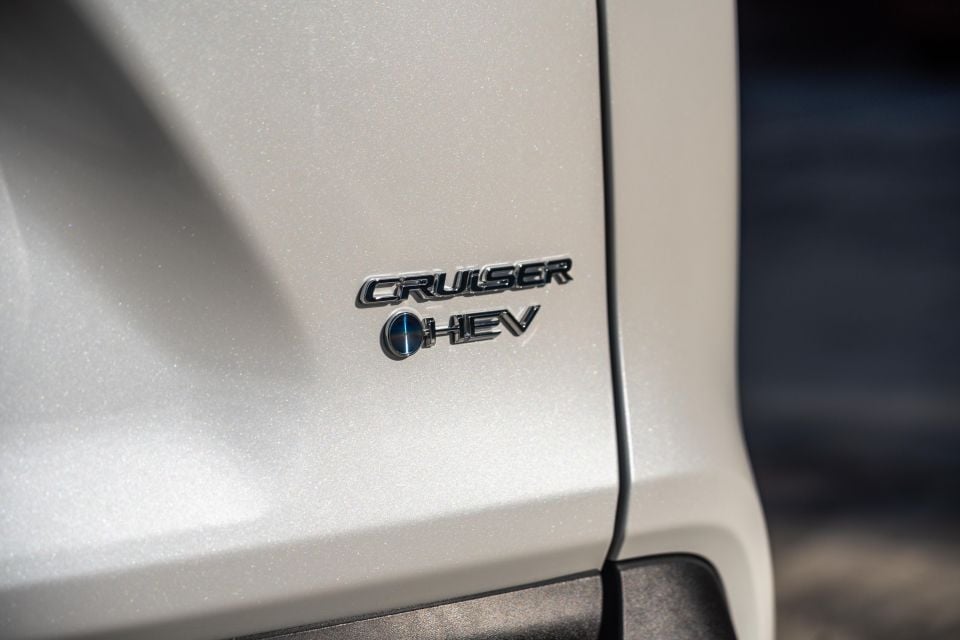
In the case of the RAV4, it’s a 2.5-litre four-cylinder petrol engine, boosted by an 88kW electric motor and matched with a continuously-variable automatic transmission. It’s primarily front-wheel drive, but there is an on-demand 40kW motor to drive the rear wheels when required – not that it’s remotely a serious off-roader.
With total outputs of 163kW of power and 221Nm of torque, the RAV4 can move briskly away from the lights and the transition from electric to combustion power is generally unnoticeable.
Toyota claims combined fuel consumption of 4.8L/100km, along with average emissions of 109g/km of CO2.
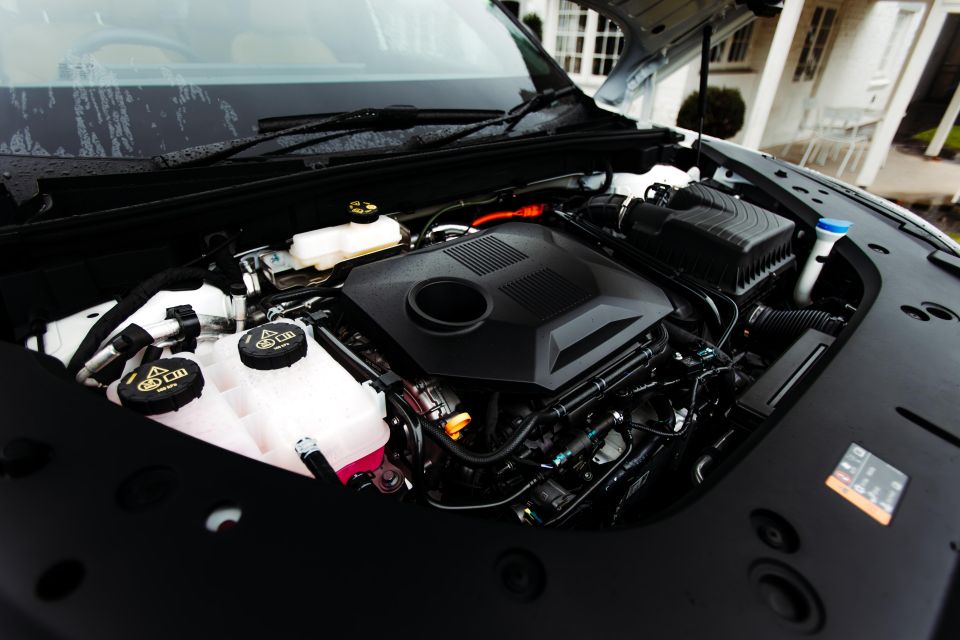
MG says the Super Hybrid system in the HS consumes just 0.7L/100km, thanks mostly to its extended EV range, and CO2 emissions are correspondingly low at only 17g/km.
The HS combines a 1.5-litre four-cylinder petrol engine with a 155kW electric motor to deliver solid combined outputs of 220kW and 350Nm, also on regular unleaded petrol. The PHEV powertrain drives the front wheels only in the MG.
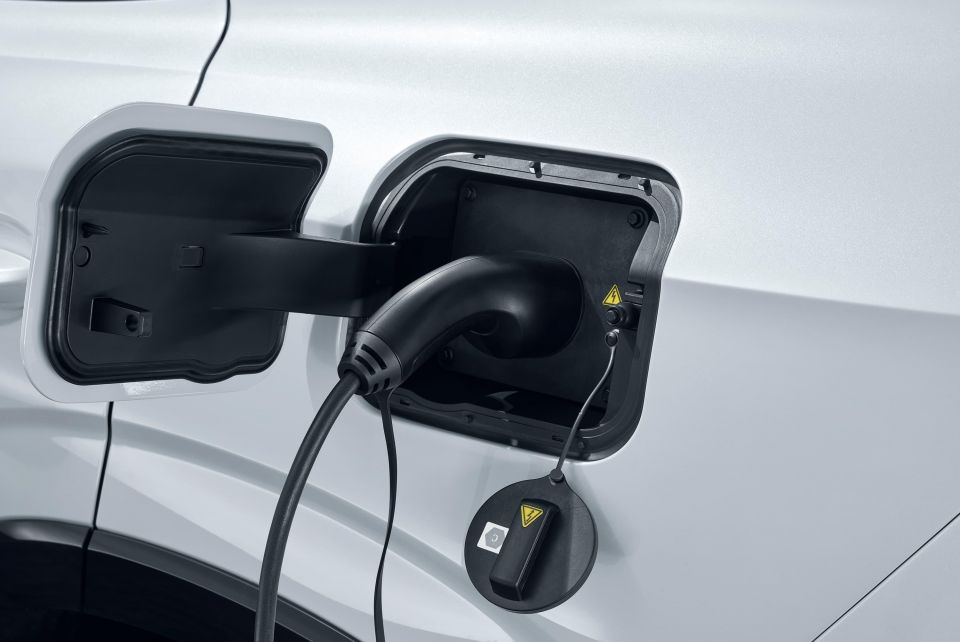
As for its electric componentry, the key is its relatively large 24.7kWh battery pack, which MG says can be charged in 7.3 hours via a regular household power outlet. Like most PHEVs, the battery is not designed for DC fast-charging.
Cost of ownership
The big difference here between the RAV4 and HS Super Hybrid depends on how the MG is used. If the battery is regularly fully charged it becomes in effect a pure EV for most people, most of the time. Various research shows the average Australian commute is around 40km a day, and the HS has a claimed battery range of 120km.
Although like all Toyota hybrids the RAV4 has limited EV-only capability, both contenders here are miserly with fuel when primarily running on their petrol engines, although the MG steps ahead again with a claimed total range of more than 1000km.
The RAV4 has the usual Toyota warranty (five years and unlimited kilometres), and 12-month/15,000km service intervals. The capped-price servicing cost throughout the warranty period is approximately $1300.
The HS Super Hybrid is backed by a seven-year, unlimited-kilometre standard warranty, but – like a growing number of brands looking to generate owner loyalty – it can be extended to 10 years and 250,000km by servicing inside the MG dealer network.
There is similar seven-year warranty coverage for the battery in the HS Super Hybrid, and although MG doesn’t advertise service costs for the vehicle’s full warranty period, it says it provides service quotes which are good for 12 months.
CarExpert’s Pick
In the end, this contest comes down to a comparison between the past, present and future. The RAV4 Hybrid is the past, the HS Super Hybrid is the future, and yet both sit solidly and successfully in the present – where plug-in hybrid powertrains have the advantage in terms of both technology and cost of ownership.
From expert reviews to the right deal
CarExpert brings reviews, research tools and trusted buying support together, guiding you from research to delivery with confidence.
The MG has moved significantly ahead for anyone who wants to do more pure-electric driving, without sacrificing their petrol-power safety net.
So it’s no wonder Toyota wants to get in on the PHEV act with its most popular model, and it will do so when the all-new RAV4 becomes available with plug-in hybrid power for the first time later this year.
They say imitation is the sincerest form of flattery, but until then the MG HS Super Hybrid wins this contest and continues to represent great value.