
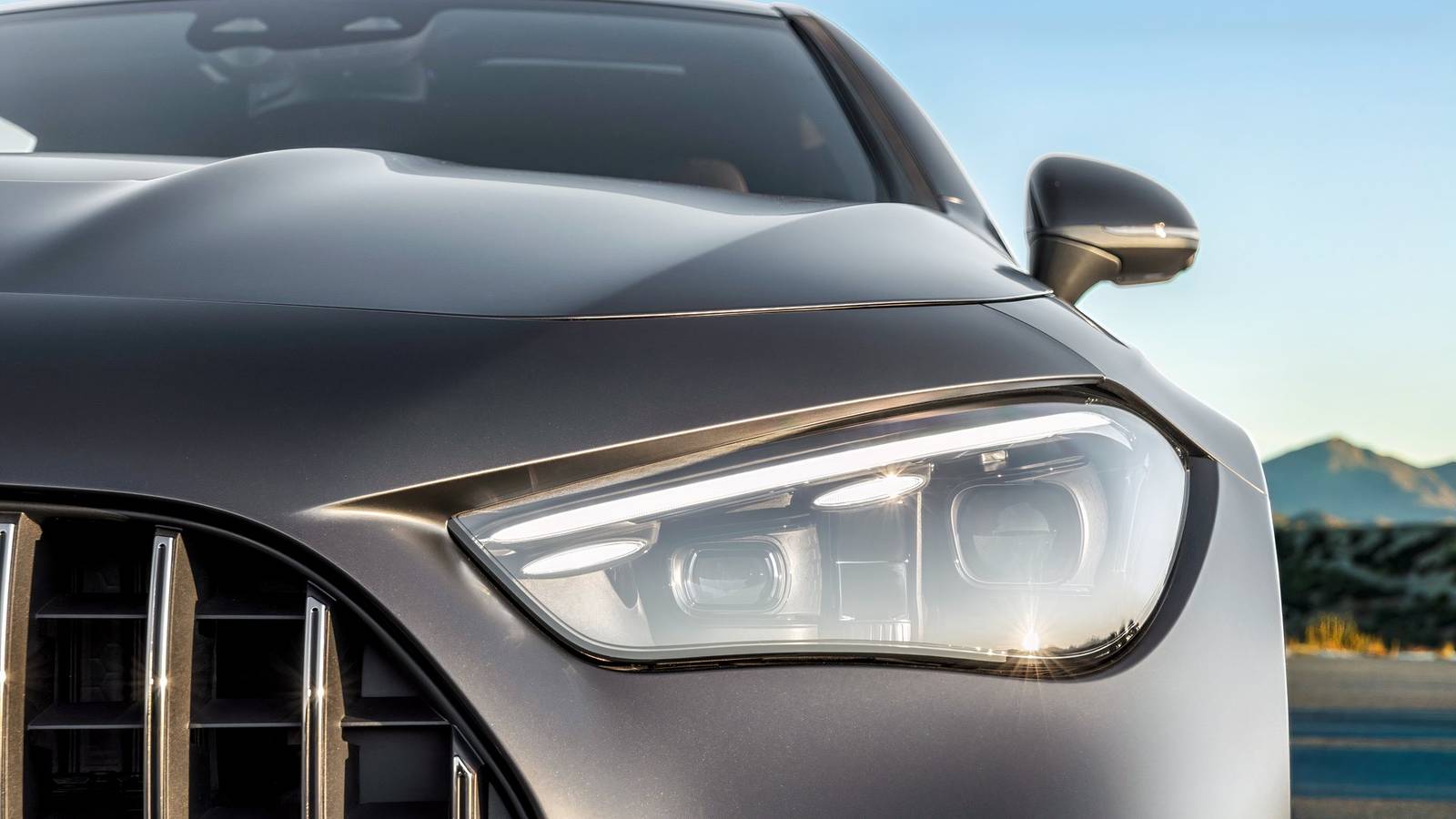
For decades, certain performance cars have transcended their spec sheets. They became symbols — not merely of speed, but of attitude, drama, and mechanical theater. These were machines that didn’t just deliver performance; they announced it, celebrated it, and often exaggerated it. Their engines were as much part of their identity as their badges.
Among enthusiasts, few things carry as much emotional weight as an engine configuration. Power figures can rise, lap times can fall, and technology can advance, but the character of a car — the way it feels, sounds, and communicates — often matters far more than the numbers themselves. This is particularly true in the world of high-performance sedans, where heritage and expectation play an unusually powerful role.
Mercedes-AMG Is Moving On From The C63 As We Remember It
The End Of A V-8 Performance Icon

Today’s automotive landscape is shifting faster than many enthusiasts are comfortable with. Electrification is accelerating, emissions targets are tightening, and engineering goals have expanded well beyond pure performance. Many of the world’s most revered performance divisions now find themselves balancing efficiency, compliance, and hybridization alongside the traditional parameters of speed and handling. That evolution might be inevitable. But when progress meets nostalgia, things rarely stay quiet. And few recent developments have illustrated that collision more dramatically than one of the most divisive performance sedans Mercedes-AMG has ever built.
Why The AMG C63 Changed So Dramatically

That tension reached its peak with the arrival of the Mercedes-AMG C63 S E Performance. The model’s debut triggered one of the most polarized reactions in recent performance-car history — not because it lacked performance, but because it fundamentally rewrote what the badge represented. Gone was the thunderous V8 that had come to define the earlier C63s.

In its place sat a highly complex hybrid system built around AMG’s M139l 2.0-liter turbocharged four-cylinder engine, paired with an electrically assisted turbocharger and a rear-mounted electric motor. With a whopping 671 horsepower and 752 pound-feet of torque, it instantly became the most powerful C63 ever produced — numbers that on paper would satisfy even the most hardcore enthusiast.

From a purely technical standpoint, the accomplishment was remarkable. But to understand why AMG took this direction, we need to look beyond emotion and examine the forces shaping modern performance engineering. Large-capacity engines — particularly V8s — face mounting challenges from tightening CO₂ limits, fleet emissions averages, and increasingly strict efficiency standards.
The Shift towards Hybridization

For high-performance divisions like AMG, electrification and hybridization are now fundamental tools in meeting modern regulatory frameworks without completely sacrificing power. Performance engineers are no longer just trying to make cars faster — they’re trying to make them comply with evolving environmental legislation. That shift creates an engineering problem in its own right.

Viewed through this lens, the new C63’s powertrain begins to make sense. AMG leveraged the M139l platform — now one of the most power-dense four-cylinders in production — and electrification to supplement torque, sharpen response, and push performance beyond what a similarly sized combustion engine alone could achieve. The result is blistering straight-line acceleration, with the car flying from zero to 62 mph in roughly 3.4 seconds, a pace that places it firmly among contemporary high-performance machinery.

But bridging the gap between engineering logic and emotional resonance is far more challenging. While regulatory pressures might explain the transition, they don’t automatically make the results easier to swallow for fans attached to a certain era of AMG performance.

Every AMG Black Series Ever Made: A Look At All Six Hardcore Models
A byword for style and face-melting performance, the Mercedes-AMG Black Series are sports car-defining models – here are the six series models.
What The Future Holds For AMG
Redefining Performance In A Post-V8 World

The story of the latest C63 ultimately extends beyond a single model. It reflects a broader transition in performance car engineering — one in which electrification, compliance pressures, and evolving consumer priorities collide with long-held emotional attachments. Industry reports indicate that AMG is reassessing its engine strategy after the mixed reception to four-cylinder hybrid performance cars.

While the technology delivered extraordinary output figures, it revealed a critical lesson: numbers alone don’t guarantee emotional acceptance. Growing indications suggest AMG may lean into six-cylinder configurations where packaging and regulations allow, as evidenced by the move toward the upcoming C53 and similar models. The anticipated C53’s inline-six architecture — producing around 443 horsepower and 413 pounds-feet — signals a potential bridge between pure performance and enthusiast expectations, even if it doesn’t match the hybrid C63’s peak figures. For the C63 line itself, a direct return to a V8 remains uncertain — engineering and regulatory constraints make that difficult in the compact segment.

Instead, a high-output six-cylinder hybrid could be a future path that strikes a balance between emotional resonance and modern efficiency demands. Viewed historically, the W206 C63 may not be judged a failure so much as a transitional chapter — the misunderstood middle child of AMG’s evolving performance narrative. It pushed boundaries, absorbed criticism, and forced both the maker and the market to re-examine what performance means today. Mercedes-AMG didn’t build a slow car, nor did it build an incapable one.
It Built A Machine That Challenged Deeply Ingrained Expectations

The backlash was not rooted in ignorance but in attachment — a reminder that automotive enthusiasm is shaped not just by engineering, but by emotion. One thing remains clear: the debate surrounding this car was never just about an engine. At its core was identity — and unlike horsepower, identity cannot be recalculated.

The Most Powerful Naturally Aspirated V8 Sedan Ever Made
The most powerful sedan with a naturally aspirated V-8 didn’t live that long, but when it existed, it was one heck of a luxury sports sedan.
Where The AMG C53 Fits Into The Picture
A Different Interpretation Of Modern AMG Performance

Alongside the debate over the plug-in hybrid C63, another trend has emerged within AMG’s performance hierarchy that speaks to broader strategic shifts: the rise of a straight-six-powered “53” Series model. Industry sources strongly suggest that Mercedes-AMG will soon introduce a new C53 variant that uses the same 3.0-liter turbocharged inline-six engine found in models like the AMG CLE 53. In that configuration, the six-cylinder produces around 443 horsepower and 413 pound-feet of torque, delivered through a conventional nine-speed automatic and all-wheel drive. For AMG purists, a straight-six might not carry the same visceral legacy as a V8.

However, it still represents a return to a more familiar engine character than the hybrid four-cylinder. The “53” variants in AMG’s lineup (such as the CLE 53) have long-balanced performance with usability and refinement, featuring smooth power delivery, strong mid-range torque, and compelling on-road dynamics without relying on electrified theatrics. This makes the C53’s role distinct from its controversial predecessor.
Bringing True AMG Attitude Into The Future

It isn’t designed to be the ultimate expression of performance in AMG’s compact sedan range, so much as an interpretation of modern AMG performance — one that prioritizes everyday excitement and usable power over headline-grabbing numbers or sensory spectacle. Where controversy erupted with the plug-in hybrid C63, the anticipated C53 is unlikely to spark the same emotional backlash, mainly because it doesn’t carry the same legacy burden or expectation of replacing something beloved.

No V-8 Comeback: Mercedes-Benz Shuts Down C63 AMG Rumors Again
Mercedes-Benz denies V-8 rumors, confirming the C63 AMG will keep its F1-inspired 4-cylinder hybrid powertrain.
Why The Decision Has Split Enthusiasts
Emotional Drama Versus Measurable Performance

Objectively, the new C63 is astonishingly capable. Driven hard, its composure is undeniable. Rear-axle steering enhances agility, AMG Ride Control suspension sharpens body control, and all-wheel drive transforms traction. The car deploys torque with a kind of immediacy that feels relentless rather than explosive — modern rather than mechanical. On challenging roads, the chassis communicates confidence. Turn-in is sharp, grip levels are immense, and the vehicle feels neutral, controlled, and deeply competent. In dynamic terms, it arguably surpasses its predecessors in precision and usability.

Yet the divide persists because measurable performance and emotional engagement are not interchangeable currencies. Earlier C63 generations were never defined solely by lap times or acceleration figures. They were defined by theater — the sensory spectacle of a large-capacity engine delivering power with raw, unfiltered drama. Sound plays an outsized role in that perception. The new car’s exhaust note, largely synthesized and digitally enhanced through cabin speakers, can be assertive and convincing when dialed into aggressive drive modes. But it lacks the organic vibrations, harmonics, and nuanced character of a naturally aspirated or twin-turbo V8.
The Difference Is Subtle Yet Profound

A V8 does not just make noise — it feels alive. Synthetic augmentation, however advanced, struggles to replicate that level of sensory complexity. Real-world reactions at meetups and events reflect this tension: admiration for numbers and tech often coexists with a longing for the analogue drama that once defined AMG’s performance identity.
Sources: Mercedes-AMG,