
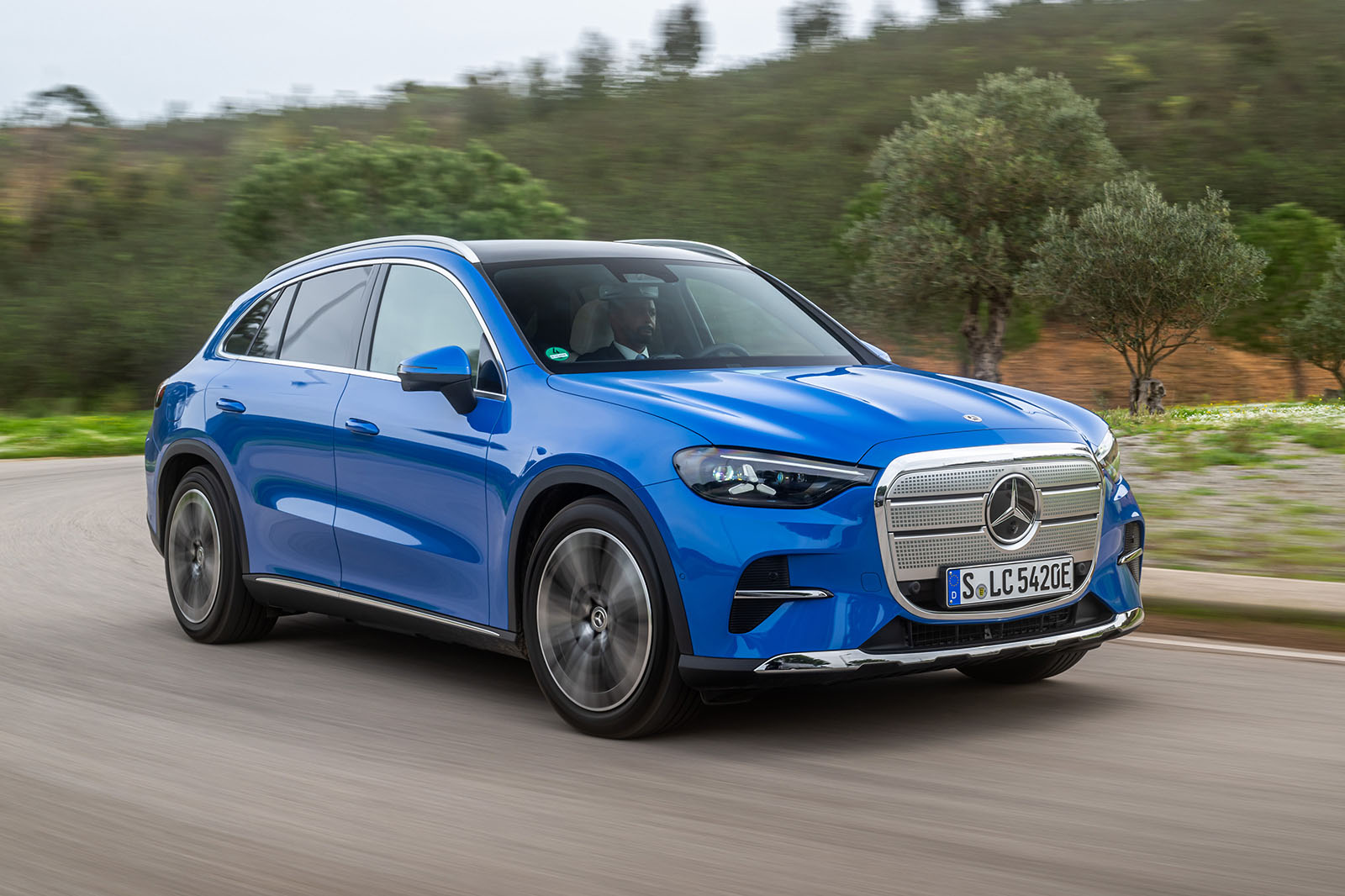
The GLC may not look outrageously different to the ICE GLC, but it is a substantially bigger car, at more than 100mm longer overall and with a useful 84mm of extra metal between the axles for a tangible boost in leg room in both rows.
Head room is slightly better, too, and while the boot is slightly smaller, at 520 litres, it’s supplemented by a relatively whopping 128-litre frunk that will take the charging cables and all your family’s muddy boots.
It feels pretty massive inside: bright, airy (partly courtesy of the standard panoramic sunroof) and far better packaged than the old EQC that it indirectly replaces – testament to the benefits of using an EV-native platform rather than an adapted ICE car platform.
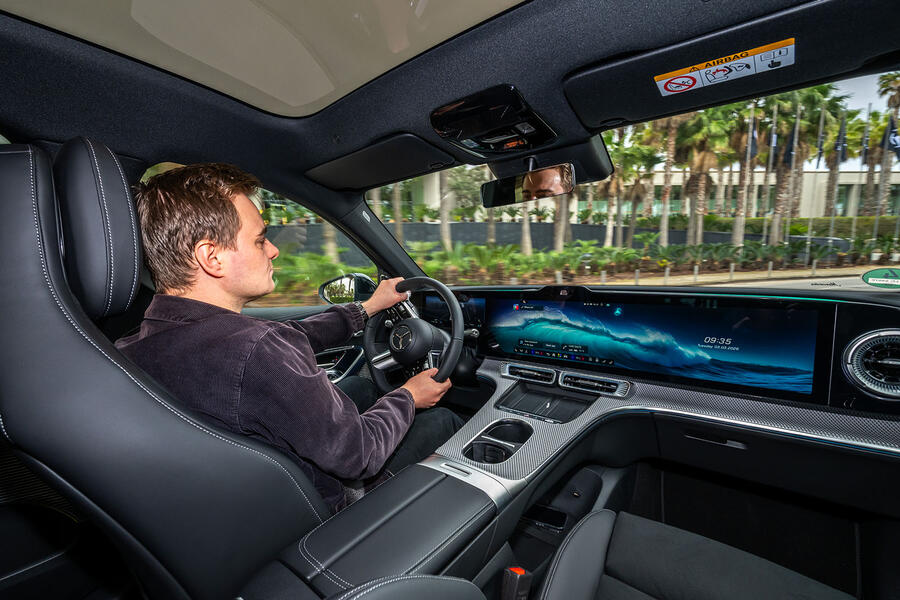
It’s also a seriously luxurious environment in here: material quality is extremely impressive, the seats are excellent, the voice control works like a dream (“Hey Mercedes, open my window and turn off the speed limit warning bong” etc) and, while there’s not exactly a surfeit of physical controls, those that do feature have a solid feel to them, clicking and clacking with that reassuring vibe of quality craftsmanship.
But there’s only so long you can talk about the interior before you have to address the inelegance in the room. Even the iX3’s whopping 18in central display, strikingly parallelogramic as it is, feels subtle and unobtrusive by comparison to the GLC’s full-width digital interface.
This is simply too much screen. What little you gain in real-world functionality, you more than lose in visual appeal: it’s no more than a massive slab of fingerprint-smeared black plastic when turned off. And if you don’t spec the passenger touchscreen, you essentially just get a digital photoframe, with the option to display one of your phone pics in the car.
Less digitally dependent alternatives in this space do a better job of cultivating a sense of occasion through interesting dashboard design flourishes and luxurious materials.
It can’t half do a lot, though. Powered by a new internal operating system said to be capable of 254 trillion operations per second, this latest iteration of Mercedes’ MBUX is one of the quickest and most impressive infotainment systems I’ve yet used in a car. With a new ‘AI-driven superbrain’ powered partly by both Microsoft and Google (we’re moving away from ‘welcome home’ a bit here), this feels like the sort of car you could conceivably run for an entire four-year PCP contract and still not try all of the functions available to you.
While hunting for the button that makes the panoramic roof cloudy or clear (or a combination of both in curiously named ‘motif’ mode), I got distracted and watched a bit of a programme in the Disney+ streaming app, sampled the Campfire and Aquarium ‘emotional modes’ and then settled in for a couple of levels on Angry Birds.
Mercedes also proudly highlights the inclusion of Microsoft Teams, with an inbuilt webcam allowing you to join meetings virtually and presentation slides displayed on the central screen – but I was careful not to tell anyone back at the office about this functionality.
Impressive utility aside, though, the fact remains that this is quite a tricky interface to use on the move, requiring a fair bit of eyes-off time to make adjustments while driving and always lingering just within your line of sight at all other times.
The clever head-up display is a winner, though, with its snazzy holographic directional arrows, and the ADAS are all nicely integrated: the ones you don’t want are extremely easy to deactivate (some by voice control) and the ones you do want are intuitive and intelligent.
I particularly liked, for example, the polite “Caution: bump” announcement that comes about 100 metres before a big pothole or speed hump – although if it works so effectively in the UK, it will be activated so often as to give the poor AI voice assistant a sore throat.