
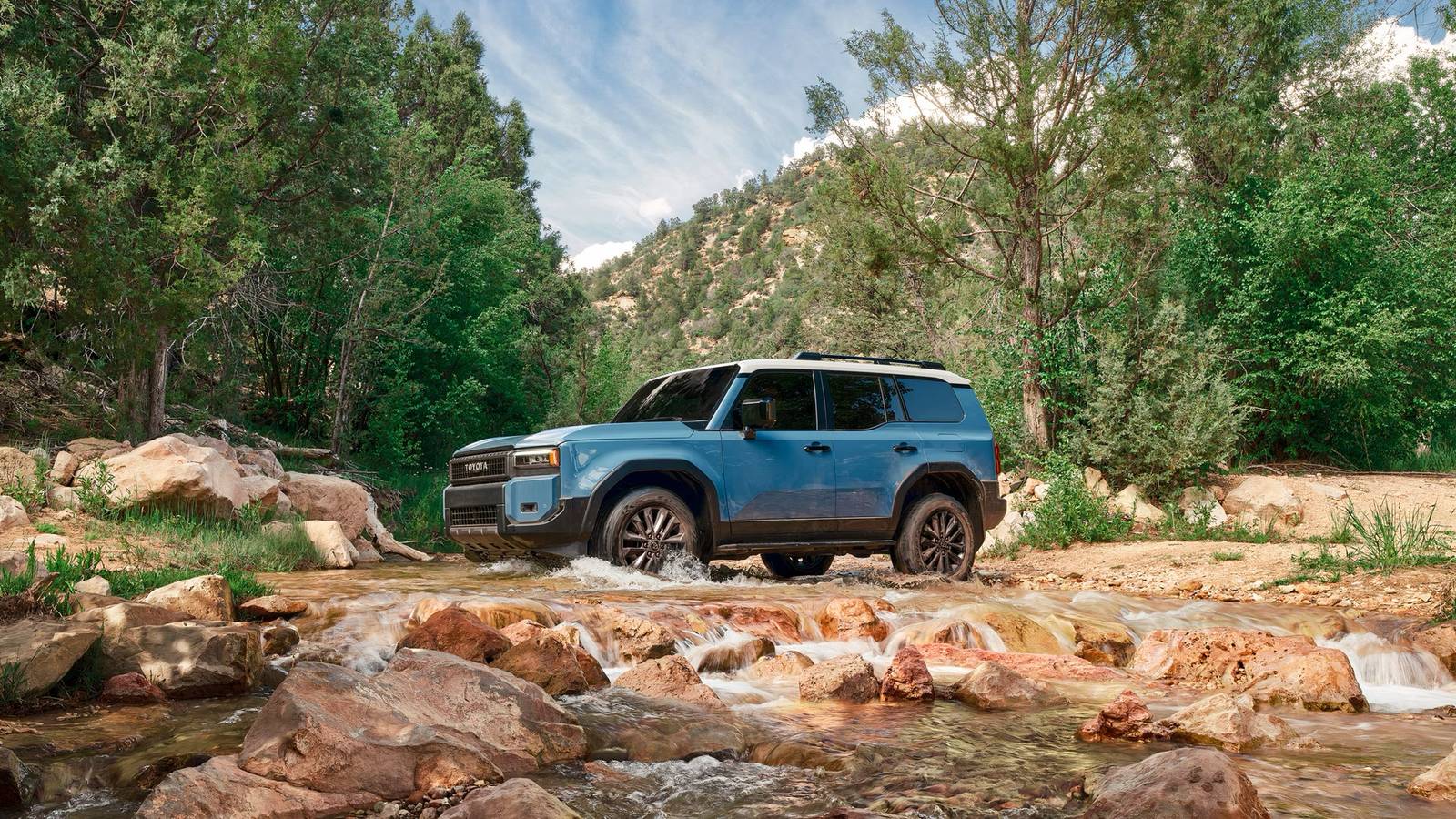
There was a time when the Toyota Land Cruiser sat at the very top of the SUV hierarchy, an over-engineered, V8-powered icon that blended unstoppable off-road capability with near-luxury refinement. But the 2025 model is smaller, cheaper, and powered by a turbocharged hybrid four-cylinder—this new-generation Land Cruiser is no longer trying to out-muscle a Range Rover. Instead, it’s chasing relevance in a world where buyers demand efficiency, technology, and everyday usability alongside rugged capability.

- Base Trim Engine
-
2.4L Turbo Hybrid
- Base Trim Transmission
-
8-speed automatic
- Base Trim Drivetrain
-
Four-Wheel Drive
- Base Trim Fuel Economy (city/highway/combined)
-
22/25/23 MPG
- Base Trim Battery Type
-
Lead acid battery
- Make
-
Toyota
- Model
-
Land Cruiser
- Segment
-
Full-Size SUV
That shift raises an important question: is the Land Cruiser still worth it in 2026, or has it lost the very qualities that once made it special? With used 2025 models already circulating at noticeable discounts and the 2025 version arriving with only minor updates, buyers now face a classic dilemma: buy slightly used and save money, or go new for peace of mind and spec flexibility. The answer isn’t as straightforward as you might expect. Because while the Land Cruiser remains one of the most capable SUVs on the market, it’s no longer the default choice it once was.
How The 2025 Toyota Land Cruiser Reinvents Itself For A New Era Of Buyers

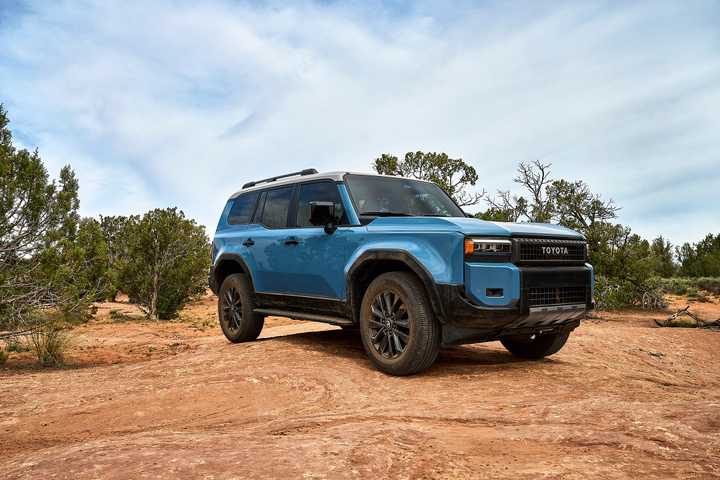
The 2025 Toyota Land Cruiser represents one of the most dramatic reinventions in the model’s history. Gone is the naturally aspirated V8, replaced by a 2.4-liter turbocharged hybrid four-cylinder that reflects Toyota’s broader shift toward electrification and efficiency. This change is not simply about fuel economy; it signals a complete repositioning of the Land Cruiser’s identity. Rather than competing directly with full-size luxury SUVs, the new model embraces a more focused role as a mid-size, adventure-ready vehicle. Built on a shared platform with rugged stablemates like the Tacoma and 4Runner, it prioritizes durability and off-road performance while becoming more accessible to a wider range of buyers.

Design plays a key role in this reinvention. The boxy proportions, upright stance, and retro-inspired front fascia deliberately echo classic Land Cruisers, blending heritage with modern appeal. Underneath that nostalgic exterior, however, lies a thoroughly contemporary machine. Pricing reinforces this new direction. A brand-new 2025 Land Cruiser typically starts between $56,700 and just over $62,000, depending on trim, having launched at this price point for the current model year. The used market, however, tells a more compelling story. Early 2025 examples are now commonly found in the $48,000 to $55,000 range, making them significantly more attainable for buyers willing to skip the new-car premium.

Review: In Hindsight, The 2025 Toyota Land Cruiser’s Execution Is Brilliant
The Toyota Land Cruiser’s hybrid powerplant has been the topic of a lot of opinion lately. Don’t worry, everything’s going to be fine.
What You Actually Get For The Money
Hybrid Power, Off-Road Hardware, And Modern Tech Explained

On paper, the shift to a four-cylinder engine might seem like a step backward, but the reality is far more nuanced. The Toyota Land Cruiser’s i-FORCE MAX hybrid system produces 326 horsepower and an impressive 465 pound-feet of torque, delivering performance that rivals, and in some cases surpasses, the outgoing V8 models. Power is routed through an eight-speed automatic transmission and a full-time four-wheel-drive system that ensures constant traction across a wide variety of conditions.
The engineering beneath the surface is what truly defines the Land Cruiser’s value. It comes equipped with serious off-road hardware, including locking differentials that allow it to maintain traction in extreme conditions, as well as advanced electronic systems like Crawl Control, which effectively acts as low-speed cruise control for technical terrain. Multi-Terrain Select further enhances its capability by optimizing throttle response, braking, and traction control, depending on the surface.

Efficiency is another area where the new model makes a meaningful leap forward. With combined fuel economy figures hovering around 23 mpg, the Land Cruiser is significantly more economical than its predecessors, making it more viable as a daily driver.
Inside, the cabin strikes a balance between rugged functionality and modern technology. Higher trims feature a large 12.3-inch infotainment display, a digital instrument cluster, and a comprehensive suite of driver assistance systems under Toyota Safety Sense 3.0. However, the entry-level 1958 trim leans heavily into simplicity, offering a more utilitarian experience that may feel sparse compared to similarly priced rivals. Moving up the trim ladder quickly pushes the price into the low-$60,000 range, where expectations for luxury and refinement increase substantially.

How The Toyota Land Cruiser Cemented Its Legacy In Overlanding Culture
As one of the most legendary overlanders in existence, the Toyota Land Cruiser takes some beating – here’s how it has become an overlanding icon.
On-Road Comfort Vs Off-Road Dominance
Where The Land Cruiser Still Sets The Benchmark

The Land Cruiser’s character has always been defined by its ability to go anywhere, and that core strength remains unchanged. Off-road, it continues to set a benchmark for capability, thanks to its body-on-frame construction, advanced traction systems, and robust suspension setup. In challenging environments, it feels composed, predictable, and nearly unstoppable, reinforcing its reputation as a true go-anywhere vehicle.
On paved roads, however, the experience is more nuanced. The ride quality is generally comfortable, and the hybrid powertrain delivers smooth and responsive acceleration. Yet, the inherent compromises of a body-on-frame SUV are still present. Handling feels deliberate rather than agile, and there is a sense of weight and height that becomes apparent when navigating corners or tight urban environments.

Interior packaging also reveals some tradeoffs. Rear-seat space is not as generous as some buyers might expect, and the high cargo floor can make loading heavier items less convenient. These characteristics highlight the Land Cruiser’s priorities, which remain firmly rooted in durability and off-road performance rather than maximizing everyday practicality.
When compared to unibody SUVs that emphasize comfort and space, the Land Cruiser feels more specialized. It excels in environments where others struggle, but that capability comes at the expense of the refinement and versatility that many modern buyers prioritize.

Forget The Land Cruiser: 7 Reasons We’d Buy This Lexus Instead
Move aside Toyota Land Cruiser, the Lexus GX 550 brings premium, a comfortable ride, and proper off-roading guts for not much more money.
Ownership Reality Check
Reliability, Running Costs, And Long-Term Value Compared To Rivals

One of the Land Cruiser’s strongest selling points has always been its reputation for reliability, and that legacy continues with the 2025 model. Toyota’s engineering philosophy emphasizes longevity and durability, and the Land Cruiser sits at the very top of that hierarchy. Historically, these vehicles have proven capable of covering hundreds of thousands of miles with proper maintenance, making them a favorite among long-term owners.
This reputation directly influences resale value. Land Cruisers have consistently demonstrated strong value retention, and the early performance of the 2025 model in the used market suggests that this trend will continue. Even with increasing availability, prices remain relatively high compared to many competitors, reflecting sustained demand.

However, ownership is not without its considerations. The addition of a hybrid powertrain introduces greater mechanical complexity, which could translate into higher long-term maintenance costs. Fuel requirements and the presence of advanced off-road hardware also contribute to overall running expenses.
When evaluating alternatives, buyers will find strong competition from vehicles like the Lexus GX, Ford Bronco, and Jeep Wrangler. Each offers a different interpretation of off-road capability, with varying levels of comfort, technology, and personality. The Land Cruiser distinguishes itself through its balance of refinement and ruggedness, but it does not necessarily dominate every category. Feedback from owners and enthusiasts often reflects this reality. While many appreciate its capability and heritage, others question whether it offers enough of a step up in daily usability compared to more affordable options within Toyota’s own lineup.
So, Is It Worth It Today?
Who Should Buy The New Land Cruiser – And Who Should Look Elsewhere

The 2025 Toyota Land Cruiser is, without question, a highly capable and well-engineered SUV. The real question is not whether it is good, but whether it aligns with your needs. For buyers who genuinely intend to explore off-road environments, undertake long-distance overlanding trips, or simply want a vehicle with proven durability and a strong heritage, the Land Cruiser remains an outstanding choice. In this context, opting for a used 2025 model priced between $50,000 and $55,000 represents particularly strong value, as it delivers identical performance and capability to a new 2025 model that starts at around $56,700.

For those who prioritize comfort, interior space, and everyday usability, the equation becomes less favorable. There are numerous alternatives that offer a more refined driving experience, greater practicality, and better value for primarily urban or family-focused use. Ultimately, the Land Cruiser no longer tries to be everything to everyone. Instead, it has returned to its roots as a purpose-built machine designed for capability and durability above all else. For the right buyer, that focus makes it one of the most compelling SUVs on the market. For others, it may simply feel like more vehicle than they truly need.
Sources: Toyota U.S.