
There’s always a gap between what a manufacturer claims and what a car actually delivers. Sometimes it’s small. Sometimes it’s embarrassing. And now and then, it goes the other way entirely. Porsche has long been known for this approach — rarely shouting about 0–60 mph times, yet consistently delivering sports cars that feel quicker than advertised.
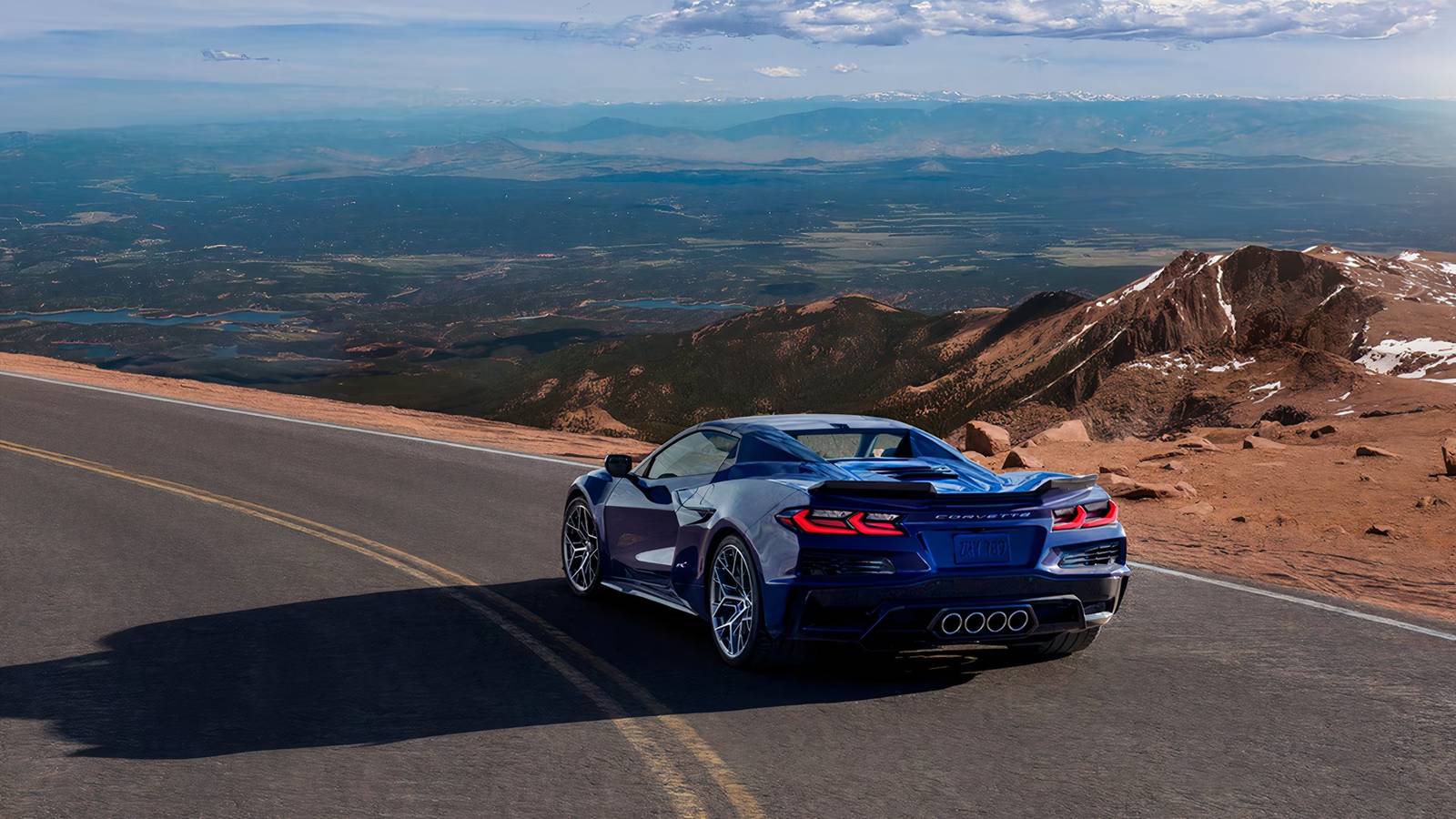
The Chevrolet C8 ZR1 appears to fall into that rare category. Independent testing suggests this isn’t just the most powerful Corvette on paper — it may be far more brutal than Chevrolet itself was willing to admit. In an era where performance figures are often inflated, massaged, or hidden behind qualifiers, the C8 ZR1’s early real-world results tell a different story.
The C8 ZR1 In Context

The ZR1 badge has always held a distinct meaning within the Corvette lineup. Historically, it hasn’t been about incremental upgrades or cosmetic aggression. ZR1 has stood for excess — engineering without apology, performance without restraint. And that’s specifically what enthusiasts like me love. From the C4 ZR1’s Lotus-assisted V8 to the wild C6 and C7 iterations, the formula has always been the same: take the Corvette platform and push it well beyond what seems reasonable.

The C8 ZR1 applies that philosophy to a completely new layout. This is the first ZR1 built on Chevrolet’s mid-engine architecture, and that alone changes everything. The shift from front-engine to mid-engine wasn’t just about chasing European credibility — it fundamentally altered how power could be deployed, cooled, and controlled. As a result, the C8 ZR1 doesn’t just feel like a faster Corvette. It feels like the logical extreme of everything Chevrolet learned while reinventing the Corvette itself. And re-invention counts for something across the motoring landscape.

How The Chevy Corvette ZR1 Is Changing The Supercar Market
This Chevy supercar threatens to knock the best of Europe’s hypercars off their thrones with good old American horsepower and engineering.
Independent Testing Changes The Narrative

On paper, the numbers were already absurd. Chevrolet positioned the ZR1 as the most extreme Corvette ever, with power figures that comfortably eclipsed anything the brand had done before. But independent dyno runs and real-world acceleration testing tell a more interesting story. Multiple tests suggest that Chevrolet may have been conservative with its published output — a refreshing twist in an industry where exaggeration is the norm.

Dyno results indicate that the ZR1 is likely to produce more wheel power than expected, suggesting crank figures well beyond the official claims. Acceleration testing supports that theory, with runs that consistently beat projected performance benchmarks. This isn’t about catching a manufacturer out. It’s about discovering that Chevrolet may have deliberately undersold just how extreme this car really is.
Straight-Line Performance That Defies Expectations

Straight-line speed has never been the sole measure of a great Corvette, but it’s always been part of the appeal. The C8 ZR1, however, seems to operate on a different level altogether. Independent testing shows acceleration figures that place the ZR1 firmly in hypercar territory. Not “for the money.” Not “for an American car.” Full stop. Zero-to-60 mph times appear comfortably under three seconds in ideal conditions, and quarter-mile runs suggest trap speeds that rival — and in some cases edge past — established benchmarks like the Porsche 911 Turbo S, a car long considered the gold standard for repeatable, real-world acceleration.

What makes this especially notable is the consistency. This isn’t a one-run wonder. The ZR1 repeats these numbers without drama. To put it in perspective, a 911 Turbo S — widely considered one of the best all-around performers on the planet — starts at $270,300 for the 2026 model, with lightly optioned examples often trading well above that. The C8 ZR1, by comparison, enters the conversation at a lower price point, even before options. That means hypercar-level straight-line performance without crossing into traditional supercar pricing. That kind of speed doesn’t happen by accident.


Find 2026 Chevrolet Corvette ZR1 and more cars for sale on our Marketplace

It’s the result of traction, gearing, cooling, and power delivery all working in harmony — an area Chevrolet has historically struggled to master at this level. Yes, the Porsche delivers its performance with precision and calculation. The Corvette C8 ZR1, by contrast, feels more untamed — raw, aggressive, and unapologetic. But for a car of this caliber to genuinely play in that space, it shows up with intent, gloves strapped, ready to swing.

How An American Supercar Outperforms Pricey Rivals Against All Odds
This American supercar may cost less than some of its European counterparts, but that doesn’t mean it is any less of an adrenaline-inducing weapon.
More Than Just A Power Number

What really shifted the conversation were the dyno numbers. Independent testing has shown the C8 ZR1 putting down well north of 900 horsepower at the wheels, depending on conditions and setup. That’s a critical detail, because it suggests Chevrolet’s quoted crank figures are extremely conservative. Accounting for drivetrain losses, those wheel numbers imply a real-world output that could comfortably exceed 1,000 horsepower at the crank — without aftermarket tuning or tricks.

That matters because dyno results don’t care about press releases. They reflect what the car is actually delivering to the ground. And in this case, the ZR1 isn’t just meeting expectations; it’s shattering them. What separates the C8 ZR1 from past muscle-era excess is how usable its performance appears to be. Power alone is easy. Managing it is where things usually fall apart. The ZR1’s engineering choices tell a clear story. Massive cooling capacity ensures sustained performance rather than headline numbers. Aerodynamic elements aren’t decorative —they’re functional, designed to keep the car stable at speeds most owners will never see, but some absolutely will.
Taming The Beast That Is The ZR1

The drivetrain plays a huge role here as well. Power delivery is aggressive, but not chaotic. The mid-engine layout allows the ZR1 to put its power down in a way previous Corvettes simply couldn’t. Instead of overwhelming the rear tires, the car seems to lean onto the pavement and go. This is speed you can actually use — or at least access — without feeling like the car is constantly trying to punish you for your ambition.

Inside The 2025 C8 Corvette ZR1 Flex As The Fastest Production Car Available
A throwback to the C2 Corvette, the C8 ZR1 split-window conceals a 1,000+ HP twin-turbo V-8
Enthusiast And Tester Reactions

Perhaps the most telling part of the C8 ZR1 story isn’t the numbers themselves, but the reaction to them. Enthusiasts who were skeptical of the mid-engine Corvette have been forced to reassess. Testers accustomed to European benchmarks are acknowledging that this isn’t a novelty or a value alternative — it’s a legitimate performance reference point. What stands out is how often the word “composed” comes up.

Not just fast. Not just violent. Composed. That’s not a term traditionally associated with Corvettes at this level, and it speaks volumes about how far the platform has evolved. For many, the ZR1 feels like a turning point — not just for Chevrolet, but for American performance cars as a whole. It suggests that the old narrative of brute force versus finesse no longer applies.
Chevrolet Didn’t Lie — It Just Underestimated Itself

The irony of the C8 ZR1 story is that Chevrolet didn’t mislead anyone. If anything, it played things safe. Conservative figures, cautious language, and a restrained rollout suggested confidence without bravado. Independent testing has simply revealed that the reality is even better than promised. That’s the kind of “disregard for the truth” any manufacturer would love to be accused of. When your car outperforms its own marketing, the internet does the rest of the work for you.

The C8 ZR1 isn’t just fast. It’s a statement — one that says Chevrolet now understands exactly what it’s capable of, even if it chooses not to shout about it. In a world obsessed with exaggeration, letting reality speak louder than the press release might be the boldest move of all. And if this is what happens when Chevrolet underestimates itself, the rest of the performance world should be paying very close attention.
Sources: Chevrolet, CorvetteBlogger, Porsche