
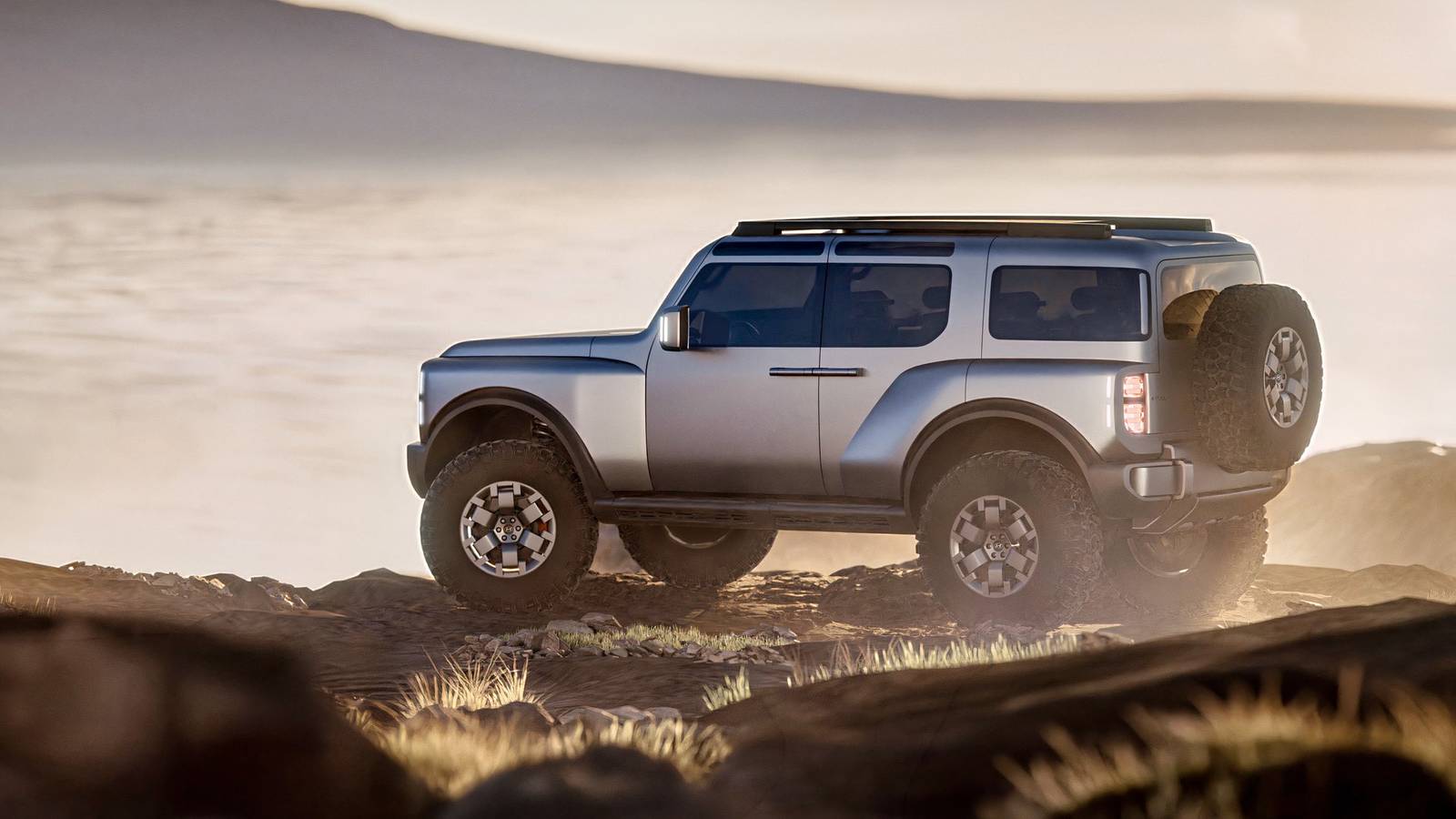
With the New York International Auto Show kicking off, we’re flush with new designs, special edition models, future concepts, and more. Hyundai has announced 36 new vehicles in North America by 2030, a few of which have already been spoken about. However, they’ve just revealed a design study that takes the bones of the mid-size body-on-frame pickup revealed to arrive in 2030 and turns it into an SUV with all the right stuff to get off-road enthusiasts, specifically American enthusiasts, interested in the future of the Korean manufacturer.
The Boulder Concept Is A Masterclass In Modern Rugged Design And Capability

Making a surprise debut at NYIAS, the Boulder wears Hyundai’s “Art of Steel” form, which, while definitely eye-catching, transforms the strength and flexibility of steel into a “sculptural-yet-functional” work of art. It’s inspired by the advanced steel technologies pioneered by Hyundai Steel, with the alloy’s natural formability and versatility on full display.

Smooth lines, bold contours, and muscular accents help the Boulder concept capture the essence of adventure, which is made more utilitarian thanks to the body-on-frame platform underpinning it and the aforementioned pickup. The body-on-frame structure has long represented the hard-working, no-nonsense American attitude, whether that involves towing, off-roading, or any other vehicular activity that requires a platform that refuses to submit.
Body-on-frame vehicles are the backbone of American work and adventure, and we intend to compete in the midsize pickup segment with everything we have… We are entering segments we have never competed in before, and we are doing it the right way: designed in America, built by Americans for American customers.
– José Muñoz, President and CEO, Hyundai Motor Company
The Ultra-Versatility Is Obvious At First Glance

This upright two-box ute takes the design elements of the previously teased pickup and builds on it by giving a true off-road kit. This includes dual safari-style fixed upper windows, coach-style doors, a roof rack, oversized 37-inch mud-terrain 37×12.50R18 LT tires, tow hooks, a double-hinged rear tailgate, and a power drop-down rear window. Designed to be a blank canvas that buyers can add to and subtract from depending on the situation at hand, the Boulder could easily take the fight to the off-road stalwarts, which include the Ford Bronco, Toyota 4Runner, and Jeep Wrangler.

The cabin is just as utilitarian and modern as the exterior, featuring robust materials for key touchpoints, like grab bars and areas that see lots of action. Switchgear includes physical knobs (thank goodness) within an easy-to-reach, natural range of occupants, and there’s even an available off-road guidance system, lending more credence to the rugged enthusiast-focused approach inside and out. The cabin is also configurable, like the exterior, allowing buyers to tailor their kit depending on the adventure ahead, or simply on the fly, if need be, with fold-out tray tables adding to the toolkit.
Hyundai’s Tariff-Busting Production Plans

The global economy hasn’t been on the up-and-up lately, with tensions flaring up in the Middle East and prices rising across the board. Though before we entered into this most recent conflict, we had tariffs to deal with, which saw prices angling upward before bombs were dropped. This led a few automakers to consider moving more operations to the US to counteract the spike in manufacturing costs, among them, Hyundai.

This notion was strengthened with the reveal of the Boulder Concept, as production, design, and materials being used in Hyundai’s body-on-frame platform are said to be localized. Designed in America, developed for America, built in America, and forged with Hyundai-produced US steel, the upcoming body-on-frame models, which include the pickup set to arrive in 2030 and the Boulder SUV Concept, will effectively sidestep many added costs attributed to import tax. If true and made into reality, we could have a true Bronco, Wrangler, and 4Runner killer on our hands.
Sources: Hyundai, U.S. Customs and Border Protection, Reuters